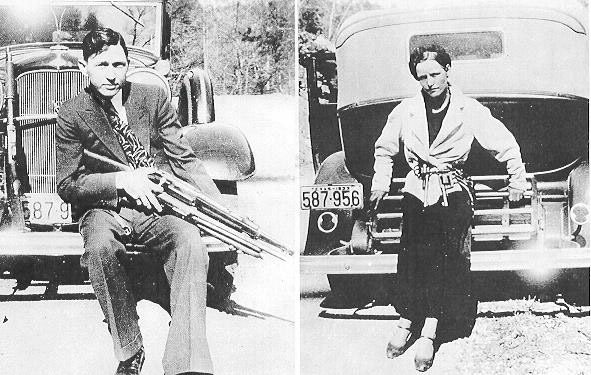
Clyde Barrow was a big fan of the new Ford V eight automobiles and he in fact, he wrote a fan letter to Henry Ford saying while I have a breath left in me, I want you to know that if I ever have a choice of stealing a car, I always steal a Ford V eight.
That’s Byron Johnson, Director of Texas Ranger Hall of Fame and Museum, describing the vehicle of choice for Bonnie and Clyde’s getaways.
The gang rode roughshod over the Central United States during the Depression in the 1930s until Texas Ranger Frank Hamer came out of retirement and ended their deadly robbery spree in an ambush.
It’s one of many cases that contributes to the worldwide reputation of the Texas Rangers.
This is an edition of True Crime Reporter™ Texas Ranger Files.
On March 1st of 2022, Texas kicked off plans to commemorate The Texas Ranger Bicentennial in 2023.
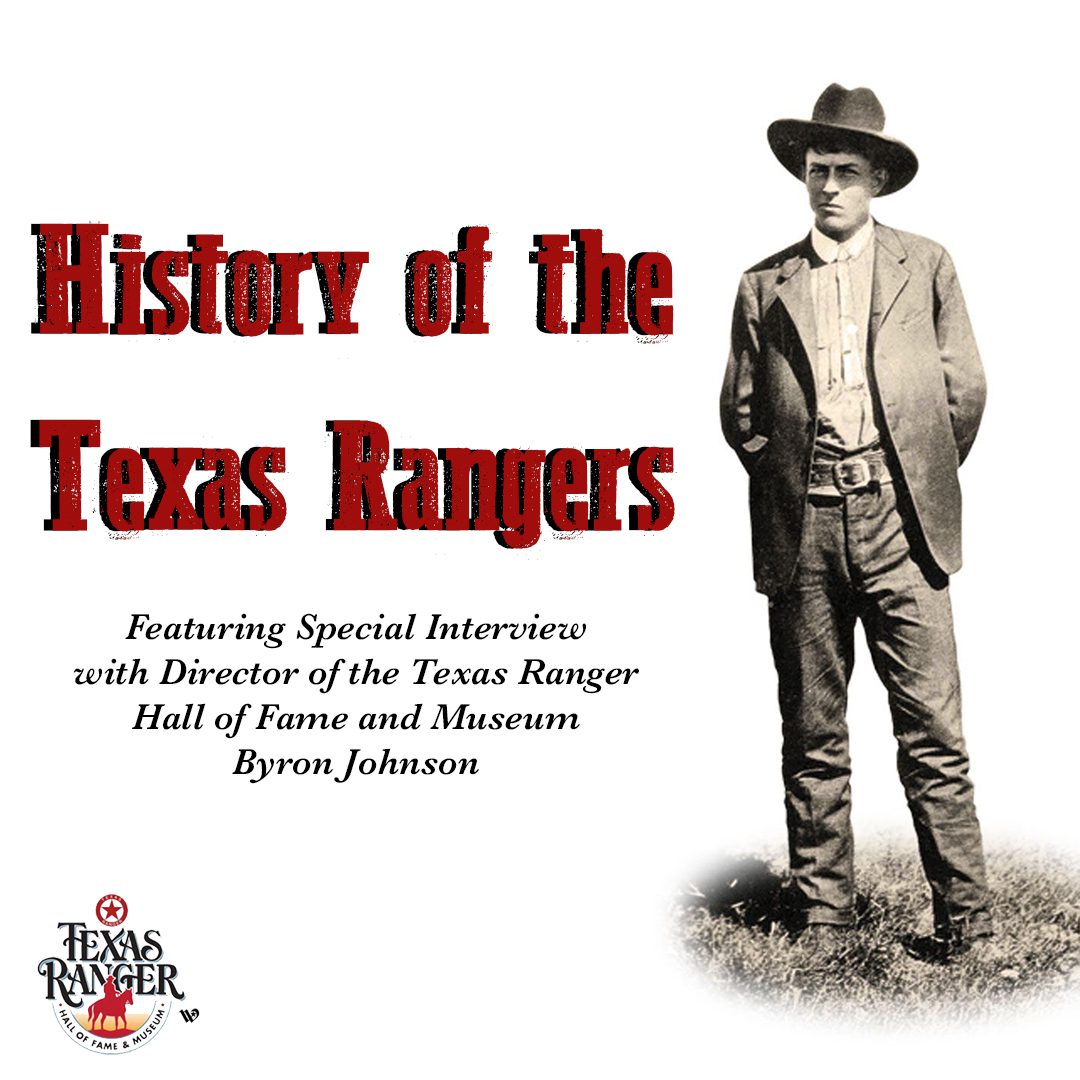
In order to get a concise and accurate account of its history, we went to the Official Texas Ranger Hall of Fame and Museum.
The museum attracts 100-thousand people a year from around the globe to see its exhibit artifacts, artwork, and archives.
Here’s my interview with its Director, Byron Johnson.
Texas Ranger History Byron Johnson
Robert Riggs
Are the Texas Rangers are nearly 200 years old now yet? They are the most legendary law enforcement organization, certainly the US but also what world? What is this mystique that continues?
Byron Johnson
I think part of it is due to the pop culture Texas Rangers. We've had a fair share. Let me turn that off.
Robert Riggs
Because let me just ask the whole question. In that way, that only tournament.
Byron Johnson
Yeah, these things intrude on everything. I'm going to completely power this one down. Alright.
Robert Riggs
The Texas Rangers are nearly 200 years old as we speak. And they are the one of the certainly the most legendary law enforcement organization in the United States, if not the world. What is this mystique that just keeps carrying on?
Byron Johnson
I think it's a combination of reality and pop culture. The Rangers are one of the most storied historical agencies, they have been called the second most recognizable thing about Texas after the Alamo. I think the other thing is the pop culture Texas Rangers who have been a fixture of movies since 1910, radios since 1933, etc. And who today if you go on Amazon, you'll find over 3000 books currently in print about the Texas Rangers. And I think they are really not only a Texas icon but an American icon as well worldwide.
Robert Riggs
It What is it about that icon? Is it the rugged Western spirit of it's just one person against the bad evil, that that attracts everybody are so taken by
Byron Johnson
it. I think one of the things that people really look at in terms of that is the high sort of the High Noon syndrome, the one person standing up against a an overpowering evil, and triumphing because of the spirit of will and this being in the right. And that permeates a lot of Texas Ranger history and a lot of its pop culture.
Robert Riggs
And there is a banking is inside the Texas Rangers themselves is that you should be able to walk into a room without your badge without your cowboy hat without your boots. But the way you carry yourself, they know you're a Texas Ranger.
Byron Johnson
And they do one of the things that is remarkable about the service is that they have a dedication to what it means to be a Texas Ranger and to remember that they are role models for both children and adults worldwide. And so you see them take on the persona and Ray and in reality become some of the most efficient, effective and professional law enforcement personnel and you'll that you'll ever run into. And this is something that the that opinion is shared by a lot of police agencies at the Texas Ranger Hall of Fame and Museum. We see representatives from everything from the Royal Canadian Mounted Police, the City of London Police, South American police departments and everything making pilgrimages here, because of their respect and interest in the organization.
Robert Riggs
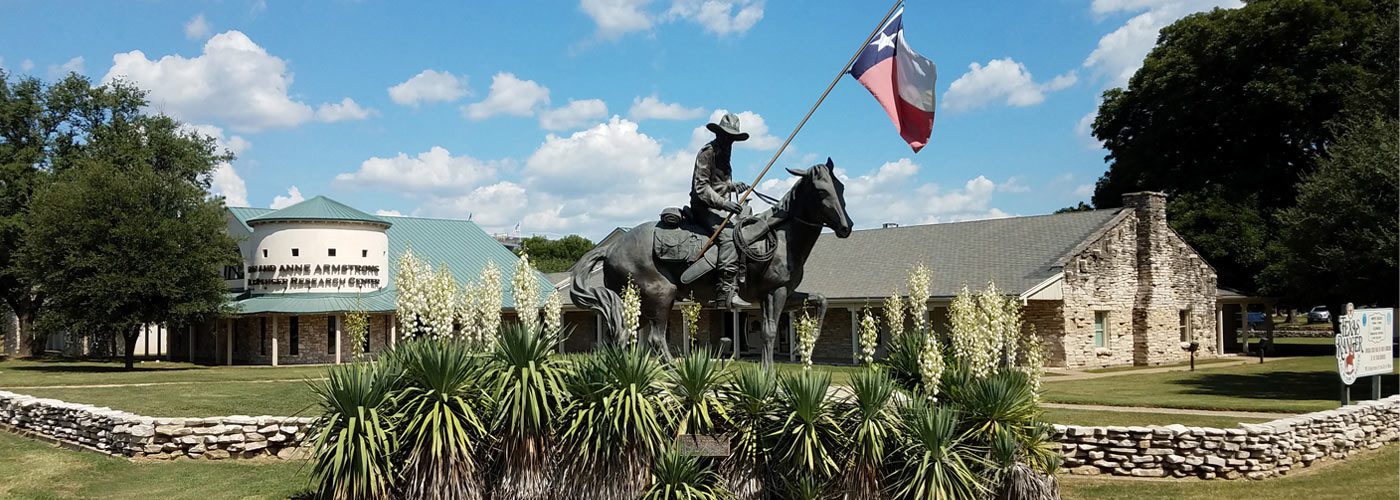
And here is of course the Texas Ranger Hall of Fame and Museum in Waco, Texas, on the banks of the righteous river nearby. What's the mission here? And what is your collection entail?
Byron Johnson
Well, we do two or three things. One is to try to collect and preserve the history through research in our research center, which is our library and archives collecting the documents and other materials so they aren't destroyed. So they're passed on from one generation to the next. Another one is to collect and preserve the artifacts, material and artwork and we have collections that go all the way back into the 1820s and we're still collecting things that the Rangers are using today. The idea is that these materials go into the museum the lifeboat if you will to be passed to future generations the rangers have been around for 200 years they probably will be around for 200 more in one fashion or Another another thing we want to do is to look at the impact the rangers have had and American popular culture all the movies, the low the television programs, the Lone Ranger, the Walker, Texas Ranger and the rest of that, because in many ways, that is the primary contact that people have with the Texas Rangers.
Robert Riggs
Well, and they today, they work in rural areas, and most of Texas population is urban. So there's not a lot, a lot of chance of seeing them unless you and there's not the coverage and rope hate newspapers anymore to hear about their work. But give us a sense of what that work is.
Byron Johnson
They spend most of their time assisting other law enforcement agencies with major crimes. They investigate homicides, they have investigated things like child pornography rings, they have they deal with computer crimes, all sorts of things like that, since about 2010, they have also been assigned by the governor to or to coordinate and observe activities on the border for the state. And they run her called Joint Operations intelligence centers, with other agencies that are on the border to try to coordinate activities and whatnot down there. They also have the discretion to investigate cases on their own if they get approached by by someone with something that appears to be the kind of criminal investigations that they do. They can they can make a decision to handle it. The governor can also assign them and has to go after specific incidences that they want investigated or resolved. So it's they they are essentially to summarize it in many ways. They are essentially the state's FBI. It is very hard to get into the Texas Rangers. Most of the we laugh when we see a story that says a rookie Texas Ranger solves a major case because in almost all incidences that rookie Texas Ranger is experienced enough to the point where they could have become the police chief of a major, you know, major Texas City
Robert Riggs
have always been strong in covering them that you might see the Rangers on horseback in the morning and on laptops in the evening.
Byron Johnson
Absolutely. We had a group of German police officers here one day and we were talking about and we said yes, in the panhandle. They're still chasing after stolen livestock or the theft, in you know, in the Permian Basin have stolen oilfield equipment, things like that. In Houston, they may be going after computer crime and internet issues and theft and the rest of that. So it's it's very, it's it's a wide spectrum of duties that you don't see with many agencies until you get into something like enter Paul, or in Canada, the Royal Canadian Mounted Police, which is a very extensive duty responsibility.
Robert Riggs
Well, let's go back to the beginning and maybe start in the museum's archive of what you have here that marks the beginning of the land.
Byron Johnson
Well, the Rangers began almost 200 years ago, next in 2023 200 years ago, when their story really begins with the independence of Mexico from Spain and 1821. When Mexico gained its independence, it also had huge northern possessions in Texas, New Mexico and Arizona. The Mexican government being brand new, could not protect hardly any of that. So they gave the colonists that came in to settle those areas, many of which were from what was then the United States or Europe or other areas, permission to form militia groups, sort of like Minutemen companies you would associate with the American Revolution in the 1700s. Those units formed when they were needed in the event of Indian rage or things like that. And basically, were the only protection for the farms and ranches and small towns that existed at the time and that really was the birth of the Texas Rangers. Today. There is a tradition that they're still very proud of neighbors protecting nature. Bruce in Texas and that's where that began with with a mustering at times when they were needed and then going back to their farms and ranches and towns, when it was over with
Robert Riggs
is at the point where they're organized by the father of Texas, Stephen F. Austin to quote range and that's how,
Byron Johnson
yes, the original ranging companies were Stephen F. Austin received permission to form them by a man named Jose tres Palacios, who was the Mexican governor of Texas. And he was given permission to form these militia companies. The first ones were formed down the coast and took to field not really knowing what they were doing. They were led by a five by a Pfeiffer and a drummer, which must have been been humorous to some of the Indians and took to the field, Austin very quickly realized this wasn't going to work. And I don't think he reserved he gets all the credit he deserved, because he decided to combine what he was familiar with on the front tier, the tracking skills and survival ability of the Native Americans that were out there. The horseback techniques of the Spanish, Spanish VARK heroes in terms of the kind of equipment they use the saddles and everything else. And some of the technological expertise and whatnot, that the for, for lack of a more inclusive term, the Anglos brought in with them. And so like the American cowboy, the Texas Ranger began as a combination of Hispanic American Indian and Anglo American cultural traditions, which is which melded into something unique, and something that in the tradition still continues today.
Robert Riggs
So they were good at adapting very good at
Byron Johnson
adapting. If they had been, it's unlikely they would be around today, we're frequently asked, you know, are why are the Rangers still here after 200 years, and we say we've told them because in over their lifetime, they've gone through five different major changes as Texas has changed. And they have been useful, and every single one of them, they still continue to be useful and well respected today. The Rangers are one of the only departments of the state of Texas that cannot be sunset, they can't go out of existence by an act of the state legit legislature. They they are permanent in terms of a fixture of Texas. Those they will be here another 200 years, right.
Robert Riggs
Let's look at the evolution of and you mentioned there originally, they're dealing with Indian kid which tribe which group and because of their Native Americans that eventually joined Oh, yes, Frontier,
Byron Johnson
yes. And writers and it doesn't conform to a lot of the stereotypes. The quote unquote hostile Indians, some of which were basically trying to protect their lands and whatnot that the most of the conflict occurred with where their Karaca was Tonka was, and the Comanche who arrayed a relative late comers to Texas they showed up in Texas in the early 1700s. And those are the ones that they spent most of their time trying to prevent rating farms and ranches and in the state. The during that militia period would stretch from 1823 to 1874. You also have the Texas Revolution and the Texas Rangers were organized to protect settlers, during what Texans know as the runaway scrape when the Texas settlers were fleeing Santa Anna's army eastward. They fought a rearguard action to to do that. After the successful creation of the Republic of Texas, the Texas Rangers were almost the only military protection that the new country had. The standing army was stood down and the Rangers responded to situations such as some Mexican incursions or attempts to take Texas back again. Once you get into that you get into the Civil War, and most of the fit men were taken by the Confederacy impressed in the service and sent off to fight the Civil War. What you had was a small group of Texas Rangers who were fighting an action to prevent the Comanche especially from taking advantage of that. The Comanche managed to push the line of settlement over 200 miles back from war it had been before the Civil War, and the only thing protecting the people in Texas at that time were Texas Rangers who in many cases were young boys or were elderly men.
Robert Riggs
Let's go back a minute. Sure. To the revolution. Did we have Texas Rangers? at the Alamo?
Byron Johnson
Yes, we did. There was a ranging company from Gonzalez, Texas, that when they got the call from the Alamo for reinforcements were the only ones to basically come into the Alamo. And they had Rangers as young as teenagers that came into the Alamo fought and died in the Alamo. So yes, there were Texas Rangers at the Alamo, an entire company of them.
Robert Riggs
And then I've seen a document here which was stunned by that goes back to the capture of Santa Ana, and a commissioning done would you describe that document and what the significance of it as far as
Byron Johnson
Sure. After the Battle of saying you sento Santa Ana had put on the clothing of a infantry private and was trying to escape back through the lines. They sent out a squad of soldiers to try to find him and did so successfully. One of the soldiers was a man named Joel Robeson, who was on the scribe that actually captured Santa Ana brought him to Sam Houston is the right the Mexican general and
Robert Riggs
describe the quality of the Mexican army. Mexican
Byron Johnson
army was by many people considered to be the best trained and equipped army in the world. They had your European mercenaries who trained them they had the best firearms and equipment, they frequently use brown best rifles, which are the British rifles that were regarded as being being a standard at that point in time. And so how does this Texas
Robert Riggs
Ravel when?
Byron Johnson
Well, they basically stretched their the retreat of the Texas Army out all the way from the San Antonio area to East Texas. So they stretched the Mexican army out, they stretch their supply lines out and everything else. And then by pure serendipity they, Santa Ana split his forces into two groups, which was not a particularly wise thing to do. And he went with a smaller group to the area around San Jacinto, where he was discovered by the Texans and the Texans launched an early morning attack that just devastated the Mexican army they captured the bulk or captured kill the bulk of that branch of the Mexican army. Joel Robeson, who was on the squad found Santa Ana dressed as a private hauled in the same Houston and he was forced to capitulate and basically sign over the right for Texas to become its own independent nation in thanks for his service during that Robeson was presented with a Texas Ranger commission. We have it in the museum collections, naming his a him as a lieutenant in the Texas Rangers and it's one of the earliest documents. They didn't have any formal documents for Texas Rangers. So they took a taxi and army and lisman form, crossed out txi and army and wrote in Texas Rangers. And
Robert Riggs
tell us how that came to the museum because it's quite significant.
Byron Johnson
Family came in out of the blue one day and like we have with many of the artifacts and things that we have here it says we said we have a document that has been in our family for over 150 years. And we're concerned that it's going to be preserved. There was this rumor that one of our family members was a Texas Ranger which is a document document seems to say we put our research people on it and we have some some really talented individuals working in our Armstrong, Texas Ranger Research Center. And they told the family probably better sit down when we tell you this. Not only was your ancestor a Texas Ranger, he was on the squad that captured Santa Ana, general Santa Ana after the Battle of Samia sento. And what this document indicates is that he was given a ranger commission. Their comment to us was this needs to be preserved for future generations. We want to donate it to the museum since what you have becomes public property and is permanently preserved. And so we'd like to like you to have it and we were just stunned and of course very grateful. It was a gift not to us, but it was a gift to all of Texas and to future generations.
Robert Riggs
And there is such historical significance of this document. I would presume if you've been taken into Sotheby's, or heritage auctions abroad, a lot of money.
Byron Johnson
Yes, it probably would have. But again, the intangible value of it is its historical value. Yes, money will always change the value of something as an anchor to the history of Texas and the history to really why all of us are here today is in such documents and artifacts.
Robert Riggs
So before I took you back in history, we were talking about the young Rangers that were fighting against Comanches, during the Civil War, pick up the story from there.
Byron Johnson
All right, that during the Civil War, the Comanches, became aware of the war between the Confederacy and the union. And they thought, Okay, this is a good way to take back our lands and everything else. So they started to form raiding parties and started to hit the settlements and everything else. Well, every time that the Texas Rangers had a good component of people in it, the Confederacy stepped in and said, Hi, we're impressing all of these people into the Confederate Army and shipped them off to fight in the war. What they got back were people that had been wounded or were no longer in peak physical condition. They had old, older men left, and they had young boys, some as young as 15 years old, that were hastily called in Ranger service. And they wound up fighting the Comanche on the western frontier. And they actually prevented them from completely over running Texas during the Civil
Robert Riggs
War. And you said impressed as I recall, Sam Houston, very Texan had imposed succession. Yes. And you know, there were counties in Texas and voted against it. So just our listeners know, there weren't lots of men anxious to go,
Byron Johnson
no, not not. Not in many cases, there were actually Union Army units raised from the hill country in Texas, which had a lot of people German ancestry, and a lot of high heavily pro union people. And some of those left home went to the union territories and enlisted in Texas union units. So it was a it was pretty varied history.
Robert Riggs
Well, it now it always struck me that the late president, Lyndon B. Johnson, was from those German community voted against succeeding, and then later he is the president writes about, but shear force, a personality, the Civil Rights Act?
Byron Johnson
Yep. It's, you find that everything has a precedent in history that leads to where we are today. With the Texas Rangers, it's the fact that they're regarded as one of the most elite accomplished professional law enforcement agencies in the world. But they didn't get there overnight. There were enormous achievements. There were also periods of darker, darker periods of history, many of which were caused by political figures, past governors, using them in ways that were not appropriate, and assigning them to do things that were not appropriate. And they learned lessons from every one of those things, both the achievements and the darker periods that shaped them into what they are today. If you look at organizations have existed for 200 years or longer, like the US Army, they went through the same evolutionary process. We have arguably the best military force in the world today, the most professional and the best trained, of which the US Army is a big, big component of that. And they're a product of their history as well, from like the Texas Rangers, the militia companies during the revolution, Revolutionary War, all the way down to what they are today.
Robert Riggs
We're gonna pause for a break. We'll be right back. We're talking with Byron Johnson, the director of the Texas Ranger Hall of Fame and Museum in Waco, Texas, about the history of the Rangers. I do want to remind our listeners if you really want to dig deeper in the subjects we do. Sign up for our newsletter at true crime reporter calm It's there on the homepage. Now Byron, we're where we left off it was we're post Civil War or the Rangers pick up the story. All right.
Byron Johnson
Well, the Ranger militia era really ends in the 1870s. Texas was readmitted to the union in 1870. As a state again, and the problem is there's no law enforcement anywhere in the state at the same time post Civil War, you have the railroads coming into Texas and extending through every aspect of it primarily to get cattle to market. There's something like 3 million cattle on the US our department on the Texas Mexican border, and they want to ship these off to Eastern markets and everything else to service these railroads and to service this cattle industry. You have the development of new towns like Fort Worth, and Abilene and others like this that spring up overnight. When the town's spring up, one of the things you get coming into them as a criminal element. So the new mayor's send the governor's please saying please send us law enforcement up here, which is at that time, the reformed Texas Rangers, the government of the state of Texas decides to create two different units of Texas Rangers. One is called the frontier battalion. They spend most of their time bringing law to communities hunting murders, bank robbers, other people like that. The other one is called a special force and it's sitting down on the border, especially to an area called the new Asus strip along the new Asus river to try to quell the violence going on from back and forth skirmishes over all these cattle that are down there just roaming free that both the Mexican populace wants and also the Texas populace wants. It's been called a literal state of war. And in many ways, it was a predecessor to the issues that continue to plague the Texas border. For over a century afterwards. The frontier battalion becomes a legendary they are the root of the pop culture Ranger, the Lone Ranger and the rest of that going into towns and everything else. Much to the chagrin of a lot of people, though it isn't wasn't always exactly that way. The Rangers at that time weren't Lone Ranger's. They were divided into companies Company A, B, C, D, etc. And generally when you had something going on a company was dispatched to deal with the issue like, like a group of bank robbers or something like that. On the new aces strip, you have also have Ranger companies that are sent down there to try to deal with the violence and everything else. So much of this. Much of this is what the Wild West ethos of the Rangers is built out of. It still, in some ways exist today because current Rangers are assigned to companies A through F. And those are hearken back to the companies that were created during the frontier battalion days. Their dress is prescribed in their regulations as Western dress with businessman or rancher style cowboy hats, with boots, with certain types of Western cut trousers and the rest of that. And that tradition continues today. And gun belts, the badges they use, the earliest ones came were seen in the 1880s. They were made out of Mexican coins, the silver in which was a standard of purity. And today, the Texas Ranger badges are still made out of Mexican coins that are made into the modern design of the Texas Ranger badge. So you have all this 1874 to 1901 period, Frontier law enforcement ethos that has come forward as a tradition into the 21st century.
Robert Riggs
And then, so post 1901 and headed to World War One. Does that role change? What are they?
Byron Johnson
Well, there were arguments about about in the turn of the century 1900 1901 about whether the Texas Rangers were so needed, there were no more Indian problems. The railroads and the towns were stable and everything else. What they didn't plan on was the turmoil of the 20/20 century that they were getting into. You of course, had the Texas oil booms in the Panhandle and East Texas. You had the left national experiment of prohibition with alcohol being brought into Texas illegally over the border from Mexico and the stills that dotted the piney woods of East Texas during that period of time. You had an attempt during World War One to send the Rangers after dread draft dodgers and whatnot. And then in the Depression, you had the rise of what they called motorized bandits bandits using automobiles. somewhat lot like Bonnie and Clyde that had to be had to be hunted down. So the 20th century if anything turned out to be just as similar to us as the 19th century turned out to be
Robert Riggs
this Bonnie and Clyde also modern day really contribute to that pop culture image you had frank Hamer in pursuit but a hawk the what people don't realize he wasn't a Texas Ranger at the time he was had left the Rangers but he was recruited by the Texas prison system because they broken somebody out of prison.
Byron Johnson
Correct Hammerhead left the Rangers because there was a period in which two Texas governors the Ferguson's a husband and wife who became successive governors had mon paw Ferguson. Yes, they had utilize the Rangers in ways they shouldn't have been been they had led people into the Rangers that should not have been in the rangers
Robert Riggs
and notorious for their corruption. Absolutely taking bribes and
Byron Johnson
you could buy a ranger commission at that point in time from the governor's office and hammer and a lot of the other rangers just said I'm not having any of this and resigned and went on to other law enforcement activities. Well, Hammer was brought out of retirement given a state as you said a state prison commission and hunted Bonnie and Clyde for about 100 days finding out where they went, what they did everything else. And he brought their career to an end by getting Dallas policeman Louisiana policemen, former Texas Rangers and everything else to stage the famous ambush. The ambush was made possible because he went to the family of Bonnie and Clyde and said we have to get them off the streets. And if you don't help us do this, we're coming after you too for aiding and abetting them. Interestingly enough, a version of that occurred in the 1990s with the surrender of unhealed Rafi, I'll resend this, the railroad serial killer because the way they finally brought him in was talking to his family in Mexico and saying you folks realize as the way we have to get this man off the streets. And just to
Robert Riggs
elaborate this was a man with riding the rails and boxcars through Texas up into the central part of the country. murdering people, mainly women, and all that lived near rural tracks, and it was a panic that swept through the state of especially among people living at railroad tracks.
Byron Johnson
That's correct. It was a little different with Bonnie and Clyde because they achieved in some ways kind of a folk hero status, which was undeserved. During their career. They killed at least 13 police officers and innocent bystanders. But they had the same kind of mobility that Resendiz had on the train. Clyde Barrow was a big fan of the new Ford V eight automobiles and he in fact, he wrote a fan letter to Henry Ford saying while I have a breath left in me, I want you to know that if I ever have a choice of stealing a car, I always steal a Ford V eight. That's something you don't see very often in Ford ads these days.
Robert Riggs
You know, my mother said girl she whatever strong memories was going to the State Fair of Texas which was in Dallas. This was a huge event back in those days because Texas was still an agricultural cattle and so there were all kinds of displays and put on and competitions for chickens and horses and goats and pigs you name it and everybody went but she said one of the big events would that it would have Bonnie and Clyde bullet riddled vehicle on display. And that would be 1000s of people.
Byron Johnson
Yes, and that got so popular that believe it or not you had carnival barkers that were going around getting that same model and style of Ford VA automobile of filling it full of bullets and then hauling around and claiming it was Bonnie and Clyde's death car they weren't heymer Actually wandered into a carnival one time saw one of those and very strongly urged the carnival barker to discontinue his exhibit of the fake Bonnie and Clyde car.
Robert Riggs
You know, I was reading an oral history by an African blues player that I actually knew you many years ago. And he told the story of how Frank Kaymer came into the community in Texas it was being just after Americans are being dragged through this string, the hog and he came in and single handedly took all the Ku Klux Klan.
Byron Johnson
Yep. There were two Rangers that actually did that in one another one was a man named red Burton, who stood down a crowd of about 600 Klu Klux Klansmen in this area of Texas, Central Texas. And it was, you know, it's it's an example of the fact that a lot of these people were very strongly motivated again by what is right and what should be done, and how and people that should be protected. And that's something that permeates the service even to this day.
Robert Riggs
And the sad story in this oral history is that hammer had been shot in the stomach earlier in a gunfight and left to die. And it was an African American man that came out in his own risk and rescued a
Byron Johnson
hammerhead, a hammerhead, a rough and tumble life. The estimate is that he was shot more than 16 times during the course of his career, obviously survived all of them. But he was he was not a small man either. He was well over six feet tall for that for that time period. And about his time about as tough as nails.
Robert Riggs
Let's pick up the trail from Kramer now.
Byron Johnson
Alrighty. If we go up to 1935, the Texas Rangers have may have a investigative role. In 1935, the corruption that had occurred as we talked about with the Ferguson's and others, led to the creation of what we know today, the Texas Department of Public Safety. And the first three units of that were the motorcycle highway patrol, the crime, the crime, criminal intelligence division, which was basically the state crime lab, and then the Texas Rangers. It Today there are over I think 30 different units that were in that are in Texas Department of Public Safety, but they converted from sort of a frontier ish type organization into extremely professional law enforcement personnel. Except for the dress and the clothing, a lot of their operational styles are the same as government, G men. And they continued working with local police agencies and conducting major investigations up until about 2010 after 2010. They continue that but they add a whole group of things to their responsibilities, which is amazing for a group that only has about 170 sworn individuals in it. Some of these are enormously successful cold case investigation unit that has solved since its creation a few years ago, over 130 cold cases and close them. They have the border unit that has been assigned to monitor what's going on in the Texas Mexican border. They have a unit that is dealing with DNA analysis and collecting DNA samples that have been ordered by the courts to try to solve sexual crimes that have occurred. They have a unit that is involved in the protection of children. They go literally worldwide from New Zealand to Great Britain, training police officers and routine traffic stops where their children in the car to recognize a situation where a child may be endangered through kidnapping or parental you know, or parental abduction in the case of disputed custody or things like that. And they have recovered a large number of children that were in a potentially threatening situations. So that continues today. They are Interestingly as diverse as they were when they were first formed and had American Indians, African Americans and Anglos in it in the 1830s and 40s. Today there are Texas Rangers that have served in all ranks from field ranger to Chief that have been African American, Hispanic. There are female Texas Rangers heading up special operations, group functions and other things like that. So it's a lot different from the stereotype people have of you know, six foot two white guys and cowboy hats. It is it is a very modern police agency that looks like the people of Texas look today.
Robert Riggs
Well, I want to thank you for that history. For a moment, though, tell us if if you're coming to Texas, what should you plan on and come to this museum? And why should you see it? And should you just make a special trip to see it because I know you've had visitors from Germany and Europe and all around the world.
Byron Johnson
Well, if you want to get a sense of Texas and its history, there are two places that we really recommend that you go one is our place, Texas Ranger Hall of Fame and Museum located in Waco and interstate 35. And the other one is the Alamo in San Antonio. Both of them capture history that has spanned three centuries, the 19th, the 20th and the 21st. And we'll get really give you an idea of what the characteristics and ethos behind Texas really is.
Robert Riggs
Thank you for sharing the spirit of Texas and the Texas Rangers with us are
Byron Johnson
My pleasure.