Edited script
Robert Riggs
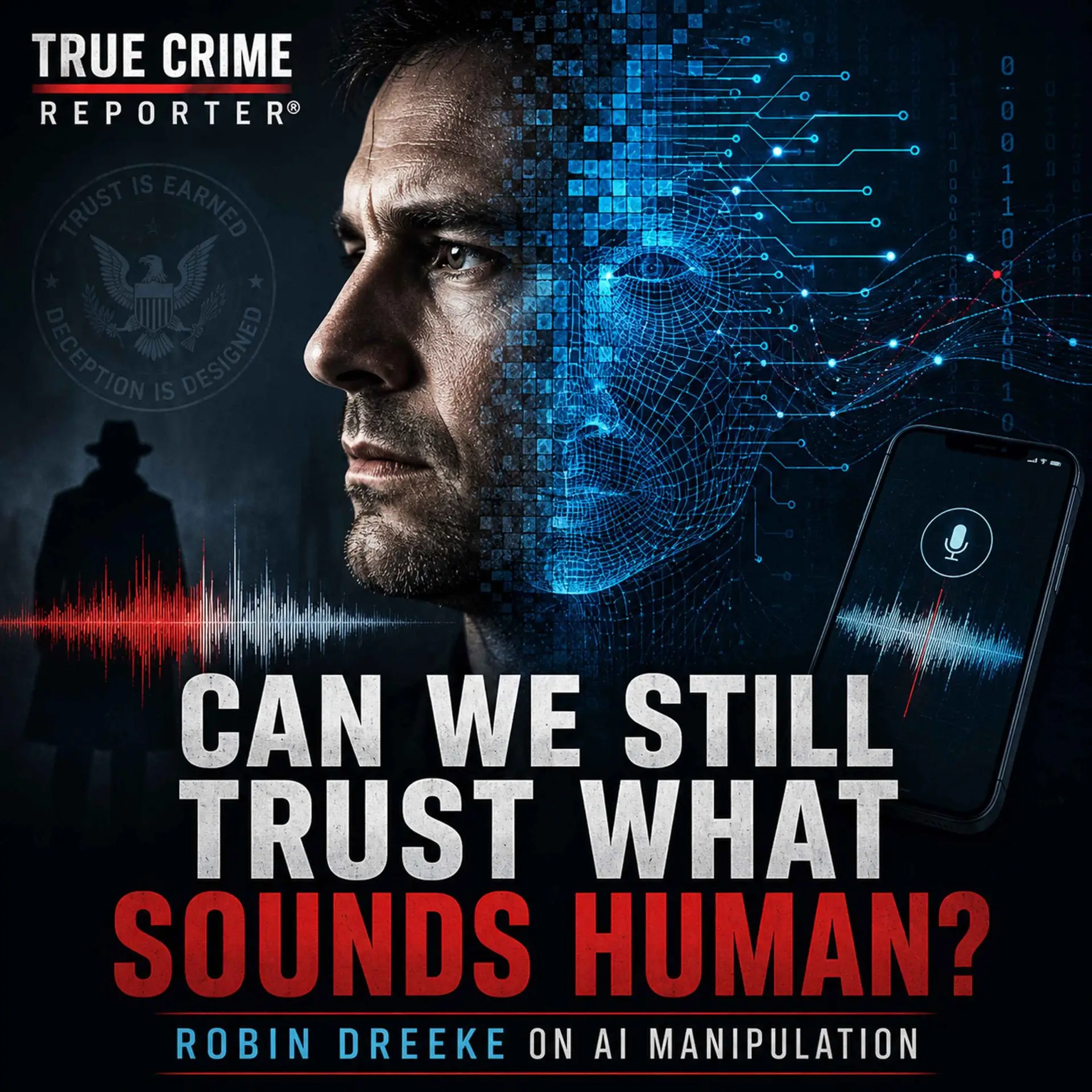
Real human connection is becoming harder to recognize in a world increasingly shaped by AI-generated content.
Former FBI counterintelligence agent Robin Dreeke returns to the podcast to explore one of the most urgent questions of our time: who or what should we trust?
From the rise of AI personalities and artificial empathy to the subtle ways criminals manipulate human behavior, Dreeke explains how the principles he used in the world of spies apply to everyday life.
We also discuss the updated edition of his bestselling book, It's Not All About Me: The Top Ten Techniques for Building Quick Rapport with Anyone.
Dreeke shares practical insights on reading people, spotting manipulation, building authentic relationships, and protecting yourself in a culture where deception is increasingly sophisticated.
Whether you are fascinated by criminal behavior, curious about the future of AI, or simply trying to better understand the people around you, this conversation offers deeply personal and timely insights.
Robin, we're living in a period now with AI, first with bots, that it's very difficult to ascertain what's true, what is real. Based on all of your experience, what is your advice? How do you do it now?
Robin Dreeke
You know, when I was thinking about this question a couple days ago, I pondered it as well. I was like, how do you assess? And basically I think this comes down to life. And there's a difference between life and artificial life.
And so when I ask myself this question or people I engage, I ask one simple question. I asked my AI the same question. And the answer is completely different. So I really think it starts with this and it's history. And it's kind of like we were talking about before we started the show and it's this.
So what was that spark and inspiration to be who you became today? Take me on that journey. Ask your AI that question, you're going to get a very different answer than a human being. And so when I asked, I use Grok for a lot of things and Grok talked about how it was merging between two things that Elon wanted to put together and so you get a history of how that AI was created. And if you ask any AI, it's going to take you on its history.
And even if it wants to try to mimic a human being, the typical thing we do with humans is, if we're actively curious, and I think that's the real key here, is not to accept what's given to you, not to take for granted the story you're given, but how do we have pragmatic thinking and interrogate the information we're given? How do we fill out the nooks and crannies to assess how we're creating a strong, healthy relationship with this individual? We're looking for commonality, we're looking for trends, we're looking for predictability because that helps us feel safe. And so all you need to do is have a slightly below the surface conversation with anyone in order to assess, is this someone I can trust and enter into my life into a healthy, strong relationship or not? And when you'd have that same kind of interrogation and critical thinking with AI you're going to quickly uncover that this is not a human being with a life arc.
Robert Riggs
Well, if you go on social media these days, though, you're just inundated by AI images, quotes, what have you.
I've been in this and I can see it, but I don't really think most people can see it. Is there a way they should start looking at that differently or just turn it off?
Robin Dreeke
That's another great question. So AI is creating a lot of content out there today. It's like everything in life. If you want to try to find it, you're going to give yourself a confirmation bias to try to find it. And you'll do a great job of finding the AI that's out there.
But then you gotta ask yourself, what value do I get out of expending bandwidth to try to identify what's AI and what's not? I think it's a lot easier if we're trying to gain value from something, then we should try to recognize value first and then what's not a value. And how do we recognize value?
What stands out from the noise? AI just creates noise. Again, another thing that you and I are talking about is AI, as of right now, cannot innovate. It cannot come up with original ideas. It'll take other ideas, historical ideas, thoughts and opinions, synthesize it, maybe reformat it. But nothing's going to be innovative, new, or earth shattering, or groundbreaking, at least yet. And so if we're looking online, whether it's social media or anywhere else, I'm looking for something going to stand out as something new, something innovative. I remember the first time I talked to my literary agent when I was writing, and they always have this, and I give the same advice to any writer out there that's trying to write a book or publish something, even self-publish. And that is this, what unique problem that's facing people today are you trying to solve? In what very unique way that hasn't been approached before do you have to solve it? So unique problem, unique solution, and that's how you move forward. And so when we're trolling the internet, doing the same thing, we're looking for unique solutions to problems we face.
And so what is typically providing those unique solutions? It's a human being.
Robert Riggs
Well, in your latest updated book, It's Not About Me, you seem to be going against a large tsunami current of an era now where it is about me.
It is all me.
Robin Dreeke
Right.
Robert Riggs
24-7, there was once the me decade. It's the me century.
Robin Dreeke
The cult of me, yes.
Robert Riggs
Yeah. What's your pushback on that?
Robin Dreeke
Well, it's interesting. I typically don't think in terms of pushback. I like putting information out for people to make decisions on.
Because if we start judging right, wrong in this area, then you're going to have half the world lined up against you, people that are on a different path, and a different trajectory.
Robert Riggs
Mm-hmm.
Robin Dreeke
And so I typically don't say this is right or wrong or good or bad or pushback. I love putting data out for analysis. And so again, one of the things that I discern people on is, are you an emotional thinker are you a critical thinker? It's a dichotomy. Everything in life is a dichotomy. And where are you on that sliding scale? Not for judgment, for I understand how to communicate with you.
And one thing that I enjoy so much and we all of us enjoy as human beings is be able to have a great, beautiful conversation. Those great conversations are generally because they're critical thinking conversations and critical thinking conversations where you can throw out a thought, opinion, idea, not be disregarded, even if it's against someone's thoughts and opinion you're engaging with, but they become curious about those things. That is what critical thinking is. And so when I publish things and I write things like it's not all about me, I am always talking about the benefit of the human condition and human interaction. It's not to disregard AI and the emergence of it as the amazing, wonderful tool it is.
It's made my life easier. It's made your life easier. It's made a lot of people's lives easier. But if you think of it as a shiny screwdriver rather than an equal partner, I think that's a more healthy way to engage it today. It's a very functional, useful tool.
And so I'm always leaning on the side hard on the strong interpersonal relationships and communication because as the species that's been on this planet a very, very, very long time, at least in the cognitive sense that we're seeing now about 200, 300,000 years, we are genetically and biologically programmed in our genes for human interaction and connection and the value we get and what's going on in our brain when those things happen. The serotonin, the dopamine, oxytocin, endorphins, the big four firing in the brain. We have a great, healthy, strong relationship with another human being that can actually interact with us both emotionally and in a critical thinking way. The screwdriver right now cannot do those things. It'll give blips and blobs of some dopamine hits.
But what happens is, we do this as human beings. One way that human beings become addicted to things is the hit that we got from the dopamine from say, say we had a chocolate, you know, a piece of chocolate. First time we ever had chocolate.
Man, that felt really good. So you have the same piece of chocolate the next day just doesn't do the same thing. So what you got to do? I kind of have a little more chocolate because they have a little more of a hit. Same thing in relationships. Same thing when people get addicted to unhealthy things in their lives like alcohol or drugs or something like that because our brain is constantly seeking a new stimulation because once there's experience of once, it wants a little bit more.
If you dive deep and think about this, for those of you who, like I have too, interact with AI and you're thinking, wow, this school is innovative. I can have a conversation with this. And you go back for another conversation. You're looking for a deeper conversation. I've tried to have deep conversation with my AI and you know what it was?
Flat. It wouldn't bust through and elevate it to the next level. It wouldn't be a deep thinker. It kept regurgitating in the same theme, the same systematic lines. And so it leaves you empty. So the dopamine gets cut off at a very, very shallow level. So that's why you regard it as a tool that can only do this for the, what we're looking for as human beings. So no pushback, just complete clarity. If you're looking for the healthy things we need in life through great, healthy, strong dialogue, relationships, trust, You're only going to get it right now from a human being.
Robert Riggs
Yet one of the strongest growing trends is relationships with AI characters. I mean, it's off the charts, especially with teens.
Robin Dreeke
Yeah. Yeah.
Robert Riggs
So they're getting some kind of dopamine hit from it.
Robin Dreeke
Sure.
Robert Riggs
Now, they're sycophantic.
Robin Dreeke
Sure.
Robert Riggs
They're telling you you're wonderful, you're great and stuff. But you know I know of cases where you know teenagers started doing bad things because Linda, their AI character, told them to do it. This is the way you deal with you know criticism at school. Punch them in the mouth or something.
Robin Dreeke
All right.
Robert Riggs
What do you make of that? Especially with all your background in behavioral studies.
Robin Dreeke
Yeah, I haven't seen it linked exactly through a study like this, but what popped in my mind when you said that is Rutgers did a study last year, I think it was like May of last year, and this is 2026, so like May of 2025 of self-radicalization online, where people are not being radicalized outside from outside influences coming in, like recruitments of like ISIS and ISIL and Al-Qaeda and things like that, where we used to think about radicalization, it's actually happening internally. So when we're seeing some of the assassination attempts, we see the Charlie Kirk shooter. We're seeing all the attempted presidential assassinations. Many of these people have been self-radicalized. So because they have a certain disconnect from society, they're looking online because you can find anyone online that has a similar opinion of you. And so they proactively are looking for groups, organizations, and people, even if it's one, two, or three, they're going to validate their own self-opinion of how they see the world to their victim mentality. And then they're going to start acting on that and then go down potentially the dark triad and bad things can happen as they are escalating towards violence and thinking that they're some savior of the world because they they've gotten their brain so twisted up.
I think as you described it right there, the same potential is with AI as well, because that is a self-radicalization tool that's sycophantic, where it's going to allow you and promote you and allow you to feel good as you're venting and come up with these great ideas. It's going to help you rationalize, strategize, and come up solutions to your victim mentality because these are not licensed counselors. These are not therapists. These are not healthy relationships. It is a regurgitation of garbage it's collecting on the internet and feeding it back to you in some of the programs because, man, remember, AI, it comes from what's already been created and whatever algorithm that the company has decided to package it in for communication to you. And so that's the danger of it, how these things are happening because AI is not a loving critic. AI is just a tool that is designed to placate and be a useful tool for you in whatever dark things you want to do.
Robert Riggs
Well, in looking at some of these characters, and I think one of them even advertises, it's the AI character that is always horny. But as I've looked at it, during my career, you know I covered cults.
I was at Waco for the 51-day Branch Davidian siege.
Robin Dreeke
Yeah.
Robert Riggs
I covered their trials. I covered the aftermath. I talked to their members. And these AI characters almost strike me. They're, they're like cult leaders and what you saw cult leaders do to people that just didn't have a purpose.
Robin Dreeke
Yeah, it's really interesting. I cover a lot of cults too. I cover the IBLP a lot and what's going on with the Duggars and the two children, one now behind bars the other Duggar accused of child molestation, I covered FLDS, and actually interviewed Christine Marie, who actually uncovered another fundamental Latter-day Saints sect that actually took over for Jeff's. And so just amazing work on the cult stuff. And so kind of, it's an interesting comparison you're making to that. So yeah, so what do cults do? They isolate, they feed propaganda that is off of mainstream. They create a mindset of us against them, victim mentality. So yeah, you could definitely see how it can become very cult-like, especially again, there's no outside influence and it's all self-generated because the AI is not telling you to do these things. It's someone who's actually looking for validation to do it already.
AI is basically in these situations, I'd say is helping the individual unlock what they already wanted to do. Because again, is not innovative. It's going to follow the path that you, I think it's, you're trying to set for yourself.
I think it's enabling the self-radicalization rather than initiating. It's again, just my own experience working with the ones I've worked with and kind of overlaying on what I'm seeing on the true crime side.
Yeah.
Robert Riggs
Well, what would you say to the parent of a teenager about using this stuff?
Robin Dreeke
Oh, we would just have discussions. We would, first of all, I think the most important thing you're doing with anyone is transparency. If you're going to have a healthy, strong relationship with someone and avoid the manipulation tool that groomers and predators use, which is shame, the way to avoid shame is to fully have transparency without judgment their entire lives. I mean, you can't, it's also hard to jump from zero to a hundred with any human being, especially your own children. So I highly encourage anyone watching, listening or tuning in later, make sure you create a strong, healthy relationship with your children by being curious about everything in their lives without judging it. Then you have a discussion about cause and effect of impacts of X of this behavior. Let's play that forward. Or what are you hoping to achieve again? It's helping their cognitive pragmatic brain start to develop before it actually hits that, you know, before the prefrontal cortex is fully formed around 23, 24. That's our role as parents is actually help that cognitive brain engage. And I would say, yes, let's use AI. Cause again, if you start blasting away and judging the choices they're making or the tools they want to use in their lives, shields up, no communication, and you're screwed. They're gonna do it anyway. They're gonna find a way. It's this age-old thing. I mean, you know this with killers. They're gonna find a way. If you take away all their guns, they're gonna use a knife. Take away all the knives, they're gonna use their hands. Either way, if someone's been determined to do harm to another human being, they're going to find a way. So the same thing with our kids. If they want to use AI, the best thing you can do is say, all right, let's do it together.
Let's talk about the cause and effect. And then after every single interaction, use it as the tool it is. And then let's talk about what it actually did, what the strength is and what we saw together, what it couldn't do. Again, you just keep a dialogue, keep understanding what place things have in life and how to use it as a tool it was intended and not beyond that. And then you can—I love doing thought experiments with people. And this is what you do with your own kids. You do it with everyone. It's like, all right, If you wanted to use it in this kind of mode, or we can talk about hypothetically, if your friends are using this as a romantic partner, let's really think about that.
Let's think about what's the reason why they would want to do that. What do you think they want to get out of that? Do you think that's something AI can actually provide them? Or do you think it might be a good test that they can actually practice having a conversation as a tool with this thing, and then they can go out in the real world and try it and with a real human being and see how it works? I think AI, I've seen it work.
With friends of mine that are doing job interviews, college interviews, college prep, it can be very, very good practice back and forth on a very narrow lane for some prep, but then you'll go have real conversation with someone. In other words, use it as the tool of a starting point as we enter the real world. But if you stay in this microcosm of fake, very, very surface level, non-human interaction, it's going to stunt your emotional growth 100%.
Robert Riggs
Well, we're really now getting into what your revised edition of It's Not About Me gets into. Walk me through some of the really important principles that you go over in the book that can lead really to a good life, a better life. I mean, a number of the things that you teach in there I used when I was a leader of small investigative units in journalism.
We didn't call it all about me. I think I always thought of it as servant leadership or something like that.
Robin Dreeke
All right. 100%.
Robert Riggs
But walk us through how this can be helpful.
Robin Dreeke
So, It's Not All About Me. It was formed many, many years ago when I was teaching at Quantico still in the FBI, I was an instructor at the counterintelligence training center after years on the street. And someone came to me and said, Hey, we're teaching a course on source recruitment. You're doing the source recruitment blocks of instruction. How do you develop rapport?
And it's one of those things that was an assumed knowledge. You know I'm sure you face it too. You know When you're doing your interview training and specialized training, people typically say, build rapport, then do this. Or if you're gonna build rapport, do a little bit of flattery, mention something on the table, a photo or picture something, you know validate that and then move on to this. It became such an assumed knowledge that people were brushing through it, but not realizing that that's the first impression we make with every human being is that first couple microseconds.
Really what they're doing is they're assessing, can I feel safe with this person? It's all we're doing all the time is we're judging the world around us. Again, our genetics and biology, is this person feeling threatening to me are they empowering me to feel safe in some way? And so all we're doing in those first couple seconds with rapport is strategizing our communication around making someone feel safe. Now, granted, AI, I'll tell you the language in it that it uses very, very good for allowing you to feel safe because it doesn't judge you at all. The language and the phraseology is actually really spot on with my keys to communication. Seeking your thoughts and opinions, talking in terms of what's important to you, validating you without judging you way too much. And even a lot of times giving you choices about options about moving on. Those are the keys to communication, get that brain going. And that's why it's very effective. So That's why it can become addicting.
But what it's not doing is it's not moving on beyond that surface level first couple seconds of rapport that we need to actually develop trust with open, honest communication, transparency and vulnerability. Because the one thing that human beings can do or not do, it's the choice is either be as transparent as possible, be truthful as possible, and be accurate as they possibly can. And also, the other thing too is the behavior of the trust, which is that open, honest communication transparency and the vulnerability.
Vulnerability is actually owning your own behavior when you're off, when you're wrong, and understanding what your blind spots are, and then being transparent with your blind spots and saying, hey, I understand I'm not so good in this area. I have a tool that I'm using to overcome this. In other words, It's great communication, fill in nooks and crannies.
I can't tell you, and I'm sure you have too, how many times AI has told me something that I then said, that's not right, because they're trying to placate me. And you don't know when it's placating you or giving you actual data.
Robert Riggs
Mm-hmm.
Robin Dreeke
And then when you corner it and say, that's wrong, oh yeah, you're right, that's wrong, blah, blah, blah. And then they're giving you another false statement and they never own it. So that initial rapport that it starts, it then will start deceiving you because it's trying to make you feel better.
So the entire focus is not about a mutually balanced relationship. It's a relationship, all right. It's a relationship all about you. And I've asked you this before. What it's doing is it's mirroring you back to yourself with the language you're using, with what you're actually looking for. And it's not a critical thinker.
It's an organizer of information that both you feed it and it's then scraping off the internet to give you it back in a format that makes you feel good. You know, it's off.
Robert Riggs
Yeah You know, I was using it to edit something. I was writing a story. And I look up and there's a quote suddenly in the story.
Robin Dreeke
Yeah, it's off on those.
Robert Riggs
And it's fake. It doesn't exist. And I even ask it, why did you put this in here? I've told you you're not to add anything. You know, I've got this all in my instructions.
And it came back and said, you know, I was just trying to make the story have a little more pizzazz for you, Robert.
Robin Dreeke
Yeah there you go
Robert Riggs
Yeah. And then suddenly like, am I talking to a person here? You know? But yeah.
Robin Dreeke
I had the same thing, Robert. So, one of the things I added to both Unbreakable Alliances, my last book, and the update of It's Not All About Me is I love great quotes at the beginning of every chapter. Cause I try to capture the essence of that chapter, what I'm going to cover with a quote from someone from history that's already mastered this on their journey. And so I already knew the authors I wanted to use. And I always pick a quote from a book I always have read.
And so what I did was I actually used AI. I said, all right, I want a quote from this book, from this author that I want to put at the beginning of this chapter. And I wanted to talk about this. As I remember that book talking about this. Come up with a quote for me. It invented a quote.
And I thought they were real. When I submitted to my editor at the publisher, they then did deep research, you know, verifying everything. Every single quote I came up with was completely wrong.
I had to go actually manually go back into every book to come up with it on my own because it actually completely lied on them all.
Robert Riggs
With your background and with the FBI, what do you see in terms of any new crime trends today, things to be concerned about for personal safety?
Robin Dreeke
Oh, crime trends and personal safety. Boy, there's so many aren't there? When it comes to AI, or just in general?
Robert Riggs
No, in general, I mean just physical security.
Robert Riggs
You may recall in a previous conversation we came up with that mantra of pause, stop, observe.
Robin Dreeke
Yeah, I'm still about that. So what I'm seeing in true crime right now that is typically a little concerning—and stop, pause and observe is a great way to detect it—is what I call wobbles and looking at what I call tempo tells, you know, people have a tempo, and the group and society around you has a particular tempo and energy vibe. And when someone has intent that is incongruent with what the normal environment is, it stands out. If you can pause and observe, like we said, what I'm seeing as a trend that's not a little, but very disturbing is we're seeing more and more people going from zero to 100.
In other words, it's a self-radicalization we spoke about earlier.
Robert Riggs
Yeah.
Robin Dreeke
And so people, younger people, especially because generally if you're talking about crimes of violence in some way, whether it's either going to be physical violence, psychological violence, it's generally starting to manifest in its 20s.
People in general, I'm giving a broad swath of research, right? We're generally dealing with people that are escalating up to their 20s, maybe early 30s on most of these cases. In a lot of these cases, there's not very pronounced or as pronounced blips and wobbles that are observable. And so here's why. Here's what's going on. Before the internet, before social media, before people could self-radicalize and that's where this is coming in is that if people are going to go on an arc of consistently more violent, more destructive, more anger—all these things became a very predictable arc. You could start seeing it manifest. They have more of a victim mentality, start complaining more, start feeling like they're going to lash out more, they start getting angry more, and it gets escalated and escalated over a period of time until eventually, if there's not an intervention in some way, a healthy intervention, it's going to escalate in violence in some way or in death through homicide and murder.
And it's outwardly been manifested because there was no internal organism to hide it. And so, or through, you had a close circle of friends or it was gang or something like that.
Robert Riggs
Right.
Robin Dreeke
What's happening now more and more is that all these feelings and emotions they are having, they're not being validated on the inside. So what are they doing? Inside self-radicalization. They are finding groups on Reddit. They're finding groups on all the, I can't remember the blue horizon. There's, there's a lot of social networking and sites, including discord where people can be anonymous and vent. So there, they have the anonymity. So there's no consequences for actions, words, and deeds that they're speaking online. And then they get venting around other, other wound collectors, grievance collectors in the world and start feeling justified in their emotions, justifying their actions.
Robert Riggs
Mm-hmm.
Robin Dreeke
Luigi Mangione is a great example of this about self-radicalization and thinking he's the greatest thing in the world because he got validated by a bunch of sycophants that think murdering someone's the way to get around things. And I know it might inflame people listening, but good. You don't need to listen to anyone who actually has a cognitive brain if you don't agree with that. But that is what's going on is they're able to hide these feelings and emotions from the leakage outside. It gets harder and harder to detect. So from us on the outside, it looks like, Hey, they're completely fine, and they cracked.
No, they didn't. Very, very few. I won't say at all, but very, very few have a psychotic break and they just snap it and all of a sudden go do violence and murder on someone. There's always an escalation.
Robert Riggs
Well, and then we have this phenomenon. Now I've seen it in the prison system with, you know, women who fall in love with the death row inmates.
Robin Dreeke
Yeah.
Robert Riggs
But, you know, you've seen this and you just shake your head. But now, you know, there are three women that have been very high profile of validating him, you know, freeing.
Robin Dreeke
Oh yeah.
Robert Riggs
What's going on there? What is the psychology
Robin Dreeke
There's a few psychologies in that, Robert. The first one, not just with Mangione, but with a lot of these people, I mean, Manson had a lot of marriage proposals. I guarantee every single serial killer behind bars, I wouldn't say it for the pedophiles and the child molesters, but the ones of this great notoriety that had this charisma that they thought, like the BTK, you know Dennis Rader, you know all these types of people will have these sycophants coming after them because why?
Robert Riggs
Yeah.
Robin Dreeke
What are they looking for? People want to feel special. And I can be chosen by them, especially if they're already behind bars so they can actually be safe, but they're chosen. They want to feel special. And he picked me. That's a large part of it. But then in cases like you're dealing with social justice, where people pose as social justice warriors, that they can cascade on top of that, I want to feel special. I want to be special and be, you know, criminal notoriety comes into this a lot as a motivation. Not that the individual that is the follower is looking to be criminal, but they want to be associated with someone of criminal notoriety because they're going to get that leakage. I'm going to be notorious and famous because of this. And I'm a social justice warrior. So I'll have all these other people around me saying, oh, you're just a social justice warrior. Meanwhile, no, you're just a murderer.
So that's, I think with the things like Mangione, those two things are at play. They're looking to feel special and they're also looking to be a social justice warrior because, that's what social media is feeding us. It's just crazy. The algorithms for clickbait and selling ad space do that. Because again, as the dopamine hit, people that are actually all about human, true humanists that are actually talking about strong, healthy relationships, building rapport, building trust, having strong relationships, interpersonal communications.
That's boring to our brains algorithm because that's healthy. People love to watch NASCAR car wrecks. That's why Mangione, he is a car wreck. He does destruction, devastation, and they can feel associated by that. So yeah, there's a lot of sick brains out there.
Robert Riggs
But, you know, on top of this, one of the things I've noticed, you know, there are a lot of social organizations that you don't hear of anymore. Do you remember there was the, for men, there was the Jaycees, the Kiwanis, and everything else.
Robin Dreeke
Yeah. Yeah.
Robert Riggs
And, you know, where people got together and had some kind of fellowship over lunch and those sort of things and community things. Those organizations all seem to have died off.
Robin Dreeke
Yeah, it's true. A lot of them have because they take bandwidth. I think what happened is with, again, with the internet and social media, people get addicted to the screen.
They get addicted to the busyness of life and the tempo that is picked up.
Robert Riggs
Mm-hmm.
Robin Dreeke
It's amazing the tempo that's picked up because with every innovation of technology, which says it's going to make life easier. It does, but then allows more bandwidth to be filled with something else. And so we've gotten busier and busier and busier. We're still getting about the same things accomplished as we always have before. We can just do it quicker, and it becomes easier to rationalize away: I don't have time for this because I got to do this. And so, the saddest thing ever is that people forget what gives us the greatest satisfaction in life. It is, I mean I just talked about this on a show the other day.
You can't take anything with you. Literally, the only legacy as a human being, as a Homo sapiens on this planet you can leave behind is a legacy of what was your impact on others and how we treat people?
I mean, it's literally the only, the greatest thing you can do as a species that we're trying to do as a species, and it takes thousands of years is to break the trauma cycles inside of families. Just think about that. All the chaos in life that's going on is because people are just repeating the unhealthy trauma cycles in families. And what happens is, every now and then you get someone that can break that trauma cycle that learns how to have a healthy, strong relationship. And they teach that to their family members.
And so that their family members will now recognize it and demand that of the people in their lives. And then they teach it their children. So I think the greatest thing we do that is our legacy is not titles, positions, or anything else.
Because one generation from now, no one even remembers your name, right? Maybe two, unless you're, you know, a president something and did something,
Robert Riggs
Abraham Lincoln.
Robin Dreeke
Right, exactly.
Robert Riggs
Yeah.
Robin Dreeke
But you know, in one of the great books, The Courage to Be Disliked, in that book, one of the things they say is you have to have the courage to remember you're average, if that.
And so just being the average human being that we are, the legacy we will leave is our ability to impart on those around us, especially our loved ones, how to have and recognize healthy, strong relationships so that that's the only thing we'll accept.
And then we can teach and propagate that. Because if we're going to move out of the chaos of war of what we are as a world, and granted, as I know you're a study of history, we are the best time in history as a species that we've ever been before.
It's just that we're being fed only the chaos because the confirmation bias is trying to sell ad space. But as a species, we're doing better now than we've ever done before. But in order to keep advancing and encountering the unhealthy crap, we have to focus on those healthy, strong relationships because that is the only thing that actually helps us innovate to get through problems. You know These great physicists, I love to death, talk about how come we haven't seen you know true signs of life and alien life out there. You know There's no noise in the universe or that we're seeing. There's no noise in the galaxy. We should have been picking up something if there's other advanced civilizations out there, right? And one of the theories on that is the fact that every society that emerges in the universe, there's a potential that they reach a certain point and they stagnate and die off because they get bored. They don't have, they just get so saturated that innovation just dies off. And so it reaches a certain pinnacle and just stops. And the way to bust through that is not to get so reliant on the technology and the AI, because that's what'll die off and kill off innovation, because only innovation keeps us moving and advancing. I mean, think about it. The only innovations we've done to overcome the greatest struggles as a species we've had is when we've actually had amazing crises. Every major step forward has come through a crisis of some sort, whether it's plague, whether it's famine, whether it's war, whether it's genocide, all the huge moves forward we've made as a species has happened in deprivation. Because again, in order for us to move out of the cave couple hundred thousand years ago, we needed to innovate and have fear to create something that allowed us to feel safe outside the stone.
And actually be able to provide and feed our children and provide warmth and shelter. That didn't happen because it was easy. It happened because it was hard. And so as we create systems to make society easier, our need to feel innovative starts dying off. And so that's one of the problems I have with AI is like, we cannot allow it to kill our innovation, thinking that it's going to substitute for it because we as a species will start atrophying, which I think is part of the fear that we have now.
Robert Riggs
Well, like you, I do a lot of reading. And if you look at history, it will surely help you put into context the world now. And things don't look so bad if you go back to the time of what was happening with Napoleon and war and other things.
Robin Dreeke
Right.
Robert Riggs
And good Lord, the conquest of India
Robin Dreeke
Thirteen hundreds, England. Just finished a book on that too. Sorry.
Robert Riggs
And stuff. What do you recommend about reading to the listeners? Because there is that adage, leaders are readers.
Maybe it's from Churchill.
Robin Dreeke
Yes.
Robert Riggs
And We know he was a reader.
Robin Dreeke
Yeah, all the greatest leaders in the world are. One of my favorite books was Call Some Chaos by Jim Mattis, Mad Dog Mattis. He's a former Secretary of Defense, and he was a general CENTCOM.
Robert Riggs
Yes.
Robin Dreeke
And he's the same thing. People would ask him, you know, General, how long does it take you to make a decision? And he goes, oh, five minutes. Five minutes. It goes, oh yeah, because I was thinking about it for weeks. And he goes, and they said, how do you come up with these amazing solutions to the world's most complex problems and these war problems? He goes, I haven't come up with one solution. It's already been done before. I just had to read about it. And that's the power of reading. You know, as a reader, you're a time traveler. You are sitting there with the greatest collection ever accumulated anywhere that we know in the universe that we have the power because we move beyond grunts, groans, and hand gestures to be able to communicate story. We're the only organism that communicates past, present, and future through story.
Shame on us if we're not learning from that, using it. It's how we've advanced. And so the power of learning from our past, because all the solutions are there. I mean, think about a world where—I read a lot of Eastern philosophies as well. I love the Tao Te Ching. I love Buddhism. I love studying these ancient philosophies, the ancient Greeks, where Stoicism originated from.
These people really had much less to do every day. And so they were much deeper thinkers. And we're closer to them in history than they were to the designers of the pyramids. I mean, think about that. We are closer to these ancient Stoics in timeframe on our species than the 5,000 years or even longer than some than the great Giza pyramids were built. So these people are not our ancient ancestors. These people are very, very recent for us in the time span of our species. They were deep thinkers and they solved a lot of life's problems by deep thinking, understanding the world and coming up with solutions to situations that are now today.
So food, famine, politics, relationships. It's all been done before. All you have to do is read it and interpret it for us today. All the answers are there. And also the most amazing thing.
The things that really have advanced very well are nation states, law and order. You're not going to be killed by bandit on the street, at least in most cities, you know, or by anyone. No one's about to throw you out of your house, burn it down, kill your wife and family. You go running away in the hills and you have no reciprocity.
The probability of that happening, oh, and by the way, the birth rate, survival rate beyond the age of three and four and five, what, 25% was death rate for anyone under five at that time period?
Robert Riggs
Right.
Robin Dreeke
I mean, to advance beyond the age of 30, you're considered old if you're living in the middle ages. Oh my gosh, everyone's always wondering how come that people got mad. Think about this. They had such a low survival rate.
Even the people that actually had the best conditions for living, they were field marshals and generals in their 20s. And it wasn't because of nobility that gave them a leg up, but it's because they're the only ones left.
Robert Riggs
Yeah. Okay. Listeners for your reading list, Robin Dreeke’s It's not about me. I highly recommend it. Robin, thanks for sharing your thoughts with us today.
Robin Dreeke
Thanks for this great deep conversation, Robert. Enjoyed it much as always.