**Steve Cook**
There's absolutely a war going on. And I think you can equate all of this back to the Twin Peaks massacre, I guess, as I like to refer to it, and Waco, Texas.
**Robert Riggs**
Police Detective Steve Cook has investigated outlaw motorcycle gangs for three decades.
He warns that escalating violence in a turf war between the Bandidos and other motorcycle clubs may spill over on to innocent victims.
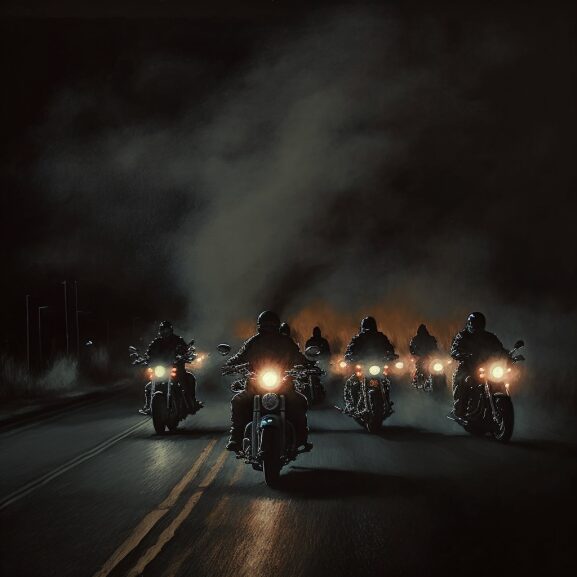
Hello I’m investigative reporter Robert Riggs. In this episode of the True Crime Reporter Podcast I will take you inside the crime scene tape of a deadly war going on the nation’s highways and in bars and biking events in the Southwest.
Riding point is Detective Steve Cook who you just heard. Cook works on the frontlines of this battle.
**Robert Riggs**
Steve, the the Hollywood's version of an outlaw motorcycle gang, of course, the Sons of Anarchy. The separate for me, if you will, the the facts from fiction of what they're really about?
**Steve Cook**
Well, I mean, I think like anything that you see in Hollywood, it's glamorized, you know, they try to turn these guys into antihero type characters. When in reality, you know, these guys are organized crime. They're involved in a multitude of criminal activities. And, you know, so a lot of times the portrayals that we, you know, just the general public get to see are completely inaccurate with the facts for people that actually have to deal with them on a day to day basis.
**Robert Riggs**
Talk, if you will, about how the gang works, how they make money, who gets the money? Who runs the Club? How do you get in the leadership of the club? And how do you how do you become a member?
**Steve Cook**
Well, I guess, to break it down, first and foremost, from a membership side is, you know, you're either recruited, because you know, somebody that's already in, or there are individuals that just kind of come in off the street that, you know, think that they liked the lifestyle, think it's something that they want to pursue. So they will access somebody who's in the group, somewhere in public, whether it's at a bike night or a bar, or what have you, maybe even a dealership. And, you know, they can express their intentions, if you will, to maybe hang around a little bit come around the group. And if that's reciprocated, if they if they're okay with that, then that kind of starts the journey for him. As far as getting up into a leadership, it's extremely political, it's no different than any other organization, whether it be a you know, a law enforcement agency or, you know, a large hospital or what have you, you know, if you want to get into those upper echelon positions, you're gonna have to do a fair amount of politicking occurs in these groups as well. So, you know, in short, as far as financially speaking, I think a big misconception is, is that the gang itself is making money. The purpose for the gang is to enrich the individual members of the organization, through their membership in the organization, and by, you know, that pretty much everybody becomes rich, you know, so, I think for you know, a lot of times people think that oh, there's just this one person, you know, kind of like I'm sitting behind the curtain, and they're reaping all the benefits of this organization, it really doesn't run like that. Now, that's not to say that you don't have guys that get into leadership positions that don't, you know, steal money, embezzle money from from the organization, you know, do things to enrich themselves. But by and large, it's kind of a vehicle for the membership, to commit crimes to be involved in criminal activity, and to have a support system behind you. You got to think about it in these terms. If you're a drug dealer, and somebody rips you off for, you know, a Kia Coke, they're ripping you off. But if you're a member of the Hells Angels, they're ripping off the Hells Angels, at least that's their perception of it. And most people aren't going to go down that road to do that. So it does play a big factor, just having that patch.
**Robert Riggs**
So it's a deterrent to being a drug dealer with a gang behind you, you you don't want that gang coming after you? Well, absolutely, you
**Steve Cook**
know, obviously, drug addicts and people that, you know, buy and sell and use and what have you, they're gonna have some erratic behavior. But even those individuals, by and large know, their limitations. And you know, it's a lot easier to go rip off a nobody than it is to come at these guys try to rip one of them off, and then it turns into a much bigger situation.
**Robert Riggs**
Do the gangs rule by actual violence or the reputation or fear of violence?
**Steve Cook**
Well, I think it's a little bit of both. You know, when they go into an area, they stake their claim. A lot of times, the initial step of that is to try to regulate any existing motorcycle gangs that are in the area, because obviously, you don't want to compete with those people for that territory. So I think, you know, that's a starting point, definitely for it. And then once you get that, that street credibility, that reputation out there, a lot of people are not maybe so anxious to step to you because they know what your capabilities are.
**Robert Riggs**
Well, what are the typical criminal enterprises of gangs in particular, the Bandidos, they've been in the news here in Texas? And then I mean, do they, like a corporation? Do they just literally sit down and split up the proceeds each month, yearly? What?
**Steve Cook**
Well, you know, primarily, especially groups, you know, use the Bandidos, for example, drugs is a big part of what they do. Now, as far as how that works, a lot of times, it can be on an individual chapter level, it could even be in a more regional level, depending on who's dealing with who and what Chapters and, and so forth. Where you have to look at is, is that every member pays dues, whether that's, you know, some groups, they pay them weekly, some pay a monthly, it depends on the organization. But basically, how that works is, is a portion of those dues goes to your national, you know, leadership, if you will, your mother chapter, and they will determine what to do with those funds. And there are a variety of things that can occur with that. They can use it to throw a party, you know, buy food and booze and, and even drugs for some kind of event. Or they could use it for legal defense, and a lot of guys get locked up in a criminal matter of some sort. They can use it to go to war with a rival gang to help support that as far as you know, guns, ammunition bombs, you know, whatever it might be. So, ultimately, yeah, these proceeds of crime do go to the mother chapter or the the hierarchy of the group. And that's why these groups are enterprises. That's why racketeering laws work so well against them, because they do have a rank and file, they have a structure, they have a leadership, they have, you know, bylaws, they have, you know, rules and requirements for membership, a rite of passage, if you will to get in. So that does make them elevated to just a standard street gang, for example, whereas, you know, you might have a Crip member in Dallas, I can bet you money. He doesn't know any crypts in Kansas City or Los Angeles or Minneapolis for that matter. But I can guarantee you if you have a Bandito in Texas, he knows every bandido in Kansas City and And vice versa, because they are a connected, you know, organization they associate with each other they attend events together, they communicate with one another.
**Robert Riggs**
What's our source of drugs? Do they manufacture? Or do they sell at the street level? Are they the middle group and the hierarchy? Well,
**Steve Cook**
I think things have obviously, they've changed over time. I think at one point, you know, you look back into the 60s and 70s, especially, you know, they were definitely, you know, these groups were manufacturing, methamphetamine. But now, because Mexican meth is so plentiful, the quality of it is so much better than it used to be. And the accessibility, there's no point in trying to make your own. That's not to say that you're not going to have the isolated, you know, incident where someone does, but from a purely financial, you know, perspective, it doesn't make sense to try to procure all these precursor chemicals, and go through this elaborate process, which, you know, you could get caught pretty easily. Or you could just go meet somebody who's got a cartel connection and buy from them.
**Robert Riggs**
And are they probably pretty tightly connected to the Mexican cartels?
**Steve Cook**
Well, I think most of these groups, you know, especially if you look at your larger al motorcycle gangs, groups like the, you know, Hells Angels, outlaws, Bandidos, you know, even the pagans, most of those groups, with the exception of the pagans have international presence, you know, both the Hells Angels, well, actually, Hells Angels, Bandidos, and now the outlaws. They all have chapters in Mexico, the angels have chapters in Colombia, in Bogota in Cali. So they use that to make connections with other criminal enterprises. That's a big part of, you know, putting this all together for them is to have people in other countries, other places that have the ability to make introductions, make things happen for him.
**Robert Riggs**
So if they wanted to reach out from Texas to touch somebody in Australia for either violence, drugs, sales, what have you, they can do it?
**Steve Cook**
Absolutely. They can. They've got a tremendous reach, literally in, you know, a majority of the world now, you know, the Bandidos, the Hells Angels, the outlaws, all of them are in Russia, you know. So it's not that these are just groups that have this. And I think that's a perception, a lot of people think that they just have this local presence. They're everywhere.
**Robert Riggs**
Reporter’s Notebook: May 17th, 2015. The Twin Peaks Restaurant. Waco, Texas.
Nearly 200 members of the notorious Bandidos Motorcycle gang crowded inside and outside on a patio among lunchtime patrons.
The Justice Department considers the Bandidos one of the eight most dangerous motorcycle gangs in the U.S due to links to drugs, weapons and human trafficking.
A gang threat assessment by the Texas Department of Public Safety had ranked the Bandidos as a "Tier 2" gang — or the second-most dangerous classification — alongside the Aryan Brotherhood of Texas.
So police were there. They watched from a distance.
Then members of a rival motorcycle gang, The Cossacks arrived. And all hell broke loose.
At 12:24PM gunfire erupted.
Police snipers armed with scoped rifles zeroed in on the bikers who were shooting and put them down.
The gunfire quickly stopped.
When the gunsmoke cleared after just 3 minutes, nine bikers lay dead. 18 others wounded.
The shootout was the deadliest incident in the Waco area since the Branch Davidian Cult in 1993.
Steve Cook says that deadly confrontation at the Twin Peaks continues to fuel a violent territorial war among rival outlaw motorcycle gangs across the Southwest.
**Steve Cook**
there's absolutely a war going on. And I think you can equate all of this back to the Twin Peaks massacre, I guess, as I like to refer to it, and Waco, Texas. And basically, what you had happen at Twin Peaks is the Bandidos historically have controlled Texas that's been their kind of power base. And they had a coalition of clubs that they were, you know, kind of running for lack of better terms, which is pretty common in different states. Some call it coalition, some call it a confederation of clubs, but basically, what it is, in short, is it's a way to keep a thumb on other groups in the state and to maintain some sort of control over what goes on within the motorcycling community in that state. So, in this situation, the Cossacks didn't want to be a member of this coalition. They just were kind of independent wanted to do their own thing. The Bandidos, of course, that wasn't acceptable to him. The Cossacks had also put on a Texas bottom rocker, there's quite a bit of, you know, dispute, if you will, on whether that was authorized or not. Some say that a bandido had given them permission to do it. Others say that they didn't. So, you know, that's kind of up for, you know, speculation, I guess you could say, but the bottom line is, is the Bandidos had had a coalition meeting planned somewhere else that day, I believe in the Dallas area. And they decided to come to Waco and it was intentional. waco was, you know, the Cossacks area. So they came there, and you know, all hell broke loose. And the main reason for that is is the Cossacks weren't afraid of, you know, they stood their ground. There were a lot of unnecessary deaths that occurred. Nine, I believe, when it was all said and done. A lot of people injured. But what really was accomplished out of that, if you want to use that term, is it exploited the Bandidos? It showed others that, hey, you know, maybe these guys aren't as strong as they lead everyone to believe they are in Texas. A lot of groups, you know, around the nation hadn't heard of the Cossacks. They didn't know who these guys were. And they thought, Well, these guys stepped up to them in a big way. Why not? Us? What Why don't we go down there and plant our flag, which is what's happened.
**Robert Riggs**
So suddenly, there was a chink in the armor of the Bandidos and I, but it sounds like this is all about turf, and who controls what part of the state in the sales of drug Other activities?
**Steve Cook**
Yeah, at the end of the day, it's all about turf. And what goes along with turf is controlling certain aspects of crime. You know, and there is a certain, you know, component of it that is just plain and simple, toughest kid on the schoolyard. You know, machismo, you know, who's the baddest kid on the block, you know, we want to be the toughest bike gang around. No, we want to be the toughest bike, you know, and sadly enough, there's a lot of stupid that goes along with that, because you give people fueled with drugs, making irrational decisions. Some of these guys, you know, you specially see this with the angels a lot of steroid use and things like that. So, you get a lot of these guys that they get pumped up. And, you know, they buy into the hype of what this lifestyle is about, and they're willing to go out and kill somebody over a piece of fabric.
**Robert Riggs**
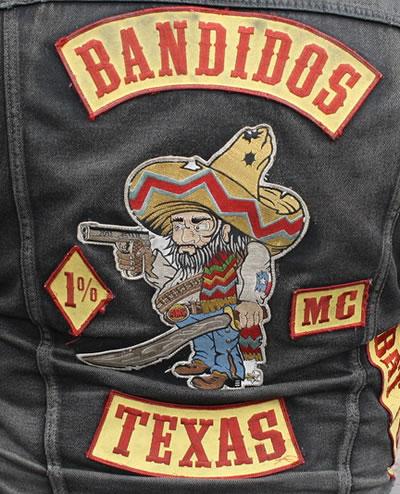
That piece of fabric is the patch, the gang colored insignia with the Bandido name proudly and boldly worn by members to make their presence known.
They ride in large groups and seek to turn public sentiment tp their favor by organizing frequent charity runs.
According to the Bandidos legend, a 36-year old Vietnam War veteran and Houston dockworker started the club in the 1960s.
It adopted the red and gold colors of the U.S. Marine Corps.
The one percenter sign on the patch refers to a saying that was coined in the 1950s by the American Motorcyclist Association (AMA). They were saying that 99% of motorcycle riders are law-abiding, upstanding members of society, but 1% of motorcycle riders are criminals and give the whole group a bad reputation.
This saying was specifically directed at clubs like the Hells Angels, who at the time were seen as being involved in various crimes. The saying was adopted by the clubs themselves, who sometimes call themselves "one-percenters" with pride.
**Robert Riggs**
do what do they always have on the jacket in the patch? So you know, they're amongst you, or often are they in civilian clothes?
**Steve Cook**
Well, if they're on their motorcycle, they should have their patch on that. Pretty standard. But most of these guys, even if they aren't, have something on him because they're proud of who they are, you know, this is a accomplishment, if you will, for them to get into these types of organizations. So they're gonna have a, what we call soft colors, which is a T shirt, with their patch screen pit printed on it, or a belt buckle or a necklace or rings. Definitely tattoos. So you know, if you know what you're looking for, you're going to be able to, you know, pick them out in public.
**Robert Riggs**
So if I walk into a restaurant, I see some of these things, maybe I should pick a different table or a different restaurant.
**Steve Cook**
Well, I, like I say, you know, I don't know that. I personally want to go and sit down at a table next to four or five of these guys, not because I'm worried that they're going to do something, but I don't know who's going to ride by and see their bikes in the parking lot and decide to ambush them when they walk out the door. And, you know, hopefully you're not walking out the door at the same time it happens. But, you know, yeah, it's it's not good for business, it's not good for, and a lot of places know that. And I mean, you'll see a lot of places, you know, I go down to daytona beach a lot for Bike Week. And most of the bars down there have signs, you know, that you can't wear colors, or any kind of support gear inside their establishment because they know what it brings with it. And they don't, you know, they can't afford to lose the business.
**Robert Riggs**
Reporter’s Notebook Saturday April 2nd, 2022. 2PM
Four Banditos and 7 members of the rival Homietos outlaw motorcycle gang, traded insults at a gas station on Main street in Madisonville, Texas.
It’s a small town located between Dallas and Houston on Interstate 45.
The Homietos cranked up their motorcycles and circled back opening fire on the Bandidos in the parking lot.
Bystanders hit the ground for cover as dozens of 9mm bullets ricocheted around them. While there were no serious injuries, at least one round struck a Bandidos motorcycle, and police found a bullet hole in a car parked more than 400 yards away.
Police arrested three members of the Homietos, including the 28-year-old Eric Oberholtzer the gang’s President of its Oklahoma City Chapter.
**Robert Riggs**
Reporter’s Notebook. April 1st, 2023. 11PM Almost exactly a year after Oberholtzer was charged with opening fire on a group of Bandidos in Madisonville, Texas, the Bandidos surrounded the Whiskey Barrel Saloon in Oklahoma City bar where the Homietos hang out.
Oberholtzer and another member of the Homietos traded insults with a group of Bandidos near the patio entrance.
A security camera recorded a Bandidos shooting one of the Homietos twice in the back.
Oberholtzer, leader of the Homietos and member of the rival Bandidos shot it out and killed each other.
When the gunsmoke cleared two Homietos and one Bandido lay dead.
**Robert Riggs**
Reporter’s Notebook: April 14th, 2023 Three Bandidos driving to the funeral of the fellow club member killed two weeks earlier in Oklahoma City are shot dead on Interstate 45.
Two died on the side of the highway near a colossal six story tall white statue of Sam Houston, the first President of the Republic of Texas.
An eyewitness who tried to give first aid said of one victim said, “I've never seen anything like that. His eyes were wide open and empty."
**Robert Riggs**
Well, now we've seen this escalate into, you know, Bandidos being shot off their bike in Huntsville, Texas, on the interstate, you know, which is the home to the prison system in Texas, and then an outbreak in Oklahoma and then New Mexico, what's going on?
**Steve Cook**
Well, I think what's happened is, is you've had a couple of things go on one, the Twin Peaks incident, definitely, but you've also had a lot of disruption within the Bandidos themselves, the, you know, young against the old. You have a lot of the old time Bandidos, many of whom I know, that weren't happy with the trajectory that the group was on. They didn't like how these, you know, a lot of these young members were coming in. gangbangers not really interested in riding their motorcycles they were more interested in party in, you know, in violence, things like that. Some of the older time bandits, they didn't want that they wanted to ride their bikes that, you know, sure they wanted to party a little bit get high. But by and large, you know, it's you know, you guys do your thing, we do ours. And, you know, we'll leave each other alone, you know, we just don't need it. We've, we've, we've lived through it, you know? So you had a lot of guys break away to the kinfolk, which started some immediate violence. From that time you've had several Bandidos and support club members become Mongols in the state of Texas which has created a lot of adversity. And then you've got two other groups the brothers East known as the beast and the homie, homie toes. And both of those groups have, you know, not all but they both have some former Bandidos within those groups. So what you have is you have a lot of hostility, you have a lot of animosity, if you will, and, unfortunately for the Bandidos, you know, now with the pagans, being in the state of Texas, the Bandidos have a lot of issues. They're kind of on an island if you will, within their own home state down there because they're surrounded by people that don't like them
**Robert Riggs**
Reporter’s Notebook: May 28th, 2023, 5PM Memorial Day Weekend
Thousands of motorcycle enthusiasts converged at Red River, New Mexico for the 41st annual motorcycle rally.
A fight broke out and then gun shots between members of the Bandidos and the Waterdogs Motorcycle Club.
It stemmed from a wedding photo posted on Facebook of the Waterdogs president standing with two members of the Mongols Motorcycle club—a hated rival of the Bandidos.
The California based Mongols set up in New Mexico without getting required permission from the Bandidos.
According to the FBI, the Bandidos saw the photo and likely “felt disrespected.”
Two Bandido members were killed along with one of the Waterdogs.
The shootout brought the annual motorcycle rally to a screeching halt.
**Steve Cook**
Yeah, the deal and Red River is complete fiasco? You know, sadly enough, is there are a lot of good people that have went to that event for a lot of years. And now it's done. I don't know that it comes back. From a liability standpoint, how do you allow it to come back. And I think the saddest part of it is, is a lot of the stuff is preventable. But in the law enforcement circles, in a lot of places, this is not deemed a priority, I cannot wrap my head around it, I think a lot of the problem is, is there's a lot of people over the years that have put out a lot of bad information to young cops, and have scared them of these guys. And oh, you know, you shouldn't stop these guys, you can't pull these guys over. Because they're gonna do X, Y, and Z. It's ridiculous. I've been doing this for 30 years, I've stopped hundreds of these guys. I've stopped groups of you know, 10 plus Hells Angels by myself, okay? The job is inherently dangerous. If you didn't know that, you probably should have figured it out before you signed on to do it. So, you know, a lot of these places that you see this activity just running rampant. It shouldn't be happening like this. If law enforcement collectively would, you know, put put a foot down on this, you could probably solve a lot of these issues, prevent them from happening. And a lot of it is just as simple as having a dialogue, being able to talk to these individuals. I spend a lot of my time talking to leadership in different l motorcycle gangs for that very reason. Because we don't want this kind of stuff happening. Not for anybody. I mean, not like how these guys live their lives, and you know what they represent, but I don't want to dead, you know. So a lot of this can be addressed by just sitting down getting at the table with somebody and saying, Hey, guys, knock this off. You know, this is what's going to happen if this continues on and if that's what you guys want, if you want prison. We sell that stuff every day. We can definitely accommodate you. But you know, how about you guys just pick your bar and let them pick their bar and everybody go on about their business?
**Steve Cook**
Yeah, they absolutely are. And they they feed off that, you know, that's, that's built, you know, pumps the ego and, you know, helps them beat their chests a little bit harder of, you know, who they are. And they want that respect. They want that fear. They want people not to try to cross them.
**Robert Riggs**
Well, considering the recent spike in violence, what do you think is next more paybacks coming?
**Steve Cook**
Well, you know, I think the violence is going to keep going until somebody puts a stop to it. You know, and again, a lot of that from a resource side, that's kind of a obligation to the federal government. There are several, you know, federal agencies that have the capability to prosecute these types of crimes. Unfortunately, some of them seem distracted with, you know, political type, you know, issues instead of dealing with street violence and gangs and things like that. So, until that changes, I don't know that it does change. But I can tell you, what you will see is there are a lot of East Coast based bike gangs and international based bike gangs that are planning their flags in the United States. You know, groups like the Finks out of Australia. They're in the United States. They're in Texas, they're in Missouri, Ohio, Pennsylvania that I know of. They're in several states. I think they'd even been in Georgia at one point. So you've got groups like, you know, the dirty ones, the unknown bikers, the thug riders, you know, that are pretty prominent on the East Coast. And they're starting to branch out to the Midwest and out west. So all that's going to do is create more violence and more problems because groups that have traditionally held areas that they consider to be theirs are now going to have to defend that territory.
**Robert Riggs**
and why should the law abiding public be concerned what is there to be concerned about?
**Steve Cook**
Well, I think just like we saw in the Twin Peaks case, though, is it would be one thing if this was just something that these guys hashed out amongst themselves out in a field somewhere but unfortunately, that's not the case. People are being shot off their bikes on interstates killed at bars, different public venues. And anytime something like that happens that you know, obviously opens up the possibility of a stray round hitting an innocent bystander which is something that nobody wants and I'm sure it's not something these groups want either but they are creating the situation where that can occur. So you know, it's one of those things is we're past a point at least in this culture, where people can say well, I don't you know, go to biker bars I don't hang around with these types of guys so this doesn't affect me because these guys are everywhere and they go to the same places you go to they go to restaurants they you know go to Walmart's you know, they go to places that every day citizens you know frequent so it's it's not a situation anymore of avoidance
**Robert Riggs**
In closing, here’s my Reporter’s recap and reflections.
The violence could have stopped 8 years ago after the Twin Peaks shooting. But no one was ever held accountable for the deaths of nine bikers.
The case turned into a prosecutorial fiasco and collapsed.
The leader of the Bandidos blamed the Cossacks and was acquitted of organizing the confrontation.
All charges were dropped against 155 bikers.
No end to the violence is in sight.
You’ve been listening to the True Crime Reporter® Podcast: Stay True. Stay Safe. And Stay Tuned for more stories from inside the crime scene tape.
**Steve Cook**
There's absolutely a war going on. And I think you can equate all of this back to the Twin Peaks massacre, I guess, as I like to refer to it, and Waco, Texas.
**Robert Riggs**
Police Detective Steve Cook has investigated outlaw motorcycle gangs for three decades.
He warns that escalating violence in a turf war between the Bandidos and other motorcycle clubs may spill over on to innocent victims.
Hello I’m investigative reporter Robert Riggs. In this episode of the True Crime Reporter Podcast I will take you inside the crime scene tape of a deadly war going on the nation’s highways and in bars and biking events in the Southwest.
Riding point is Detective Steve Cook who you just heard. Cook works on the frontlines of this battle.
**Robert Riggs**
Steve, the the Hollywood's version of an outlaw motorcycle gang, of course, the Sons of Anarchy. The separate for me, if you will, the the facts from fiction of what they're really about?
**Steve Cook**
Well, I mean, I think like anything that you see in Hollywood, it's glamorized, you know, they try to turn these guys into antihero type characters. When in reality, you know, these guys are organized crime. They're involved in a multitude of criminal activities. And, you know, so a lot of times the portrayals that we, you know, just the general public get to see are completely inaccurate with the facts for people that actually have to deal with them on a day to day basis.
**Robert Riggs**
Talk, if you will, about how the gang works, how they make money, who gets the money? Who runs the Club? How do you get in the leadership of the club? And how do you how do you become a member?
**Steve Cook**
Well, I guess, to break it down, first and foremost, from a membership side is, you know, you're either recruited, because you know, somebody that's already in, or there are individuals that just kind of come in off the street that, you know, think that they liked the lifestyle, think it's something that they want to pursue. So they will access somebody who's in the group, somewhere in public, whether it's at a bike night or a bar, or what have you, maybe even a dealership. And, you know, they can express their intentions, if you will, to maybe hang around a little bit come around the group. And if that's reciprocated, if they if they're okay with that, then that kind of starts the journey for him. As far as getting up into a leadership, it's extremely political, it's no different than any other organization, whether it be a you know, a law enforcement agency or, you know, a large hospital or what have you, you know, if you want to get into those upper echelon positions, you're gonna have to do a fair amount of politicking occurs in these groups as well. So, you know, in short, as far as financially speaking, I think a big misconception is, is that the gang itself is making money. The purpose for the gang is to enrich the individual members of the organization, through their membership in the organization, and by, you know, that pretty much everybody becomes rich, you know, so, I think for you know, a lot of times people think that oh, there's just this one person, you know, kind of like I'm sitting behind the curtain, and they're reaping all the benefits of this organization, it really doesn't run like that. Now, that's not to say that you don't have guys that get into leadership positions that don't, you know, steal money, embezzle money from from the organization, you know, do things to enrich themselves. But by and large, it's kind of a vehicle for the membership, to commit crimes to be involved in criminal activity, and to have a support system behind you. You got to think about it in these terms. If you're a drug dealer, and somebody rips you off for, you know, a Kia Coke, they're ripping you off. But if you're a member of the Hells Angels, they're ripping off the Hells Angels, at least that's their perception of it. And most people aren't going to go down that road to do that. So it does play a big factor, just having that patch.
**Robert Riggs**
So it's a deterrent to being a drug dealer with a gang behind you, you you don't want that gang coming after you? Well, absolutely, you
**Steve Cook**
know, obviously, drug addicts and people that, you know, buy and sell and use and what have you, they're gonna have some erratic behavior. But even those individuals, by and large know, their limitations. And you know, it's a lot easier to go rip off a nobody than it is to come at these guys try to rip one of them off, and then it turns into a much bigger situation.
**Robert Riggs**
Do the gangs rule by actual violence or the reputation or fear of violence?
**Steve Cook**
Well, I think it's a little bit of both. You know, when they go into an area, they stake their claim. A lot of times, the initial step of that is to try to regulate any existing motorcycle gangs that are in the area, because obviously, you don't want to compete with those people for that territory. So I think, you know, that's a starting point, definitely for it. And then once you get that, that street credibility, that reputation out there, a lot of people are not maybe so anxious to step to you because they know what your capabilities are.
**Robert Riggs**
Well, what are the typical criminal enterprises of gangs in particular, the Bandidos, they've been in the news here in Texas? And then I mean, do they, like a corporation? Do they just literally sit down and split up the proceeds each month, yearly? What?
**Steve Cook**
Well, you know, primarily, especially groups, you know, use the Bandidos, for example, drugs is a big part of what they do. Now, as far as how that works, a lot of times, it can be on an individual chapter level, it could even be in a more regional level, depending on who's dealing with who and what Chapters and, and so forth. Where you have to look at is, is that every member pays dues, whether that's, you know, some groups, they pay them weekly, some pay a monthly, it depends on the organization. But basically, how that works is, is a portion of those dues goes to your national, you know, leadership, if you will, your mother chapter, and they will determine what to do with those funds. And there are a variety of things that can occur with that. They can use it to throw a party, you know, buy food and booze and, and even drugs for some kind of event. Or they could use it for legal defense, and a lot of guys get locked up in a criminal matter of some sort. They can use it to go to war with a rival gang to help support that as far as you know, guns, ammunition bombs, you know, whatever it might be. So, ultimately, yeah, these proceeds of crime do go to the mother chapter or the the hierarchy of the group. And that's why these groups are enterprises. That's why racketeering laws work so well against them, because they do have a rank and file, they have a structure, they have a leadership, they have, you know, bylaws, they have, you know, rules and requirements for membership, a rite of passage, if you will to get in. So that does make them elevated to just a standard street gang, for example, whereas, you know, you might have a Crip member in Dallas, I can bet you money. He doesn't know any crypts in Kansas City or Los Angeles or Minneapolis for that matter. But I can guarantee you if you have a Bandito in Texas, he knows every bandido in Kansas City and And vice versa, because they are a connected, you know, organization they associate with each other they attend events together, they communicate with one another.
**Robert Riggs**
What's our source of drugs? Do they manufacture? Or do they sell at the street level? Are they the middle group and the hierarchy? Well,
**Steve Cook**
I think things have obviously, they've changed over time. I think at one point, you know, you look back into the 60s and 70s, especially, you know, they were definitely, you know, these groups were manufacturing, methamphetamine. But now, because Mexican meth is so plentiful, the quality of it is so much better than it used to be. And the accessibility, there's no point in trying to make your own. That's not to say that you're not going to have the isolated, you know, incident where someone does, but from a purely financial, you know, perspective, it doesn't make sense to try to procure all these precursor chemicals, and go through this elaborate process, which, you know, you could get caught pretty easily. Or you could just go meet somebody who's got a cartel connection and buy from them.
**Robert Riggs**
And are they probably pretty tightly connected to the Mexican cartels?
**Steve Cook**
Well, I think most of these groups, you know, especially if you look at your larger al motorcycle gangs, groups like the, you know, Hells Angels, outlaws, Bandidos, you know, even the pagans, most of those groups, with the exception of the pagans have international presence, you know, both the Hells Angels, well, actually, Hells Angels, Bandidos, and now the outlaws. They all have chapters in Mexico, the angels have chapters in Colombia, in Bogota in Cali. So they use that to make connections with other criminal enterprises. That's a big part of, you know, putting this all together for them is to have people in other countries, other places that have the ability to make introductions, make things happen for him.
**Robert Riggs**
So if they wanted to reach out from Texas to touch somebody in Australia for either violence, drugs, sales, what have you, they can do it?
**Steve Cook**
Absolutely. They can. They've got a tremendous reach, literally in, you know, a majority of the world now, you know, the Bandidos, the Hells Angels, the outlaws, all of them are in Russia, you know. So it's not that these are just groups that have this. And I think that's a perception, a lot of people think that they just have this local presence. They're everywhere.
**Robert Riggs**
Reporter’s Notebook: May 17th, 2015. The Twin Peaks Restaurant. Waco, Texas.
Nearly 200 members of the notorious Bandidos Motorcycle gang crowded inside and outside on a patio among lunchtime patrons.
The Justice Department considers the Bandidos one of the eight most dangerous motorcycle gangs in the U.S due to links to drugs, weapons and human trafficking.
A gang threat assessment by the Texas Department of Public Safety had ranked the Bandidos as a "Tier 2" gang — or the second-most dangerous classification — alongside the Aryan Brotherhood of Texas.
So police were there. They watched from a distance.
Then members of a rival motorcycle gang, The Cossacks arrived. And all hell broke loose.
At 12:24PM gunfire erupted.
Police snipers armed with scoped rifles zeroed in on the bikers who were shooting and put them down.
The gunfire quickly stopped.
When the gunsmoke cleared after just 3 minutes, nine bikers lay dead. 18 others wounded.
The shootout was the deadliest incident in the Waco area since the Branch Davidian Cult in 1993.
Steve Cook says that deadly confrontation at the Twin Peaks continues to fuel a violent territorial war among rival outlaw motorcycle gangs across the Southwest.
**Steve Cook**
there's absolutely a war going on. And I think you can equate all of this back to the Twin Peaks massacre, I guess, as I like to refer to it, and Waco, Texas. And basically, what you had happen at Twin Peaks is the Bandidos historically have controlled Texas that's been their kind of power base. And they had a coalition of clubs that they were, you know, kind of running for lack of better terms, which is pretty common in different states. Some call it coalition, some call it a confederation of clubs, but basically, what it is, in short, is it's a way to keep a thumb on other groups in the state and to maintain some sort of control over what goes on within the motorcycling community in that state. So, in this situation, the Cossacks didn't want to be a member of this coalition. They just were kind of independent wanted to do their own thing. The Bandidos, of course, that wasn't acceptable to him. The Cossacks had also put on a Texas bottom rocker, there's quite a bit of, you know, dispute, if you will, on whether that was authorized or not. Some say that a bandido had given them permission to do it. Others say that they didn't. So, you know, that's kind of up for, you know, speculation, I guess you could say, but the bottom line is, is the Bandidos had had a coalition meeting planned somewhere else that day, I believe in the Dallas area. And they decided to come to Waco and it was intentional. waco was, you know, the Cossacks area. So they came there, and you know, all hell broke loose. And the main reason for that is is the Cossacks weren't afraid of, you know, they stood their ground. There were a lot of unnecessary deaths that occurred. Nine, I believe, when it was all said and done. A lot of people injured. But what really was accomplished out of that, if you want to use that term, is it exploited the Bandidos? It showed others that, hey, you know, maybe these guys aren't as strong as they lead everyone to believe they are in Texas. A lot of groups, you know, around the nation hadn't heard of the Cossacks. They didn't know who these guys were. And they thought, Well, these guys stepped up to them in a big way. Why not? Us? What Why don't we go down there and plant our flag, which is what's happened.
**Robert Riggs**
So suddenly, there was a chink in the armor of the Bandidos and I, but it sounds like this is all about turf, and who controls what part of the state in the sales of drug Other activities?
**Steve Cook**
Yeah, at the end of the day, it's all about turf. And what goes along with turf is controlling certain aspects of crime. You know, and there is a certain, you know, component of it that is just plain and simple, toughest kid on the schoolyard. You know, machismo, you know, who's the baddest kid on the block, you know, we want to be the toughest bike gang around. No, we want to be the toughest bike, you know, and sadly enough, there's a lot of stupid that goes along with that, because you give people fueled with drugs, making irrational decisions. Some of these guys, you know, you specially see this with the angels a lot of steroid use and things like that. So, you get a lot of these guys that they get pumped up. And, you know, they buy into the hype of what this lifestyle is about, and they're willing to go out and kill somebody over a piece of fabric.
**Robert Riggs**
That piece of fabric is the patch, the gang colored insignia with the Bandido name proudly and boldly worn by members to make their presence known.
They ride in large groups and seek to turn public sentiment tp their favor by organizing frequent charity runs.
According to the Bandidos legend, a 36-year old Vietnam War veteran and Houston dockworker started the club in the 1960s.
It adopted the red and gold colors of the U.S. Marine Corps.
The one percenter sign on the patch refers to a saying that was coined in the 1950s by the American Motorcyclist Association (AMA). They were saying that 99% of motorcycle riders are law-abiding, upstanding members of society, but 1% of motorcycle riders are criminals and give the whole group a bad reputation.
This saying was specifically directed at clubs like the Hells Angels, who at the time were seen as being involved in various crimes. The saying was adopted by the clubs themselves, who sometimes call themselves "one-percenters" with pride.
**Robert Riggs**
do what do they always have on the jacket in the patch? So you know, they're amongst you, or often are they in civilian clothes?
**Steve Cook**
Well, if they're on their motorcycle, they should have their patch on that. Pretty standard. But most of these guys, even if they aren't, have something on him because they're proud of who they are, you know, this is a accomplishment, if you will, for them to get into these types of organizations. So they're gonna have a, what we call soft colors, which is a T shirt, with their patch screen pit printed on it, or a belt buckle or a necklace or rings. Definitely tattoos. So you know, if you know what you're looking for, you're going to be able to, you know, pick them out in public.
**Robert Riggs**
So if I walk into a restaurant, I see some of these things, maybe I should pick a different table or a different restaurant.
**Steve Cook**
Well, I, like I say, you know, I don't know that. I personally want to go and sit down at a table next to four or five of these guys, not because I'm worried that they're going to do something, but I don't know who's going to ride by and see their bikes in the parking lot and decide to ambush them when they walk out the door. And, you know, hopefully you're not walking out the door at the same time it happens. But, you know, yeah, it's it's not good for business, it's not good for, and a lot of places know that. And I mean, you'll see a lot of places, you know, I go down to daytona beach a lot for Bike Week. And most of the bars down there have signs, you know, that you can't wear colors, or any kind of support gear inside their establishment because they know what it brings with it. And they don't, you know, they can't afford to lose the business.
**Robert Riggs**
Reporter’s Notebook Saturday April 2nd, 2022. 2PM
Four Banditos and 7 members of the rival Homietos outlaw motorcycle gang, traded insults at a gas station on Main street in Madisonville, Texas.
It’s a small town located between Dallas and Houston on Interstate 45.
The Homietos cranked up their motorcycles and circled back opening fire on the Bandidos in the parking lot.
Bystanders hit the ground for cover as dozens of 9mm bullets ricocheted around them. While there were no serious injuries, at least one round struck a Bandidos motorcycle, and police found a bullet hole in a car parked more than 400 yards away.
Police arrested three members of the Homietos, including the 28-year-old Eric Oberholtzer the gang’s President of its Oklahoma City Chapter.
**Robert Riggs**
Reporter’s Notebook. April 1st, 2023. 11PM Almost exactly a year after Oberholtzer was charged with opening fire on a group of Bandidos in Madisonville, Texas, the Bandidos surrounded the Whiskey Barrel Saloon in Oklahoma City bar where the Homietos hang out.
Oberholtzer and another member of the Homietos traded insults with a group of Bandidos near the patio entrance.
A security camera recorded a Bandidos shooting one of the Homietos twice in the back.
Oberholtzer, leader of the Homietos and member of the rival Bandidos shot it out and killed each other.
When the gunsmoke cleared two Homietos and one Bandido lay dead.
**Robert Riggs**
Reporter’s Notebook: April 14th, 2023 Three Bandidos driving to the funeral of the fellow club member killed two weeks earlier in Oklahoma City are shot dead on Interstate 45.
Two died on the side of the highway near a colossal six story tall white statue of Sam Houston, the first President of the Republic of Texas.
An eyewitness who tried to give first aid said of one victim said, “I've never seen anything like that. His eyes were wide open and empty."
**Robert Riggs**
Well, now we've seen this escalate into, you know, Bandidos being shot off their bike in Huntsville, Texas, on the interstate, you know, which is the home to the prison system in Texas, and then an outbreak in Oklahoma and then New Mexico, what's going on?
**Steve Cook**
Well, I think what's happened is, is you've had a couple of things go on one, the Twin Peaks incident, definitely, but you've also had a lot of disruption within the Bandidos themselves, the, you know, young against the old. You have a lot of the old time Bandidos, many of whom I know, that weren't happy with the trajectory that the group was on. They didn't like how these, you know, a lot of these young members were coming in. gangbangers not really interested in riding their motorcycles they were more interested in party in, you know, in violence, things like that. Some of the older time bandits, they didn't want that they wanted to ride their bikes that, you know, sure they wanted to party a little bit get high. But by and large, you know, it's you know, you guys do your thing, we do ours. And, you know, we'll leave each other alone, you know, we just don't need it. We've, we've, we've lived through it, you know? So you had a lot of guys break away to the kinfolk, which started some immediate violence. From that time you've had several Bandidos and support club members become Mongols in the state of Texas which has created a lot of adversity. And then you've got two other groups the brothers East known as the beast and the homie, homie toes. And both of those groups have, you know, not all but they both have some former Bandidos within those groups. So what you have is you have a lot of hostility, you have a lot of animosity, if you will, and, unfortunately for the Bandidos, you know, now with the pagans, being in the state of Texas, the Bandidos have a lot of issues. They're kind of on an island if you will, within their own home state down there because they're surrounded by people that don't like them
**Robert Riggs**
Reporter’s Notebook: May 28th, 2023, 5PM Memorial Day Weekend
Thousands of motorcycle enthusiasts converged at Red River, New Mexico for the 41st annual motorcycle rally.
A fight broke out and then gun shots between members of the Bandidos and the Waterdogs Motorcycle Club.
It stemmed from a wedding photo posted on Facebook of the Waterdogs president standing with two members of the Mongols Motorcycle club—a hated rival of the Bandidos.
The California based Mongols set up in New Mexico without getting required permission from the Bandidos.
According to the FBI, the Bandidos saw the photo and likely “felt disrespected.”
Two Bandido members were killed along with one of the Waterdogs.
The shootout brought the annual motorcycle rally to a screeching halt.
**Steve Cook**
Yeah, the deal and Red River is complete fiasco? You know, sadly enough, is there are a lot of good people that have went to that event for a lot of years. And now it's done. I don't know that it comes back. From a liability standpoint, how do you allow it to come back. And I think the saddest part of it is, is a lot of the stuff is preventable. But in the law enforcement circles, in a lot of places, this is not deemed a priority, I cannot wrap my head around it, I think a lot of the problem is, is there's a lot of people over the years that have put out a lot of bad information to young cops, and have scared them of these guys. And oh, you know, you shouldn't stop these guys, you can't pull these guys over. Because they're gonna do X, Y, and Z. It's ridiculous. I've been doing this for 30 years, I've stopped hundreds of these guys. I've stopped groups of you know, 10 plus Hells Angels by myself, okay? The job is inherently dangerous. If you didn't know that, you probably should have figured it out before you signed on to do it. So, you know, a lot of these places that you see this activity just running rampant. It shouldn't be happening like this. If law enforcement collectively would, you know, put put a foot down on this, you could probably solve a lot of these issues, prevent them from happening. And a lot of it is just as simple as having a dialogue, being able to talk to these individuals. I spend a lot of my time talking to leadership in different l motorcycle gangs for that very reason. Because we don't want this kind of stuff happening. Not for anybody. I mean, not like how these guys live their lives, and you know what they represent, but I don't want to dead, you know. So a lot of this can be addressed by just sitting down getting at the table with somebody and saying, Hey, guys, knock this off. You know, this is what's going to happen if this continues on and if that's what you guys want, if you want prison. We sell that stuff every day. We can definitely accommodate you. But you know, how about you guys just pick your bar and let them pick their bar and everybody go on about their business?
**Steve Cook**
Yeah, they absolutely are. And they they feed off that, you know, that's, that's built, you know, pumps the ego and, you know, helps them beat their chests a little bit harder of, you know, who they are. And they want that respect. They want that fear. They want people not to try to cross them.
**Robert Riggs**
Well, considering the recent spike in violence, what do you think is next more paybacks coming?
**Steve Cook**
Well, you know, I think the violence is going to keep going until somebody puts a stop to it. You know, and again, a lot of that from a resource side, that's kind of a obligation to the federal government. There are several, you know, federal agencies that have the capability to prosecute these types of crimes. Unfortunately, some of them seem distracted with, you know, political type, you know, issues instead of dealing with street violence and gangs and things like that. So, until that changes, I don't know that it does change. But I can tell you, what you will see is there are a lot of East Coast based bike gangs and international based bike gangs that are planning their flags in the United States. You know, groups like the Finks out of Australia. They're in the United States. They're in Texas, they're in Missouri, Ohio, Pennsylvania that I know of. They're in several states. I think they'd even been in Georgia at one point. So you've got groups like, you know, the dirty ones, the unknown bikers, the thug riders, you know, that are pretty prominent on the East Coast. And they're starting to branch out to the Midwest and out west. So all that's going to do is create more violence and more problems because groups that have traditionally held areas that they consider to be theirs are now going to have to defend that territory.
**Robert Riggs**
and why should the law abiding public be concerned what is there to be concerned about?
**Steve Cook**
Well, I think just like we saw in the Twin Peaks case, though, is it would be one thing if this was just something that these guys hashed out amongst themselves out in a field somewhere but unfortunately, that's not the case. People are being shot off their bikes on interstates killed at bars, different public venues. And anytime something like that happens that you know, obviously opens up the possibility of a stray round hitting an innocent bystander which is something that nobody wants and I'm sure it's not something these groups want either but they are creating the situation where that can occur. So you know, it's one of those things is we're past a point at least in this culture, where people can say well, I don't you know, go to biker bars I don't hang around with these types of guys so this doesn't affect me because these guys are everywhere and they go to the same places you go to they go to restaurants they you know go to Walmart's you know, they go to places that every day citizens you know frequent so it's it's not a situation anymore of avoidance
**Robert Riggs**
In closing, here’s my Reporter’s recap and reflections.
The violence could have stopped 8 years ago after the Twin Peaks shooting. But no one was ever held accountable for the deaths of nine bikers.
The case turned into a prosecutorial fiasco and collapsed.
The leader of the Bandidos blamed the Cossacks and was acquitted of organizing the confrontation.
All charges were dropped against 155 bikers.
No end to the violence is in sight.
You’ve been listening to the True Crime Reporter® Podcast: Stay True. Stay Safe. And Stay Tuned for more stories from inside the crime scene tape.