**Mike Cox**
I've never really counted up how many murders I've been involved in, and let me hastily say not as the perpetrator but as the person either writing about the murder or telling the media about the murder.
**Robert Riggs**
Mike Cox has spent a lifetime immersed in blood and ink, straddling the line between horror and history. He began as a police beat newspaper reporter and later became the chief of media relations for the Texas Department of Public Safety (DPS). Now, he's an accomplished author, chronicling the history of the legendary Texas Rangers in a series of books.
Mike Cox started writing about murders as a senior in high school and has covered hundreds since.
I first met Mike while covering the Luby’s Cafeteria mass shooting on October 16, 1991. George Hennard, a 35-year-old man, drove his pickup truck through the front entrance during lunchtime in Killeen, Texas, near what was then known as Fort Hood.
To this day, we don’t know why Hennard chose that crowded Luby’s as the site of his rampage, but the carnage left 23 dead and 27 wounded before he turned the gun on himself. It remains one of the deadliest mass shootings in U.S. history, a tragedy that could have claimed even more lives if not for the swift action of DPS troopers attending a nearby briefing on car thefts.
Amid the chaos, I interviewed Mike during my live televised reports amid hundreds of reporters who had descended on the scene worldwide. Afterward, I wrote a letter to the head of DPS, commending Mike for his professionalism. His timely, accurate updates helped quell the rumors and wild speculation that swirl during a crisis of this magnitude.
In the months that followed, Mike’s interview with me was widely used as an example in corporate crisis communication training on how to handle crisis media relations.
Mike, as well as my veteran friends from journalism, believe that covering a beat, especially the police beat, provides the best training for rookie reporters.
The starting point of this story begins with notorious serial killer Henry Lee Lucas, among the biggest stories of Mike’s career as a journalist and DPS spokesperson.
**Robert Riggs**
In June 1983, Cox was the police beat reporter for the Austin American Statesman. It was a slow news day.
**Mike Cox**
I'm sitting in the police press room and Lieutenant Robert Wiesehan, who at that time was in charge of the homicide detail at at the Austin Police Department. I knew him you know really well, having dealt with him for for years. And the cops would come into the press room and you know hang out and drink coffee and BS and so on. He came in one morning and I was sitting there on about my second or third cup of coffee and he said, hey, yeah I don't think there's any connection to Austin, but it said the the there's a cusy a guy in custody up in North Texas who is supposedly claiming that he had sex with numerous women after killing him and that you know they're looking at him for possibly being a mass murderer.
**Robert Riggs**
Cox called his city desk editor and got permission to fly to Dallas and rent a car.
He drove to Montague County located an an hour and a half northwest of Dallas on the Texas Oklahoma border.
He was about to break the story of a lifetime.
46-year old Henry Lee Lucas, a snaggle-toothed drifter with an off-kilter glass eye made a stunning confession in court.
**Mike Cox**
I went to the courthouse and sat there in the open court while he was being arraigned. And that's when he blurted out. And I still remember it very clearly. What about the other 100 women I've killed? Because he was being charged with having killed an elderly woman there in Montague County.
**Robert Riggs**
Cox broke the front page story about Henry Lee Lucas’s shocking courtroom confession in the following morning’s paper.
His photographer had captured color photos of Lucas being escorted to jail by sheriff’s deputies. It’s called the perp walk when a suspect is paraded in front of the press. Cox was the only reporter from a big city daily present and had the scoop.
The news media converged upon Montague, a quiet rural county founded in 1857 and named after Daniel Montague, a surveyor and soldier from the Mexican–American War.
By morning, the normally sleepy courthouse was buzzing with reporters, and as Mike arrived, news helicopters circled overhead like a swarm of dragonflies, their blades slicing the air in a relentless pursuit of the next headline.
It marked the beginning of a surreal spectacle.
**Mike Cox**
It exploded into a national story. The first explosion was his claim in having killed you know roughly 100 women. And you know that was that was big enough. And then as law enforcement agencies began talking to him, he cheerfully you know confessed to murder after murder. And eventually it just became sort of ludicrous. I mean, know he claimed to have killed more than, at one point he claimed to kill more than 600 people. And then he then he claimed to have killed people, I think in Japan. I mean, he just, you know, he was going nuts. And, you know, law enforcement,
for a large measure was swallowing it, except for the ridiculous things like killing people in Japan.
**Robert Riggs**
After his murder trial in Montague County, Lucas was transferred to the custody of Williamson County Sheriff Jim Boutwell.
Lucas confessed to the murder on an unidentified woman known as “orange socks” there. Her nude body clad only in orange socks had been discovered in a culvert on Interstate 35 north of Austin near Georgetown on Halloween Day 1979.
She had been sexually assaulted, strangled, and thrown into the ditch from an overpass above. Cox conducted a series of exclusive interviews with Lucas inside the Williamson County jail.
**Mike Cox**
Boutwell let me have a standing Tuesday night date with Lucas were same thing He let me in the cell Or at least the runaround right adjacent to his sales. I mean I literally held my tape recorder microphone through the bars to get it close to his face and
and interviewed him at great length about his life.
**Robert Riggs**
Lucas claimed 600 murders dating back to 1960. He bragged of raping, dismembering and eating some of his victims. He said he hanged them, ran them down in cars, burned them, crucified them and filleted them like fish. He even claimed to have provided the cyanide poison for the mass murder-suicide of 900 members of the Jonestown Cult in 1978.
**Robert Riggs**
In 1986, Hugh Aynesworth, a quintessential old school investigative reporter in Dallas, debunked Lucas’s claims by proving his geographic travels made it impossible for him to have been at every single murder scene.
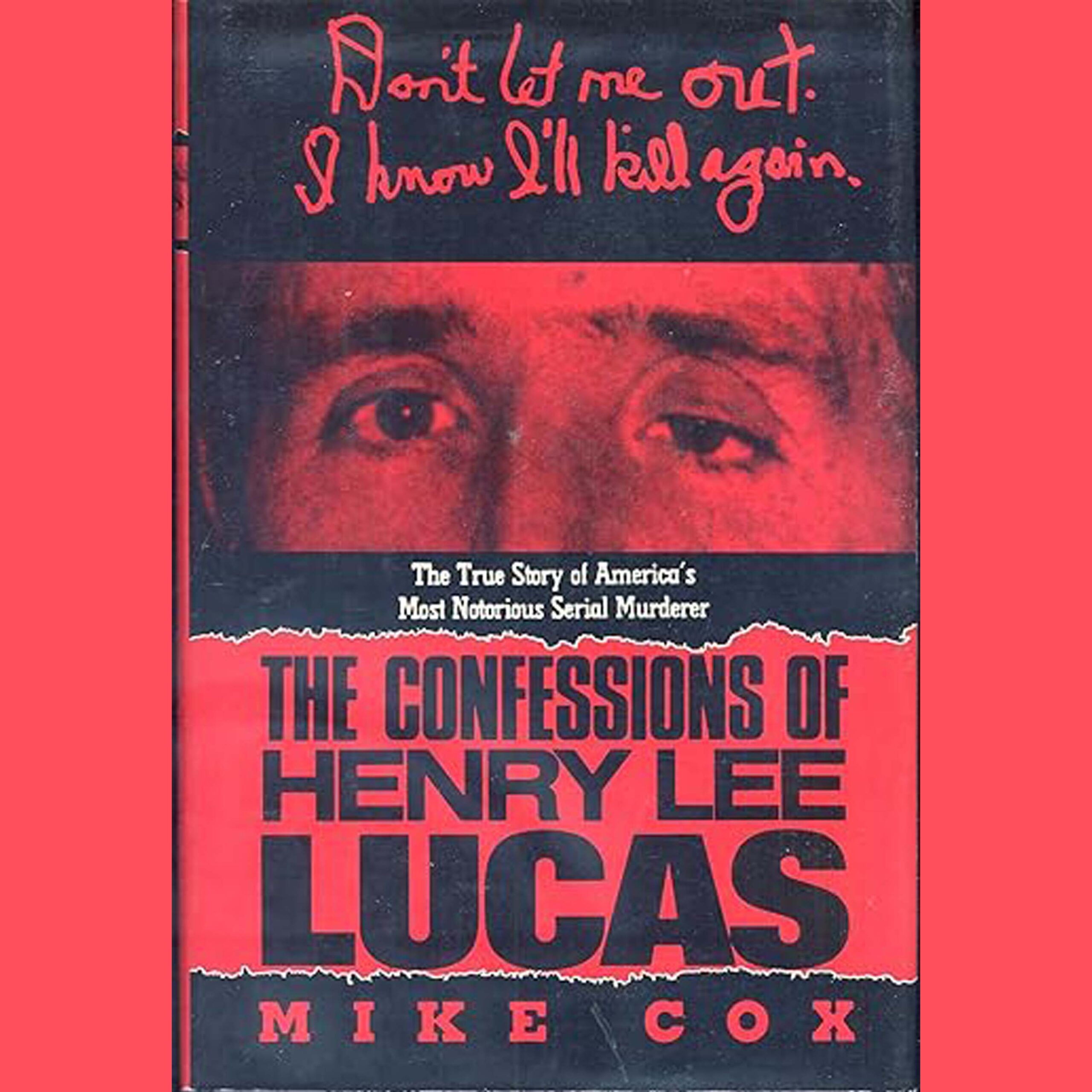
Mike Cox then published “The Confessions of Henry Lee Lucas” in 1991. This was after Cox became the head of Media Relations for the DPS and the Texas Rangers.
**Robert Riggs**
Based on your early conversations with him, how many murders did you think he committed and what did you think when you saw all this other crazy stuff coming out?
**Mike Cox**
I began to realize that that, yes, it was much of it had been just spun out a whole cloth by Lucas. There's absolutely no doubt I traveled to Ohio when I was working on my book. I guess it was Toledo, Ohio, and he had killed his mother, stabbed his mother to death in the early 1950s that was what sent him to prison, I guess the second time he he'd done some time, I think for burglar even before that. But, I mean, I held a knife in my hand that was still in evidence that that he'd used to kill his mother, so there was just really no question about that. I mean, it's, it's, there's plenty of evidence that he killed his mother. And then back in Texas, there's ample evidence that he killed 80-something-year-old Kate rich. That was the murder that he was convicted of in Montague County. And that's what drew me up there when he made his admission in court. And then also, there was plenty of physical evidence to link him to the murder of his young girlfriend.
**Robert Riggs**
Lucas's girlfriend, 15-year-old Becky Powell, lived with him while he worked as a handyman for 82-year-old Kate Rich in Montague County. After an argument with Powell, Lucas brutally stabbed her to death, dismembered her body, and scattered the remains across a field.
Just three weeks later, back in Montague County, Lucas offered 82-year-old Rich a ride to church. Instead, he stabbed the elderly woman and stuffed her body into a drain pipe.
It was during Lucas’s arraignment for Rich’s murder that Mike Cox found himself in the courtroom—just as Lucas stunned the world with his bombshell confession, claiming responsibility for an inconceivable number of murders.
**Robert Riggs**
On serial killers, I'm always asked when I was reporting and now from listeners, why, why, and you know, and is it nature or nurture? What was your sense? So you've, you've covered so many of them.
**Mike Cox**
Well, with Lucas, I traveled to the you know the deep woods of rural West Virginia. I talked to the sheriff in the county where he was raised. And I talked to a few people who'd known him as a as a child. He was horribly abused at home. He was suffered a severe head injury when he was young. He was, his mother was a prostitute and and she would have him watch as she entertained some of her customers in their, in the hubble that they lived in and the mountains of West Virginia. And so I've always said that he was pretty much a manufactured serial killer. early on he ah he got a thrill out of killing animals. i mean he he his his His early life story is pretty much just a checklist with all checks of all the various factors that have been identified by scientists over the years as you know often associated with with serial killers. So he possessed of course to whatever you know wicked genes that his his mother had which must have been considerable and his father was a you know an alcoholic and a double amputee and you know certainly did nothing positive for Lucas and probably abused him too. So, you know, on when one level, you know, you can almost feel sorry for him that probably he would not have turned out like he did had a you know had he not been so abused as a child and also had that head injury, which can play a major role. So I think, I think in in a case of a serial killer, I think it really is, you know, both nature and nurture.
**Robert Riggs**
In 1984, a Texas jury convicted Henry Lee Lucas of capital murder in the case of the victim known as "Orange Socks." Despite the lack of physical evidence linking Lucas to the crime, his confession alone secured the conviction. Of his 11 murder convictions, this was the only one that resulted in a death sentence.
A year later, Lucas recanted his confession, along with hundreds of others. As his fabrications unraveled, they revealed a troubling reality: law enforcement agencies had been more focused on closing unsolved cases than verifying Lucas's far-reaching claims.
Lucas later admitted to a prison spokesperson that he had deliberately misled investigators. "I wanted to make a mockery of law enforcement and did everything I could to discredit the badge," he said.
After spending 13 years on Texas death row, Lucas narrowly avoided execution in 1998 when Governor George W. Bush commuted his sentence to life in prison. Acting on a recommendation from the Texas Board of Pardons and Paroles, Bush noted that work records and a cashed paycheck suggested Lucas may have been in Florida when the "Orange Socks" murder occurred in Texas. However, questions lingered about the authenticity of those documents.
**Robert Riggs**
Decades later, in a breakthrough, the "Orange Socks" victim was identified through her sister’s DNA as 23-year-old Debra Jackson, who had last worked at an assisted living facility northwest of Fort Worth.
Although Lucas’s death sentence was commuted, there was no possibility of his release. In addition to the life term for the "Orange Socks" murder, he was serving six other life sentences and 210 additional years for three other killings. He had been convicted of nine murders in Texas and one in West Virginia.
**Robert Riggs**
During his time at the Ellis prison unit, Lucas took up painting, creating still lifes in oil and watercolor, which he sold to collectors interested in owning art produced by a convicted serial killer.
Lucas passed away quietly in his sleep in March 2001, after years of heart problems and complaints of breathing difficulties before he died. He was 64. "Unlike some of his victims, he had a peaceful passing," said Larry Todd, a spokesman for the Texas prison system.
**Mike Cox**
But what I tell people is that you know anybody who would kill his own mother is not somebody you'd want to go camping out with. And so I believe that he killed more people, but certainly not he. He fell way short of being, as he used to put it, the world's worst mass murderer. I mean, he, that was absolutely not true.
**Robert Riggs**
Cox, a seasoned author with extensive writings on the history of the Texas Rangers, says that some Rangers still firmly believe Lucas was responsible for a significant number of murders.
**Mike Cox**
I've talked to Rangers, you know. Personally who say, he said, I'm telling you, I had him in the car, and he said, Turn left here. Turn right here. Said we had not given him any information as to the location of where the body was found. So, man, it's, to me, it's one of the great, great mysteries of the of 20th century crime anywhere
**Robert Riggs**
Next on True Crime Reporter®. Get ready for a tongue-in-cheek dive into the true crime phenomenon with Mike Cox's latest book, *Getting Away with Murder: Learning from Dateline and Other True Crime Shows.