**Robert Riggs**
Whether walking through a dimly lit parking lot, meeting someone new, or even evaluating the behavior of people close to you, the ability to read people and size them up could mean the difference between safety and danger.
This episode teaches you how to think like an FBI Behavioral Analyst.
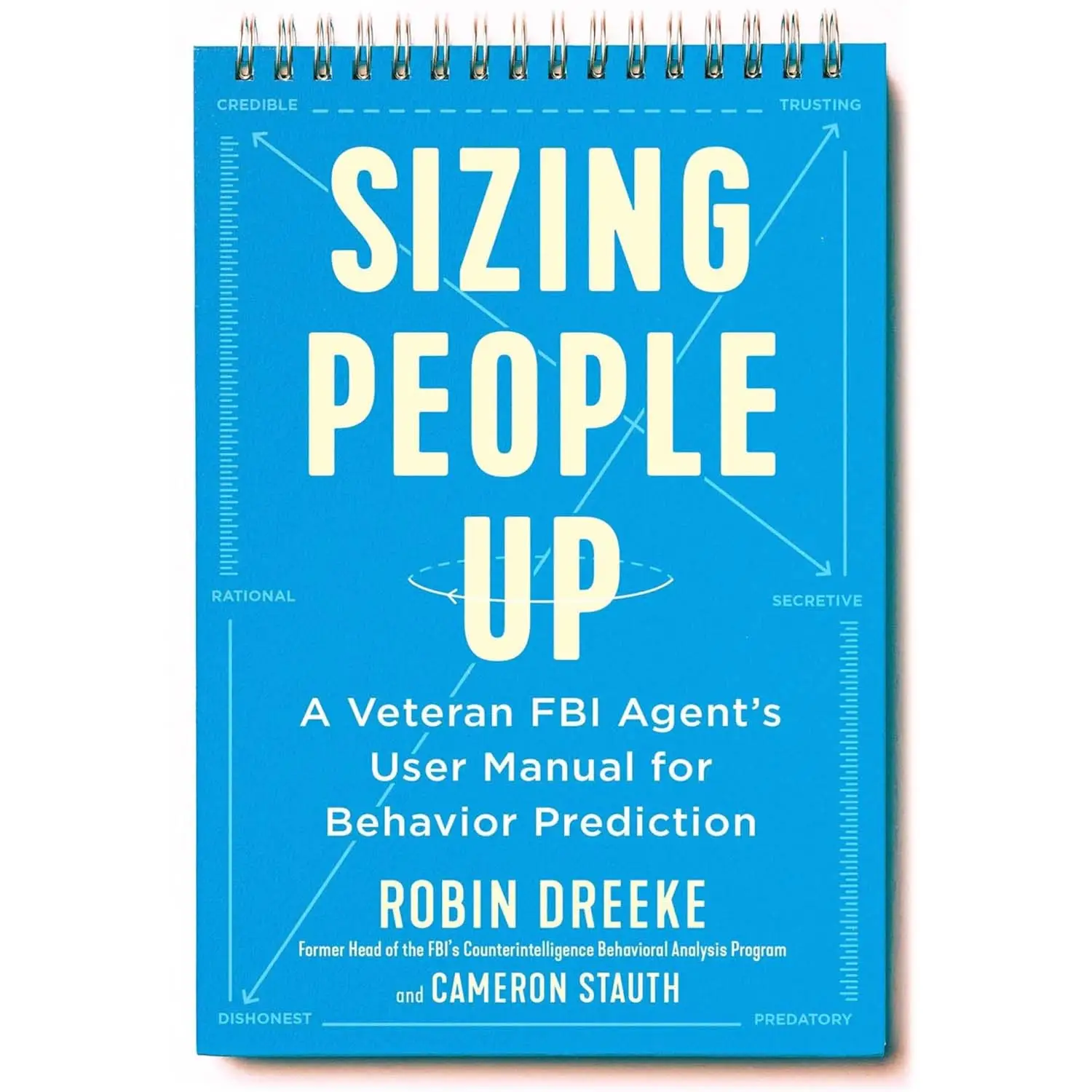
Robin Dreeke, who headed the FBI’s Behavioral Analysis Program, joins me to discuss his framework for predicting human behavior.
Dreeke wrote the book, “Sizing People Up”, based on his years in counterespionage.
His unit was part of the Behavioral Analysis Unit that focuses on violent crime—popularly known as the serial killer unit.
Now, in private consulting, Dreeke teaches how anyone can learn to predict what others will do in the most important situations.
Robin Dreeke is here to help keep you safe in public and online by learning to read people.
**Robin Dreeke**
Trust is really the bedrock of everything we do as a species and as a human being, because without trust, we don't do anything. You know, because human beings are genetically and biologically, coded to want to be safe, and trust is the bedrock of feeling safe, and so we're seeking it, we want it, and we're afraid we won't have it. And that's actually when that trust and that feeling of safety is betrayed, is when you know peril comes our way.
**Robert Riggs**
Few things in life are more important than knowing who to trust. As Dreeke says, many people hide the whole truth for dark reasons–such as greed, manipulation, power, control, and deception.
I spent my career as an investigative reporter exposing politicians who betrayed the public trust.
During his work with the FBI, Dreeke developed six signs for behavior prediction applicable to relationships in your personal life, work, business, and safety in any setting.
#1 Vesting: Does this person believe they will benefit from your success?
#2 Longevity; Does this person think they will have a long-term relationship with you.
#3 Reliability: Can this person do what they say they will? And will they?
#4 Actions: Does this person consistently demonstrate patterns of positive behavior?
#5 Language: Does this person know how to communicate in a positive way? Or do they talk trash?
#6 Stability: Does this person consistently demonstrate emotional security, self-awareness, and social skills?
**Robin Dreeke**
So action and language are they work together for me, and in the sense that I think the best indicator of whether you're dealing with a situation that is going to be safe or unsafe, trusting or untrusting, is, do we are engaging a human being as congruence in their words, actions and deeds. Because when people are congruent in the things they're saying, so that's language. In other words, they're making it about us, and when someone's making it about us, here's the language they're using. They're framing their content. They're packaging the things that you want to say around us by seeking our thoughts and opinions instead of sharing theirs. They're talking in terms of our challenges, our priorities, our pain points and our friction points in life. Instead of lamenting about theirs, they're validating us our thoughts and opinions, non judgmentally and being curious about us. And ultimately, they're empowering us with choices about how to move forward if they're comfortable with us. And so those are the four keys of the language that I'm looking for, and then at the same time, I'm looking for congruence of their actions. Other words, is there non verbals, which is part of their actions congruent with that behavior? In other words, what I'm looking for is, I'm looking for their tempo and pace. They're accommodating non verbals of smiling, little bit of head tilt, ventral displays up and out with high levels of comfort matching our tempo, or even maybe going a little bit slower rather than pressing tempo. So I'm looking for a congruence of language as well as our tempo and actions coming together to give us a sense of calmness about them and peace. And then if, for some reason, we happen to have a question about something they said, something they do, or maybe an incongruence that gives us some pause. If we're seeking clarity and transparency, they should be able to give it like this. In other words, they should be able to maintain their tempo of sharing in openness and accommodating at that same tempo. If all sudden there's a pause or there's a drawback, well, then there's someone who's actually trying to hide something. There's lack of transparency. So then that's when we should take a pause.
**Robert Riggs**
Dreeke explains how to protect yourself from stranger-on-stranger crimes.
**Robin Dreeke**
You and I have talked a few times, Robert and in situations where you are engaging in a world where there's a lot of unknown individuals maybe around you, we as a species like all like all species on this planet, are baselining what normal looks like around us, and that's why, when we see something that spikes out of normal, we'll get like, you know, like that little uncomfortable feeling, or that creepy feeling. Well, when we get a creepy feeling or uncomfortable feeling, what we're seeing is subconsciously sometimes, with those that are even hyper aware, are very conscious about it, we're seeing a deviation from what the normal environment looks like. You know, a great example is number of years ago, at the Ariana Grande concert in the UK, where there's that bombing and a lot of people died. And what happened was a security officer noticed something that was standing out from the normal as an individual, the way he was dressed, what he was carrying and what. He was doing stood out from the normal crowd. There's a deviation from the baseline of what normal. But he's afraid to take action. He's afraid to reciprocity, afraid that he get approvals and all these things. But he saw something was wrong, something was different. And we do this all the time as human beings. So when you go to a mall, or you go to a strip mall, you know, or grocery store, or the Walmart, or wherever you know, we take that second, take that pause just to say and observe everything. Don't try to see something, because if you're looking for something, you'll typically find, if you're looking for someone who looks odd, you'll find someone who looks odd. But what you're doing is you're taking in an environmental tempo, because the world has a certain tempo about how it moves, how it interacts, how it flows. And people that are not trying to do harm to others are flowing with the normal flow. People that are on a mission to do something different, not necessarily do something of harm, but mission to do something different, have a different tempo. And here's what I mean. So say you go to a Walmart, people that are generally browsing in to go shopping for whatever it is they want to pick up. They go in, they're walking the same pace. When they walk in, they walk around the aisles to walk at the same pace. Go to the checkout, same pace. Maybe someone who goes in, they're a little angry because they're making a return something they bought just doesn't fit. So instead of browsing on their way in, picking up a shopping cart going down one aisle then the other, these people are walking in with a mission. Well, that's going to stand out to you. Now, we can often guess improperly what's causing that deviation from a baseline, but something standing out. So we want to take that second and pause and kind of assess, and then we can kind of assess what they're doing, what they're carrying and those types of things. So people then might be going into Walmart to do some harm. They're also going to stand out. They're in there for a different reason. So they're going to be they're non verbals, and all their aura around them is going to be deviating from what all the other people are they're doing because they're there to do something different.
**Robert Riggs**
I've talked to many crime victims, though, that they didn't trust their instincts, yeah. What is it about human nature that? Oh, it's not what I'm feeling here, or maybe you don't want to believe it.
**Robin Dreeke**
I think what happens with people sometimes that they don't trust their instincts is they've made a wrong guess, and if they made a wrong guess in the past, it makes them leery of of guessing again. What I mean by that is, when we pick up that that hair in the back of our neck, or we get that feeling because we observe something, what happens is, is we'll try to guess at what's causing it? Because we did see something that was off. And then if we guess so, this grand example from Walmart's a perfect one. So say you saw someone come in like I said, that was different from the normal flow of everyone else, and the first time you guessed maybe they're there to do a shooting. It's gonna be a mass shooting. So you go to the Walmart manager and you reported over to a security guard or something. I'll say I saw someone come in. I think they're going to do something, do some harm, and they and then the management or the security that investigates it, they're just returning a package. Oh, so then you second guess yourself. I'm an idiot. I must be crazy, and so you're afraid to do it again, because you guessed wrong. You saw something right, because your instinct was right. You saw someone deviating, but you made a guess. Instead of saying, hey, let's assess this. Let's take in some data, and let me present it in a different way. Let me present it a more open way. And you can say, listen, here's the person I saw come in. I'm not quite sure what's going on, but something is different. Maybe it might be something you might want to look at and explore a little bit differently. So that's how you can do it.
**Robert Riggs**
And you counsel very simply, stop, pause, observe?
**Robin Dreeke**
Yeah, it's really a simple thing in life. We We get so wrapped up in tempo, and we get so wrapped up in paying attention to a cell phone or in our own small tunnel world that we don't take that second to pause without an agenda, and just observe, just see the world as it is, and just take a note of it. Take a mental picture of it. And that way, when you return, you know, say you're leaving your house. A lot of times, law enforcement, when something, a crime happens in area like I remember, there was an escaped convict in Pennsylvania about a year or two ago. His name was Cavalcante. And while Cavalcante escaped the the Pennsylvania State Police rightfully put out a an alert to the local residents in the prison there you escaped from, and said, Be vigilant. And so I go on news, and they're asking so Robin, you know, people are told to be vigilant, what should they do? And I was like, well, let's define what vigilant actually should look like for an individual, and it's just what you said. It's stop, pause and observe. And so I said, Here's what vigilant can mean and should mean for you. So here's the residents of the area. They're told to be vigilant, but they don't know what to do. They're going to. Look for the bad guy. No, it's much easier when you walk out of your house and you're about to go to school, about to go to work, or wherever it is. When you walk out that front door, stop, take a pause, freeing of agenda, not anything. Just take a pause. Look from your left, as far left as you can, and then just look. Don't try to see something. Just look at your place. Look at your place. Look at your house, look at your surroundings. Get a sense and a feel for things, how things look, how things smell, the air, everything. And then just go, then get in your car, go about your day. Now, when you return home and get out of that car, you do the same thing. And if something feels a little bit different, you're picking up on something. It's the spider senses, the tremor in the force then, then that's when we take that pause. We assess, what do I see that's different? There you go.
**Robert Riggs**
And you know, I've seen cases in my own neighborhood where there has been a there have been parking lot robberies at grocery stores. Yet in the at night, I'll see people walking from their car into the grocery store or back looking at their cell phone. (note edit)
**Robin Dreeke**
What you're doing is, in situations like this, you're making it easier to be chosen by a predator. Because what's happening is predators are, you know, just think about a wolf or a bear in the wild. They're not going to go for an animal that they want to eat and consume, that's going to be hard kill on them, that's going to wound them, that's going to make it difficult for them. They're going to go for an a wounded animal, an animal that's going to make it look like it's easier to take them down and eat them. Well, the same thing every predator in a parking lot or in a mall or anywhere else in life is they're going to go for someone that is that makes it look it's going to be easier and safer for them to not get hurt and not have reciprocity against them for the horrible things are going to that's why you have school shootings and as opposed to scooting shootings at a at a place that's not a school, I mean, so bad guys that want to do harm are going to go for a target that they perceive as an easier target so they can get away with what it is they want to get away with, without any reciprocity back against them.
**Robert Riggs**
When former FBI Special Agent Robin Dreeke assesses a crime scene, he first looks for a connection between the victim and the perpetrator.
Statistics reveal that individuals are more often victims of violent crimes committed by acquaintances or family members than by strangers.
The FBI’s Uniform Crime Reporting Program found that in 2017, 28.0% of homicide victims were killed by someone they knew (excluding family members), 12.3% by family members, and 9.7% by strangers. In 50% of cases, the relationship between the victim and perpetrator was unknown.
**Robert Riggs**
A Justice Department Bureau reported that between 1982 and 1984, 54% of violent crimes—including rape, robbery, and assault—were committed by someone known to the victim, while 46% were perpetrated by strangers.
Similarly, a University of Glasgow study found that the majority of rape and sexual assault survivors knew their attacker, reinforcing the reality that such crimes are more likely to be committed by someone within the victim’s social circle rather than a stranger.
**Robert Riggs**
Well, as you know, most crime in America occurs in relationships or between people who know each other is this, then where really your predictors of behavior can come into play, and how you ought to be thinking about these relationships and the signs you should be looking for?
**Robin Dreeke**
Yeah, 100% you know, the stats. Stats don't lie. You know, anytime we're doing any kind of assessment on any kind of crime, or true crime, or something we're covering on the news, the first thing if someone will say, well, it was just a random shooting or random killing, the probability is almost zero. It's very low probability. There generally is always some sort of connection between the perpetrator and the victim, and so the first thing you want to look at is the relationships in that person's life, because they're 99% of the time, or actually, I think it's like 95% of time, there's some sort of connection, and there's an escalation, you know, as James clear talks about in his great book atomic habits, people don't go from zero to 100 In behaviors. There's an arc, an escalation of unhealthy behavior and unhealthy behavior that starts going into more violent behavior or angry behavior. And it's not that all angry, violent people are going to kill someone, but healthy people don't. And so we want to start looking those behavior arcs of unhealthy behavior, of unreasonable behavior, especially when rage starts coming in there uncontrollable rage outbursts. That's generally a recipe for really bad things happening.
**Robert Riggs**
In your book, “Sizing People Up,” you know, one thing you talk about is that you've got to analyze the most predictive data points of people's behavior. Do you start with actions?
**Robin Dreeke**
Yeah, I like actions because past patterns, I talk about this in the book and in life in general, when we especially when we were assessing for safety. You know, past patterns of key behaviors are good predictors of future ones. And it's not that you're going to do something the same way today and tomorrow as you did yesterday. No, you're going to do it a little bit differently, but it's going to follow an arc. What I mean by arc is and it's why you know serial killers. Serial killers are on arcs. And a generally predictable arc is someone that's a troubled younger kid that starts, you know, having problems in school, having problems with parents, having having maybe. Mental health issues, but mental health is always not a thing with serial killers, but there's something a little off in their behavior, and then it's going to escalate into experimentation with animals. Animal Cruelty and serial killers tend to go hand in hand in early teenage years, and then the first time a serial killer might start that that first arc into doing violence against another human generally happens in the 20s and then so it keeps escalating, so the learning behavior keeps on that arc with the serial killers, same thing with everyone. So you're going to follow these predictors of human behavior, and they're pretty tragic, but they start, they generally start pretty early.
**Robert Riggs**
Dreeke describes the negative behaviors you should look out for in a relationship. He calls them the negative tells of trust.
**Robin Dreeke**
The behaviors of trust, and these are going to be the anti behaviors of trust. So the behaviors of trust are plain and simple, open, honest communication, transparency and vulnerability. And what I mean by vulnerability is someone who's willing to own up to the mistakes they've made. And here's what I'm going to do to make it better tomorrow. It better tomorrow, transparency and openness. So if someone doesn't feel safe with you, the person that is going to inspire trust is one that's going to do all they can to allow you to feel safe with them by openness and transparency. So the negative tells are those people that are hiding things using a lot of sub, diffuse deception, wordsmithing or bridging around actually answering questions that are asked, not answering questions that are actually asked. And so sub, diffuse shifting of tempo paces a lot of times, are big keys to me, if someone's pushing a tempo that you're not comfortable with using any sort of psychological manipulation or coercion to they'll use shame against you. That is a huge tell, I think, where someone's shaming you into doing something or into an action, and they didn't use shame as an escalation, like sexual predators that are grooming someone, they'll start using shame. They'll get you to do a little something that might be perceived by the individual as something they might not necessarily do. And then once they get them do a little thing, then they'll shame them into doing more and more and more. So I'm looking for those behaviors well,
**Robert Riggs**
And those the behaviors you describe. Boy, they seem to be in play in our age of information on the internet, yeah, with deceit, manipulation? Is it the same, same type of?
**Robin Dreeke**
Yeah. So everything on the internet's the same as in real life. It's just a little more prevalent allure, a lot more prevalent on the internet, because there's such a sense of anonymity and courage people have when they don't have to look someone in the eye to be such an ass, the easiest way to put it. So there's a lot more online bullying. And, you know, just conjecture. I haven't seen any studies on this, but, but just my conjecture on this, because people tend to feel a little more freer with their negative rhetoric, because there's less of reciprocity of doing it, in fate, in in person, the reps they get, in the comfort they have of being a toxic individual might be a little more on the rise, because they can be so toxic online, and the damage they do so and think about this too, the damage someone can do to an individual by negative toxic relation rhetoric online is just as damaging as it is in person. And so I think the effect on society has been really detrimental.
**Robert Riggs**
Well, the various scams that used to be on the street that are online now, there are so many people that fall for them. Are we just, in some respects, too trusting, or we don't look at the trademark behaviors for trust?
**Robin Dreeke**
Both? Again, I'm definitely don't want to victim blame, because these perpetrators or manipulators and her and negative bad actor social engineers are using trust as a weapon against you, okay? And so they're using relationships that you're going to trust to manipulate you. And a typical one is, you know, you have a relative that all of a sudden you get an email says they they've traveled, they've lost their wallet. And can you please help me, um, get home, or, Hey, I lost my I can't find my Amazon accounts. If you can just buy this gift for me. I'm trying to send it to our friends, so and so. So they're going to use relationships that are established in your life fraudulently to get you to take actions. And because they're using a couple, you know, as Robert Cialdini talks about in his book, influence, they're going to use a couple levers of influence against you. That is in our human nature to want to do sympathy is a great trait that we have as a human being, as a species, to render assistance of those people in need, because we're genetically in biological. Coded to it. And when you do that, they're going to use that lever of influence, of sympathy and assistance, and then they're going to use a trusting relationship that you've already established in your life to leverage you to take an action it's not in your best interest. And so it's very tough to do those things and not be called out. But I'll add here. Here's how you can recognize it. In general, I haven't seen an instance yet where the behavior that they're that these negative perpetrators are trying to do is congruent with the behavior of the person that they're trying to portray. In other words, like my great example this, my mother-in-law was just the subject of one of these things, one of these negative things where my mother-in-law from, so the so the bad actor hijacked my mother-in-law's email account and then sent an email out to all her her network, asking for help to buy something on Amazon for a friend. And so some people are susceptible this because they know my mother-in-law, they know she's a good person. They want to help her. But the other people, the skeptical people like me that see behavior arcs, that's why I understand someone's behavior arc of what their normal behavior is, says that's a really unusual behavior that she's never, ever done before. It's a spike. She has never sent this type of email out before, even though it might even sound like her, that's a behavior spike. Let's double check through another communication method to say, Hey, did you actually send this out? Because this seems out of the ordinary for you. That's what people aren't doing enough of.
**Robert Riggs**
You know the the big scam online are the romance scams that take advantage of lonely people. But the big part of is what you mentioned earlier, sympathy. They'll say something bad has happened there in some sort of problem, and they go for your sympathy.
**Robin Dreeke**
Yeah, it's unfortunate, but and true. And I mean, I get these on my I mean, who doesn't get these on their cell phones all the time. I get spam all the time from people trying to use sympathy against me. But again, unfortunately, we're in an age where skepticism, healthy skepticism, is really important. Matter of fact, that's why, you know, it's funny just, you know, popped in my mind. You know, the whole point of the book is trust but verify. I'm very I am a very positive glass half full. I start with trust, and then you can lose a kind of guy. But same time, though, I I'm seeking, if there's a question, because there's a deviation from what I'm normally seeing, from not just people I know in my life, but generally, a population in general. I'm going to seek transparency. I'm going to seek that kind of communication, and if I don't get it and verify through another means, I'm not going to do it.
**Robert Riggs**
You know, I covered President Reagan's White House and his negotiations with the Russians on the strategic arms limitation, and it was the first time I ever heard trust by verify, but verify in Latin from President Reagan. That was a big part of how he conducted his negotiations.
**Robin Dreeke**
There you go. Reagan, trust but verify.
**Robert Riggs**
Robin Dreeke’s method for assessing trustworthiness was forged in the high-stakes world of FBI counterespionage against Russia, where reading people correctly meant the difference between success and failure for national security.
From the parking lot to the internet, deception is everywhere. But by understanding the behavioral patterns Robin Dreeke outlines, we can sharpen our instincts and protect ourselves from those who wish to exploit our trust.
In my next episode, we go even deeper, applying his principles to real-life criminal cases.
You’ll learn to think like an FBI behavioral analyst to protect yourself and those you love.
As Robin says, before stepping into any new situation: Stop. Pause. Observe.
And that’s the new watchword for my newsletter, Stories To Keep You Safe.
Stop. Pause. Observe