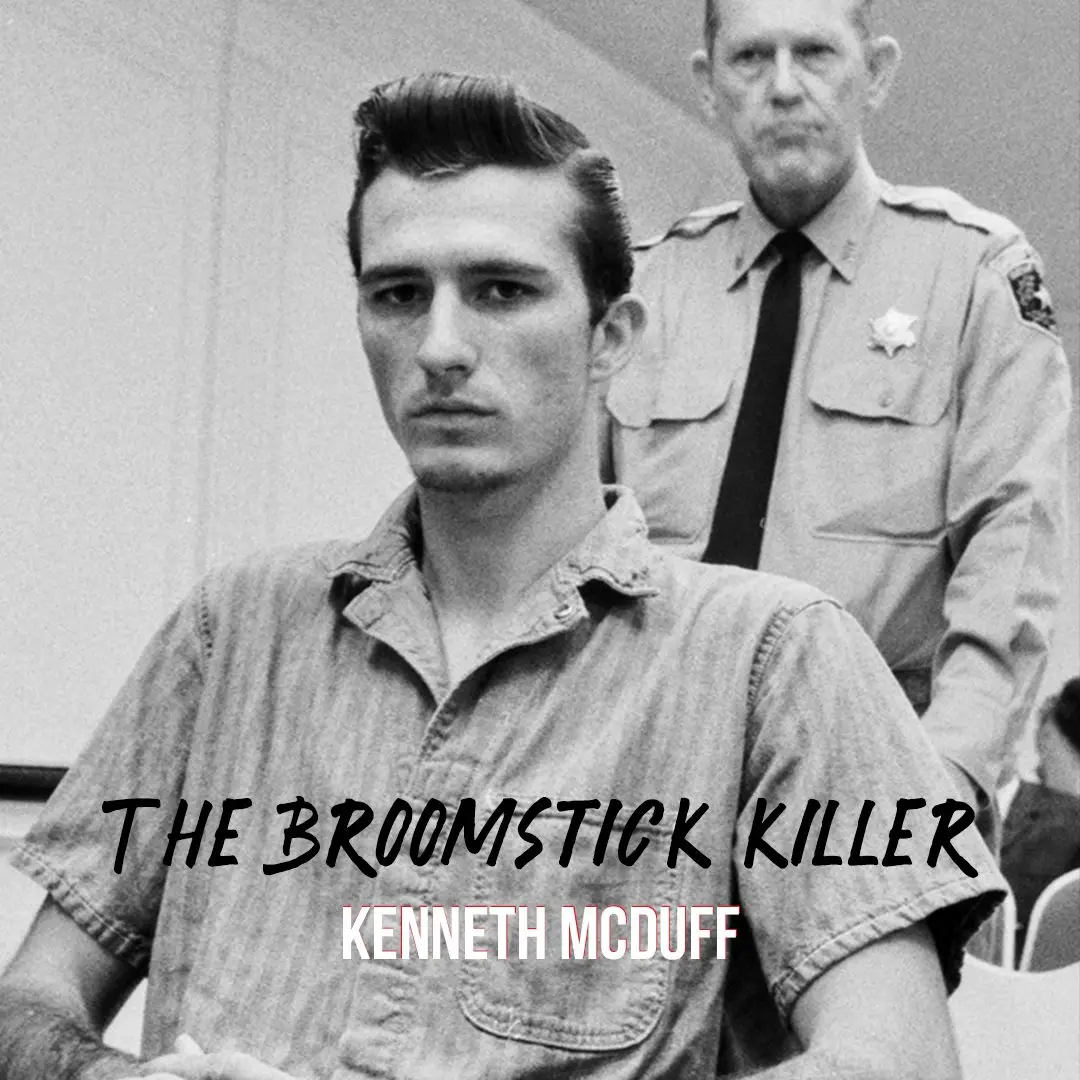
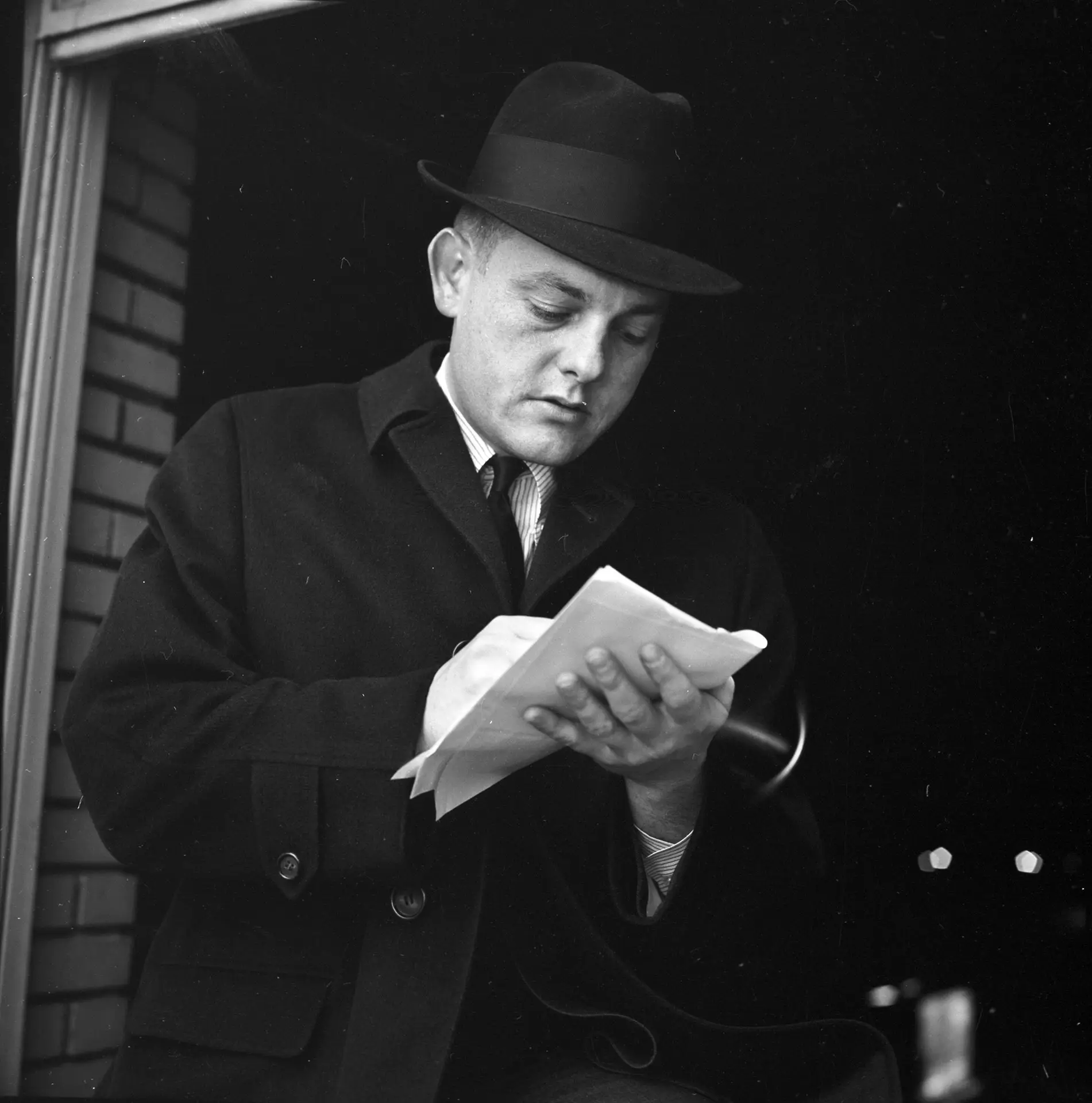
Retired CBS News Anchor Bob Schieffer was the first reporter to interview Kenneth McDuff and cover his crimes in 1966.
Back then Schieffer was the police beat reporter for the Fort Worth Star-Telegram.
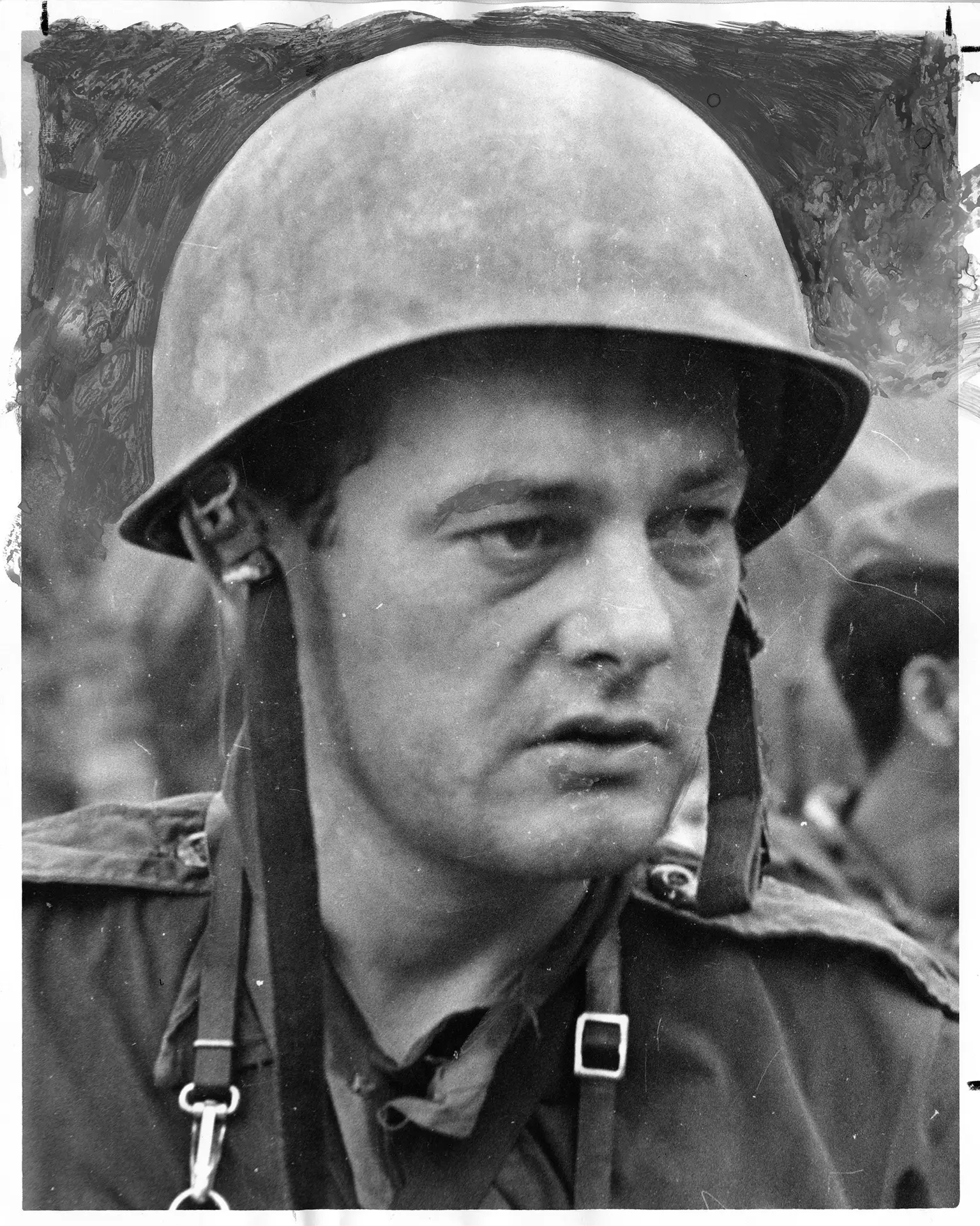
Schieffer had just returned from a combat assignment covering the Vietnam War when the call came in from homicide detectives.
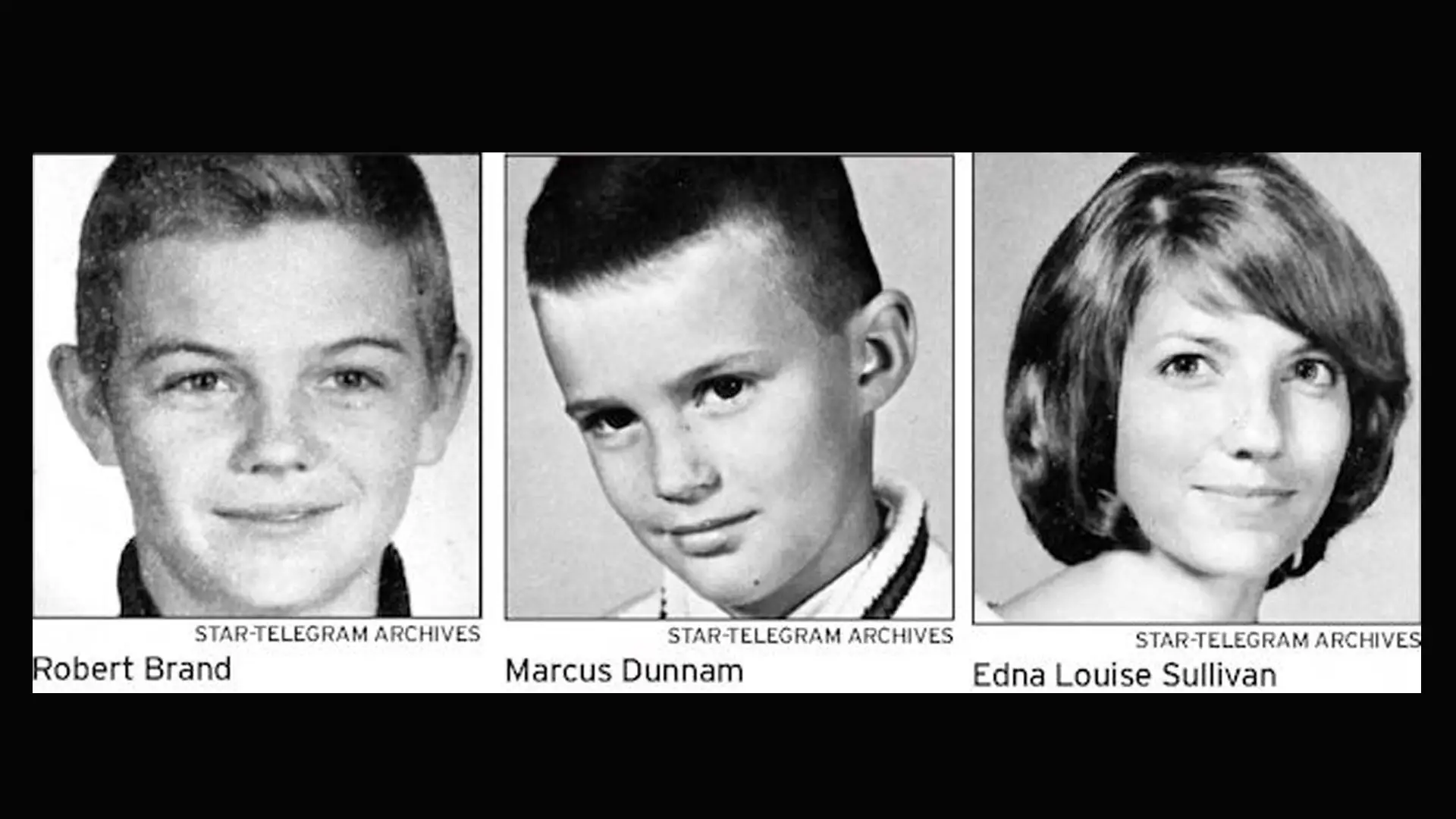
The bullet-riddled bodies of 17-year old Robert Brand and his cousin 16-year-old Mark Dunnam had been found in the trunk of their abandoned car on a remote farm road south of Fort Worth, Texas.
Sixteen-year-old Edna Louise Sullivan who had been out with the boys was missing.
Hundreds of law enforcement officers and local residents started a widespread search of rough terrain.
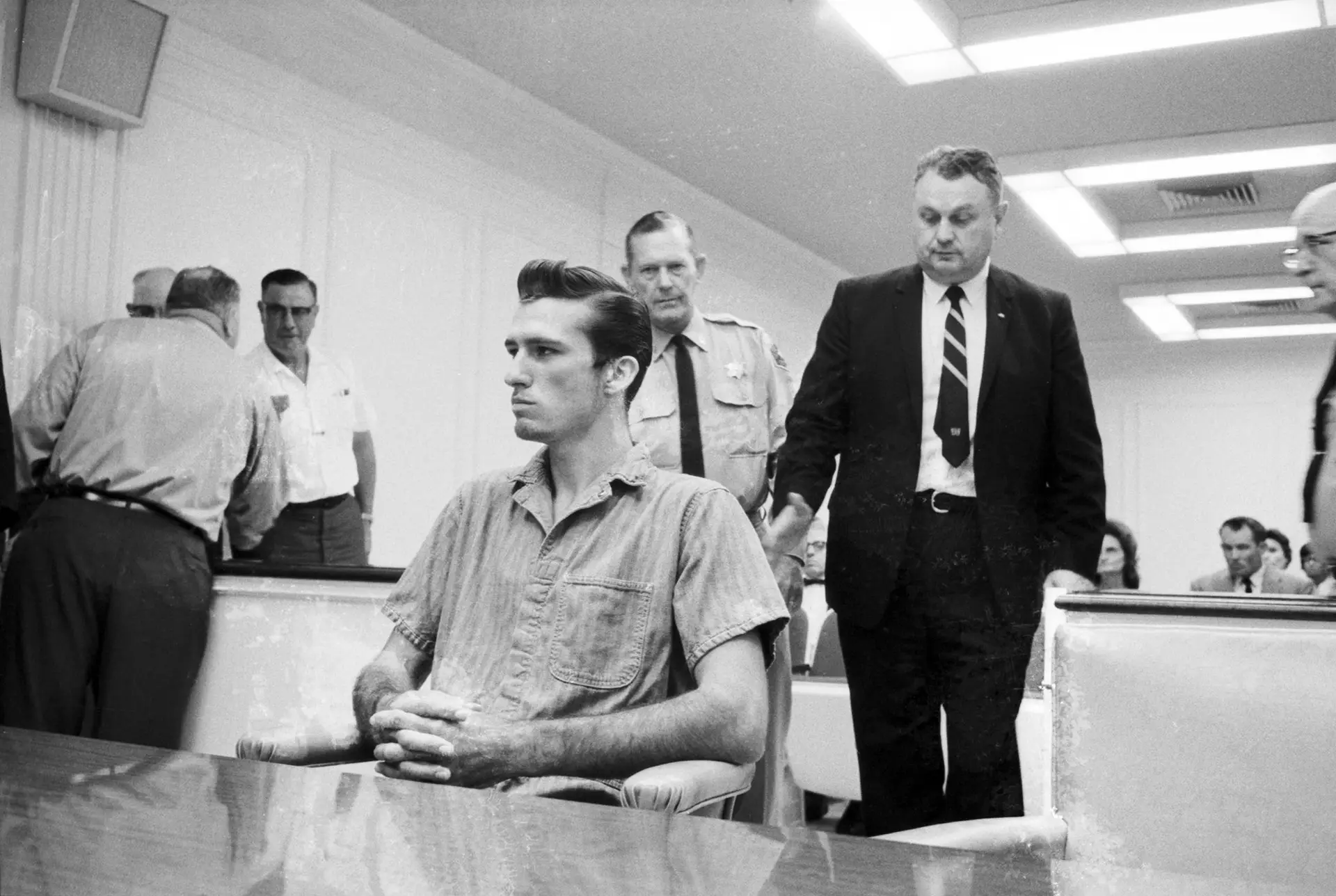
The triple slaying would bring Schieffer face to face in exclusive interviews with 20-year old Kenneth McDuff who became known as the “Broomstick Killer” and his accomplice 18-year old Roy Dale Green.
Investigative reporter Robert Riggs would follow Schieffer's lead 27-years later.
Their journalism careers came full circle.
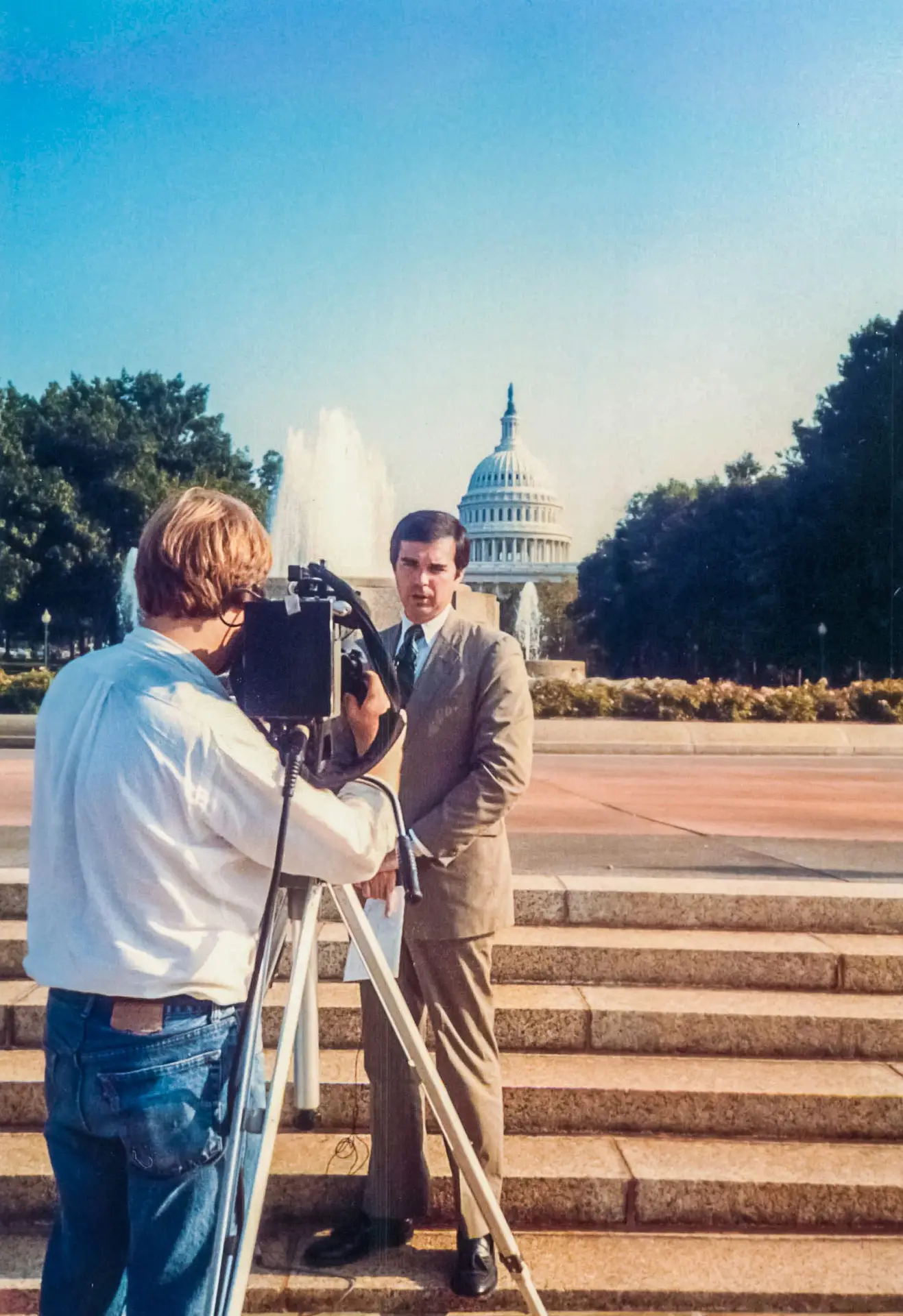
In 1978, Schieffer helped Riggs move from the staff of a congressional committee to television news.
Both reporters covered wars for CBS during their careers but never witnessed brutality like serial killer Kenneth McDuff inflicted on young women.
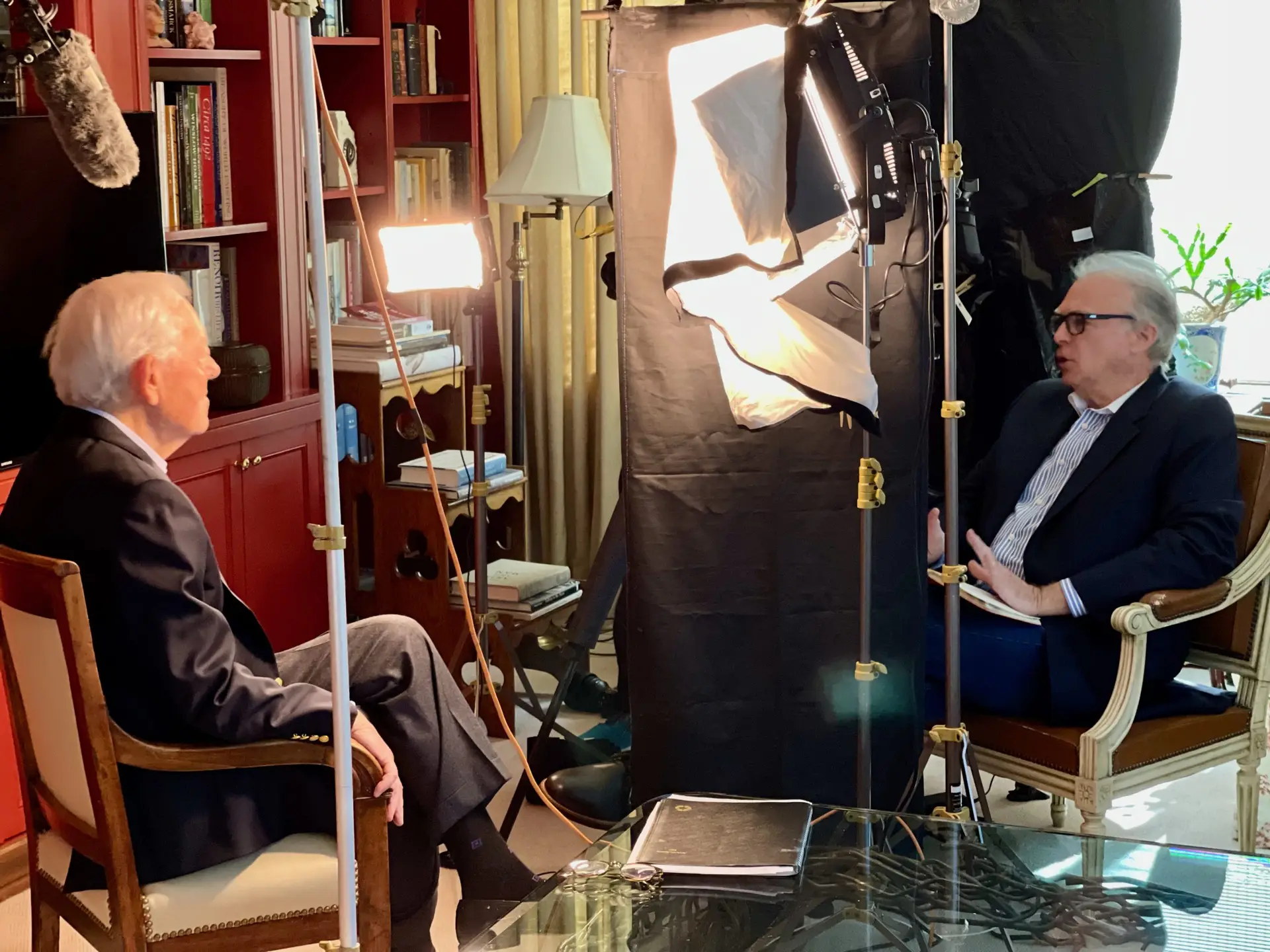
Besides appearing on the True Crime Reporter™ podcast, Schieffer sat down in front of a TV camera to talk with Riggs about what it was like to cover McDuff.
Kenneth McDuff Is The Broomstick Killer
For years Texas had a reputation as a tough law and order state.
But nothing could have been farther from the truth.
It ran a revolving door prison system. And it turned loose a monster.
Parnell McNamara
You know sometimes at night when I think about what he did to these people, these innocent people, I can’t sleep at night. I’m not a tough cop. It still affects me.
Retired Deputy U.S. Marshall Parnell McNamara now the Sheriff of McLennan County Texas can’t forget a sadistic sexual serial killer like no other. Kenneth Allen McDuff
I’m investigative reporter Robert Riggs the creator of the True Crime Reporter™ Podcast.
I’m here to take you inside the crime scene tape of The Broomstick Murders.
On Saturday night of August 6th, 1966, three teenagers parked their car at a high school baseball field to listen to music near Fort Worth, Texas.
The top 20 hit that month was Summer In The City by The Lovin’ Spoonful.
Dressin’ so fine and lookin’ so pretty sang the band’s leader John Sebastian.
16-year old Edna Louise Sulivan, a pretty blue-eyed high school basketball player known as Louise, playfully wrote her name in mascara on the car window.
Her boyfriend, 17-year old Robert Brand, the car’s owner,
and his cousin 16-year-old Mark Dunnam who was visiting from California shared in the fun with Louise.
But the idyllic moment was about to turn into a nightmare.
20-year old Kenneth McDuff, not long out of prison on parole for a string of burglaries snuck toward the teenager’s car.
18-year old Roy Dale Green followed McDuff carrying a broken piece of a wooden broomstick handle.
McDuff had told his running buddies that quote, “I’m going to kill somebody. I’ve killed people before. And I like it.”
He gripped a .38 caliber revolver and threw open the car door.
Our story about how McDuff randomly executed three innocent teenagers begins in Rosebud, a small farming community located in Central Texas.
A large water tower with rose blooms painted on it and a similar sign at the city limits welcomes visitors.
Every home used to have a rose bush in the front yard.
They have long wilted in the shadow of Kenneth McDuff.
Fran Hargrove is a lifelong resident and the town librarian.
Fran Hargrove
Kenneth was evil. He was the personified evil. You look in his face, you see what was going on and we discovered that when he killed those three people. When he killed those three kids, that is when we first realized what Kenneth really was.
Kenneth McDuff was the town bully.
His high school principal described McDuff as a habitual liar and a thief.
His mother Addy thought her son could do no wrong.
A hefty, gruff woman, she was known as “Pistol Packin Mama McDuff.”
Hargrove, recalls Addy’s reaction when Kenneth got kicked off the school bus for misbehaving.
Fran Hargrove
Her reputation really came about early on, with that pistol. She was called pistol packing mama. Kenneth got kicked off the bus. They lived out in the country at that time. At that time, the bus drivers, they could kick off anywhere. They may be walking miles away, but they had that authority to do it. So, the next day, when the bus came by, they weren't going to pick Kenneth up, and she was standing in the road with a gun and stopped him. And she was demanding that he get on the bus.
Tellers at the local bank dreaded waiting on the “pistol packin mama.”
Ms. McDuff came in and she looked at her desk set." And there was a stapler and a scotch tape dispenser. And she said, "I don't know if it was both, or one but she said, 'I've always wanted this,' and she picked it up and put it in her purse." And this young lady said, "Why would you let her do it?" And she said, "My gosh," she said, "She has a gun in her purse, she carries it, she has it there." People were scared enough in town, of her. They reacted that way.
I learned that the McDuff’s home was a house of horrors.
J.A McDuff, a concrete finisher by trade, was a quiet man around town.
But behind closed doors, he would explode in violent rages at Kenneth McDuff’s four sisters and brother.
For example, he once punished a daughter by hanging her from a barn rafter with a rope tied to her wrists, her feet dangling off the ground.
J.A. McDuff made the family watch as he horsewhipped his daughter and then ordered Addy to wipe her bloody wounds with rubbing alcohol.
But J.A. and Addy put their son Kenneth on a pedestal. Addy claimed he was the most loving out of all of her children.
McDuff got away with molesting his youngest sister for years according to a family member and U.S. Marshals.
I uncovered that McDuff raped a high school classmate, cut her throat, and left her for dead in a ditch. Her family was too afraid to come forward.
McDuff’s impregnated victim secretly gave birth to his daughter.
Fran Hargrove
That would fit a pattern of how he treated women. There was something going on in that house with women that caused him to just absolutely snap-on women and hurt them badly and kill them and torture them.
After a student-athlete at the high school stood up to the bully and as they say in Texas “whipped the snot out of him,” McDuff dropped out in the 9th grade.
In 1965 at age 19, McDuff received a 42-year prison sentence for a string of burglaries and robberies that he called a prank.
But in Texas revolving door prison system at that time, McDuff walked out on parole after serving only nine months and two weeks.
He started hanging out with Roy Dale Green who poured concrete with him at his father’s business.
McDuff boasted to Green that killing a woman is like killing a chicken, they both squawk.
Addie McDuff confided to a neighbor that Kenneth was always choking her chickens to death with a stick.
McDuff kept a broken broomstick in the back seat of his car.
On August 6th of 1966, as they drove to Fort Worth together McDuff bragged to Green about killing women and sex, “sexcapades” he called it.
Gary Laverne, the author of Bad Boy From Rosebud-The Murderous Life of Kenneth Mcduff says Roy Dale Green was the perfect accomplice.
He was dim-witted and weak-willed.
And McDuff understood that. I mean it’s not like McDuff picked out a high school graduate to bring along. I mean he wanted to impress people with his brutality and anyone with an ounce of intelligence or education would not have been impressed.
McDuff was a sexual predator always on the hunt.
When he spotted the three teenagers that night parked at the empty high school baseball field, McDuff pulled a revolver out of the glove compartment and told Green to follow him with the jagged broomstick.
McDuff surprised the teens and threatened to shoot them if they didn’t get out of the car.
He put the three teens into the trunk of Robert Brand’s car, got behind the wheel, and told Green to follow him in his car.
McDuff stopped at a remote area off a farm-to-market road.
He ordered Louise Sulivan to get out of the trunk.
Roy Dale Green locked the girl in the trunk of McDuff’s car.
McDuff turned to the two boys still inside the trunk and told Roy Dale Green, “We can’t leave any witnesses. I’m gonna have to knock them off.”
The boys begged McDuff not to hurt them.
Green thought McDuff was kidding.
McDuff shot Robert Brand twice at point-blank range in his ear and forehead.
Mark Dunnam tried to shield himself. McDuff shot him through the arm. Then grabbed the boy by his hair, put the muzzle of his revolver against Dunnam’s head and cooly squeezed off a round.
More than 50 years later, Royal Dale Green, vividly recalls the slayings.
Roy Dale Green
This one in front of me goes like this, covers his head. That’s what I did too. I turned away. And every time I would take my hand off my eyes to look he would shoot. I smelled gun powder and blood when he got through.
McDuff couldn’t get the trunk lid to shut against the two bodies.
So he backed it into a fence and they drove away with the 16-year old Louise locked inside his trunk.
Down the road, McDuff took her out of the trunk.
Raped her in the backseat. Ordered Green to then rape her which he did. McDuff raped her again and violated her with the jagged broomstick
Next McDuff made Louise lie down on the gravel road in front of his car.
He straddled the 16-year old girl’s chest and mashed the broomstick across her throat.
Sullivan flailed her arms and kicked as McDuff choked her death. He told Green to hold her legs, “It’s gotta be done,” he said.
When Sullivan went limp, Green grabbed her hands. McDuff grabbed her feet. They heaved her body over a fence.
McDuff dragged her through the brush and choked her once more just to make sure Louise Sullivan was dead.
They covered her lifeless body with bushes. Then drove back to Rosebud stopping along the way at a gas station for soft drinks.
Back in Rosebud, McDuff buried the gun beside Green’s home and spent the night there.
The next day, a Sunday morning, McDuff’s brother summoned his father and siblings to an emergency family meeting in Rosebud at his home.
Today a power pole stands where they thoroughly washed evidence out of the passenger compartment of McDuff’s car and sprayed clean the underside of his vehicle.
McDuff’s father poked a stick in a fire as he burned the trunk’s carpet liner to destroy any trace that Louise Sullivan had been held inside it.
Back in Fort Worth, Robert Brand never came home.
His sister Fran says their father became concerned.
Fran Brown
Because Robert was always home in time, no matter what, he was always home. And dad didn't rest till his kids were home.
Jack Brand thought his son might have eloped with Louise.
But when he didn’t show up, he set out to find his missing son.
A fisherman found the teenager’s abandoned car with the limbs of the bullet-riddled bodies of Robert Brand and cousin Mark Dunnam sticking out of the open trunk.
Fran Brown, Robert’s sister will never forget what happened next when Sheriff Lon Evans drove up to their house.
Fran Brown
That was when dad, I think it was Lon Evans brought dad over to my mother and father's house because we got the phone call to wait there, "Don't leave."
He came and he said they had found him. So dad, a little while pulled up with Lon Evans. They got out of the car and dad come over to me. He said, "We found them. They've both been shot. They're dead."
The murders were front page headlines in newspapers across Texas.
Retired CBS News Anchor Bob Schieffer, then a 29-year-old police beat reporter for the Fort Worth Star-Telegram, covered what quickly became known as the “Broomstick Murders”.
Schieffer
The shock value of suddenly you find two people shot to death in the trunk of a car, kids, I mean these were teenagers. These weren't grown people and killed, shot at point blank range.
Schieffer had just returned from a combat assignment covering the Vietnam War.
Nothing had prepared him for this.
Schieffer
It really upset people. It really bothered the community. I still remember it because I think it's the worst thing I ever saw, really when you come right down to it, I mean, I saw those bodies and when you're on the police beat, you see a lot of death, but I'd never seen anything that matched the cruelty of what McDuff did. It's just that I hope I never do see it again.
When McDuff’s accomplice Roy Dale Green heard the news on the radio he broke down on the spot.
His mother told him to turn himself in.
Schieffer witnessed Green’s confession.
Bob Schieffer
Lon Evans was the sheriff of Tarrant County, we called him the high sheriff. And he was one tough customer, but he also had a good soft side to him as well. He had been a TCU football player. He went to the green Bay Packers and played tackle in the leather helmet days, then became a referee of National Football League games, and then ran for sheriff. In fact, while he was sheriff, he still did some NFL games as a referee. He was also a great source of mine. The police reporters in those days... after you had been there for a while, and they began to trust you, they would let you go with them when they went to investigate things. I always remember on the night police beat the press office... and I was the only reporter in the building at that time of night... if the detectives had a call for what they knew was going to be a serious crime, I'd actually ride out to the crime scene with them.
One of the things that people would just shake their heads when I tell them about is often, when they would take confessions from people, they would call me in and let me type the confession. The reason what was good for them is, I could type better than the detectives could, and so that was a help to them. And what was good for me under the libel laws in those days, you couldn't use someone's name unless they had been charged in a peace justice court. So, that would be the next day when I was working at nights. And so by taking the confessions, I would then sign the confession as a witness, and I could use the person's name in the paper. That's why you would often see in those stories, told a Star-Telegram reporter. That's how we did that.
Robert
To the best of your recollection, tell me about the emotions of Green when he's confessing. What a contrast? You wrote about a contrast between the two.
Bob Schieffer
What was interesting about these two is how totally different they were, just from the standpoint of, McDuff wasn't about to tell anybody about anything. He wouldn't give you details, he wouldn't even acknowledge that he was there.
Green, on the other hand, couldn't hold it in.
Schieffer
He was a person who was easily swayed. He was the kid in the high school that if everybody else wanted to do something, he went along with them. It never seemed to be his idea. He obviously was totally afraid of McDuff, but they were two absolutely different people.
Sheriff Parnell McNamara, now sheriff of McLennan County in Waco, Texas recalls his father’s reaction to the murders.
T.P McNamara, then the Deputy U.S. Marshal in Waco was friends with Falls County Sheriff Brady Pamplin who had a long history of trouble with the McDuffs in Rosebud.
McNamara podcast interview
I remember Sherriff Pamplin talking to my father about this brutal murder that had just happened, that this guy named McDuff, you know once you hear that name associated with a murder, you don’t forget McDuff.
McNamara: He had a reputation as just being a low life thug and a punk. So, I remember Brady Pamplin’s hand shaking and his voice trembling when he was telling my father how McDuff had killed these three teenagers and especially the little girl and putting broomstick across her throat after he had used it on her and brutally sexually assaulted her and had her down on her back in a gravel road. And I remember the sheriff shaking and saying “TP, he broke her neck just like you would kill a possum.”
And I remember how sick I was and my father, you know, his reaction – I know that either one of those men would have killed McDuff at the drop of a hat and so would I. I was a guard. I didn’t have a badge. I didn’t have credentials but I had a gun. And you know to hear something like that happen in such a brutal way just made sick and I never forgot it.
McNamara: Exactly. The night after the brutal murders, McDuff comes back home the night of the murders. But the next night, he has a date with a young girl that living in Bremond.
McNamara: Yeah, and he’s out on is date like nothing like nothing ever happened.
Sheriff Brady Pamplin and his son Larry who would later become the sheriff surprised McDuff when he took his date home.
They captured McDuff during a running gun battle.
To this day, Pamplin regrets that he didn’t put a slug into McDuff when he had the chance.
Parnell McNamara and Larry Pamplin Interview
Riggs: So, do you have any sense of how this man became so mean and evil?
Pamplin: Well, as I indicated, in his mother’s mind he could do absolutely no wrong. The man, in my opinion, had no sign of a conscience. And he got his thrills from terrorizing, holding a person in bondage, inflicting pain, torture.
Schieffer rode to Rosebud with the Tarrant County Sheriff to arrest McDuff for murder.
Bob Schieffer:
In those days, when there was an important prisoner to be transferred to the Fort Worth Jail, Sheriff Lon Evans would generally drive down in a patrol car with his deputy, Earl Brown, who was the number two guy in the Sheriff's department, and bring them back himself. And on this particular case, I had asked him if I could go with him to pick up these people after this story broke. And, so we did drive down there.
On the way back in, and we were in the car for about two and a half hours with McDuff, he expressed no interest in any conversation about anything. At one point, the only thing when people would ask him a question and he would just nod or act like he was asleep or just... I've never seen anybody quite like him. He showed no remorse. He showed no hesitancy about any of it, he just sat there and said he wanted to see a lawyer. And I came to realize, I had never seen anyone like this, and I'd been on the police beat for a long time, at that point. He was a monster. He was a monster. I don't think he had any conscience. And I remember somebody saying at the time, if there was ever a reason for the death penalty, it was Kenneth Allen McDuff. He personified that. And it just made you feel uneasy, really to be around him.
The state was still reeling from a mass murder that had unfolded on live television in Austin a few days earlier.
Bob Schieffer
As I remember it, the only thing that McDuff talked about on that ride back home, somehow the shooting at the University of Texas Tower, Charles Whitman had taken a rifle and gone to the top of the tower and started shooting people down on the campus below. And it was a horrendous day. This happened probably a couple of weeks after that, and somehow it came up as we were driving back and McDuff volunteered. That guy must have really been crazy, but that's the only thing that he said all the way back. And even when he got back and was jailed, he refused to talk to anybody. The sheriff told me that he had gone by his cell to see him the next morning and said, good morning. And he said, go to hell, and turned around. And he never talked to anybody about anything throughout that time.
Green agreed to help find the body of Louise Sullivan. Sheriff Evans brought Green to the scene.
Schieffer was there covering the search.
Bob Schieffer
The search, because they knew by then that obviously, this girl was missing, they hadn't found her. But there were more than a hundred law officers on that search, and all of this was taking place in pretty rugged country. It was pasture land, but there was a lot of brush there, that sort of thing. It was not easy. And they spent, it was not at all, I guess the second day that they finally were able to find her body. And he, Green, had agreed to take them and show them where she was buried. And they went out the first day and took him out there and he had kind of a meltdown of sorts and couldn't seem to find his way. They took him back to the jail and he drew some crude maps of where he thought the body was and they use those maps to finally find her body.
Green was the prosecution’s star witness against McDuff during an eight-day-long capital murder trial.
He nervously fidgeted and testified in a barely audible voice about the gruesome details of the triple slaying.
Addy McDuff sat front and center in the packed courtroom flanked by Kenneth’s brother and sisters.
Fran Brown
I just thought he had the coldest, coldest eyes I've ever seen in my life. Mean. Mean looking to me.
—---=-=-=
Robert Brand’s sister came to trial for one day but never came back.
Because Addy McDuff threatened her family outside the courtroom.
Fran Brown
And she was talking so loud. She said, "He's not guilty of this." She said, "I will get each and every one of them." Well, that kind of scared me. I was horrified. Mother said, "Just don't listen to her."
McDuff took the stand in his own defense.
He claimed Green did the killings and was trying to frame him.
But the contrast between McDuff and the pathetic personality of his accomplice undermined his defense.
The nine-man, three-woman jury which had shed tears during Green’s testimony didn’t believe McDuff.
They deliberated for four hours.
McDuff, wearing a black suit and tie, casually waved to his family as deputies escorted him into the courtroom to hear the verdict.
The judge asked McDuff to stand as the verdict was read.
McDuff replied, “I’ll take it sitting down.”
McDuff remained stone-faced and showed no emotion just as he had done throughout the trial.
The jury found him guilty of the murder of Robert Brand and sentenced him to die in the Texas electric chair known as “Old Sparky”.
Roy Dale Green pleaded guilty to murdering Edna Louise Sulivan. He was sentenced to 25 years in prison.
Later, he was transferred to the Rusk State Mental Hospital after seeing visions and hearing voices that kept him awake at night.
Green was paroled in 1979 after serving 13-years of his 25-year sentence for his part in the “broomstick murders.”
Rosebud heaved a collective sigh of relief when McDuff was sent to Texas Death Row to await his execution.
But they had not heard the last of Kenneth Allen McDuff.
In 1989, Sheriff Larry Pamplin, the lawman who had captured McDuff with his father for the “broomstick murders” 23-years earlier received a shocking phone call.
McDuff, the serial killer had been released on parole. Freed To Kill.
Larry Pamplin
And I said, “Mark my word…” I said “I don't know if it’ll be three days, three weeks or three months but I promise you bodies are fixing to start showing up.” And I think it was three days later.