Robert Riggs
At quitting time in the 1980s, the men in LA's business district took off their ties, loosened their collars, and headed home.
While they stepped back into ordinary lives, the LAPD’s most famous homicide detective stepped deeper into the darkness most of them never had to see.
John St. John, known as JigSaw John, carried the faces of the dead home with him. There was no quitting time in his business. He lived in the company of murder.
He studied the handiwork of men who killed for pleasure. Their tools were ropes, knives, their hands, and fear. Used to torture and kill their victims.
During 43 years with the LAPD homicide, he solved more than two-thirds of 1,000 homicide cases.
He helped put a dozen prolific serial killers in prison.
Unlike the police dramas that unfolded on Hollywood’s backlots in LA, St. John didn’t fit the movie stereotype.
He was no Clint Eastwood from “Dirty Harry”.
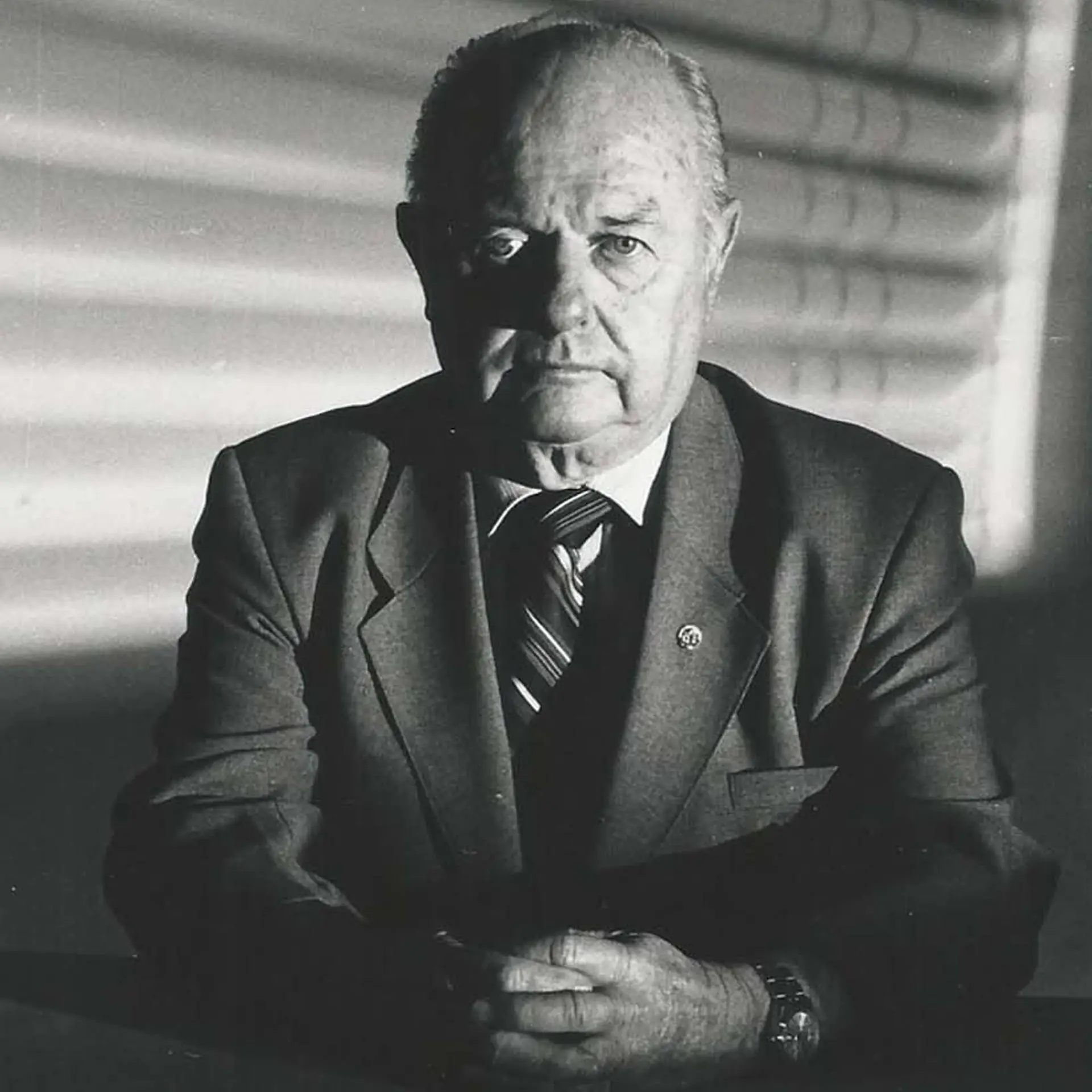
He wore rumpled off-the-rack suits. Short and heavy, he shuffled in his step. He moved slowly with deliberate purpose. He flashed a gold tooth when he smiled. He could have been mistaken for someone’s grandfather.
He took his own photographs at crime scenes. Hundreds of them. He spotted clues others missed.
“You’ve got to see the face of a real victim,” he told a reporter in 1974. “You’ve got to go to a murder scene, and you’ve got to see the face of death. The agony. They could never fake that on TV.”
A lifer paid him the best compliment “If I ever kill anyone, I would hate like hell to have old John on my case. Because sooner or later, he’s going to get you.”
In 1982, the LAPD awarded the then 64-year-old detective the Distinguished Service Medal for solving the Freeway Killer murder case.
St. John carried the coveted “Badge #1”. He joined the department in 1942. He was a legend in his own lifetime.
Robert Riggs
The morning newspaper headline about the award caught the eye of Jane Howatt, a 37-year-old suburban housewife married to a physician.
The story jumped off the page as Jane sipped coffee while her two elementary school-aged boys spooned cereal out of the breakfast bowls.
She was taking a writing course. Planned to publish a book about tennis, the favorite pastime of women among her circle of friends.
Suddenly, she found herself drawn to a meatier subject.
She wanted to sink her teeth into the back story of the legendary detective nicknamed JigSaw John, after he solved a murder in Griffith Park.
Jane Howatt
When John got onto the case, the body was dismembered, but the hands were not found. So it came to be later on, soon that he was called Jigsaw John, because he was able to put the corpse back together from the having it been hacked as it was by the killer. So it was, it really boiled down to his being a puzzle solver, being able to put put not only bodies back together, but crimes back together. What are the missing pieces? So the jigsaw sort of went from the dismemberment case to now. He became somebody well known for his ability to put pieces of the puzzle of the murder puzzle back together again. That turned out to be the name Jigsaw John.
Robert Riggs
Jane wanted to ride along with JigSaw.
Detectives in the homicide bullpen responded to the desire of a novice unpublished writer from the privileged suburbs to get up close to murder with yeah, like fat chance lady.
Jane’s persistence led to an unprecedented journey alongside LAPD's greatest detective.
It produced her true crime memoir, JigSaw & Jane: Thirteen Years of Murder and Mayhem with Badge Number One.
Jane Howatt
You look at him and you think you know he's this. Here's his sleepy grandfather who goes to the buffet on Sunday mornings. He's he has that ordinary look, you know, a little like Columbo, you know, that kind of aw shucks look. You never think you know that he was this. But I can tell you that I think it helped. The other thing that helped Robert was
the fact that he was an excellent listener. He doesn't tell you anything. You tell him everything. And the way he would do that was, you know, he would, he would listen, for example, when I was talking to the one of the mothers of the murdered victims. He leaned into her as she spoke to him, asked her questions about the family, asked her questions about how things are going. He had this ordinary sort of look, look to him, but that helped, because I think that disarmed people. They felt that he could talk to him and they could tell him stuff, and as he's, as I said to you, he's an information broker. This is what he lives for. I want you would wind up telling him way more about yourself, and he would know nothing about you. That was the magic of how his interrogations went.
Robert Riggs
Howatt says JigSaw John’s dogged determination helped solve the sensational Freeway Murder case. The one for which he received the Distinguished Service Medal.
William Bonin, a truck driver, kidnapped, robbed, raped, and murdered a total of 14 teenage boys while prowling Southern California in his van between 1979 and 1980.
He dumped their bodies beside freeways in Los Angeles and Orange counties. Thus the name, “Freeway Killer.”
Acting on information from his network of informants, St. John tracked down the truck driver and, on June 11, 1980, his team captured Bonin in the act of sodomizing a victim.
The killer had his murder kit in his vehicle.
Two months earlier, Bonin had picked up 16-year-old Steven Wood shortly after he left his orthodontist appointment.
Wood forgot a notebook at home that he needed for his driver’s ed class. He walked across the street to buy one at a liquor store.
At that same moment, Bonin, the Freeway Killer, walked in to buy his morning paper.
Their worlds were never meant to touch.
Wood was Bonin’s preferred type, thin and blonde.
Jane Howatt
This is just, just a guess, but St. John's guess is that he sees Steven Wood in a hurry to get to class. Hey, kid, you want to ride. Hey kid, you know, hey, and you could have known him. Sure, I'm a little late for class, you know, I'll take a ride. So guess what happens? The next thing you know is that he's found. He's, he's, he's, I think it's about the 13th victim. So you talk about sort of a, I looked at the coincidence of murder. This happened shouldn't have happened. That happened. Maybe it's like an airplane crash, a series happens that you don't expect. And watch out.
Robert Riggs
Steven Wood's nude body was found the next morning in an alley behind an industrial complex near the Pacific Coast Highway and Long Beach Freeway.
He had been beaten, sodomized, and strangled with a ligature.
Bonin loved to hear his victims' screams. He confessed to committing 21 murders in the span of a year.
Investigators believed he was responsible for many more.
His youngest victim was a 12-year-old waiting for a bus to Disneyland.
In 1996, Bonin was the first California inmate to be executed by lethal injection.
Robert Riggs
Speaking his last words to the Warden of San Quentin, the serial killer said the death penalty sends the wrong message to the youth of the country. He suggested that when a person considers breaking the law, they should go to a quiet place and seriously think about it.
Jane Howatt felt what the serial killer could never feel.
The pain of his victim’s mothers. The last physical memory of the sons was their death certificates.
Jane Howatt
This book shook me in so many ways to think that I'm I, I'm so I have this good life, and their lives are filled with all this tragedy, unbearable tragedy.
Robert Riggs
Detective St. John, with Jane Howatt in tow, topped off his career with the arrest of serial killer William Bradford.
Bradford was an amateur photographer driven by a sadistic lust for murder.
Jane Howatt
He murdered two girls in in the desert, um, he was a photographer. This is the lure that he used to get. You know. Get to get women to go out with him, or to get them to into his into his vehicles, which is why he wound up killing them, and take and not killing them, but to where he took them, to the desert, where he murdered them. So Bradford was guilty of Shari Miller and Tracey Campbell, two murders that happened in the in the Mojave Desert.
Robert Riggs
In July 1984, a barmaid named Shari Miller disappeared after meeting Bradford at a Hollywood dive called The Meet Market.
He promised to help her build a modeling portfolio. Days later, Shari Miller’s nude body turned up in an alley.
Initially unknown, she was named Jane Doe No. 60 with patches of flesh missing from her leg and abdomen.
Around the same time, Bradford’s fifteen-year-old neighbor, Tracey Campbell, vanished.
Detectives searched his apartment and found rolls of undeveloped film.
One photograph stopped them cold: a woman posed against a seal-shaped rock formation, a tattoo visible on her calf at the same spot mutilated on Shari Miller, AKA Jane Doe No. 60.
JigSaw drove Jane to the crime scene in the Mojave Desert to show how his eye for detail cracked the case.
Jane Howatt
I looked around, and I thought, I thought, This is so desolate. This is so frightening. Imagine what it would be like knowing that this is the place, the last place you'd ever see before you died. And that was what one of those, both those girls, had to feel. And Bradford now isn't the next door neighbor, he's not the photographer. He's going to kill him, and he's going to kill him in a way that is so horrific and so terrifying. So all those
thoughts were going in my mind, what did those girls think as they saw, what was going to happen to them?
Robert Riggs
Bradford was sentenced to death. He died in 2008 at age 61 in a prison medical facility.
Investigators suspected him of murdering more than 28 women.
Then in 1993, the LAPD decided to take JigSaw’s Ford Crown Victoria away, deeming the 75-year-old detective a liability risk behind the wheel. He retired.
Jane Howatt
He had to be on the beat. If he was in his case, I'm not going to be, I'm not going to be an office detective. He He had to be out there. He couldn't wait to get out. You know, you show up at work at 830 and then after a little while, you do your paperwork, which there's tons of. But then when he could get out, that was when he really started to thrive. You know, he never needed a map to go any I said, where are your maps? When I was in his car, he knew every street he could go, any place, you know, there's no maps in his not one. So he knew LA, every street, every avenue, every alley. He knew it was in his head. So to be taken away from his car was like taking away, you know, his world of homicide. And then he then he quit, and the party was, the retirement party was, was so was a mixture of, you know, fun and games. But at the end of it, everybody knew that that was end of an era. the end of St. John, and it will never be the same.
Robert Riggs
Detective John St. John died of cancer two years after retiring.
JigSaw John once said of serial killers, “These guys all kill the same way you or me pick a banana off a tree. Whenever they get the urge, they go out and do it to get their sexual gratification or whatever. They’ll keep doing it, too, until you stop them.”