The men and women of the Texas Highway Patrol work alone, often at night, on remote stretches of highway.
They drive distinctive black-and-white cruisers and SUVs with bright gold Texas emblems on the side doors.
If a traffic stop turns bad, help may be a hundred miles away.
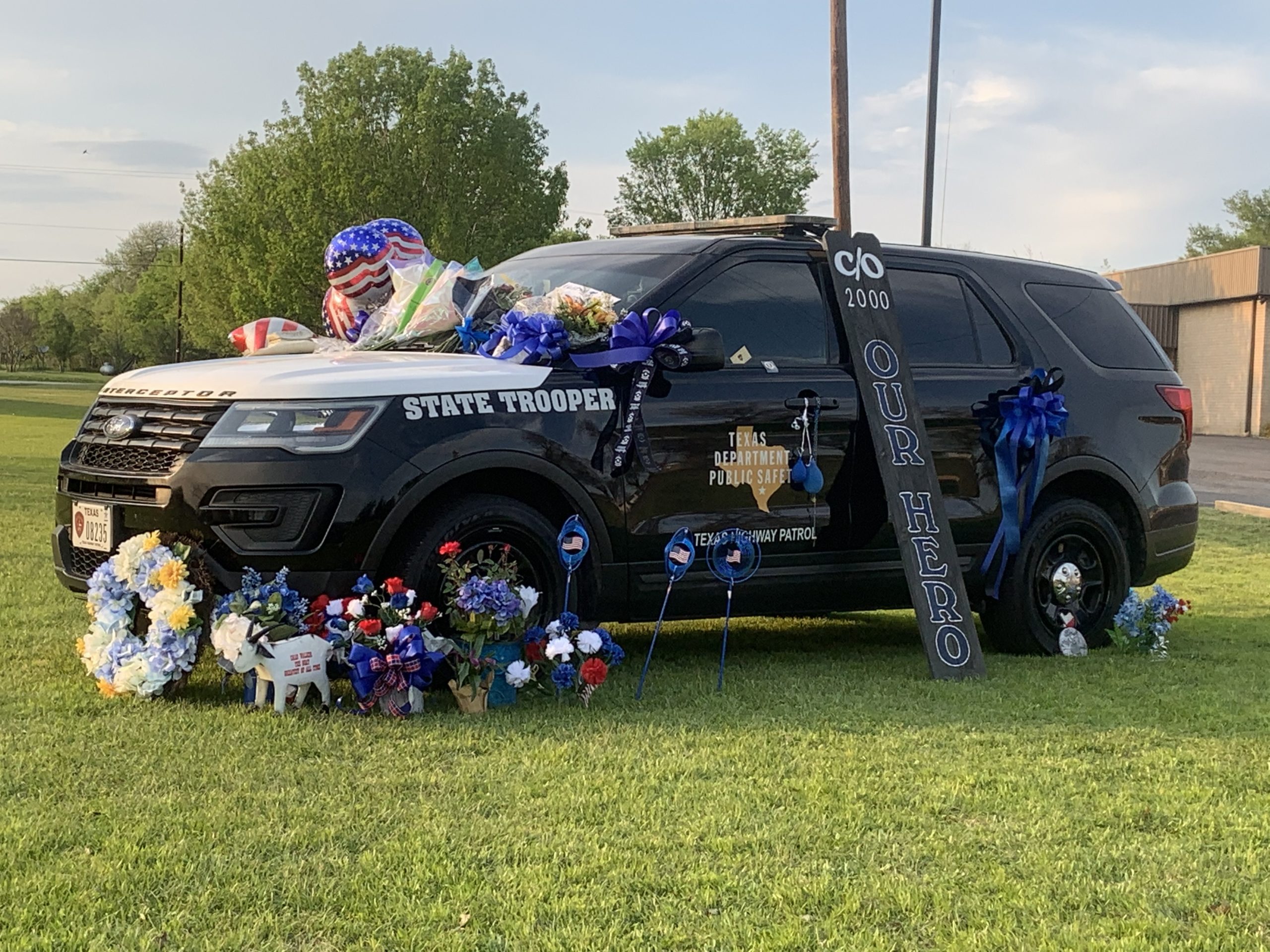
For example, in 2021, Texas Department of Public Safety Trooper Chad Walker was killed in an ambush.
Walker stopped to help a driver whose vehicle was disabled.
The driver jumped out of the car armed with a handgun and unloaded rounds into the windshield of the Trooper’s vehicle, striking Walker in the head and abdomen.
The 38-year-old trooper was survived by his wife and four children.
The suspect fled and later killed himself when surrounded.
These are the dangers Texas troopers face.
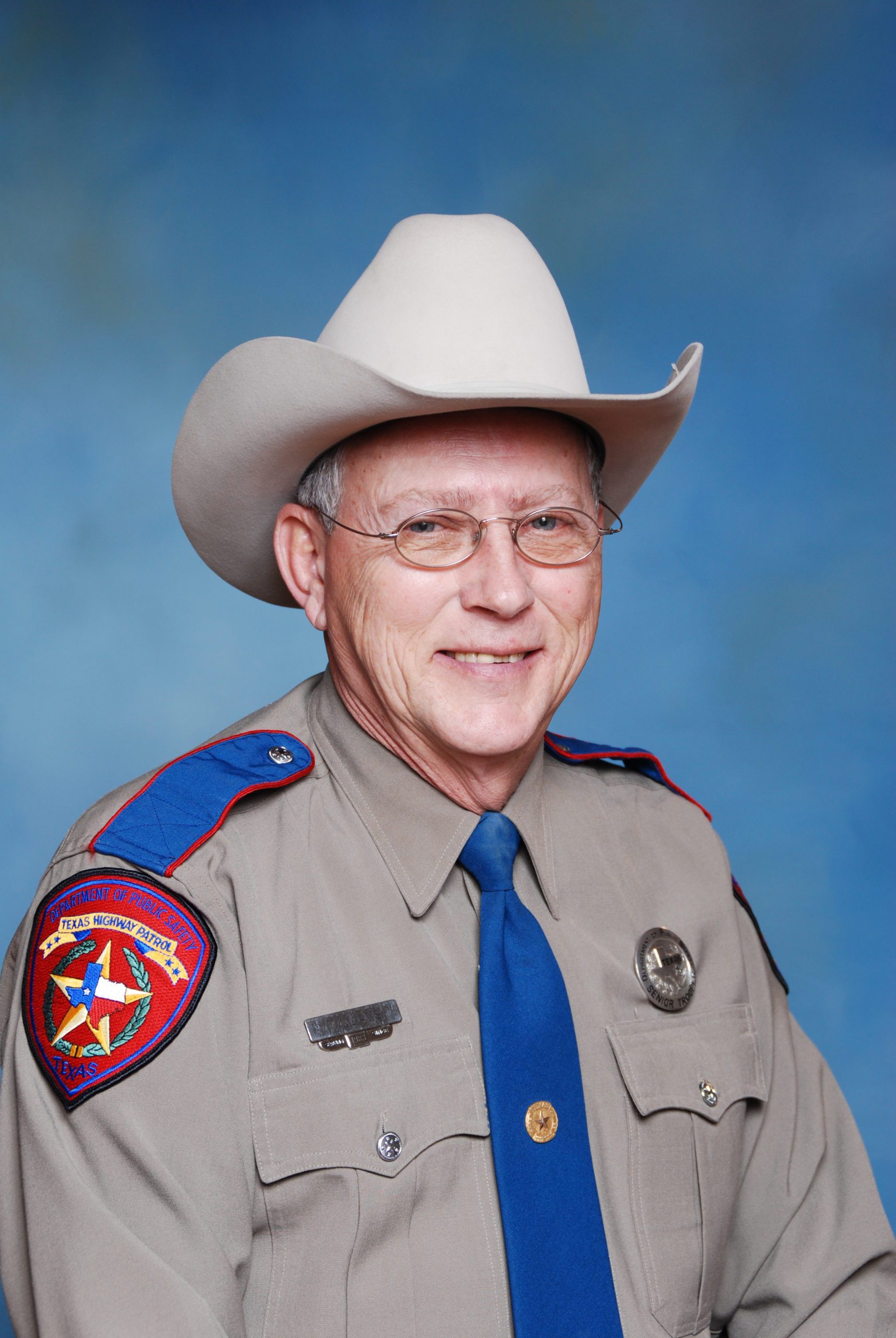
In this episode of True Crime Reporter Extra, we feature real stories from the Texas Highway Patrol, told by retired Senior Trooper Johnny Williams.
2800 women and men called State Troopers enforce traffic laws and serve other policing duties, some even on waterways.
They work alone, often on lonely roads at night or in remote areas where they are the only law for hundreds of miles. And help is a long way off.
They patrol more than 683,000 miles of paved roads across Texas, through its piney woods, desert plains, mountains, and Gulf Coast.
Texas ranks as the largest state highway system in the United States.
The state’s Old San Antonio Road, used by trailblazers in 1691, is America's oldest highway.
Johnny Williams patrolled those highways as a state trooper for nearly a quarter century before retiring in 2007.
He has been a commissioned law enforcement officer in Texas for 40 years and currently serves as a court bailiff in Lamar County.
Williams saw his share of high-speed car chases, apprehended armed felons wanted for violent crimes, and investigated horrible car wrecks.
One of those wrecks still sticks with him.
Newlyweds ran off the road and hit a culvert, a concrete pipe, in a drainage ditch beside the highway.
And it was a couple of Amish kids. They had been over to Lewisville and had gotten married. They live in Como outside of Sulphur Springs. And the young man worked on a dairy. They'd been over to Lewisville and gotten married, and they had to get back home because he had milk cows the next morning. And they ran off the road.
And the young lady fell asleep. The young man was asleep in the backseat. The young lady fell asleep while driving, ran off the road, and hit that culvert. And it flipped the car completely over, and it landed upright on the other side of the culvert.
It killed the girl; the young man survived. But on the dashboard was a Bible. After the wreck, the Bible on the dashboard was open to the 23rd Psalm: “The Lord is my Shepherd.” If I never remember anything else about my career, I'll remember that night
I can't explain how that happened. There is no way to explain how that happened, but that, that particular wreck probably may have affected me more than any one I worked in 25 years.
Williams and I are childhood friends from Paris, Texas, in Lamar County.
Our interest in law enforcement started when we would volunteer to ride along with a State Trooper named Max Womack.
At times, it was a rough ride on a stretch of Highway 271 north leading to honky tonk nightclubs and bootleggers across the Oklahoma border.
Some of the folks stopped for speeding and drunk driving preferred to fight than go to jail.
Max Womack, now deceased, went on to become a legendary Texas Ranger.
You may recall from our previous Texas Ranger Case File episodes that you must first serve as a Texas Trooper in order to become a Texas Ranger.
We both learned a lot out on patrol with Max Womack.
Max was always very professional. And he was always nice to people. As long as they were nice to him, he could flip the coin in a heartbeat if it called for it. But Max always tried to talk to people on the same level that he was on. And if it took something different then Max could go to that in a heartbeat if it needed it. But if he didn't, I saw a lot of people that got tickets from Max that thanked him for it when they were through before they'd left, you know. And that probably impressed me more than anything.
Williams and I went to Texas A&M University. His father was a graduate and decorated B-17 pilot during World War II. My uncle and namesake was a graduate and decorated infantry sergeant in World War II.
So naturally, we both went to Texas A&M.
Later, Williams enlisted in the United States Navy and served on a destroyer during the Vietnam War.
After Vietnam, he entered law enforcement, first serving as a Sheriff’s Deputy.
Next, Williams was accepted into the Texas Department of Public Safety, known as DPS, after a rigorous background check.
He says the 18-week DPS training academy was even tougher than the Navy’s boot camp.
If you leave boot camp, you're AWOL; you've committed a crime. At the DPS Academy, they tell you every day you can leave; all you have to do is sign one sheet of paper, and you can go, and it's up to you to have the mindset to stay. And I've talked to a few youngsters who were about to go through, and I said What do I do and I said You take one day at a time; you don't get a calendar and hang it up and mark each day off. You don't mark each week off, you don't go all the way over here. 18 weeks ahead and put a star on the day you're going to graduate. You take it one day at a time. You get by Monday, you prepare yourself for Tuesday, you get by Tuesday, you prepare yourself for Wednesday, you just take one day at a time. They've never killed anybody.
It's a huge physical challenge. But I think it's an even bigger mental challenge.
You’re out there on the PT field every day, and you're watching all the cars go by and you're watching people drive into Waterburger and you're watching them drive into McDonald's, and you're watching them walk out of a Seven Eleven with a six-pack of beer, and you can't have any of that. You know, so it's a that, and they do that; they put you out there and let you watch all that because, you know, and saying, Do you want to stay here bad enough to not walk over to Waterburger and get you a Waterburger, you know, chocolate malt. So, you know, yeah, it's a it's a huge physical challenge. It was an extreme physical challenge for me because I went into the academy at 35 years of age. And I was expected to do exactly the same stuff on exactly the same level that the 20-year-olds were expected to do. And I had to do it. I wasn't I was the oldest in my class. There was one other one in there my age, and I actually turned 36 in the academy and he didn't so often I am the oldest one there.
Williams says the physical demands of training to become a trooper caused some recruits to drop out in the middle of the night.
A couple left before the boxing started, you know, we have to box and, and, and the philosophy back then was Will you keep fighting when you taste your own blood they want to build your confidence up. But they want you to know what it feels like to get beat. And they want to know if you will give up when your nose and blood from your nose run down into your mouth, or will you keep fighting, if you won't keep fighting, you can change somewhat now. But I'm always proud to say that our academy had $37,000 in broken Noses. And by golly, I was one of them.
Robert Riggs
In the wake of high-profile confrontations between police officers and citizens, Williams believes that compassion should be a law enforcement officer’s most important personality trait.
Johnny Williams
Compassion is one word. There the ability to project yourself in a friendly manner and also the ability to control a situation regardless. But you have to have compassion to do this job. You just can't be cold blooded.
Robert Riggs
Williams is concerned that some police agencies turn out officers that are robotic.
During traffic stops, they sternly demand license and registration. No small talk.
Johnny Wiliams
But it just seemed like that, that they had no personality to do, didn't smile. Didn't try to engage in any conversation. Do what you had to do, leave. Just like that. And it. That's not the way we worked. You know, I could stand on the side road and talk to somebody for 15 or 20 minutes. They wanted to have a conversation. You know, we didn't talk about anything but the weather. But you know, I mean, you know, I mean, I'm stopping and talking to people. Did it lots of times.
Robert Riggs
Williams proudly says that no one ever filed a racial profiling complaint against him during his career.
He loved putting on the “Texas Tan”, western-style uniform, and donning his cowboy hat to head out on patrol.
Johnny Williamns
It's a, it's a new day, every day you wake up just like a goose. You're in a new world every night, you don't know what's gonna happen. You don't know if it's just going to be, there is no such thing as a routine traffic stop. Any traffic stop can go south on you. But I think it's just just the appeal of getting out there and maybe doing something just a little bit different. Maybe having the opportunity to help somebody that really, really, really needs some help. And the opportunity to put somebody in jail that really, really, really needs to go to jail. That has no business in public. And you're, you're, you're helping the community, you're making the community you live in safer. And it's just, it's just a new day every day.
Robert Riggs
I asked Williams if he thinks the job has gotten more dangerous for State Troopers.
He believes there has been a cultural change in attitudes about authority across all socio-economic groups.
Johnny Williams
I think what makes it more dangerous today is I think we have raised a generation of people who have absolutely no respect for authority of any kind. They have no parental authority. Single parents. Absentee fathers. They pretty well do what they want to when they want to do it and they don’t respect anybody telling them they can't do it. And I think that's the biggest problem. society as a general in general, and it's we've just raised that generation of people that don't respect authority of any kind.
Robert Riggs
Williams last high-speed chase covered 56 miles in just 41 minutes.
It was a wanted felon driving a stolen Chevy Camaro sports car.
Johnny Williams
The car busted my radar southbound at 111 miles an hour. I jumped off after it. He takes off.
Robert Riggs
Williams says his cruiser was about to run out of gas when the felon crashed.
Johnny Williams
He wrecked it, jumped out, and raised his hands. I don't know how I didn't get hurt. But he didn't; he hit one of those great big huge concrete power poles. Just annihilated the Camaro; it just exploded. So he gets out. I jumped out and yelled at him to get on the ground.
Robert Riggs
After handcuffing the fugitive, Williams said he realized that it was time to retire.
Johnny Williams
I knew that night it was time to go for sure. Because just as soon as the adrenaline dump wore off, I just puked my guts out over there on the side of the road. I mean, it was it was I’m too damn old for this shit. You know.
Robert Riggs
Today, Williams gets Facebook messages from people he stopped many years ago.
One man wrote that when he was a teenager, Williams should have written him a ticket. “I told my parents Johnny Williams pulled me over, but he didn’t fine me. Mom said that’s odd. I heard he would write his own mom a ticket!” The man concluded his Facebook message with a laugh-out-loud. Thanks, Johnny.