Robert Riggs:
In the mid-1970s, New Yorkers were growing accustomed to violence and a climate of fear permeating its boroughs. But in the summer of 1976, an unseen menace emerged.
A serial killer who came to be known as the "Son of Sam" and the ".44 Caliber Killer" carried out a series of shootings over a year.
He killed six people and severely wounded seven at close range with a .44 caliber Bulldog revolver.
Several months before the shootings, a young lady was nearly stabbed to death by the killer as she walked home.
The serial killer typically targeted young women with long dark hair and couples sitting in parked cars late at night.
There were no ties between the victims. It seemed to be a case of senseless stranger-on-stranger killings.
The trail of carnage was dictated by Satanic voices that only the Son of Sam could hear.
It sent a chill through New Yorkers who feared they might be next.
In April 1977, the serial killer left a handwritten letter near the bodies of his latest victims, identifying himself as the "Son of Sam" for the first time.
The killer taunted police and the media with “catch me if you can letters” signed with the scribbled monikers “Wicked King Killer”, “Duke of Death”, and the one that gripped the public, “Son of Sam.”
Additional rambling letters were sent to newspaper columnist Jimmy Breslin and police, with the killer taunting officers and promising further attacks.
The extensive media coverage lent the “Son of Sam” a grim celebrity status, and international newspapers closely followed the case.
As 1976 bled into 1977, more young couples and individuals fell victim to the phantom shooter.
The discos where young New Yorkers danced the night away to The Bee Gees closed early so ladies could return home at a safe hour to their anxious parents.
During the TV broadcast of game two of the 1977 World Series from Yankee Stadium, viewers saw a fiery inferno in the background.
Robert Riggs:
It is believed that legendary sportscaster Howard Cosell exclaimed, The Bronx is Burning. The statement underscored the calamity that was New York City in the 1970s.
The serial killer was also a prolific arsonist. He had set nearly 1500 fires starting in his teens.
The city suffered a massive 25-hour blackout. Looting erupted
In May of 1977, the serial killer taunted the upcoming anniversary of the first shooting in a letter to Daily News columnist Jimmy Breslin. The “Son of Sam” boasted about his thirst for blood and promised more murders. "What will you have for July twenty-ninth?" he asked.
As the date approached, NYPD assigned 75 detectives and 225 other department members to a dragnet of the Queens and the Bronx to find the man they dubbed “Mr. Monster.” Named the OMEGA task force, officers beamed large flashlights into parked cars to tell young people to go home.
On the night of July 13th, at 9:37 PM, a lightning strike knocked out power to the city’s largest generator, triggering a power failure that plunged New York City into darkness for 25 hours.
Mobs looted 1,616 stores. Smashing shop windows. Stealing furniture, clothes, and electronics in an orgy of violence. Dozens of Pontiacs were stolen from a Bronx dealership. They set fire to a five-block stretch in the Crown Heights. And assaulted 550 officers.
Two weeks later, the “Son of Sam” struck again in the suffocating summer heat on July 31st. Stacy Moskowitz and her boyfriend were each shot in the head while kissing in their parked car in Brooklyn.
The headline on the front page of the New York Post the following day blared, “No One Is Safe From The Son of Sam.” New York City lived on the edge. Women dyed their hair to avoid being the typical brunette target.
Then detectives got a break in the case.
A woman walking her dog the night of the Moskowitz murder remembered seeing a
patrolman ticketing illegally parked cars near the crime scene.
A detective tracked down a ticket issued to David Berkowitz of Yonkers for parking his Ford Galaxie too close to a fire hydrant.
On August 10th, Detective Edward Zigo, with his gun drawn, arrested 24-year-old David Berkowitz after ordering him out of his car at the apartment house where he lived.
“Well, you got me,” Berkowitz said, adding a moment later, “I am the Son of Sam”.
Berkowitz was a chubby, curly-haired, baby-faced postal worker with no criminal record.
His Ford Galaxie contained a rifle, a letter threatening to attack a disco, and .44 caliber ammunition.
Inside Berkowitz's apartment, NYPD officers discovered a handwritten log documenting more than 1,411 fires set throughout the city, noting dates, locations, and weather conditions.
Some of the arsons coincided with the same dates as his murders.
Berkowitz started lighting fires when he was six years old. He would place his toys on the windowsill and light them on fire. He played dumb the few times his parents asked about the scorched windowsill.
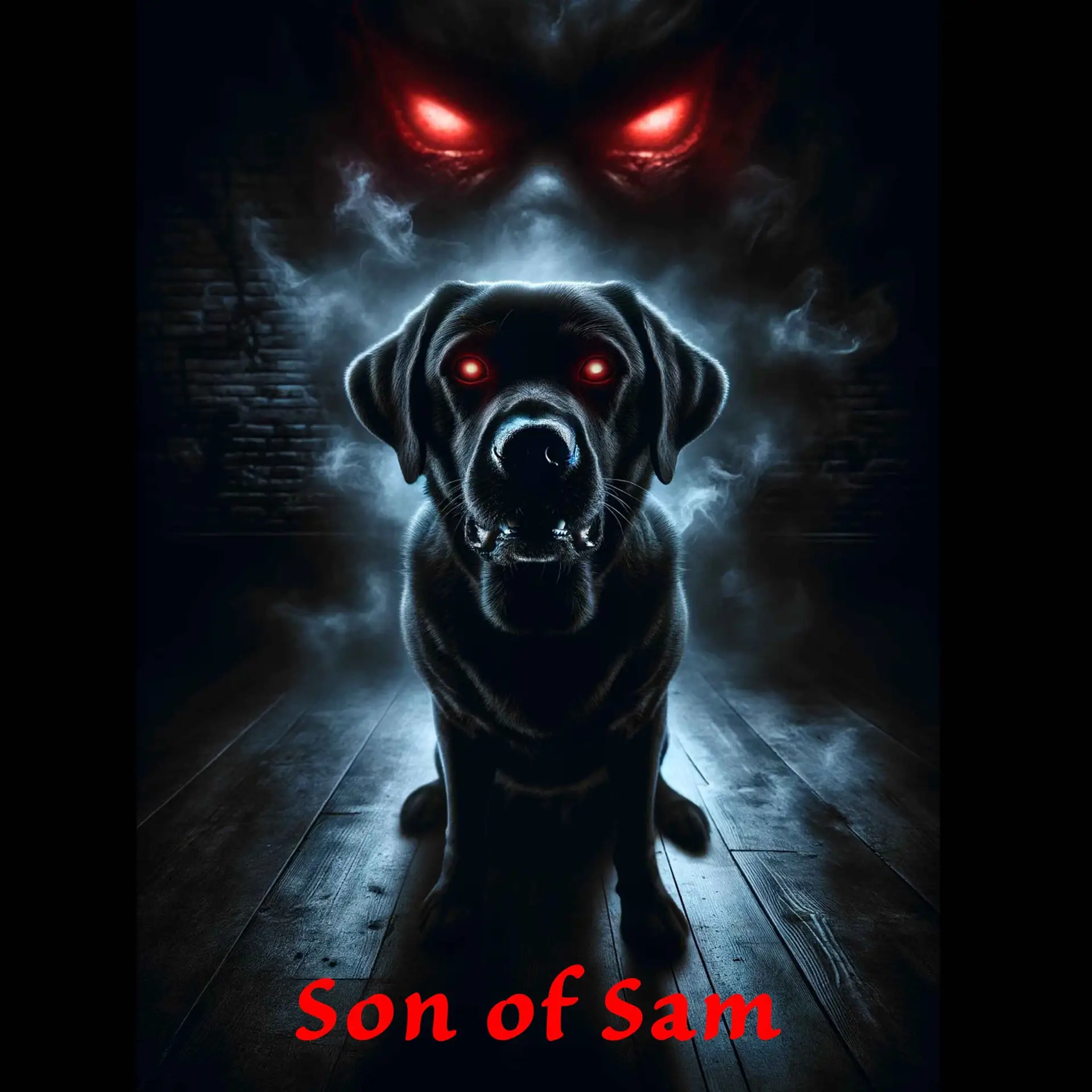
Once in custody, Berkowitz claimed his neighbor, Jack Carr, owned a black labrador retriever, Harvey. And that Harvey had been possessed by a demon and commanded the killings. He quickly confessed to all eight shootings and received six life sentences in prison.
Later, Berkowitz claimed that a cult assisted him in the murders. That set off a flurry of TV shows and books.
But you are about to hear that it was a lie. David Berkowitz confessed that he acted alone to Dr. Michael Caparrelli, a behavioral science professor in Rhode Island and former minister of 16 years with extensive experience ministering to prison inmates.
Caparrelli has written Monster Mirror, a book about his 34 face-to-face interviews totaling 100 hours with one of America’s most frightening serial killers.
Today, Berkowitz is 70 years old and has had a quadruple bypass.
I am drawn to the subject of serial killers and the mystery of what can cause someone to become the personification of evil. I imagine you listen to the True Crime Reporter® podcast because you to share this macabre curiosity.
Dr. Caparrelli and I discuss the building blocks that shaped Berkowitz into a serial killer, including isolation, trauma, resentment, and shame. None of those factors excuse his murders.
We also examine Berkowitz’s jailhouse religious conversion and whether true rehabilitation is possible after committing such atrocities.
One disclaimer. In the wake of the murders, New York passed legislation, known as the Son of Sam Law, to prevent criminals from receiving money from selling their stories to publishers and movie producers.
Robert Riggs:
Berkowitz does not receive monetary or otherwise profits from the sales of Caparelli’s book.
Here’s my interview with Dr. Michael Caparrelli, the author of Monster Mirror. Stay tuned to learn why Berkowitz called himself the Son of Sam.
Michael Caparelli:
It was in 2019. I resigned from pastoring. And right now I traveled the country. I'm probably speaking at about 70 venues a year. I'll speak on depression. I speak on criminal psychology. I speak on grief, anger management, seminars, workshops. I've written five books. The book on David Berkowitz is my fifth. In fact, it was the second book that I've mailed to David Berkowitz. I mailed it to him at Shawangunk Correctional Facility, I just had a heart for prisoners because of my background. And David read the book must read a quick because in about two weeks, he responded back with a letter saying I read your book. He said, I've been looking for a guy like you to tell my story. He said, Would you visit me? Your dual qualifications both as a clergyman and a behavioral scientists, a researcher in human behavior I'd already conducted other studies, I believe is a perfect fit to tell my story. So I visited him on April 1, 2022. And that was the first session in 34 sessions of meeting with David Berkowitz.
Robert Riggs:
Dr. Caparrelli was curious. He had heard that Berkowitz claimed to have converted to Christianity in prison 35 years ago.
Michael Caparelli:
You know, I kind of went into it being a kid from the streets. And with my education, a little cynical, maybe skeptical, more than cynical. And it was partly a curiosity to see if this conversion was real. But then to also understand the mental health factors behind his violence. Talk to me about your state of mind. When you gunned down 13 people, lit 1400 fires, and stabbed a young lady, what was going on in your head? Probably because of the fact that we live in a country where there are 13 mass shootings a week. I mean, those are staggering statistics. There are teens, you know, that includes school shootings, mass shootings. So trying to understand what's behind that sort of thing. And wanting to know if his conversion was a testimony or a testiphony.
Robert Riggs:
Did he have a detailed memory of what unfolded in each crime?
Michael Caparelli:
Yeah, well, you understand when David Berkowitz talks about the crimes, he does not discuss the crimes as easily as some of the other criminals that I've dealt with. Or even guys you see on maybe TV, a Ted Bundy or Ed Kemper, they sort of discuss it. So matter of factly. For David, it's, it's traumatizing. And I don't say that in a histrionic way. I mean, he, he gets this, this vein across his forehead, like he's deadlifting 300 pounds. And the pressure, the, it's a weight, he calls it a weight, and his eyes immediately fill up with tears. So it's a hard subject, it would almost be like talking to somebody about a loss now that that may be insulting to some of your listeners, like he's responsible for this loss, and I get it, believe me, he's, he's the culprit, he owns it. There's no justifying or minimizing it, but it still affects him in a very personal way. So in discussing that he's very detailed in his childhood. In incredible analysis of himself, even in the events right before the crimes and even in between the crimes, but when you actually deal with the murders itself, it's a lot of fragments that I had to sort through and put my interpretation, interpretive skills to the task.
Robert Riggs:
Well with your experience of interviewing inmates, particularly serial killers, I'm sure you've got a very good radar, the sense who's true. Did you sense that he has real any remorse? Or, you know, misgivings like to take it all back?
Michael Caparelli:
Oh, without a doubt. You know, first of all, I was exposed to 1600 documents, psychiatric reports, court records, prison records, letters between David and random strangers that write to him letters between David and his father, letters between David and family members of the victims. In particular, Neysa Moscowitz. Neysa was the mom of Stacy. Stacy was his final victim. Him and Neysa before she passed from cancer, stage four cancer developed the friendship needs to forgive him. And the heartfelt you know, statements in those letters. So you got the 1600 documents. And then you have if you sit with somebody for 100 hours, Mr. Riggs you're not only seeing actions, actions will tell you something about a person's character, certainly more than talk. But what's more profound than actions is reactions, reactions or actions that are unscripted there. When a man is caught off guard actions in real time when he's taken by surprise when things don't go his way. I got a chance to see David's reactions to all sorts of unscripted stimuli. Give you for instance, chapter two of my book, my book is on Amazon, you can order it. It's called Monster mirror. Chapter Two, I talk about a session where I arrive and David had a conflict with an inmate and the inmate insulted him. And David was enraged, was not in good headspace. And I watched how he navigated through anger for three and a half hours. So I got a chance to see David Berkowitz very angry because of this insult from an inmate, but I watched him have anger and anger not have him. I watched how he navigated through it. Typically when people get angry. When they're really out of control. They externalize externalize. They talk about people places things, everything outside of them. The angry are usually introspectively handicap, the ability to self reflect reflect is not very high when someone's angry. David Berkowitz, took me through a long dark tunnel into his own soul while he was angry in really exploring what was underneath the anger which in this case, we shame. And we discussed the relationship between shame and anger. We also discussed how that applied to the crimes and the murders. And so I get a chance to see his reactions and I'd say David Berkowitz, his conversion is real. Now he's not a perfect man. I have definitely noted some character defects, and even confronted him about them, which I write about in the book. So it's not perfect. But I'd say he had a real conversion 35 years ago, which is another thing it's hard to fake a conversion for 35 years. jailhouse conversions are typically six months before a parole hearing. They don't last for 35 years.
Robert Riggs:
So what precipitated the conversion?
Michael Caparelli:
1988. He's probably about I don't know. He's in his 30s. And he's walking the prison yard of Sullivan County. It's January. It's a cold evening he would go for walks he loves walking outside. And another inmate by the name of Rick is about five years younger than David. Late 20s. He approaches David and he begins to tell David that Jesus loves them and forgives them. And David says, Well, you don't know my story. What I've done is unforgivable. And Rick is very persistent. He joins David in the prison yard every night over a span of six months. Finally gives David a Bible Gideon Bible little pocket Bible with the New Testament, the book of Psalms. David brings the Bible back to his cell at night, starts to read, gets on his knees, and he says I just started sobbing. He said I wasn't sobbing because I was in prison and I I'll never see daylight. I'll never see free society. So it wasn't sobbing because I messed up my life. I was sobbing Because of the hurt I caused people and because of the, my sins against God, it was a genuine repentance. I woke up the next day. And I felt like 1000 pounds was lifted from my chests. He said, But still that weight. When I think about what I did it comes it says not a day that goes by. I don't at some point during the day feel that weight.
Robert Riggs:
So I've done a lot of stories about serial killers, a television series, spent time with them in prison. And of course, the question I always get from listeners and viewers is why? Were they born that way? Is it nature or nurture? Did you get any kind of answer like that? In all this time you spent examining his record and talking with him?
Michael Caparelli:
Oh,
yeah, I mean, that age old question, a question that is a very common theme in human growth and development. The trap that you have to be careful for when trying to explain human behavior is causal reductionism. It's to take a complex phenomenon, and to reduce it to one single factor. It would be like playing the game Jenga. you've ever played Jenga with the blocks? Oh, sure. And the tower collapses, you would be a fool to think the last block caused the tower to collapse. In reality, it was a buildup of blocks. And when you're explaining David Berkowitz, his collapse, his psychological breakdown, only a fool would think it's one factor. It's a buildup of blocks. Now in spending 100 hours, I gathered nine themes from the data. I collect my data, qualitative study, conduct thematic analysis where you're looking for themes. And those nine themes I would consider the nine building blocks. Now are they the nine building blocks behind every serial killer? Probably not. But I'll bet that there's some, some commonality. One of those building blocks from a very young age was isolation. Now we know from the data with behavioral science, the more isolated people are, the more their aggression levels go up. They get aggressive and more empathetic, or empathy levels go down empathy represented by oxytocin, aggression represented by cortisol and adrenaline.
Michael Caparelli:
So we as people, we don't do well in isolation. David Berkowitz was always a part of groups. He grew up in New York City. He's not like the Unabomber, you know, shaggy beard, hermit and a cabin. So he's around people a lot. But he's always sort of the outsider in the group. There's a difference between being with people and bonding with people. David was with people he played on baseball teams, part of the Appalachian Mountain Club, a group of teenagers that would climb the mountains be bused from the city to upstate New York. But he never connected. He always felt like the outsider. In fact, in his letters that he left at the crime scene, you go back and evaluate the content. It speaks so much to the themes I gathered. He says I'm an outsider, that's watching the world go by, programmed to kill and you'll see that isolation theme that outside of mentality probably amongst a lot of the especially the school shooters, the mass shooters, one of the building blocks. I'd say another building block was shame. David Berkowitz experienced lots of shaming in his childhood, not making excuses, Mr. Riggs, there's no excuse for what he did. explanations, just shedding some light. When he was in the third grade, his teacher took his desk because he was a very hyperactive child. In the 1950s. Nobody understands ADHD. And the teacher places his desk in the center of the classroom and says to the other kids, this is where the bad boys sit. So he's experiencing shame. His uncle, his father's brother, adopted father, by the way, would often body shame him because he was chubby, overweight. So shame was one of the building blocks, we discuss head trauma, David Berkowitz. A pipe hit him in the head at about six, seven years old. He was playing stickball in the Bronx and Westchester Avenue. Another player on the team accidentally hit him in the head with a pipe. He was also hit by a car two years later. Now we know TBI traumatic brain injury, about 63% of the criminal population in prison has suffered a TBI that's significantly high compared to the general population. Head trauma. In this case, an assault against the frontal lobe can affect one's impulse regulation. It can also result in sensitivity to Sound, which David Berkowitz definitely suffers from misophonia. We know that because of his irritation with barking dogs. I also know that from watching his life in prison, he's dealt with neighbors making loud noises, how it drives him insane. So head trauma was another building block. Now when I gather all these building blocks, just like building that tower in the game of Jenga, at some point, in the case of David Berkowitz, the tower collapses, I discuss each of those building blocks in the book Monster Mirror.
Robert Riggs:
After this message, I will be back with Dr. Caparelli’s to explain why Berkowitz called himself the Son of Sam.
Robert Riggs:
What did you learn about the moniker Son of Sam and what does he think about it?
Michael Caparelli:
David, called himself the Son of Sam, during that maniacal time in the 1970s, for a couple of reasons. He was heavily involved in Satanism. And one of the particular gods that he served, god of the underworld was a God by the name of sin, Sam hain, it was a druid God that demanded human sacrifice. At the same time, David's neighbor, a man by the name of Sam, becomes a real source of irritation for David, this is according to David's testimony. The neighbor's dog is constantly barking dog named Harvey. And David starts to see through his sort of delusional perspective, he sees Sam the neighbor, as a conduit, a vessel, an avatar, almost of Sam hain, this god of the underworld, so and then the name Sam. So you can imagine what that does, in his mind. The fact that Sam, his neighbor is named Sam. And he's become this source of irritation, it starts to play in his head is this distorted narrative, that Sam the neighbor is sort of a representation of Sam Hain the, the god of god of the underworld. And he becomes, in his mind, a messenger of Satan, a Son of Sam, in committing these crimes. So we're dealing with a guy that deftly had a psychotic break in that psychotic break is, you know, you could make a correlation between that and some of the themes I discussed in the book, especially isolation. I mean, when people isolate for too long, David was certainly very isolated the last couple of years of his crimes. The average person, their head, can get real tied up in knots. I'm not saying the average person is going to do a David did. But I think at some level, we're all susceptible to the effects of isolation on the personality.
Robert Riggs:
Did he explain to you what he was thinking during those crime sprees or what he was trying to achieve?
Michael Caparelli:
While there were definitely urges to kill the built up inside of him through a lifetime of resentment. Resentment is another one of the themes. The broader name anger, that was definitely something building from a young age. I mean, his his pyromania is in his vandalism of property was probably the, the seedlings of, of the homicides, the murder. I mean, he's lighting fires constantly from the time he's six, seven years old, very angry, a lot of that having to do with his adoption, which is a long story in itself. And he sees the crimes as partly what he would call demonic under demonic influence, but not this this like devil made me do it story. He believes the demons were working closely with this build up of hate inside his heart, and the crimes themselves the murders was sort of a release he talks about wrestling with the urges. He said at some points, I'd get in my car, I would drive leave my apartment in Yonkers I park at Orchard Beach, a very comfortable place for me that brought back a lot of childhood memories. And I would hope to escape the urges. But he in many most nights, he would succumb to the urges, and he felt sort of a relief in committing the crimes, a dopamine rush, if you want to call it that, that brought some temporary relief, just like a drug addict, is experiencing relief from a substance from these particular urges. But the relief just like a drug would only last for a certain window of time. And the next day, he's back to these urges building again, and looking for that outlet of frustration.
Robert Riggs:
Does he expect to win parole someday? And is he eligible?
Caparelli He is. He goes before the parole board every two years. And he does not expect to meet parole. He didn't go to a good portion of his parole hearings. But it was perceived as arrogance on behalf of the parole committee and the families of the victims, like how do he not show up. So he didn't want to communicate that message. So now he goes before the parole board every June, every other June every two years. He's up for parole this coming June. And he goes just simply with the expectation of sharing his story of conversion. But he knows the chances are very slim.
Robert Riggs:
Dr. Caparrelli says isolation and loneliness are contributing factors to the epidemic of mass shootings and impulsive violence sweeping the United States.
Michael Caparelli:
We live in a very extroverted nation. Um, you compare our culture to Japan, for instance, we're pretty out there. I mean, look at a social media. Yeah, selfies are all over the place. But extraversion and community are not the same thing. That's why I make the point in the book that David was in New York City, very populated. People are all the time surrounding him. But to be known in intimacy is to know and to be known. It's, I know, you, you know, me, it's not just shoot the breeze. Social media has kind of painted this idea that I'm connected. But are you really, you got 5000 Friends, but do they really know you? So, you know, social media is a great supplement for relationships, if you got real life relationships, and you're using it to supplement wonderful, but it's a horrible substitute. If it's all you got, which more and more people today is sort of turning to social media because it's easier than dealing with the risks that come with relationship, real face to face relationship, where I have a whole lot less control. Social media is becoming the pseudo relationship. It's becoming the I want to call it the counterfeit, if it's a substitute. So with that said, loneliness is going to skyrocket. The more people are on social media, the more lonely and the more depressed they get according to mood inventories. And I think you're gonna you're gonna see less active shooters, less serial killers in your collectivist countries of the world. You're not going to see the same level of serial killings and school shootings statistically, in collectivist nations, villages in Africa, Asia, even some countries in Europe, but in you're more into individualistic cultures, where we're sort of competing with each other more than we are completing each other. In that type of individualistic environment, more loneliness, more isolation. Which paves the way for more violence,
Robert Riggs:
Now from my Reporter’s notebook, some closing thoughts.
David Berkowitz serves as an extreme yet instructive case study about how social isolation can contribute to violence by young males, which has become increasingly common in the United States.
The underlying message of his book, Monster Mirror, is the need for empathy and emotional intelligence in today’s disconnected society.