My investigation of the parole of serial killer Kenneth McDuff uncovered a shadowy world of influence peddling inside the Texas parole and prison systems.
For years Parole Board members and staff had been leaving the system to become parole consultants.
They in effect went to the darkside. Using their relationships if not money with their old cronies still on the Parole Board to release their inmate clients, early.
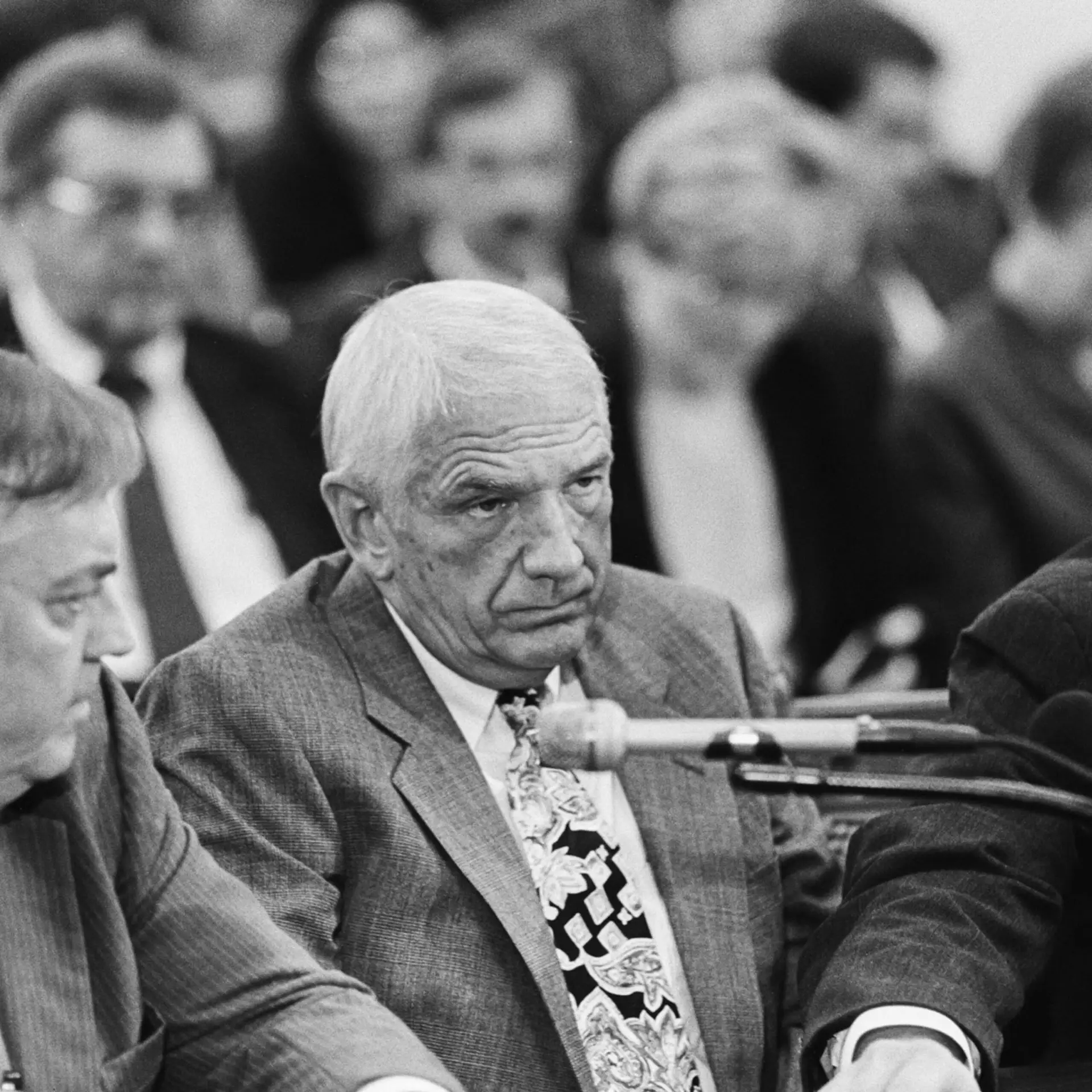
Fireworks broke out in a Texas Senate hearing when the former chairman of the Parole Board was subpoaned to answer why he paroled serial killer Kenneth McDuff and who he represented as a parole consultant.
Texas inmates thought a ticket freedom had arrived in their prison mail.
They started receiving personal letters from former Parole Board chairman James Granberry.
You may recall from the first episode that Granberry suddenly resigned his chairmanship of the Parole Board a year earlier.
After being grilled by senator Ted Lyon about the release of death row inmates including Kenneth McDuff.
Granberry set up shop as a parole consultant. He solicited business from inmates and their families.
When inmates opened their prison mail from Granberry, they felt
As if they had drawn the get out of jail free card in monopoly.
Granberry wrote,
"A mutual friend of ours told me that you might desire representation in securing your parole. If you would like for me to review your case to determine whether I might be able to help you, please write to me or you may want a member of your family to contact me.
GRANBERRY STATED AT THE END OF THE LETTER, "I'm enclosing a couple of my cards for your use."
Granberry claimed he didn’t know how those cards ended up inside Texas prisons.
In june of 1992, I recorded my confrontation interview with Granberry.
Riggs Q. WHEN YOU LEFT THE BOARD YOU FORMER PAROLE BOARD CHAIRMAN BECAME A CONSULTANT AND YOU HAD SOME
Inmates pass your cards out in the
Prison?
James Granberry: {laughs} I'm told that happen to, but I don't know how that came about.
Riggs Q. WELL HOW WOULD AN INMATE GET
Your cards?
James Granberry:I have no idea.
Riggs Q. THEY WERE OUT SOLICITING BUSINESS FOR YOU?
James Granberry: No.No. Not at all. I don't know how that happen but I was told that story.
I learned from inmate sources that staff members of the parole system were helping Granberry drum up business from inmates and their families.
Moriarty says it was all a scam.
there was also a list of people that were on mandatory release coming up that some of these Parole Board Members, former Parole Board Members that were consultants now would get these lists and know who was going to be released.
And so, they would get the family information from their contact inside the agency, call the family and say, “You come today with $400, $500 or $600 or $1000 and he will be out next Thursday. I guarantee you that.” Well, the reason he could guarantee it is because it’s already done. He is a mandatory release.
Robert Riggs: This seemed to me to be the perfect crime because Texas is under pressure to release hundreds and hundreds of inmates so who is going to notice that I’m taking money to let the worse to the worse out?
Here’s a sample of that bottom feeding.
THE WEALTHY PARENTS OF AN INMATE FROM DALLAS RECEIVED AN UNSOLICITED PHONE CALL FROM GRANBERRY AND LATER A $5,000 PAROLE CONSULTING CONTRACT TO HELP GET THEIR SON RELEASED EARLY FROM PRISON.
Granberry even paper clipped a note to the contract written on his Parole Board memo pad. A not so subtle message that he still had influence.
AND HERE’S ANOTHER SAMPLE OF WIDE SPREAD BOTTOM FEEDING, GRANBERRY SOLICITED THE BOARD TO RELEASE A HOUSTON INMATE THAT WAS SERVING A LIFE SENTENCE FOR PAYING A HITMAN $1800 TO KILL HIS FATHER.
THE HARRIS COUNTY PROSECUTORS OPPOSED THE PAROLE WRITING TO THE BOARD THAT, “This was a premeditated crime of pure jealousy and greed.”
When I questioned the ethics of the former Parole Board chairman taking money to get his old cronies on the board to release his inmate clients, Granberry took exception in my june 1992 interview with him.
Riggs Q: IS IT APPROPRIATE FOR YOU TO GO
Through that revolving door and one day take off the hat as board chairman? A very powerful position. And the next day be taking money to represent inmates to try to help them get out?
James Granberry It's not a very powerful position. I'll tell you that. It's not unethical. It's not illegal. But I'm choosing not to do it any more.
Inmates told me Granberry still knew how to flex his muscle inside the parole system even though he was now on the outside.
A Dallas insurance salesman serving three consecutive sixteen year sentences for bilking investors out of nine million dollars hired Granberry.
When it came time to walk out, of prison, the inmate told me Granberry tried to shake him down for more money.
When he refused to pay, guards hustled him on to a prison bus.
He spent weeks riding from prison unit to prison unit across the state of Texas. Lost in the system.
No one would tell his family where he was or what happened to him.
The criminal justice committee of the Texas Senate will come to order.
In the wake of my reports about Granberry’s involvement in the parole of serial killer Kenneth McDuff and Granberry’s parole consulting activities senator Ted Lyon subpoenaed Granberry to testify before the Senate criminal justice committee.
Lyon opened the hearings with a statement on september 18th, of 1992.
...today we are going to consider many recommendations aimed at curing a diseased parole system. 3:58
We are also going to continue to explore the circumstances surrounding the parole of Kenneth Allen McDuff one of the worst monsters known in this state’s history. The committee is also going to continue to examine the parole consulting business. …
...ethical standards are being adhered to. 4:41
Granberry’s criminal defense attorney, herman gotcher, told senators that Granberry would not testify unless he received immunity from prosecution.
As a result of the tragic events surrounding the parole of kenneth mcduff public outrage has caused a great deal of scurrying in the legislative and executive branches of the government to find a scapegoat. Dr. Granberry has been ridiculed in the press, by the Chairman of the Committee and accused of criminal conduct. As recently as last night it was reported on channel 24 here in Austin that Ted Lyon was accusing Dr. Granberry of conflicts of interest and violations of state law while he served on the board. In addition Democratic Governor, Honorable Ann Richards has called on the Travis County District Attorneys Office to instruct the Travis County Grand Jury to investigate the parole of Kenneth McDuff. That investigation is now ongoing. And I might add that the assistant district attorney in charge of that is present in this committee at this time. Dr. Granberry will not cooperate in this circus and will not assist this committee in its fishing expedition. I have instructed Dr. Granberry to assert his right under the 5th Amendment to the United States Constitution and in Article One of the Texas Constitution.
Granberry through his attorney refused to turn over a list of inmates that he represented as a parole consultant.
Granberry flashed a smug grin when senator lyon asked about the parole of Kenneth McDuff.
I have some questions that I want to ask and you can assert your Fifth amendment right on every one of those. Mr. Granberry why did you abstain from the vote on the initial parole panel to release Kenneth Allen McDuff?
Gotcher:
He submits his privilege.
Now Mr. Chairman I want to ask the chairman whether or not he is going to sit here for 15 or 20 minutes in front of the media here to castigate an honorable citizen of this state by repeatedly asking questions concerning his privilege and conduct for just some personal reason for harassment Mr. Chairman? If that’s going to continue, I’m going to state to Mr. Granberry to get up and walk out of here.
LYON: Well you can do that counsel. Let me explain something to you sir. We are investigating and I am going to ask him some questions just for the record. I’ve got about 15 questions to ask him.
GOTCHER: All right that’s reasonable.
LYON: Now we are investigating the release of a man who has personally under investigation for the alleged murders of about 15 women. Are you aware of that counsel?
GOTCHER: I was aware of that probably before you were Mr. Chairman.
LYON: Good
GOTCHER: It’s important to many citizens in this state not only this committee.
LYON: Good. I am glad to hear that. Here are the questions.
Gotcher: State your question Mr. Chairman.
Did you violate the conflict of interest policy in voting on Kenneth McDuff’s release as a member of the administrative review panel.
Granberry took the 5th amendment against self incrimination 16-times. Setting a modern day record for the Texas legislature.
Have you ever tried to influence a board member to deny an inmate’s parole because that inmate owed you money?
Gotcher: I assert Mr. Granberry to assert his privilege.
The systemic corruption uncovered inside Texas parole and prison systems angered the lawmen who brought McDuff to justice.
Three decades later, retired U.S. Marshal Dan Stoltz still gets mad thinking about it.
I’m going to tell you, this case is an emotional case. There were a lot of young women that were – young boys as well, and there is no sense in – and when he was released, there was no justice for the people in the State of Texas because he was released when he shouldn’t have been. We weren’t protecting our people by releasing this animal into our community. And that’s what rubs me the wrong way and I get very emotional when I know that we released him.
Next on true crime reporter, Kenneth McDuff goes on trial for two capital murders and scuffles with deputies.
Pamplin: It was the trial in Houston,
I said “I am aware of what he did the day before where he jumped four deputies in an elevator.” And I basically told him that I’d be happy to be there but I would be well-armed and if he so much she scratch his ass in the courtroom that I’d killing right there in the courtroom.
To follow true crime reporter.
Text true crime to 33777. Text true crime to 33777.
Riggs: The – back when McDuff is in high school, does he have the community? Does he have Rosebud, the people of Rosebud afraid of him?
Pamplin: Oh, absolutely. I would say everybody that knew him was concerned and did not want to have any dealings with him because they were afraid.
Riggs: What was there about him that struck fear in everyone’s heart?
Pamplin: Well, he had the general reputation of being a bully, of being tough. He was a large physical structure, 6’3, 6’4 weighing anywhere from 250 to 270 depends on time, year and so forth. But he was extremely good physical condition. He worked in a concrete business with his dad and his brother Lonnie. And he was strong, very strong. But actually the only people that I have ever known that he has physically done harm to has been young women and young boys. In my personal opinion he was a coward and he was a very, very sick individual.