African American convicts at the Darrington Prison Farm in Texas sing in rhythm to the swing of their axes.
A 1934 recording captures a work song by a prisoner called Lightnin’ Washington by his fellow inmates who said he could think faster than the warden.
They chant “It’s a Long John” about an escape from bondage.
Well I wouldn’t listen. I wouldn’t listen. Got to run’in around. Got to run’in around. First thing I know. First thing I know. I was jailhouse bound. I was jailhouse bound.
Folklorist John Lomax and his son Alan recorded the music of African American convicts here during the Depression.
Darrington was originally a Civil War-era plantation. Convict labor leased from the Texas Prison Commission supplanted slave labor.
In 1918, the Prison Commission purchased the 6,747 acre plantation located south of Houston.
Today, inmates still raise cows, pigs, and poultry here. And work the fields, planting and harvesting crops.
John Moriarty: The Texas prison systems were self-sufficient. They grew their own food and raised their own cattle and sheep and hogs. Back in the day, they had the third-largest hog operation in the world.
John Moriarty is the former Inspector General of the Texas Department of Criminal Justice. He was the prison system’s top fugitive hunter.
Robert Riggs: Is it mostly changed now?
John Moriarty: It’s not self-sufficient, I can tell you that because of all the changes. And probably for the better.
In 1963, before racial desegregation, the prison housed white second-time offenders.
By the 1980s, Darrington, now called a maximum-security unit, held the leaders of violent prison gangs among its more than 1800 inmates.
In 1986 the prison system built a 12-foot high gun walk so guards could keep a closer eye on inmates in the recreation yards.
This brings us to the Thanksgiving holiday of 1994.
Saturday, November 26th. Darrington was on a skeleton security shift. Most of the unit’s 425 guards were at home with their families.
Inmate Gregory Ott was inside the prison boiler room, filling a water sample for a daily test.
At about 9:05 PM, the doorbell to the room buzzed.
Ott thought it was a guard making rounds and pushed the button to open the electric lock.
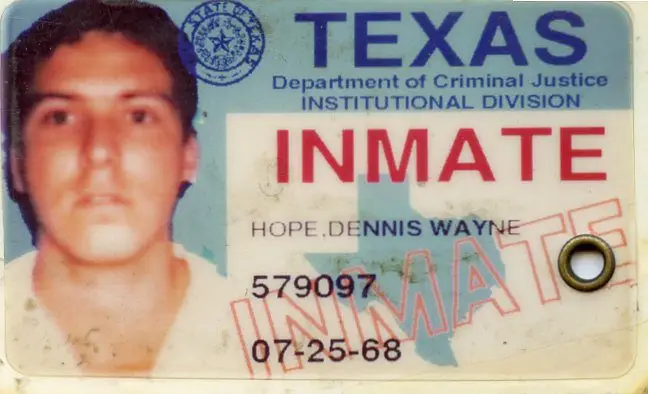
Inmate Jason Montgomery pushed inside followed by 26-year old Dennis Wayne Hope.
Montgomery was serving a life sentence for attempted capital murder.
Hope was serving an 80-year sentence for armed robberies.
Hope grabbed Ott from behind. Put his arm around his neck. Forced him to the floor.
And said, “I was told to just kill you but I’ve got nothing against you. Lie there and shut up and you won’t get hurt.”
Hope and Montgomery tied Ott’s hands behind his back and his legs with electrical wire.
And bound his hands with electrical tape.
They wanted to know if all of the prison lights would go out when the electric power was shut off.
Ott replied yes but was afraid the boiler would blow up.
Hope and Montgomery pulled green prison blankets out of their shirts and began tying the blankets around their legs.
The doorbell buzzed again. A third inmate, Harry Decker, showed up.
Decker was serving a life sentence for aggravated robbery.
The leggings made out of blankets would help them get through razor wire on the prison fences.
They had also made dark clothing with hoods out of the blankets to cover their white prison uniforms.
Hope masterminded the escape plan.
But inmates Montgomery and Decker didn’t know that Hope was using them to distract attention from his own escape.
The blue-eyed, five-foot-eight-inch, 152-pound inmate had appeared to be a fitness fanatic. Doing hundreds of push-ups and handstands every day.
He calculated that ten laps around the prison recreation yard was a mile. He would run at least ten miles a day.
Louis Fawcett
He would run around the prison yard, put some rocks in his pocket as he made one lap. He'd put moving over to another pocket so he could tell when he'd run 10 miles when he did a lot of exercise and working out getting ready.
Louis Fawcett was a prison investigator assigned to the FBI Violent Crime Task Force in Dallas.
Fawcett specialized in hunting fugitives. Two weeks after joining the FBI squad, Dennis Hope became his first case.
Dennis Hope had been a grocery store stocker in Dallas. When he got passed over for a promotion, the 22-year old retaliated.
He knew where money was kept and the schedule when armored cars would pick up daily deposits.
He robbed four supermarkets at gunpoint, some of the very ones where he had worked. And fired a round into one store as he left.
In two other robberies, Hope dressed up in a uniform stolen from an armored car company.
He called a grocery store manager telling him that the regular armored car was running late and he was the substitute.
Hope walked out with $29,200 in cash from the first robbery and $37,000 in the second robbery.
The real armored cars would roll in shortly after Hope had made his getaway.
Later that month, a Dallas police detective spotted Hope wearing a shoulder holster with a Ruger 6 blue steel revolver in the Borrowed Money Bar nightclub parking lot.
Hope claimed he was a sheriff’s deputy. He flashed a small badge with “special police officer” written on it and produced a pair of handcuffs.
The detective arrested him on the spot for impersonating an officer.
Behind bars in the Dallas County jail, Hope arrogantly demanded catered meals and television for his cell.
Five months later, on his way to stand trial, Hope vanished from a line of prisoners who were handcuffed together at the Dallas county courthouse.
He used a key smuggled into the jail, hidden in his mouth to get out of the cuffs.
Hope stripped off his white prison overalls down to his boxer shorts and jogged
off through downtown Dallas.
Louis Fawcett
So he’s running down the street when a policeman pulled up beside him and spoke to him. He said, Oh, I'm up trying out for Triathlon. How are you today? Basically, just strike up a conversation. Didn't panic. Didn't run. Didn't fight any officers. Okay, we'll have a nice day he drove off. He was very confident, very confident.
Four days later Hope stole a Pontiac Trans Am from a service station when the driver left her keys in the ignition and went inside to pay.
The next day Hope got into a high-speed chase.
It ended when a State Trooper shot out the tires on his stolen car.
Hope rationalized his robbery spree as “I needed the money.”
In 1991 Hope was sentenced to 80 years in prison on four counts of aggravated robbery with a deadly weapon and four thirty-year sentences for stealing 20-grand dressed like an armored car guard, impersonating an officer, escape, and car theft.
Taking no chances, the Dallas County Sheriff transported Hope to the Texas Prison System Intake in Huntsville, Texas wearing handcuffs, leg irons, and a belly chain.
He was sent to the Darrington Maximum Security Unit due to his high escape risk.
George W. Bush
Texas is ready for a new generation of leadership and I will provide that.
Four years later in November of 1994, George W. Bush was elected Governor of Texas on a law and order agenda.
Hope wrote to his mother that making parole was now hopeless. No pun intended. Those were his words.
Fawcett
The Escape itself was very clever. I mean that he would determine He was going to go or he's going to die in the process. I really believe that.
After taking the prison boiler room during Thanksgiving of 1994, Hope dashed toward the interior prison fence located 100 feet away.
As Hope ran, Inmate Montgomery flipped off the master electrical switch.
The maximum-security unit suddenly went dark.
Hope cut a hole in the wire fence with pliers. Went through it. And then climbed over the exterior prison fence.
Inmates Montgomery and Decker weren’t in Hope’s physical condition and couldn’t follow him over the exterior fence.
They had to cut a hole in the wire which slowed down their escape.
Fawcett
well to the other two guys were delayed because they couldn't get over the fence and trouble.
They had trouble and I think both of those were smokers and tennis didn't smoke. And he was in shape. He'd been prepared for it. I think for a while.
Now Dennis, cut a hole in the fence with wire cutters. People listening to this are going to wonder, Where does an inmate in prison get wire that they can cut a hole in a fence to escape?
Well, there's maintenance departments and a lot of the inmates work as trustees and maintenance. So they have access to a lot of tools. But they keep apparently good count of all the tools employees do but now then we'll slip through
At 9:30 PM a guard in a picket tower located 100 yards away saw inmates Decker and Montgomery running in the dark.
He ordered them to halt and fired a warning shot with his rifle..
They briefly stopped and started running again. The guard fired four more rounds.
Decker fell to the ground crying out that he had been shot in the foot.
Montgomery crawled back to help him. Decker hadn’t been shot. He had sprained his ankle.
The pair got up and started running again.
The guard fired four more rounds but missed in the night.
John Moriarty who led the hunt for the escapees said the prison released its bloodhounds to find the inmates.
Robert Riggs: So did he –did he use these other two escapees basically as bait?
John Moriarty: Yeah. They were basically dog meat because he knew that the minute that they went over the wire, the dogs would be put on the ground and they would be tracking them.
Robert Riggs: So Dennis Wayne Hope goes one way but he sends his other two escapees another way and they’re bait for the dogs. How long does it take to like put them down?
John Moriarty: Within a couple of hours, they were apprehended.
Montgomery and Decker were caught on the prison grounds.
A guard found inmate Montgomery lying flat on his back covered with leaves, sticks, grass, and other brush.
When ordered to get up, Montgomery told the officer quote, “I was just laying here thinking about blue skies and the Bahamas, when your funky ass found me. I thought I had made it, and was just about to roll me a cigarette.”
Later, a captain of correctional officers who lived on the unit heard a noise outside.
In the carport, he found inmate Decker leaning against the driver’s side door of his Ford van dressed only in his inmate underwear and wearing tennis shoes. When asked what he was doing, Inmate Decker responded, “I’m just watching” and he gave up.
Robert Riggs: Meanwhile, where is Dennis?
John Moriarty: He is on a full run. From the time he hits the fence, he is gone. I mean he is long gone. And into the towns, into a populated area.
and he knew the distance because he had found a church pamphlet that somebody had left at one of their services there at the unit had a map of where their church was. And so he saw from that how far apparently and was, he was able to fly this course. So when he hit the fence. He knew exactly what direction he was going to go.
Hope ran 8 miles at a fast clip.
Swam across a canal. Rolled in the dirt to turn his white prison garb brown.
And ran 13 more miles to Pearland, Texas south of Houston.
He lived off of hamburger buns thrown out from a McDonalds and hid in the weeds.
He watched a service station for the next customer to leave keys in the ignition.
When the driver of a GMC pickup truck went inside to pay the cashier.
Hope slipped behind the wheel.
He had a long head start on fugitive hunter John Moriarty.
Robert Riggs: And what do you then typically do as a fugitive hunter of trying to …
John Moriarty: Well, there’s a – the ground search and the perimeter that goes up is obviously the first thing that happens and they notify us. We set up a large command center operation in Huntsville and we have of course the presence there working, conducting interviews of cellmates and employees and trying to get any piece of the information that we can about the possible whereabouts of what he did. But one thing I’ve learned over the years that these guys are creatures of habits. So the first thing they do is to look at the files on the guy and see what he did in the past because he is going to go back to what he did without a doubt.
Hope proved to be a creature of habit.
He headed back home to Rockwall, a suburb of Dallas.
In Mesquite, another suburb, Hope dumped the stolen pickup at a convenience store.
He approached an 82-year old man in the parking lot.
Told him that he had sprained his ankle and needed a ride.
Several blocks away as the good samaritan neared his home, Hope pulled out a hunting knife to carjack him.
Fawcett
that he needed a ride and got in the car with this gentleman and then pulled a knife that he had found in the pickup truck. The elderly gentlemen tried to grab the knife and grab the blade, Dennis pulled the knife in his hand and cut it. He told him I'm not trying to hurt you, I'm just, you know, need a ride. So he jumped over to the driver’s seat. And they take off in the process of doing that he threw his inmate ID card, now just very close to where the truck was located and very close to where the store was located. So he ditched his inmate ID. And he took the Illinois gentleman's ID not so much the driver's license, but anything else that he had was the name of it. And he put the old man out of the car and took off in that vehicle.
Riggs And he goes to where?
FAWCETT: He took off to parts unknown.
Hope took the man’s wallet with 80 dollars inside and dropped him off on the side of the road.
For the next several days he lived inside the car and would eat at McDonalds.
He purchased a BB pistol at a sporting goods store near the Borrowed Money Nightclub.
Remember it. The place where he had been arrested four years earlier for impersonating a sheriff’s deputy.
Hope truly was a creature of habit.
And that would play to the advantage of Moriarty and Fawcett who were hot on his trail.
Hope used the BB gun to rob one of the very grocery stores that he originally had been convicted of robbing.
He brazenly went into the grocery store with a marked Irving Police patrol car parked in front.
Hope held up a clerk for $1300 and calmly walked out past the police officer.
He drove his carjacked vehicle to a vantage point.
Watched and laughed as the grocery store’s employees ran outside to tell the officer in the parked patrol car that they had been robbed.
It was payback. Hope felt he was treated unfairly when he had received 80 years for his earlier robberies.
Fawcett
you know, he wasn't gonna do that time. Didn't feel like he earned that time. Didn't feel like he deserved That time for a little case robbery. He said he didn't hurt anybody. And of course, my response to that if you put a gun on a young girl, you've hurt her. Because she's terrified, you know, and you'll affect what she does. that'll affect the rest of her life. But anyway, that was his attitude. He didn't hurt anybody. And wouldn't you know, nobody, no harm, no foul, so to speak.
Investigators launched a statewide dragnet for Hope immediately after his escape.
Crimestoppers posted an award.
Wanted posters were distributed to grocery stores across the Dallas metropolitan area.
Investigators followed up on dozens of leads and sightings of Hope.
They interviewed ex-wives, ex-girlfriends, family members, friends, work associates, and his fellow inmates.
One woman told them that Hope lived three different lives:
Husband and Christian Image
Rich man’s son to his girlfriends.
Top Thief in Town
Robert Riggs: So he came back to Dallas and started robbing some of the same grocery stores, armored car visits that he did in the past. Was that habit? Or was that “I’m going to thumb my nose at everyone?”
John Moriarty: Like I said, what I’ve learned is that we are all creatures of habit but especially convicts. That’s how they made their living before. They didn’t get caught for all of them. They didn’t get prosecuted for all of them. But they go back to what they know. And in his case, he worked scams, involved in picking up money from grocery stores dressed as a guard on an armored car. He would surveil them. He would know their times, know their routines, because of his prior experience also working at these grocery stores, and would go in and make the money pick-up.
The ability to obtain the money without having to kill anyone or shoot anyone, that’s kind of what he did.
A dozen FBI surveillance teams staked out grocery stores with this order from their supervisor.
Given our boy’s history, it should go without saying that you ensure you have a full tank of gas. He likes to travel at high rates of speed and for long distances. Please wear your vests and have your raid jacket handy in case we get rolling and have the occasion to get out on foot. I am certain there will be an overabundance of plainclothes detectives and I don’t want any identity mistakes.
Fawcett
We had SWAT teams looking SWAT teams on top of buildings and parking lots and everyplace else you could take to put them in no sign of it. No sign
Riggs: So wouldn’t Hope case the grocery stores. Spot the FBI stakeouts. And drive a few blocks down the street where there was a place not under surveillance and hit it to just kind of thumb his nose at the FBI?
Fawcett: Well, we had one doors take down and that one, the one that he hit, he actually hit another one down the street or not far from there.
Robert Riggs: But is it he is making a statement?
John Moriarty: Yeah. I think he was and I think he was thumbing his nose at us. Later on, obviously, we learned he wasn’t residing in the Dallas area when we apprehended him
After committing the first grocery store robbery, Hope headed to Memphis, Tennessee.
He would use Memphis as his home base to commute back and forth to Dallas to commit more armed robberies.
In Memphis, he was charming women and spending thousands of dollars from the robberies at casinos in Tunica, Mississippi, a short drive south of Memphis.
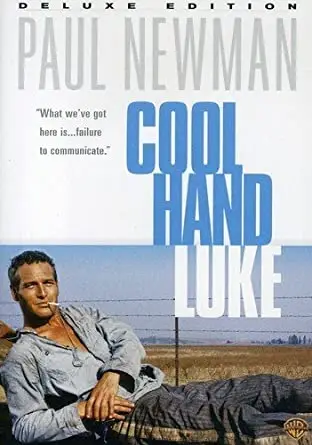
Like a scene from the movie Cool Hand Luke, Hope sent letters and fifty-dollar money orders to his friends back at Darrington bragging about his cool life on the outside.
He signed one as Your Bro. Dangerous “D”.
On another letter, the return address in Hope’s handwriting was Irk Megclerk from 1269 Drop Trousers, Austin, Texas.
Another letter contained the PS message: Big Bank Hank
It was a code that Hope had recovered money hidden from an earlier armored car robbery.
But for all of his bravado, Hope apparently got homesick at Christmas. And made a mistake.
John Moriarty:
Well, he is in Mississippi gambling but we ended up – we had again, the State of Texas is pretty unique in that they all spend a million dollars to go after you because their attitude is if you don’t catch one, you will be chasing them all. And so, we ended up getting up – putting some electronic surveillance on some phones of some known associates and there was a woman that we suspected that he had had an affair with that was residing in the Dallas area. And on Christmas day, the phone got multiple calls. Her phone as well as some others that we were looking at got multiple calls from the Memphis area.
So at that point, a couple of days after Christmas, we loaded up, Louis Fawcett.
Police in a suburb of Memphis found an abandoned
1985 beige over brown 4 door Oldsmobile 98 with a luggage rack on the rear trunk and mud flaps on the rear tires.
It was the vehicle that Hope had carjacked from the elderly man.
Moriarty and Fawcett arrived in Memphis at 3AM on February 2nd of 1995.
They found clues that Hope left in the stolen car.
A receipt for an id photo purchased at a Memphis shopping mall.
A newspaper with ads circled for apartments and rental furniture.
A receipt from a motel where he had stayed.
And a newspaper ad for a Honda CRX with the owner's name and number scrawled on it in Hope’s handwriting.
Hope had bought it on December 16, 1994, for $2,850 in cash.
He had used the Honda to drive back and forth for multiple armed robberies in Dallas.
Hope had been stopped by local police twice.
Fawcett says the officers were lucky.
Louis Fawcett
they just don't care about anybody except themselves. You know, with most of them it's me, me, me. It's all about themselves and whatever they got to do to get what they want, you know, sociopaths and psychopaths and people like them.
RIGGS: And Dennis fit that profile?
FAWCETT: It fit him to a tee. In fact, told us that he was planning on or was prepared to kill us. Memphis officer that stopped him. In that Jaguar. He was driving around, of course, had no driver's license. And when these two officer uniformed officers stopped him, he was sizing up, which one he was going to shoot trying to determine which one were wearing a vest and which one wasn't. But he talked himself right out of it. I mean, he, he convinced him that he would just out he got lost in the wrong neighborhood and they let him go without a warning ticket or anything.
Hope stayed true to the habits of ex-cons on the run.
Moriarty traced the phone number that Hope had used to call a girlfriend on Christmas Eve to the executive office of a meat distributor in Memphis.
John Moriarty
the second call was from a business at a home meat delivery type place. Anyway, it was again, around the holidays wherein a whole lot of people working but the boss was there. So it was coming in off of his phone which was very unusual. So we were kind of concerned about whether or not we should approach him or should we watch the place. And we decided we will just approach him kind of covertly.
So we went in and he told us that, “Oh, that phone is answered by his secretary.” So we got a hold of her. She was a nice, pleasant, young lady and she said – we started asking her questions about who had made phone calls, where you here on Christmas Eve, well, she had come in and brought her sister and the sister’s boyfriend in. And so at that point, we showed her photograph and she said, “Yeah, that’s my sister’s boyfriend,” identifying Dennis Wayne Hope as being the person that used the phone to call Texas.
Robert Riggs: So he has got a girlfriend but he is calling a woman in Texas that he has had an affair with.
John Moriarty: Yes.
Robert Riggs: So it always comes back to find the girlfriend or the woman.
John Moriarty: That’s correct. It’s one of the things that they do a great job of covering themselves usually and trying to hide but the associates that are with them don’t always do such a great job. So at that point, her sister was out of town. And so – and of course, there were no cell phones then, it was pagers and that kind of thing. So – but she had his pager number. And so, we had her paged and she had called back at work and knowing that the sister was out of town, he said, “Where can I …” she said, “Where can I meet you or whatever? Can we go have a beer? What are you doing tonight? Blah, blah, blah?” And he said, “I’ll be at this country western bar.
Robert Riggs: So how does a guy on a run get a girlfriend so fast in another city?
John Moriarty: Well, he was definitely a womanizer. And the old saying, “Women love outlaws,” really applied in his circumstance. He played that cowboy image and he was a con man.
Hope had told his new girlfriend in Memphis that he owned a country-western bar back in Dallas
The investigators discovered that Hope had bought a black Jaguar with his stolen loot.
When they pulled into the parking lot of the Denim and Diamonds country-western nightclub in Memphis, there it was, the black jaguar.
John Moriarty[1:28:0]
When you look in the car, you could see the butt of a 45 automatic underneath the driver’s seat. So we knew he was armed or would be armed and so we disabled the vehicle in order that if he did get out on us that it wouldn’t start and the tires were without air.
Moriarty and Fawcet went inside Denim and Diamonds.
It was the largest country western club in Memphis.
Moriarty worked undercover and he looked like an excon. Bearded with long hair, dressed in street clothes.
Fawcett didn’t look much different and certainly nothing like a cop.
Far across the 31,000 square foot dance hall, Moriarty spotted Hope wearing a white straw cowboy hat.
He stood at a table holding court. The center of attention.
John Moriarty:
I mean our concerns obviously were that if we snatch him up that the bouncers would think we were starting a fight.
And just as we were talking, a fight call drops at the bar that we’re at and so that was kind of like perfect because it allowed plenty of cops to pour into the place. And so, we ended up going back in, getting up close to him, waiting for the uniforms to arrive. They told the uniforms that we were in there and what we were wearing and what was going on. So they were dealing with that fight with the bouncers and everybody else. And then the Marshals came in with the cops and with police raid jackets on. And Lew and I jumped on him and put him on the ground and he just could not believe that two cops from Texas were in Memphis taking his ass to jail.
Lewis Fawcett
He was shocked. I told him I said you're going back to Dallas. Your name is Dennis Hope you're going back to Dallas with us. And he was shocked. He didn't argue he didn't resist. I expected we might have a fight on our hands but he was not armed.
Nearly nine hours after arriving in Memphis and running down dozens of leads, Moriarty and Fawcett took Hope into custody at 11:45 PM on February 2, 1995.
Hope was carrying more than $6,000 in cash and pager on him.
Their investigation wasn’t over.
They obtained a subpoena to get the billing information for the pager.
The address led to a boarding house where Hope had rented a room shortly after his arrival in Memphis.
Forty minutes after Moriarty and Fawcett arrived there, Hope called the landlord from jail.
He asked if police were there and claimed it was a front for a robbery.
Hope asked the landlord to get $17,000 hidden in a TV box and duffle bag as well as a .45 semi-automatic handgun out of the house.
The landlord consented to a search.
Moriarty and Fawcett found a treasure trove of evidence that would send Hope to prison for the rest of his life.
Moriarty
He was commuting from Memphis doing the robberies, doing the surveillance, and taking down those places. We found – when we searched his place later, we found large amounts of cash and currency that were taken in the robberies, a bunch of obviously, the money that he had taken. But also, he was getting ready to do more armored car stuff. He was putting together a uniform and ID cards from Brink’s and that kind of thing. He was cutting and pasting and they looked pretty good.
By the Way. Hope’s new Memphis girlfriend collected his $5,000 reward for his capture and kept the Jaguar.
Dennis Hope
What have I got to lose?
Back in custody at the Dallas County Jail, Hope bluntly told me and the FBI that he was already planning his next escape.
Jail Commander Bob Knowles was worried.
I don’t think I’ve ever seen anybody that has spent the time to plan as he does and he is very patient.
When I walked up to his cell, Hope was doing pushups in a handstand position. He would do hundreds of them every day and would run in place for hours.
Five officers escorted Hope out of his cell to our interview.
They put him in handcuffs and leg irons. Wearing an orange prison jumpsuit, Hope shuffled his feet.
He wore a vest that worked like a stun gun to prevent him from escaping again on the way to court.
One wrong move and guards could press a remote control button that would send a 50,000-volt charge for 8 seconds into Hope’s lower back muscles.
I watched a video demonstration of the vest. It knocked burly deputies off their feet into kicking and screaming fits.
None of these extra security measures discouraged Hope. Not one bit.
He showed me on camera how he could twist the plastic ink refill from my ballpoint pen into a handcuff key.
His guards were stunned. After seeing my television news report, the Dallas County jail banned ballpoint pens.
It sounds like you are already looking for the opportunity to make a run for it again. Will you be back? I’m not going to stop trying. And I look at as if they kill me and I am trying to get away and they do kill me. Then the state still didn’t get the 80-years out of me.
Sure enough during a federal court appearance, one of Hope’s guards could not find the key to his handcuffs.
Hope had apparently lifted it and swallowed it.
The Dallas County Sheriff wanted nothing more to do with Dennis Hope.
After angry exchanges, the feds moved Hope to a privately run jail.
Hope wrote to a friend from there that, “The facility isn’t a year old and is falling apart. Doors stay ajar because the foundation is shifting and the cell doors can easily be opened.” And in closing he noted. P.S. I am using a ballpoint pen.
A few weeks later, Hope sprung open the remote locking device on his cell door.
He assaulted a guard with a metal drain cover he had pried loose from the shower and briefly took over the command center.
Officers found hacksaw blades and a shank made out of a toothbrush.
He had almost sawed through a door lock. And he had already been caught trying to dig through a wall.
Then assistant U.S. Attorney David Finn prosecuted Hope on federal charges.
He is extremely intelligent. He is extremely wily. Most criminals, particularly violent criminals are not nearly as intelligent as Mr. Hope, which is really the tragedy here because he could obviously apply himself to something productive.
On August 18th of 1995, a seven-man, five-woman federal jury deliberated for less than an hour before convicting Hope on eight counts of robbery, felony possession of a firearm, and carjacking.
During the four-day trial, the jury was shown my televised interview with Hope.
Federal prosecutor David Finn called Hope cagey, dangerous, and savvy. He urged the jury to put an end to this one-man crime machine.
In the federal courtroom, U.S. Marshals had to strap Hope to a bare chair.
The leather cover had been removed so Hope could not pry loose an upholstery tack to use as a weapon.
Before the verdict, he scuffed with officers.
And threatened to stab his court-appointed attorney in the skull with a pencil.
The judge stacked a 72-year federal prison sentence on top of Hope’s 80-year Texas sentence.
Dennis Hope
When a man has been sentenced to be locked up the rest of his life common sense would lead you to believe what his intentions were.
A year later, Hope was still defiant when I interviewed him inside the supermax Telford Unit in rural northeast Texas.
The Telford Prison unit looks like a massive concrete bunker surrounded by rings of security fences and rolls of razor-sharp concertina wire.
Hope found himself under the scrutiny of Jack Garner who was then regarded as one of the toughest prison wardens in Texas.
What do you do with Dennis Wayne Hope who has nothing to lose? My opinion is we lock him up right where he is at and throw away the key. Dennis Wayne Hope should never get out of the penitentiary.
Hope was put into Administrative Segregation called (Ad Seg).
It’s a prison within a maximum-security prison.
John Moriarty describes the restricted life inside solitary confinement there.
John Moriarty:
Yeah. He is so far back in the penitentiary, they are feeding him with a slingshot.
[Laughter]
Robert Riggs: But he went in something called administrative segregation, which is a prison within the prison.
John Moriarty: That’s correct.
John Moriarty: When you get locked up in prison, that’s where you go. You have 23 hours a day single-celled, one hour out to shower and recreate. It’s the bowels of the prison. And you’re afforded all of the care that is required by law but it’s the tightest security that the prison system has.
Robert Riggs: And I’ve been in there and all your meals come through a locked little window slot that opens in the door.
John Moriarty: The bean slot, yep. Absolutely. They call it a bean slot. And that’s how you get fed. And when you are taken out of that cell, you back up and put your arms through that hole and you’re handcuffed and there’s a leash put on you and the doors open and you know you’re in custody.
53]
Robert Riggs: And there are always two guards handling you.
John Moriarty: That’s correct.
Robert Riggs: And I think – is it the only place where the guards are actually armed with a club or something, some kind of protection?
John Moriarty: They – it isn’t the only place but they do carry a club and gas.
Robert Riggs: You know, the first time I went into an administrative segregation, the noise is what really struck me. It’s very intimidating at first. It’s almost like you’ve gone into a dog pound full of angry pit bulls.
John Moriarty: Yeah. It’s a very violent place. It’s the place where people who can’t act properly in a prison, which was saying a lot, are put. The chances of you having feces and urine thrown on you and other liquids that they heat up with what they call a stinger, it’s a dangerous place to work. I mean it’s the worst of the worst.
(LOW LEVEL ATMOSPHERIC SOUND UNDER)
Hope’s tiny cell contained a small sink built on the top of a seatless toilet made out of stainless steel in a prison factory.
He slept on a thin cloth mattress atop a steel slab both of which were also made in a prison factory.
Daylight shined through a small slit in the wall near the ceiling.
You couldn’t see outside.
Two guards armed with metal batons came to escort Hope to his daily one hour of recreation.
Guards used a wrench to open a small slot in his cell door.
Hope had to strip down, lower his boxer shorts and bend over for an anal cavity inspection for weapons.
The guards ordered Hope to turn around with his arms behind his back.
He extended his wrists through the slot in the door to get handcuffed.
When the cell door slid open, the guards firmly grasped Hope by each arm and walked him down the cellblock.
Inside a caged recreation yard, I watched Hope perform his daily regimen of physical training, running laps and doing hundreds of handstand-style push-ups.
Warden Garner wasn’t the least bit worried about Hope.
He beamed with pride that an inmate that had escaped from him to Mexico a decade earlier had just been captured.
The Warden had kept the inmate's photograph in his wallet as a reminder and pledged that Hope would never get away,
"I promise you if Hope ever runs off I will be on Hope’s doorstep, every step of the way."
Dennis Hope confidently told me that the old-time wardens like Garner would retire someday.
The prison system would forget about his notorious escapes.
He would bide his time and plan another break for freedom.
In a 2009 letter to a British television producer who was interested in his story, Hope stated, “in some areas, I threw caution to the wind.
To me life is defined by more than just a heartbeat, it’s about living and enjoying some if not all of what you do. It would serve no purpose to be on the lam if I were just hiding under a rock. I never had any intentions of coming back to prison.
I’d either be dead or exercising my freedom somewhere in the United States.”
The story of his childhood is depressing. In high school, he told his classmates his mother was dead.
He periodically survived alone in the woods homeless.
Maybe that’s what tempered Hope to survive all of these years in harsh solitary confinement.
Dennis Wayne Hope is 54 years old at the time of this writing. He has spent more than 27 years in solitary confinement. Hope has been denied parole for more than 15 years.
In February of 2022, he unsuccessfully asked the U.S. Supreme Court to consider whether such prolonged isolation violated the Eight Amendment, which bars cruel and unusual punishment.
Hope is pictured with a strong jaw and short salt-and-pepper hair in his most recent prison mugshot.
He wrote to his lawyers that “challenging the use of solitary confinement has given me a purpose and goal and helped me maintain a degree of sanity in an otherwise insane environment.”
The U.S. Supreme Court declined to hear Hope’s case, but he has been released back into the prison system’s General Population from Administrative Segregation.