Robert Riggs
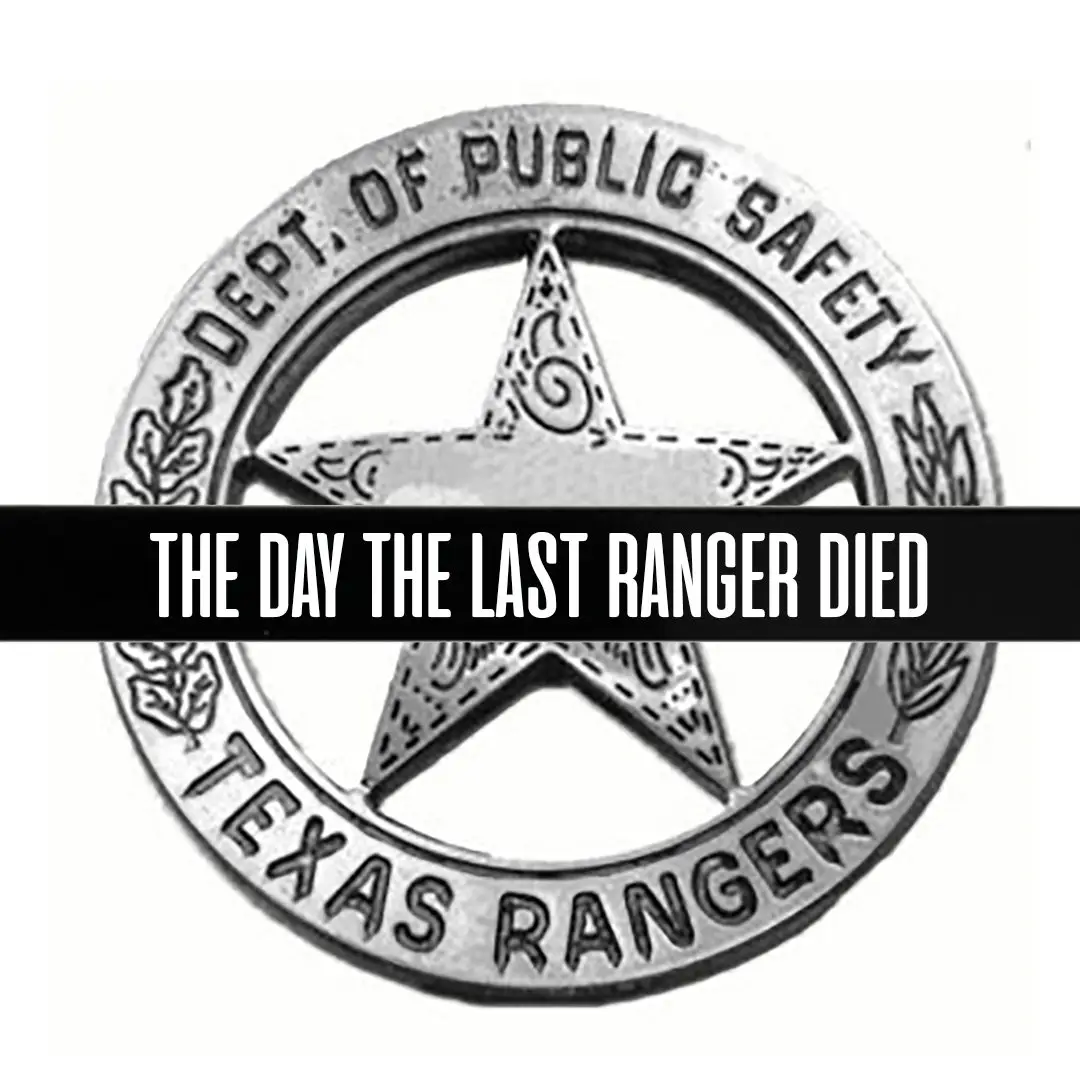
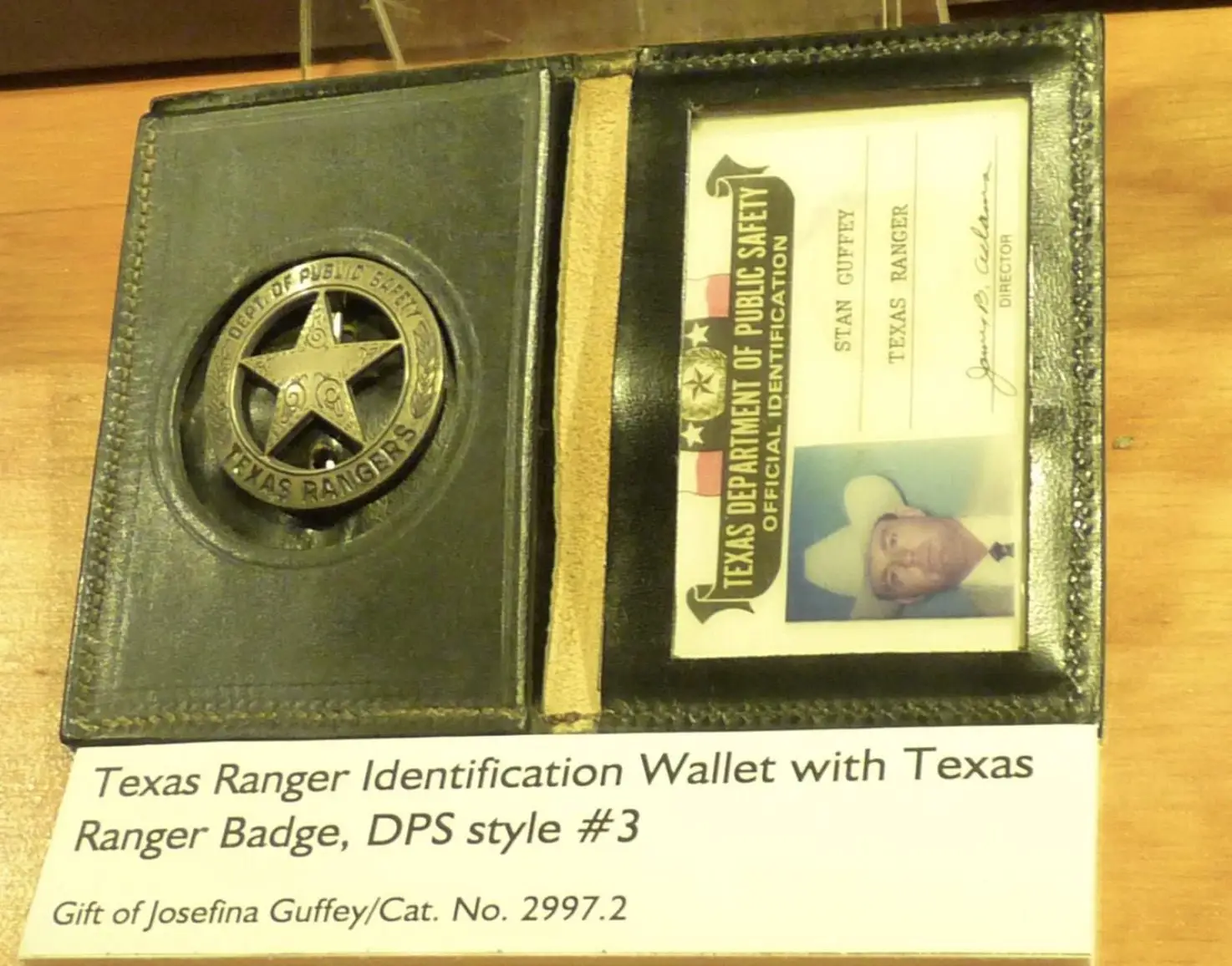
I'm Robert Riggs, and this is True Crime Reporter. Follow me into the darkest corners of the human mind, with stories ripped from the pages of my reporter's notebook. True crime reporter goes inside the case files of the Texas Rangers. I'm investigative reporter Robert Riggs with decorated former federal prosecutor Bill Johnston. You can follow the trail of the Rangers' epic stories and get bonus episodes by joining our true crime community at truecrimereporter.com. From one of the world's most legendary crime-fighting agencies. This is an exclusive edition of True Crime Reporter, Texas Ranger Files. Be advised that this podcast is for a mature audience, some episodes may contain profanity and graphic descriptions of violent crimes. It's the never-before-told story of the day the last Texas Ranger died. In the previous episode of True Crime Reporter Texas Ranger Files, we told the story of brave rangers who kept up the pursuit of kidnappers while their car was being riddled with gunfire and was engulfed in flames? 13-year-old Amy Mcneal, the daughter of the pioneer in the development of the first handheld calculator, was kidnapped by five men on the way to school in January of 1985. Retired Ranger Captain Bob Prince recalled the tension-filled 48-hour, 600-mile game of cat and mouse and a 100-mile-per-hour running gun battle that ended in the safe rescue of the team. During the pursuit of the kidnappers, Texas Ranger Stan Guffey maintained surveillance from an aircraft. Two years later, when a dope-crazed criminal out on parole kidnapped a two-year-old girl, Guffey did not want to stand by and watch as he had before. Guffey insisted on replacing another ranger in a plan to surprise the kidnapper as the father of the victim delivered the ransom. Sheriff Don Groat of Mason County, Texas, counted Texas Ranger Stan Guffey as one of his very best friends in life. On January 22 of 1987, the lawmen were scheduled to drive to the Texas Department of Public Safety forensics lab on a criminal case. Grote received a radio call from Guffey that morning that something had come up, and he had to cancel the trip. It was the last time Grote would ever hear his friend's voice. During the day, Grote received a phone call from a district attorney who gave a rambling and nervous description of a kidnapping investigation that was underway. The D.A. later called back to caution Grote to keep quiet about the kidnapping, after nightfall, Sheriff Groat received another call. This one from a deputy sheriff informing him that Stan Guffey had been shot and was in really bad shape. Grote went to the crime scene at a residence in the elite Horseshoe Bay Resort community in the Texas Hill Country outside Austin, Grote recalled in a personal account published in the Mason County News in 2020 that I was not prepared to witness what unfolded before me. It was the day the last ranger died, January 22, 1987. I'm investigative reporter Robert Riggs here with former U.S. prosecutor Bill Johnston, with an exclusive edition of the Texas Ranger Files. Bill is here to tell the sad ending of this story that has waited for years to be told. Bill, tell us about first the history of the Rangers in the state of Texas.
Bill Johnston
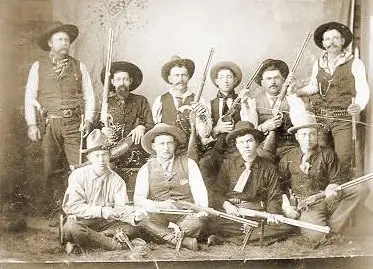
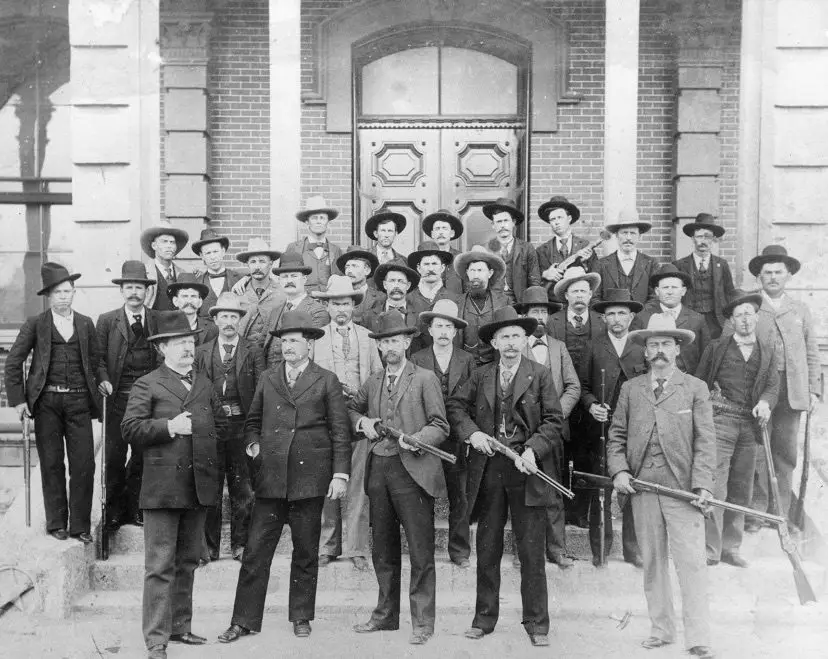
Well, when most people think of the Texas Rangers, when you hear that term, they think of a baseball team. They might think of law enforcement in some history based on a western from the '60s or '70s, or True Grit and its remake. But the Texas Rangers, that even that name, which was meaningful as a group of law enforcement people or protectors to range around the colony of Texas, it all began in about 1823 when Texas was part of Mexico, and Stephen F. Austin, Moses Austin created a little colony in Texas with the permission. Of the Mexicans, and they had trouble on the edge of the colony, particularly with raids by Comanches, with theft and lawlessness. So they got a group of men to range around, as they said, the colony and protect its inhabitants. That's the beginning of the Texas Rangers. They were more like a sheriff, or a deputy, or a posse in that day. Of course, when the Texas rebelled against Mexico, and in 1835 and 1836 during the Texas Revolution, the Rangers served as scouts, and they often could identify the location of the Mexican force and alert the Texans or the Texians. Sometimes they call them. And so, in Texas, before it was anything, it was just a colony. Then, when it was a nation from march 2, 1836, for about 10 years till it became a state, the Rangers were there. So the Rangers predate everything in Texas, all the way back to its status as a colony.
Robert Riggs
When I covered Congress as a reporter, Jim Wright was the majority leader, Democrat from North Texas. He used to love to tell the story of you know to all the northern members and all of the story of one ranger, one riot. Would you expand on that a minute? Because everybody would just love it.
Bill Johnston
Well, the rangers have a number of sayings based on something that happened or something that didn't happen that was prevented. And one of the rangers' saying is, "All it takes to quell a riot is one ranger. In other words, you can get 20 or 50 of these other types of folks, but just one ranger standing firm can quell a riot. And it's there's another saying of the rangers: you can't stop a man who's in the right
Robert Riggs
that keeps on coming, and that type of mentality and toughness was certainly part of the lore and legend of the early Rangers. So there was a a motto that came from Captain William Jesse McDonald, and it became kind of the unofficial motto at the turn of the century. And here here's the exact statement: No man in the wrong can stand up against a fellow that's in the right and keeps on a coming. That's right. That really kind of fits what we're going to talk about today. So we're going to go back to January 22, 1987, west of Austin at a resort community called Horseshoe Bay. It was a very upscale community on on Lake LBJ, named after the president. To Bill and Lee Whitehead, Bill was a very wealthy rancher, well off, and they got a call at something around four a.m. in the morning.
Bill Johnston
The the Whiteheads were folks from the hill country of Texas. Their family had been there a long time. They're still there, some of them, and very very beloved family that was a big ranching family, and they had a place in the hill country, as you said. They had a you could call her a maid or a nanny, but I think a 22-year-old woman that worked for them, and she-I wouldn't say disappeared because they didn't quite know, quite understand where she had gone, but she was not around, and that caused some concern. But unfortunately, mysteriously, their two-year-old daughter Cara disappeared from the home. In other words, was in the home and and vanished without trace.
Robert Riggs
Let me back up in a minute. So, as I recall, the the nanny was 22-year-old Denise Johnson, and there was a call-a mysterious call-had come into Mister Whitehead's business about from her saying that she thought she had been kidnapped and they wanted a ransom and that was kind of the end of it. And then suddenly, for a week, she's nowhere to be seen.
Bill Johnston
Right? It it was was not enough to know what to do with really at the time for law enforcement. And then when their daughter disappeared, it was obviously apparent that there was something bizarre going on in that area.
Robert Riggs
Yeah, and someone we're going to get into actually had a key to their home, to their resort home there, and the two-year-old Cara vanishes.
Bill Johnston
She did, and now they've called not just local law enforcement. The FBI office in Austin, Texas, came out with some agents, and pretty soon it became apparent that the little girl had been kidnapped for ransom. That in the office. Did not know where the kidnapper was, where the little girl was. They only knew that they, at some point, did receive a call wanting a vehicle and a suitcase of money brought to the kidnapper in exchange for the little girl.
Robert Riggs
So he wanted $30,000 in $20 bills and a car, right to make his escape, he did,
Bill Johnston
and of course, they didn't know at the time who he was. They didn't know anything about him. They only knew that they had the call. A plan was debated: how to do this, how to get the money there, and what to do about it because obviously it was it was dangerous. It was very unknown who exactly they were dealing with. So yeah, the FBI and the Rangers talked about what to do. The Texas Rangers, John Acock out of Waco, Texas area, out of the company from Waco, and
Robert Riggs
Stan Guffey from Brady and others were were involved. So Stan Guffey was a 40 year old Texas Ranger. He had become a ranger in 1979. Before that, he served as a Texas Highway Patrol officer, and that was a requirement. I believe it still is today. You have to do time in the Highway Patrol or be a state trooper, as we call him today, so he'd had about 20 years in in law enforcement at that point, and I look back at his record. You know, he had he'd apprehended some bad guys, he'd sent some corrupt politicians to prison, and so here he is. And tell us the expand a minute here on the source of the story. We're going to hear what we've never heard before.
Bill Johnston
Well, this this is you know not my story. This is a story of the Rangers, and it's a story of Ranger Acock, and who's the most decorated Ranger in modern times, and it's of Stan Guffey, and Ranger Acock did a great deal of work for me through the years. I worked with him on a number of fugitive cases and others in federal court, and he's helped me on many cases from the Branch Davidian case on back to other cases involving death and drug cases, all kinds of cases. And this, to a large degree, is John's story. Something he shared with me and others from time to time. But he is
Robert Riggs
he's quite a guy. Well, so what we do know is that the kidnapper we later learn is a parole violator out on prison early, you know. Later, he was described as a model parolee. Well, we know how ridiculous that is because back in the parole scandal that I reported that you were involved in in covering catching Kenneth McDuff, helping prosecute corruption. This was the this was the excuse given over and over. And what was really going on was a revolving door system to relieve prison overcrowding. Nobody was really doing much time, so it was a 22-year-old Brent Albert Beeler, and this is his plot. And he's already kidnapped the nanny, and so tell us where he is all this time.
Bill Johnston
Of course, they didn't know at first. They just had a phone call. Didn't know where he was. It turned out that he had taken over a vacant vacation home across the road from the Whiteheads, so he could see a lot of the activity that took place there with law enforcement, he was peeking underneath a garage door that was open just a little bit, and he could watch what they were doing. And so he was ahead of them most of the way here. He was ahead of them because he could tell what they were doing, who was there, what who was coming, going. So he wants a car. What kind of car did he want? The father had a sports car, and the kidnapper wanted the sports car with money, and he demanded that the father deliver the car right to where he was at this home across the way, so the FBI and the Rangers talked about how this could be done safely. Of course, it took a great deal of courage. You might understand the commitment to his daughter, but still, it took courage for the father to agree to do this because of the unknown. And the Rangers had a plan to be have a ranger in the back of the car, but it was just too small. The car did not provide enough room for the ranger to be in the back and to be able to function at all, to move and and to be able to react. And the the ranger was. Concerned about that, that it just couldn't be safely done that way. He told his captain that the captain of the Rangers out of Waco, Texas Company F, Bob Mitchell, was the captain, a very highly regarded old sage of a ranger captain, and his advice to the ranger was don't let them tell you how to do this. You need to be comfortable in doing this deal. This is dangerous enough as it is. So another plan: let's get a bigger car. We'll tell the kidnapper that that small car has a problems with the engine. You don't want that car. It looks cool, sure, but you don't want that. That car is not working right, and so let's get you a better car. That did not go over well. There was some debate with the guy, but finally they said this is the way it's got to be. So they took the back seat out of this. I think it was a Lincoln Town car or something like that. They took the back seat out. Stan Guffey, as I recall, was right-handed. John Acock was left-handed, shot left-handed. So they positioned themselves where each one would have his dominant hand available. And again, they didn't know what to expect. No one understood whether this was a, you know, some simpleton that had kidnapped and just want to get out of there, whether the guy was dangerous truly or not. So the plan was put together for the the father to drive the car up to the house where the kidnapper was, park it up up facing the garage to get out, and then let the and see what happened. Essentially, the problem, of course, was how would they get the little girl? How would, assuming there was no ranger in the car, if the father left the car, how did he know where the girl would be? What would happen? So that's where the rangers came in. The rangers were there to make sure that you know we can't trust this guy, so let's let's be there. And the father took the car. He had the briefcase of money. He drove from his place down the road, across the highway, pulled up. This was during dark. Pulled up against the garage door of the other house, now the lights of the car shined against the garage door and backlit the car just a little bit, so it wasn't quite as dark as they wanted. Here they wait. Father gets out, steps away, and then someone comes out. The rangers are under a blanket. They hear the noise of someone coming out of the house. The kidnapper, they believe, and it is. It's him. It's him. He's carrying something, a bundle. He walks to the car. He looks around, opens the door. They hear that. They're trying to peek just a little bit if they can.
Bill Johnston
He leans over into the car. The kidnapper does, and he puts something in the passenger seat. Ranger Acock, with his off hand, his right hand, feels around the seat and feels a little bottom of the girl. It's the girl. It's the girl. She's she's wrapped in something. She's covered in something. It's her little rear, and he feels it. So it's a it's a it's a child. And about that time, an impossible decision is made. Do we announce who we are? Because that's what you do. You announce who you are. You don't, you know, you don't just leave a mystery there for the for whoever you're dealing with. So all things happen in a split second. The kidnapper is has enough light to see that maybe something's not quite right in the car, he backs out. He stands away from the car a bit. Stan Guffey yells, "Rangers, give up! And about that time, this wasn't some knucklehead kidnapper who was just trying to make a little money, he was a killer, and he opened fire into the back seat from just outside the car with a 44 Magnum revolver. He opened fire, struck Ranger Guffy, and in a lightning stroke, Ranger Acock grabs the little girl, pulls her into the back seat, and opens fire, firing through the windshield at the killer, the kidnapper. And as a friend of mine described, he stitched him. He shot him through the windshield from the crouch in the back seat, and. Shot him from groin to gullet, all the way up, and the guy fell. The little girl was now safely in the back seat. Ranger Acock gets out to try to see what do we have here, and the kidnapper was had been shot, was laying dead or dying. Now. The shot of the kidnapper, which may have been bad luck, struck Ranger Guffey and mortally wounded him. And so, an effort was made to get Ranger Guffey to the hospital. It was unsuccessful. Everyone did the best they could. All
Robert Riggs
right, we're going to pause right there for a brief message, and we come back. We're going to pick back up with the wounding of the ranger. Wilt were two. to the episode in just a moment, but first, if you enjoy my exclusive stories, here are ways to support my work. Please share this podcast with someone who loves true crime stories and leave a review. Stay one step ahead of danger by subscribing to my free newsletter, stories to keep you safe. Each issue gives you expert insights on how criminals operate and how to protect yourself. The link is in the show notes. If you like my podcast, you'll love my books and audio books. The best way to support my work is to buy direct from me on my truecrimereporter.com website, you can also support my show by shopping online at our sponsors. I receive commissions for the purchases, and you receive my exclusive discount promo codes. Speaking of exclusive, let's talk about a signature style that's made its mark in both fashion and true crime. Eric Javits hats. In the world of true crime, details matter: the right clues, the right instincts, and sometimes the right hat. Deputy Chief Brenda Lee Johnson from the popular TV crime drama *The Closer* was known for her sweet Southern charm, razor-sharp interrogation skills, and her iconic Eric Javits Hampton straw hat. Whether she was closing cases in the scorching L.A. sun or outmaneuvering criminals with her disarming drawl, her Eric Javits Hampton straw hat became a symbol of elegance, authority, and unshakable confidence. Eric Javits hats for women and men feature the patented squishy material, flexible, lightweight, and crush-resistant for travel. They offer UPF 50 plus sun protection. They're crafted with timeless esthetic worn by fashion icons and true crime fans like you get yours today using our exclusive 20% discount promo code, and bring a little true crime sophistication to your own adventures. Find your promo code in the show notes and on the True Crime Reporter podcast product page on our website. And now back to our surrey. Okay, when we took a break, Bill had us just at the point where this heroic effort is made to rescue the little girl from the kidnapper, and Ranger Guffy has been mortally wounded, is rushed to the hospital.
Bill Johnston
So the FBI out of Austin, some agents helped rush the ranger to the hospital as close as they could and quickly as they could, and Ranger Guffey died. A search of the area shows that the maid Had been bound, likely assaulted and murdered, and had been dead for a couple of days.
Robert Riggs
And she was in the boat house behind that vacant house. That's right.
Bill Johnston
She was apparently
Robert Riggs
her nose was broken, and it was well. At some point, he told there was a brief in the discussions on the phone. He told him he'd made hamburger out of her.
Bill Johnston
This is not only a story of immeasurable bravery by the by the rangers, but it's a story of the heart of evil. Really, this guy had this this kidnapper had been in prison for crimes that were not necessarily violent at the time, but he learned, or he had it in him to be that way, and the heartless, heartless behavior to have done that to the to the maid, and then of course. Had it not been for the Rangers, there is no telling what would happen to the little girl because the man put her in the car and was going to leave. Obviously,
Robert Riggs
yeah,
Bill Johnston
you can't trust him, of course.
Robert Riggs
Well, so one thing about him, you know, his charge that he'd been in on-he didn't do much time-was for credit card theft and all. But just speak to the audience for a minute. That does not always tell you what they're really about in their criminal history and their propensity to be violent, because oftentimes these are plea bargains.
Bill Johnston
It just tells you what they went to prison on. It doesn't tell you their past behavior. And not to say again that someone with a white collar type crime has any propensity to violence, but it doesn't mean they don't either. Doesn't mean they don't. And this guy let it all loose within just a two or three day period of time in the Texas Hill Country and caused heartache and grief. And had it not been for the courage of the Rangers, would have could have gotten away with it. Well, so
Robert Riggs
then what they later found is that he had been living in vacant houses around there, and had a bedroll, sleeping bag, and everything, and had an arms cache and stuff he'd been stealing. Where does this kind of go next, and how does this affect the Rangers?
Bill Johnston
Well, this again, the Rangers I that I know, the Rangers that I've worked with, this was the reflection of their their character, and there were only at this at the time of this there were only about 90 Texas Rangers in all of Texas. So a state that's larger than country of France has 90 of these these rangers, and they were special. They were the best homicide investigators at any given time working, and they assisted law enforcement. But this wasn't his last ranger killed in the line of duty, and it was devastating for Ranger Guffey and his family, of course, for the Rangers as a whole. Company F out of Waco, Texas, which had this group of rangers as a part of its crew, but this no one ever got over this, and it's understandable.
Robert Riggs
What was the mood of Ranger Acock, and has he told you this story, and how did that come about?
Bill Johnston
Well, Ranger Acock does not talk about himself, and he doesn't boast or brag at all. And he has endured a great deal of tough situations in his life. John is a Vietnam veteran, serious combat in Vietnam, and and had a number of tough things happen to him and on the highway patrol and then in the Ranger Service, but John never praises himself. He's proud of the Rangers, and that's it. But I'll just let it go at that. But it's just situation where great acts of bravery are are often untold because those engaged in them are not looking to tell them, not looking for credit.
Robert Riggs
So they all came out of the Texas Highway Patrol, and when I was a student at Texas A and M, my dad was involved in law enforcement. And when I would go home on Christmas break and all, I would ride. Do it was called a ride along. I would ride with a highway patrol officer named Max Womunk. He became a legendary Texas Ranger later, but these men-it was strictly men in those days-they were out on lonely highways in rural Texas facing some really tough criminals, and they were alone. And they were-they had to really be made of something else.
Bill Johnston
They started on a highway, and very often they were the only law enforcement in West Texas. You have counties; several of the counties are larger than Delaware. Yeah, and you'll you'll be out there, and there's not help for 100 miles.
Robert Riggs
Right,
Bill Johnston
and it does take a certain level of courage and grit to do that. It's it's just a different type of way of thinking, it is somewhat real cowboys. I mean, real. Sure enough, cowboys have a toughness. They don't talk about
Robert Riggs
it. No,
Bill Johnston
and they just have grit. And there was a reason why the movie was called True Grit, and that that description was given to the marshal in that case, but as we know, the way the movie went out, the Ranger had the same kind of grit. But quite honestly, that is-I hope we're not losing that. But it's harder to find because it's criticized sometimes. Some sometimes being tough, being tough, but while being extremely fair, is a wonderful combination. Well, what struck me and was that he was there was a tough that was a tough sort of aura around the guy, but he really knew how to talk to people, size people up, when to be empathetic. That's right. You know, the Rangers, many of them in my. Day of prosecuting in federal and state court. Many of them were Vietnam veterans, or they were of that era, and of course, a generation before that, many of them were World War II veterans. And as you and I talked, it gives them perspective. You know, Ranger Acock was as fair as fair. I mean that in every sense of the word to people as you can imagine, and he was-he had compassion often for people he whom he arrested that found themselves in a difficult situation, maybe no fault of their own to some degree. But he was an expert hostage negotiator, and there's a case that happened a few years after this where a baby was abducted, and the kidnapper took that baby and went on a wild chase with the rangers and others. Eventually, this guy who had a sawed-off shotgun with him went out with the baby in a field in the middle of a pasture and sat down, so there's fence lines all around. He can see as far as he wants to, you know, look and make sure nobody's around. I'm talking about the kidnapper. Had a little bitty infant with him, and John Acock, the person that saved Cara Whitehead and worked with Stan Guffey on this horrible, horrible deal. He walked his way around in that case, years after this, around the fence line, and let the man, let the kidnapper see him, and the kidnapper saw him and pointed the gun at him and talked bad to him. And John said, "I just want to talk to you. John walked out in the field and sat cross-legged a few feet from the kidnapper, holding a sawed-off shotgun, and John had no apparent weapon on him. He might have had one in his boot, but he had nothing to get to easily. And he talked to the kidnapper, and finally, the kidnapper said, "I'm, I'm, I got to go. I'm going to that farm down there. Y'all need to leave me alone. And John said, "I can't let you do that. And the kidnap, the he's talking about an aura of of grit and toughness. The kidnapper, within a few minutes, handed the baby to John, and John peacefully arrested him and walked him down. It is a I've said about John, he's touched, and I mean that in the most flattering way. He's touched. There's something that emanates from him, and perhaps it's his nature, and perhaps it's all he's seen and done in his career. But anyway, that's who you're dealing with, and that's what happened in this case.
Robert Riggs
Well, and then of course, it looks like, in one sense, a happy ending. the The little two year old girl has been rescued. The Whiteheads move to another place. Bill Whitehead, the rancher, is also a musician, and he's writing a composition and a score for the. I think it was the Austin Ballet, kind of giving back, and they they said apparently the the music would help him calm his nerves because you know that this kind of trauma has had an impact. But six years later, the family flies out to Pebble Beach for a golf tournament. Cara and the wife are dropped off at a ski resort near Portland, Oregon, and then they're all on the plane coming home.
Bill Johnston
Everybody but the brother.
Robert Riggs
Yes.
Bill Johnston
Everybody but the brother.
Robert Riggs
10-year-old brother.
Bill Johnston
They they're coming home in their aircraft, and they leave, and I think after refueling, maybe in New Mexico. And Kara, who's now eight, I think, and mom and the dad with their pilot, the aircraft flies right in the side of a mountain, kills them all. And how that could be the ending after this story and this effort to save Cara. None of us as humans can understand, but that is the way it ended.
Robert Riggs
Those rangers snatched her from the jaws of death, and then this
Bill Johnston
right. And you know, mr. Whitehead and his courage to do what he had to do to save his daughter. I know that that family, the brother now, still lives in Texas, I believe. But they are a special, special family that have endured so much. And I only know a little bit of the story, but tribute to them.
Robert Riggs
Well, Bill, that's quite the rest of the story. Bill, thank you. We'll be back next week with more stories from our respective careers. Thank you. We want to be your favorite true crime podcast, so please recommend us to your friends and leave a review wherever you listen. If you want to receive updates and bonus interviews, join our true crime community at truecrimereporter.com. If you have suggestions or know of a case that we should look into, email us at [email protected]. This podcast is a trademarked and copyrighted news organization based in Dallas, Texas. You can read more about our news team at TrueCrimeReporter. Thanks for listening to our journey into darkness. Please tell your friends who love true crime that they can bypass secondhand tales and get their true crime fix here with authentic stories straight from my reporter's notebook. Sign up for my free newsletter, stories to keep you safe, on the TrueCrimeReporter.com homepage, it's your gateway to a world of knowledge and awareness for personal safety. And while there, purchase my audio books and other books which feature serialized stories you won't hear on the podcast. This is a copyrighted production by True Crime Reporter in Dallas, Texas. Thanks for listening, and until we meet again, stay alert and stay safe. This is Robert Riggs reporting.