Robert Riggs:
In this episode, I bridge the gap between reality and fiction in the realm of true crime.
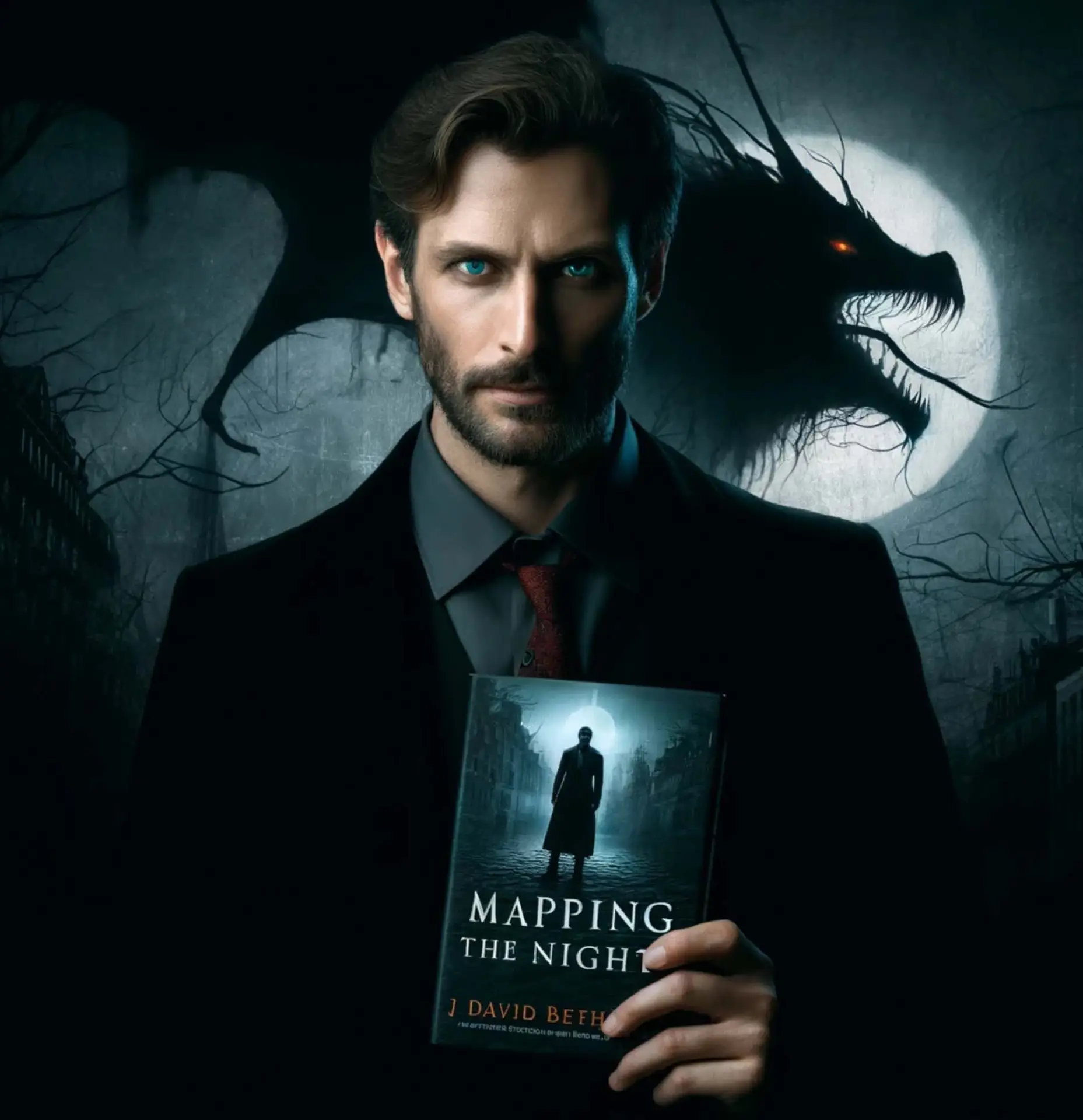
My guest is David Bethel, an acclaimed author whose latest novel, "Mapping The Night," delves into the psychological depths of serial killers.
Although the True Crime Reporter® podcast typically focuses on nonfictional accounts of crime, Bethel's work stands out for its profound basis in real-life cases.
His novels offer a unique lens through which we can explore the darkest corners of the human mind.
David Bethel's background is as intriguing as his novels. As the son of a U.S. State Department Foreign Service Officer, his early life was a whirlwind of globetrotting, which provided him with a firsthand look at the complexities of human nature.
His latest novel, "Mapping The Night," follows a pair of investigators – one from the FBI and the other from the NYPD – as they navigate the treacherous waters of a New York City serial killer case.
Like his other books, Mapping the Night is a fast-paced thriller that keeps readers on the edge of their seats.
We delve into the minds and motivations of serial killers, drawing on Bethel's extensive research and unique insights.
The psychological profiles of serial killers and the real-life cases that inspire David Bethel's gripping novels blend fact with fiction to create a compelling narrative that both chills and enlightens.
As you reflect on our discussion, it reminds us of the ever-present shadows in our society.
Thank you for joining me on this journey into the heart of darkness. Stay tuned for more episodes where we continue to explore the real stories behind the crimes that captivate and horrify us.
Robert Riggs:
Bethel’s unique perspective on the dynamics of power and the dark recesses of human nature started during his preteen when his father was in the U.S. State Department’s Foreign Service and he met Cuban dictator Fidel Castro.
Robert Riggs:
David, your your fascination with the workings of the mind of serial killer and killers seems to be connected to your the days when your father was a press attache with the State Department. How influenced were you by the conversation with Fidel Castro?
David Bethel:
My dad, as I said, it was a press attache at the embassy in Cuba, and he was in charge of putting together the first international press conference for Castro. I guess it was about a week after Castro came into Havana. And Batista was gone and Castro took over the government. And so he put together this press conference. It was at the top of one of those fancy then hotels in in Havana, and he had Castro in a hotel room with I guess we'd call that the green room now anyway, in a hotel room down below someplace. I don't remember exactly where but he had to go down and get him. So he grabbed me and said let's go let's go get him we'll you know, we'll bring them up. And of course, being living in Cuba at the time, you could not know you could not not know what was going on. Everybody knew that there was a civil war going on and who Castro was and who all the players were Che Guevara, Raul Castro and another guy named Camille, Camilo Cienfuegos, who was not well known in the States, but he was actually the general of the army that Castro depended on Castro was the PR guy he now carried around a gun, but that was about it. Anyway. So we went downstairs, went into this room, and I recognized Castro he was sitting with his brother on one side and Che Guevara on the other, and Camilo Cienfuegos and about oh, I don't know four or five, what we called Barbudos men which meant bearded ones, these were his, his, his, his guards, his uh, his bodyguards. And he stood up and came toward my dad. And you know, all little boys compare everything to their father and Castro was a tall guy. I mean, he must have been six two or so which impressed me because my dad was very big. And, and so you know, right away, I'm impressed with this guy. And my dad is giving him instructions and telling him exactly what's going to happen when they when we escort him upstairs. And while they're doing that, of course, I'm 11 years old, I could care less what they're talking about. But I'm fascinated by his sidearm, he had a very fancy gun in a holster. So Castro notices this and looks over at me and smiles and says to my dad, you know, your son here is impressed with this. With this gun, would you mind if I, you know, I'll take the clip out and make sure there's no bullet in it in the chamber and give it to him? Is it okay if I show it to him? And my dad said, Yeah, sure, of course. So while they're having their discussion, I'm just fascinated by this by this weapon. And as we're about to go upstairs, Castro says to me, says, you know, I talk a lot and your dad just told me the way this is going to be set up. And I'm going to be sitting on a couch with a table in front of me a coffee table, and there's going to he's going to be put water in a in a, you know, in a jar and I'm going to glass or whatever, I want water, I'll point at you and you pour me a glass of water. So okay, that's fine. And we go upstairs, and they're having their press conference. And I'm sitting there he points at me every once in a while I pour him a glass of water. So I'm feeling real good about myself. Then Castro, I noticed that that at some point, there's a disagreement. As I said, I wasn't paying attention. I was just, you know, happy to be there. And I noticed there's a disagreement. A Castro is very unhappy about something. So I focus in on Castro. And he is very unhappy because an American reporter as American reporters do, insisted that he answer a question about whether they were going to allow gambling in Cuba once he once he took power completely. He did not want to answer that question. And the guy kept kept on him. Finally, a whole change came over Castro one of those moments where you say the clouds come in and he the shark eyes and the whole, the whole demeanor which which were you even a young boy like myself kind of loaded noticed it and was a little bit frightened by it. How the hell does this happened? And he said to the reporter, and he pointed his finger at him. He says, you know, if you insist on answering me and asking me this question, which I don't want to answer, I'm going to have my men in a turn. He turn and looks at these guys all very menacing. And he says, I'm going to have them escort you right out of here. That was my first, I guess, experience with this, this kind of personality, where you have a complete change. And later on, it's the kind of thing that I use. When I'm writing about one of these, you know, one of these serial killers and how they change how their whole facade changes and they become a different person. Castro became a different person at that point that day.
Robert Riggs:
Bethel's crime novels are deeply rooted in real-life cases. It lends to them an authenticity that resonates with readers. For instance, his psychological thriller "Wretched" draws heavily from an actual murder case, weaving true events into a gripping narrative that delves into the complexities of human nature and the dark motivations behind such crimes.
David Bethel:
You might be referring to wretched, which is a book I did about a man named Ken Rex McIlroy, who was a bully in a small town in Missouri and had been for 30 years or so. And he was killed people actually killed some people who disagreed with them. He was a thief he stole from people. He molested young women actually raped them. And he did this for 30 years. Finally, one day, the people had enough and they surrounded his truck when he was in town and murdered him a vigilante style. Now what they did was only two people. They all had guns, but only two people fire the guns. So they never knew they were never able to figure out because the townspeople would never admit would never say who the which guns were loaded. Now they had a local investigation, a state investigation and the FBI came in and they could never figure out who killed this guy. So I use that as the basis for in my novel wretched and tied into that was another story that I took called the Jefferson eight, which was eight women in Jefferson Parish and in Louisiana just disappeared, gone. Poof. Over time. They didn't know where what had happened to him. Initially, they thought it was a serial killer, although now the latest that I have is that they think it might have been the police in cahoots with some drug runners down there got rid of these girls who kept coming to the police to try and tell them what was going on. Long story short, I took these two bits of true stories, put them together and produced the novel Wretched.
Robert Riggs:
Bethel adapted an actual case, complete with its grisly details, into his novel "Bloodmoon." This approach, pioneered by Truman Capote in his groundbreaking work "In Cold Blood," blends true crime with fiction to create a compelling and chilling narrative.
David Bethel:
Ed Dubois, a private investigator, came to me with a case that he had of a man who and this is back in the early 90s, of a man who was kidnapped, tortured, and extorted for over a million dollars. He was a very successful small businessman. And over the course of a month, they did all kinds of, you know, dastardly things to them to him and burned him with cigars, cigarettes, chopped him up into, you know, took certain pieces off his body. I won't get into all that. But the worst thing I did to him was they they put a masking tape around around his mouth, actually around the top part of his head. And he was in a, he was in a warehouse and it got to be over 100 degrees. This is the middle of summer in Miami and his face actually melted the top part of his face melted. Long story short, they got all of his money, they extorted all of his money. And back then we didn't have the, you know, the technology we have today. So basically, he was just writing them checks. He actually wrote them as assigned the deed of his house over to them. And they were living in his house while they while they were doing this to him now. They took him in and out into the Everglades and ran him ran his car into a into a telephone pole. They had propane gas in the back of it and the car exploded. What they had forgotten to do was to put the seatbelt on and so he fell out. Now he doesn't remember any of this because he was he had been filled with horse tranquilizer and alcohol but he was told later. Well actually, the perpetrators later revealed what had happened to him anyway. He fell out of the car. They were leaving the scene and they turned around they saw him get up. So they turned the car around and ran them over again. But what happened was he fell between the wheels so that he was still injured badly but not critically. So they left. He was found later on by some people who lived in the area because the fire he was staying taken to the hospital, but they didn't believe him. The people he called the cops, if he told the hospital people and they call the cops, they wouldn't believe him because he was Argentinian. Now they heard him speak Spanish. And they assumed that he was part of that whole, you know, cartel thing going on back in the cocaine days of Miami. So they dismissed it completely. Well, he called his lawyer and said, You got to do something for me, I'm getting no help from the police. That's when they called Edie, the man, this private investigator who called me about this case. And there's another part of the story. The reason he did that was because they were making a movie about all this called No pain, no gain, I think no pain, no pain, no gain. And he was appalled at some point, when he realized they were starting to make it into a black comedy. And turning Mark Schiller that was the victim, his character into a narrative well, so that they could kind of excuse the what was done to him and depicted as a, as a black comedy. So he wanted me to write a true crime novel with about it. But the problem was, the movie was coming out in six months. And there's no way as you know, as a writer, you can write a book, get it edited, and published and distributed in six months. So even though I prepared a treatment of it and set and Ed sent it off to a publisher, that the publisher said, we can't do this. So I asked Ed, and Mark the victim, if they'd mind if I turned it into a novel, that is the genesis of the novel Blood Moon.’
Robert Riggs:
But it tracks pretty well with what really happened.
David Bethel:
Yeah, I'd say the first half, maybe a little more tracks completely, almost almost completely, you know, one to one, to the whole thing that the difference is the last third, Ed and Mark had always said to me, that they had, they had hoped that that somehow these guys would get would be killed, you know, that the police would find them and that these guys would, would, you know, get into a firefight or something and they would be killed, and they were really bent on revenge. Now, eventually, these guys were found tried and sent to death row. Unfortunately, they're still on death row. This was, what, 20 years ago, 30 years ago, now and they're still on death row. So I turned that the last third, working with Eddie and Mark into kind of a revenge thing. So as these guys got got what was coming to them.
Robert Riggs:
Bethel recounts that the kidnap victim, Mark Schiller, bravely returned from his wife’s home in Colombia to testify against the kidnappers who had brutally tortured and attempted to kill him. In a bizarre twist, the FBI mistakenly arrested Schiller as he was leaving the courthouse in Miami, due to crimes committed in his name by the very kidnappers he was testifying against.
David Bethel:
When he was being tortured. And in the warehouse, they used his business to illegally scam money from Medicare. But while of course, there's nothing he can do what he could do about it, but the business was in his name. So he was the one that was arrested, and he spent a year in jail.
Robert Riggs:
In your latest book, Mapping the Night, Lead me through it and the plot in it.
David Bethel:
Well, that came about most of my writing is, the way I write my process for writing is not like most people, or many people, I guess I don't use an outline. I don't have character studies or anything along that line, I take a kernel of an idea, something that sticks in my head, I sit down, and I write it down. And I go from there. For instance, in mapping the night, I was attracted to an article in The New York Times about a welfare check that a couple of cops did because a woman in the building had a young son had not been seen for days. And they were worried because goes to school, he hadn't been in school a couple of days. So they cops walk into a rather haunting situation where the young boy is, is isn't over his mother, who is dead on the bed, she's she was nude, he put a towel over to to hide her. And he's, he's using ice to try and revive her. Because he tells the police when when they come in, you have to help her, I can't make her wake up. And this is the way she would make me feel better. When I was sick, she would put ice on my head. So that scene haunted me. And I went from there. And again, I just sit down and and write that scene out. And wherever it leads me is wherever I go. And so where it led me to, oh, I should back up one second. The killer when they finally caught him was a serial was a serial killer, who had targeted women with young boys. And he was and I turned my character of that person who was named Gregory Fleetwood into a into a mission serial killer. There are various various, I guess, levels of serial killers, various various characters, a one is a mission killer. And his he is intent on saving people from something or he find, for instance, Herbert Mullins, serial killer out in San Francisco, killed people to try and stop the earthquakes that he said were gonna plague plague the city. And it was that's a mission serial killer.
Robert Riggs:
Bethel's latest novel raises thought-provoking questions about the nature of justice, the consequences of political corruption, and the lengths people will go to protect their secrets.
Drawing from his experiences on Capitol Hill, Bethel weaves political intrigue into his stories, influenced by his work in the heart of American politics.
Interestingly, our careers intersected there as we both worked for influential members, giving us a unique perspective on the dynamics of power and secrecy.
Robert Riggs:
You also mix politics with crime. What is it about politics that makes it a good character in these books?
David Bethel:
Well, it's just another another facet of, of human nature. And I think that the reason that I do it, that it comes easier to me is because of my career in politics, I spent 35 years in Washington working in politics, so I know it fairly well. And I don't want to intimate at all, that there's anything about politicians or people that work in Washington that corresponds to these to these awful people that I write about. But it's just another facet of life that I can work in and make it real in my novels.
Robert Riggs:
Well, of course, we both worked in politics and you certainly see it play sex and power in psychology. Yes. So what what were your kind of observations about that from your experience?
David Bethel:
Are we talking politics or serial killers here?
Robert Riggs:
Well, politics how it mixes Everything.
David Bethel:
Well it's all about power, I mean, I've read and I'm sure you have to a lot of studies, psychological studies that the most successful psychopaths in the world are or sociopaths are politicians. They know how to exercise power, they enjoy exercising power, they find a satisfaction with exercising power. And people will listen to them and do what they say. So I guess it's all kind of a big mix, except, hopefully, they do not run around killing people wantonly.
Robert Riggs:
So how do you turn it off? In your head? You're you're living in an imagined world of serial killers inspired by real-world events.
David Bethel:
How do I turn it off? Meaning meaning how do I how do I get out from under all the darkness. I just turn it off. I mean, maybe it's just me but once it once I get away from my my typewriter for excuse me, my computer, what that tells you that dated me didn't. Once I get away from my computer, I'm able to do that. And I want to, I have to say when I'm reading the time when it really bothers me is when I'm researching it, and I realized that I'm researching situations that are real human beings that are real victims that are real that that's troubling. But when I'm writing, I can separate that I can say this is a story I'm making stuff up and I can walk away from it.
Robert Riggs:
Well, you know the crimes by the serial killer dollars and murderers that are psychopaths minutes it's so depraved I you know I have this phrase I say evil walks amongst us It might be your next-door neighbor.
David Bethel:
Yeah, well they say most of the most serial killers and everything I've read about them have a perfectly normal life they can compartmentalize compartmentalize their life for instance, you take someone well known like like Bundy, who was who was actually worked on a on a suicide hotline right next to the novelist Ann Rule and she thought he was a wonderful fellow and most people that met him thought he was he was a pretty good guy. Apparently, he was very charismatic, very intelligent. Edward Kemper's, another one who, who killed, oh God, I don't know how many coeds in California, and yet he was easy. If you listen to him talk. And he's not talking about awful things. He's a very intelligent, interesting guy to listen to.
Robert Riggs:
So my listeners are always asking, Why? What makes them tick? I can't really tell them what's what's your experience?
David Bethel:
Well, one of the reasons that I started writing about the subject matter that I'm writing on is because I read a lot of true crime novels, wonderful stuff, great authors. It's always the who, what, where, and how part. And it was very technical, and it was interesting. My, my interest is, is why. And then I, I then transferred that to reading a lot about, you know, John Douglas, who writes a lot about the psychology of these people to try and find out why, well, the bottom line is, you're never going to really find out why. But I wanted to put myself in the novel with these characters to have an explanation for the reader of why. I just mentioned the character in in Mapping the Night, who is a mission serial killer, I go into great detail in the novel and how he ended up being the way he was, why the way he was, why he was the way he is, or was is, and how he got there. And to give the reader some understanding of how these people tick.
Robert Riggs:
The psychological profiles of serial killers and the real-life cases that inspire David Bethel's gripping novels blend fact with fiction to create a compelling narrative that both chills and enlightens.
As you reflect on our discussion, it reminds us of the ever-present shadows in our society.
Thank you for joining me on this journey into the heart of darkness. Stay tuned for more episodes where we continue to explore the real stories behind the crimes that captivate us and horrify us.