What You Will Learn
- How a cyberattack caused a water tower to overflow in Muleshoe, Texas.
- Why Cunningham says cyberwarfare blurs the boundaries between espionage, crime, and military conflict.
- How artificial intelligence can assist both cyberattackers and security researchers.
- Why hospitals, utilities, and connected household devices face cybersecurity risks.
Story at a Glance
A cyberattack on a Texas water system illustrates how distant hackers can disrupt essential services. Former Navy cryptologist and cybersecurity expert Dr. Chase Cunningham tells Robert Riggs why hostile governments, criminal syndicates, and artificial intelligence pose growing threats to American infrastructure. His warnings extend from hospitals and utilities to connected homes, while distinguishing possible attack scenarios from predictions.
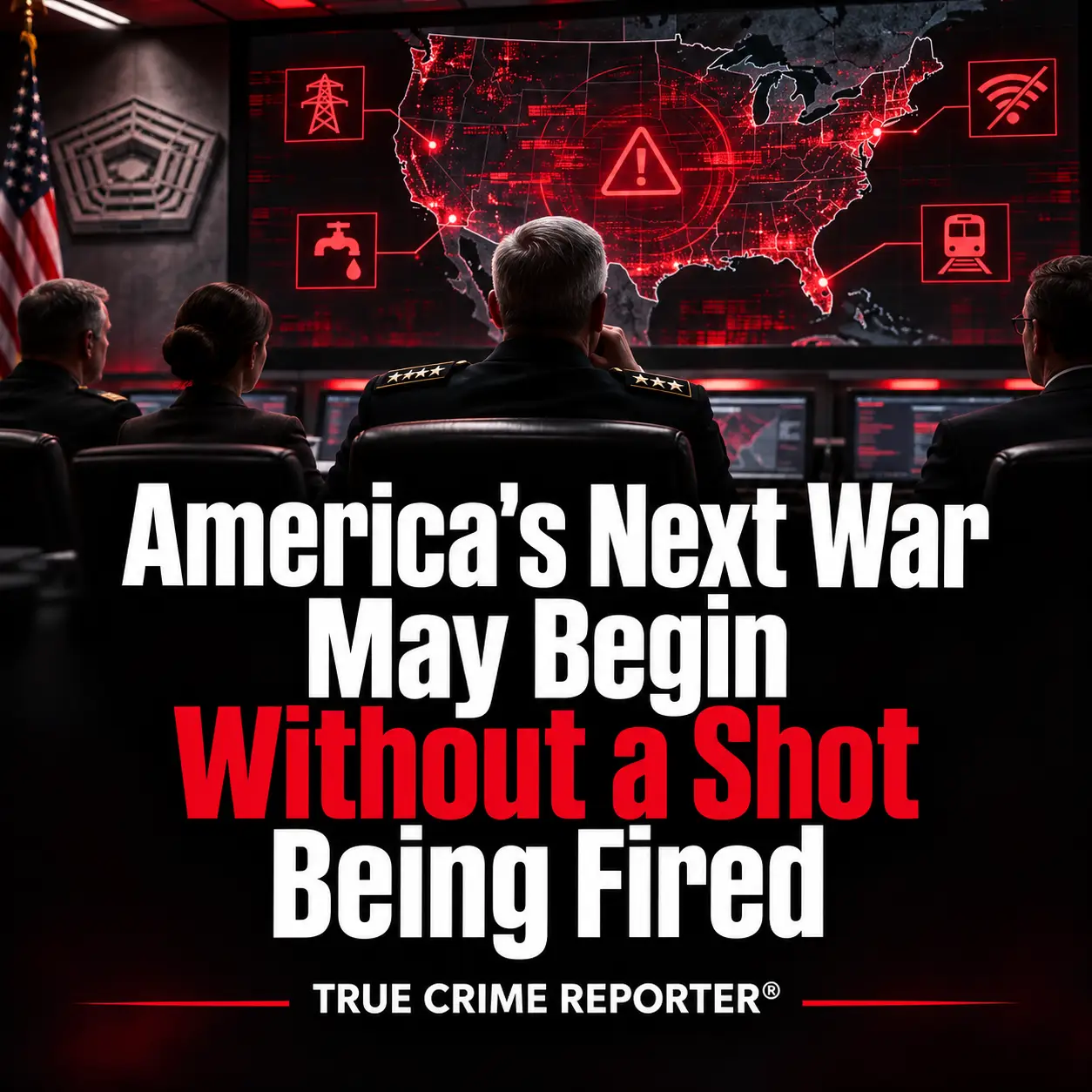
Cyberattacks, artificial intelligence, and criminal syndicates are threatening America’s critical infrastructure. A former NSA intelligence specialist warns that the next devastating attack may come without a shot being fired.
In January 2024, hackers struck a municipal water system in the small Texas Panhandle town of Muleshoe.
They remotely manipulated equipment controlling a water tower, causing tens of thousands of gallons to overflow.
The attackers never set foot in Texas. They belonged to a pro-Russian hacking group operating thousands of miles away.
The incident exposed a disturbing vulnerability: Foreign adversaries can reach into the computer systems that are the lifeline of critical American infrastructure and cause physical damage without firing a shot.
Now imagine a similar attack shutting down hospitals, electrical grids, or water treatment facilities across the United States.
Doctors cannot access patient records. Dialysis patients cannot receive treatment. Emergency services struggle to respond while critical computer networks remain paralyzed.
For cybersecurity expert Dr. Chase Cunningham, these scenarios are not far-fetched.
They represent the emerging battlefield of a quiet war already underway.
Cunningham, a former Navy cryptologist who worked in the intelligence community at the National Security Agency, warns that America’s enemies are developing sophisticated ways to attack the nation without confronting its overwhelming military power.
Known in cybersecurity circles as Doctor Zero Trust, Cunningham believes the United States is dangerously unprepared for the consequences.
A War Without a Declaration
Traditional warfare requires enormous investments in soldiers, weapons, transportation, and military logistics.
Cyberwarfare operates under different rules.
A hostile government or criminal organization can infiltrate computer networks, steal sensitive information, disrupt essential services, and inflict economic damage at a fraction of the cost of conventional military operations.
“Cyber has become the bridge between kinetic conflict and espionage,” Cunningham told me.
The distinction between espionage, organized crime, and warfare is increasingly blurred.
A deadly cyberattack could thrust American leaders into a national security crisis involving three questions: What constitutes an act of war? Who is responsible? And how should the United States retaliate?
Cunningham argues that American political leaders have failed to grasp the implications.
He contends that the United States faces adversaries unconstrained by the legal and political restrictions governing American intelligence and military operations.
That imbalance creates opportunities for hostile nations to exploit weaknesses while avoiding direct military confrontation.
The Rise of International Cyber Syndicates
International criminal syndicates reminiscent of SPECTRE, the fictional criminal organization in James Bond movies, are building vast empires in cyberspace.
Unlike their fictional counterparts, these organizations are real.
They operate across international borders, using ransomware, financial fraud, stolen cryptocurrency, and increasingly sophisticated cyberattacks to generate enormous profits.
Cunningham says these organizations enjoy access to recruits, financial resources, and jurisdictions where extradition and effective prosecution remain difficult.
Some also benefit from relationships with hostile governments.
Criminal hackers can provide governments with a degree of plausible deniability while conducting operations that advance national interests.
Arresting individual hackers rarely eliminates the organizations behind them.
Their digital infrastructure can be rebuilt, and their operations can resume under different names.
America’s Infrastructure in the Crosshairs
The threat extends far beyond stolen passwords and compromised bank accounts.
American intelligence agencies have warned that Chinese government-sponsored hackers associated with a group known as Volt Typhoon have infiltrated critical infrastructure networks.
The FBI, NSA, and Cybersecurity and Infrastructure Security Agency assess that these intrusions could enable disruptive attacks during a confrontation between the United States and China.
Cunningham describes a scenario in which a Chinese military operation targets Taiwan.
Hackers could first flood social media with fabricated information, creating public confusion.
They could then disrupt American electrical grids, water systems, or hospitals while linking the resulting chaos to their disinformation campaigns.
The objective would be to undermine public confidence and complicate an American response.
It is a scenario, not a prediction. But its underlying cyber capabilities are a documented national security concern.
Artificial Intelligence Changes the Battlefield
Artificial intelligence is accelerating the threat.
Sophisticated cyber operations once required specialized programming knowledge and technical expertise.
Now AI tools can help users write computer code, identify vulnerabilities, and produce convincing fraudulent messages.
“Everybody potentially is a coder; everybody potentially is a malware operator,” Cunningham warned.
The technology also offers powerful defensive capabilities.
In October 2026, researchers disclosed critical vulnerabilities in PHP, a programming language used by approximately 70 percent of websites.
Artificial intelligence helped researchers discover and analyze weaknesses that could potentially expose enormous numbers of systems.
The discovery demonstrated how AI can help defenders uncover dangerous flaws—and why security teams must move quickly when vulnerabilities become public.
Cunningham worries that attackers will increasingly operate at speeds that overwhelm traditional defenses.
The Threat Inside American Homes
The digital battlefield now reaches into everyday life.
Smartphones, security cameras, medical devices, automobiles, home appliances, and even pet-tracking collars connect Americans to sprawling computer networks.
Every connected device introduces another potential point of attack.
Cunningham recommends using AI assistants to help identify basic security weaknesses and develop protection plans for personal accounts and small businesses.
Such guidance should be verified against trusted cybersecurity recommendations, particularly before changing sensitive systems.
His greatest concern, however, extends beyond computers.
When I asked what keeps him awake at night, Cunningham identified the possibility of terrorists using inexpensive drones to carry out mass-casualty attacks inside the United States.
He believes the threat deserves far greater attention.
The larger warning is unmistakable.
America’s adversaries no longer need to defeat its armed forces to threaten the country’s security.
They can target the digital systems supporting hospitals, utilities, businesses, and American households.
The next devastating attack on the United States may begin with a few commands entered into a computer thousands of miles away.
And the first Americans to discover that their country is under attack may be patients waiting for treatment in a hospital whose computers have suddenly gone dark.
Meanwhile, the Trump Administration has cut funding and two-thirds of the staff for the Cybersecurity and Infrastructure Security Agency (CISA).
Robert Riggs is a Peabody Award-winning investigative journalist and host of True Crime Reporter®.