**Robert Riggs**
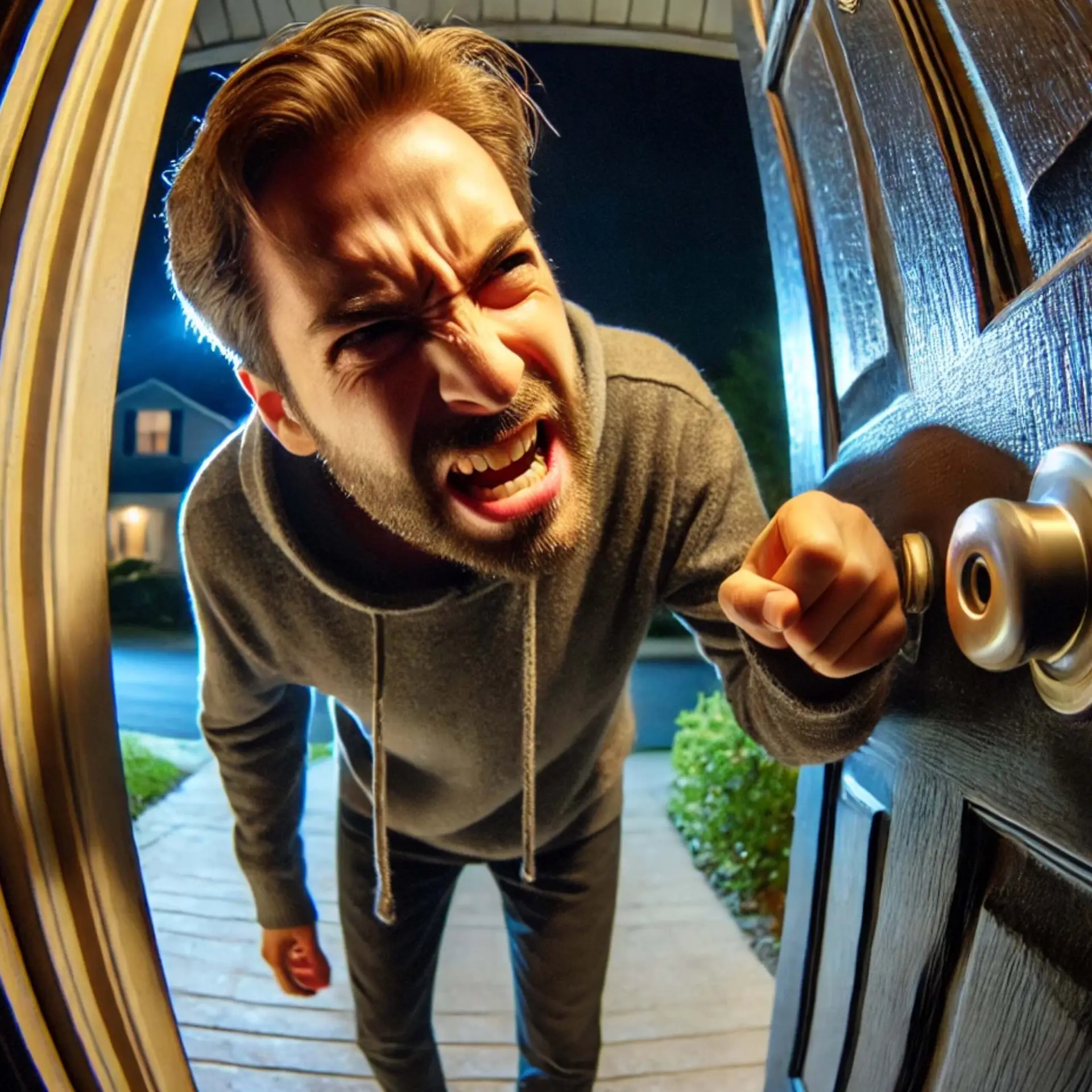
Scammers don’t just lurk online—they may be coming straight to your front door.
For centuries, con artists have refined their craft, using deception and misdirection to separate victims from their money. But today’s fraudsters have more sophisticated tools than ever before.
The worst part? You won’t even realize you’ve been conned until it’s too late.
In this episode, I break down the playbook of modern swindlers with Jim Grinstead, veteran newspaperman and host of the Scams and Cons podcast.
Grinstead studies the psychology of deception—and what he’s uncovered should concern us all.
**Robert Riggs**
What is it about human nature that we buy into this, that we get sucked into this?
**Jim Grinstead**
Well, we're nice people. We want to help other people, and if we're presented with an opportunity to do so in a way that makes sense, they're probably going to do it. We trust tend to trust one another, and that's a good thing. It helps a society stay together as part of the social contract.
**Robert Riggs**
What are the techniques of the scam artist to gain your trust?
**Jim Grinstead**
Well, it's either fear or greed.
**Robert Riggs**
Have you ever received a text message claiming you owe money for an unpaid parking ticket or a toll? Or a medical bill? Maybe a notice from an online retailer demanding immediate payment?
I get them every day.
Jim Grinstead warns that these scams are designed to trigger fear and intimidation—pushing you to act before you have time to think.
**Jim Grinstead**
The thing that's really scaring me is old, simple scams where there's talking about you're owing a parking ticket or something along that lines, which sounds like a simple old time scam, but they're now actually sending people to folks doorsteps to collect the money, and that intimate contact, that one on one sort of thing, is very new. It also talks to me that the operations have grown so local that they have local people. Who can come to your house. The call may be coming from somebody in Jamaica or China or someplace else in the world, but they've arranged a network of people who will go through and do these pickups, and apparently can be trusted, and I would assume some kind of threat held over their head, that if they don't deliver the goods, that bad things will happen to them, that's concerning me quite a bit, because that's an expansion also the drug cartels. I'm hearing from prosecutors that a lot of these scams are now being run by cartels because they have the ability to organize this type of system. So while it may seem like the scammers are, you know, four or five people who are running a scam, they're actually part of a much larger crew, and that crew works for larger organization who eventually gets up to a cartel or organized crime level, so that now we're talking about something far more and far more insidious than just somebody picking your pocket out on the highway.
**Robert Riggs**
Layout for me how the scam works mechanically. Text starts with a text phone, what? And then the live person shows up.
**Jim Grinstead**
Yeah, it's, it's fairly simple in the sense that, as you say, somebody comes in tells you you owe a debt or there's some penalty that you need to pay for and so you're sent out to get a gift card. You come back and you're told that someone will arrive at your house and say seven o'clock or whatever, to get the card and pay for it. It used to be that you would just call someone and give them the numbers off the card, and that would pay for it, but people had time to think, and so frequently they just didn't do it. This means somebody is going to come face to face to their house, and they have to deal with that person because they're there in front of them. That can happen in an hour frequently. Again, scammers these days are getting far more sophisticated in that, excuse me, they can use Google Earth and things such as that to see what your neighborhood looks like, and as part of the text in the email may send you pictures of your neighborhood, and if they've done a lot of work and gotten inside your computer's camera, they may show pictures of the interior of your home. That adds to the fear of what's coming your way or could potentially come your way. So with all that, it's a question of numbers, really, whether it's worth the time to scare people and not
send money, or whether to send people and get money, and whether you've got the resources to do that and with the amount you can collect on it is worthwhile. Scamming is pretty much an. Risk gain you can you can do it by quality or quantity. You could just blast out phone calls until the cows come home. Or you can pick your targets and pick the information and come right at them, high value targets.
**Robert Riggs**
So what is your advice? What should someone do? You know, I answer my door with my 200 pound Great Dane growling, and that's a that's a big deterrent,
**Jim Grinstead**
I would say, so, well, a Great Dane may be the best answer to come, to come, think of it. I wouldn't answer the door once I realized that this could be a scam. Call the police, tell them what's going on. They know how to handle these things, but there's no way I'd open up the door for somebody unless there was a police officer standing behind me saying, This is what we want you to do.
**Robert Riggs**
And so how do we stay old guard and protect ourselves in this new age?
**Jim Grinstead**
Slow down, stop and think. Does this make sense? Is this how these types of things are typically handled? If I have an overdue Bill, do I normally get a call from the city saying your electrical bill is behind that sort of thing. Just ask yourself, Is this the right thing to do? And maybe should I check with one, and particularly in romance scams? And this is this? Maybe the most difficult thing to do in those cases, is talk to somebody, tell someone you know and trust about this person you've met online, what's going on and what's happening, so that they can maybe back you off a little bit if you need to do that, and give you some advice. And don't be embarrassed about it. There's nothing to be embarrassed about it at all. These people are professionals. They're extremely good at what they do, but slow down. Talk to others.
**Robert Riggs**
According to Jim Grinstead, the most successful scam in the digital age isn’t a high-tech cyberattack—it’s the Romance Scam.
It starts with a simple online message. A connection request. A friendly hello.
But before you know it, you’re emotionally invested in someone who doesn’t actually exist.
**Jim Grinstead**
This is a scam I hate most, because it robs you not only of your money, but it robs you of your trust and your self respect and that sort of thing. So typically, someone meets another person on the phone or via the internet, usually via the internet these days, and they begin conversing. It's all very low pressure, no ask for money. Nothing like this. And this could go on probably for a minimum of a couple of days, but I've heard of it going on for months before somebody asks for money once that situation comes up, at this point, they've never met, and so the typical thing is, well, let's get together and meet in real life. But the person, the scammer on the other end of the phone says, my mother's gotten sick. My car is broken down. I'm ill some reason, but they can't make it, and they need money to solve the problem they're in. Well, at this point, they've always already exchanged I love yous. And so the victim says, Well, I've got the $2,500 I can send that to you and solve this problem and we can get together. So that happens. So again, plans are made to get together, they fall apart. This happens continually, until the person either runs out of money or gets wise to what's going on and stops. But even then, the FBI has had cases where women say, I knew I was being taken. I knew I was being scammed, but I loved the attention, so I continued on with the romance scam, because they needed that feedback so much. One woman in New Zealand started a long term relationship with a scammer. This went on for for, I guess, about eight or nine months, and he convinced her that he needed some papers in Venezuela. So she flew to Chicago to get the papers. It was in a briefcase. She took them down, and when she stepped on the plane off the plane in Venezuela, she was arrested for carrying drugs into the country. Now this is one that you say, you said it should have seen this coming. Why would you have somebody ferry papers to you? But she went into jail for two and a half years until it could be finally proven that she had no knowledge of this and such. But that's two and a half years in a Venezuelan jail that's not going to be fun for anyone?
**Robert Riggs**
Jim, that's a sad commentary on loneliness in our society and culture these days.
It really is. They say that, particularly for men over age 50, it's very difficult for them to make friends, and so they are among the most vulnerable women are too. The thing is, men are willing to be more sucked in by it.
**Robert Riggs**
I get text messages like that every day that look real, but if you kind of look at where the domain is or something, you'll see misspelled words, that sort of thing. You can spot it, but it used to be heavy, and email still is, and it's all but primarily is this in the social networks, because I've already reported on something called pig butchering, yeah, where you'll get LinkedIn is notorious for it. Yeah, you get a an invite from a very attractive woman, typically Asian, there. But if you really look at their profile, there's nothing. There's nothing there, but it's all about to start a relationship to get you to give them money.
**Jim Grinstead**
Yeah, that's Facebook and similar. Social networks are really good for romance scams because there's a closer connection their back channel communications. If somebody is really good, they can stack up photos and likes and followers and that sort of thing. But as you note, that rarely happens. You don't see people building out a website like that that's based on volume.
**Robert Riggs**
What are some of the quick giveaways that'll tell you? Hey, this is a romance scam. This is not real, that I am being scammed?
**Jim Grinstead**
Well, first of all, if somebody asks for payment with a gift card, that is absolutely a dead giveaway, because it doesn't make sense to pay off a gift cards to anybody. Governments don't take them. It's just, it's a way of somebody stealing your money very quickly before you have any way of knowing about it, so that if someone says, deal with this this way, with a gift card, move along. If it's a communication electronically from a government saying you owe a parking ticket or something like that, or you've been ticketed again, that's kind of a giveaway. Governments operate by paper mail. They don't send out emails and things like that on situations such as this. Now an Amber Alert or something along that lines. Sure, they'll use those communications, but they don't go out and collect by email or electronically. So those are probably two of the biggest things, and then the other thing, and again, I'll say it again. Slow down. Ask yourself, is this makes sense, and is there a way I can verify it other than what this person on the phone or through the internet is telling me.
**Robert Riggs**
Three-Card Monte has been a staple of street cons for centuries.
When I reported from New York City years ago, I saw it countless times in action. The game moves fast—marks are cleaned out in minutes.
Today, it’s still a favorite among hustlers in tourist-heavy spots. I watched it play out on the streets of Times Square, where victims willingly handed over their cash in a game rigged from the start.
**Jim Grinstead**
Now, for those who aren't familiar with Three-Card Monte, it's a guy on top of a box with a cloth on it, three cards. One of them is generally the queen, the other two could be aces or something else, but distinctly different from the queen. And they toss them back and forth. And the if the person who's at the front of the table, the mark, guesses where the queen is, they get paid. Well, the guy standing off to the side is seeing people lose money hand over fist, and he can always see where the queen is. And that's because the tosser lets him do that.
**Robert Riggs**
Here’s how the Three-Card Monte con plays out:
The Setup
The dealer or tosser lays down three cards—typically two black cards and the red Queen. The game looks straightforward. Find the Queen, double your money. It looks easy.
The Shuffle
With practiced ease, the tosser moves the cards around, mixing them up in what looks like a fair shuffle. But it’s all misdirection. The Queen isn’t where you think it is.
The Mark and The Shill
You see someone win. He picks the Queen, and the dealer hands over a wad of cash. Encouraged, you step forward to play. What you don’t realize is that the winner is in on it all—what hustlers call a shill. He’s there to lure you in.
**Jim Grinstead**
The goal is to move the mark up to the front of the table, and that's done by a whole series of shills that are all around this table. You may think it's just the guy behind the cards, but it's actually probably about six or seven people that are out there. They slowly guide them in. And if that person is with anyone, they slowly steer that person away. So when you get them up at the front of the table, let them win a few times, then the goal for the tosser is to make the mark angry. Just get them furious so that they throw all their money down and down and say, I'm going to clean you out right here. And of course, they lose everything in that moment. The shills disappear, the box disappears, everything is gone, and they're left standing there.
**Robert Riggs**
Con artists don’t just trick you—they manipulate your own confidence against you.
The mark thinks they can track the Queen, but the dealer controls the game before it even begins.
The fake winners? They’re all part of the crew.
Once the mark starts losing, they get trapped—chasing their money, convinced they can win it back.
And if the con starts to unravel or law enforcement shows up? The entire crew vanishes in seconds with the money
**Jim Grinstead**
But there's one more member of the crew, shill, and it's generally an old guy like me who comes up afterwards and said, Oh, I'm sorry that happened to you. I tried to warn you, but these guys, they're they're tough bunch. They'll beat you up. They'll kick you to the curb. They'll just do horrible things to you. Tell you what you do? Take your beating, go home, let it go. Forget about it. Here's 20 bucks. Forget you a bus ride home, and good luck to you. I'm sorry this happened. Well, then the whole crew has gone around the corner to set up another operation, but this cooling effect keeps the mark from getting angry. So that's how a con works. Now, the bigger theory is that a con artist puts you in a situation where it makes absolute sense for you to turn your money over to them. They don't steal it from you. They don't grab it. They don't, you know, do a grab and run sort of thing, you turn your money over to them, and that makes it kind of difficult to prosecute, excuse me, that makes it difficult to prosecute because you've voluntarily turned over your money.
**Robert Riggs**
Artificial intelligence is changing the game for scammers.
Fake identities, cloned voices, hyper-realistic phishing emails—con artists now have tools that make deception more convincing than ever.
Heed Jim Grinstead’s advice. Slow down. Ask a family member or friend before taking action.
And if someone claims they’re coming to collect money at your door—don’t answer it.
Because in every scam, the goal is the same: to make you willingly give up your hard-earned money.
This is Robert Riggs reporting.