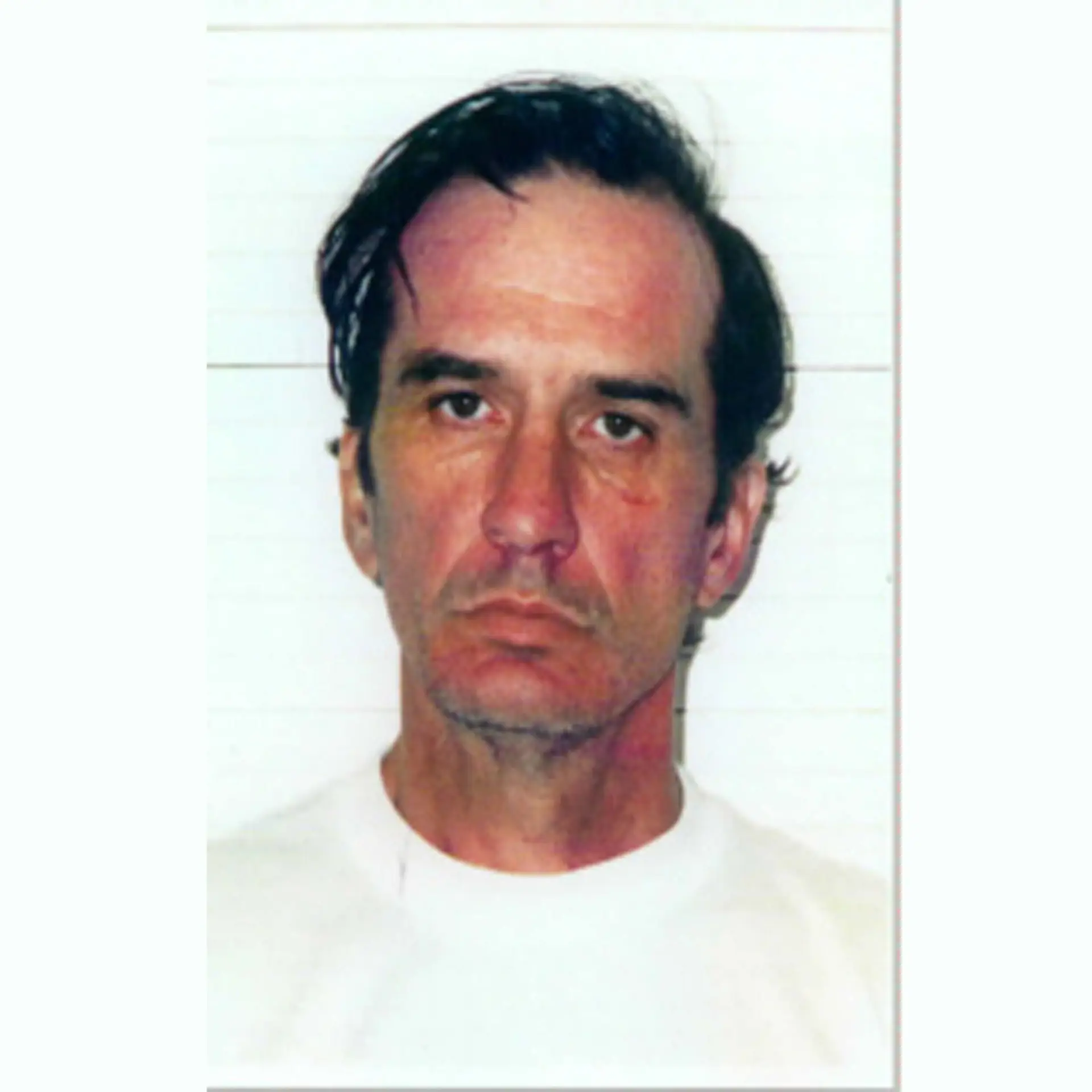
As Kenneth McDuff’s date with the Texas executioner drew closer, the serial killer kept the location of Colleen Reed’s body a closely guarded secret.
McDuff kidnapped the 28-year-old accountant from Austin car wash in December of 1991. The serial killer was set to die on November 17, 1998.
Seven years had passed since his accomplice, Alva Hank Worley, saw McDuff put ms. Reed’s body into the trunk of his car late at night in rural central Texas near the home of McDuff’s parents.
We read an abbreviated version of Worley’s confession to you in an earlier episode.
And in our last episode I explained how an informant obtained the location of two women’s bodies during visits with McDuff on Death Row.
But McDuff hoped for a last minute appeal might delay his execution.
So he held on to the incriminating secret of where he had buried the 28-year-old Austin woman.
John Moriarty
He was kind of playing games and he had not been forthright with the information. He had given some information about the location and two bodies were recovered in a short period of time but Colleen Reed, he was holding out knowing that we wanted her.
Robert Riggs
How do you get a dead man walking to talk?
Serial killer Kenneth McDuff sat on Texas Death Row with a secret he had no interest in sharing.
After all what did McDuff have to gain by revealing where he buried his last known victim, 28-year-old Colleen Reed.
The hours ticked away toward his execution.
What can you possibly give a condemned man to make him talk?
In this case an appointment with the prison dentist.
McDuff came down with a painful toothache.
Prison investigator John Moriarty jumped on an opportunity to make a deal.
John Moriarty
Robert Riggs
Well, as an opportunity – as opportunity would knock on the door, he got a toothache and – anyway, we were sitting there and prison life is a lot different than life on the streets and different things are valuable and main different things inside. And one of the things is that you’re a man of your word and they don’t have much else. And so when you tell somebody that this was the way it is, you better be a man of your word.
when he came in and he sat and he was complaining about his toothache, so I excused myself. I went out and I talked to the warden and I told the warden that he needed to tell him that it would be two weeks until he saw the dentist. So anyway, when he came back in the next morning, we were there a couple of days and then the warden had told him it would be two weeks, so I said, “Well ...” when he came back in, and I said, “Well, let me see what I can do.” So I left the room. I came back. I already had the deal cut before that. But I said, “Here’s the deal. You get up tomorrow morning at 9:00 o’clock and you can walk in the dentist will fix your tooth but you need to come in and sit down, sit in that chair across from us and give us where Colleen Reed’s body is.”
And so …
And he did it? He …
John Moriarty
He did it.
Robert Riggs
He did. You don’t worry that he will renege?
John Moriarty
Well, I mean you really don’t have much of a twist on somebody that’s on death row. That was the opportunity.
Robert Riggs
Yeah.
John Moriarty
And so …
Robert Riggs
And he kept his word.
John Moriarty
He came back in, he sat down, and he actually drew a map also of where the body was located.
Robert Riggs
U.S. Attorney Bill Johnston, U.S. Marshals Parnell and mike McNamara, ATF agent chuck meyer, and Austin homicide detective j.w. Thompson, who worked on the Colleen Reed case followed McDuff’s hand-drawn map.
The map terminated at a remote spot by a river in Falls County. McDuff’s old stomping grounds from high school. Back when he and his pistol pack’in mama terrorized the good people of rosebud.
Investigators converged on the location with shovels and a tractor.
The tractor slowly scraped inch after inch of topsoil away with a rear blade. The earth yielded no clues.
Then, pouring rain halted the search.
Investigators returned the next day with a bulldozer.
They dug a four-foot-deep square hole the size of a large swimming pool.
They found buried animal bones and trash from the nearby river.
But no sign of Colleen Reed’s remains.
Johnston says everyone grew frustrated.
Then John Moriarty suggested bringing Kenneth McDuff to the site of the dig.
Bill Johnston
And so, Moriarty had said, “Bill, we can bring him out here.” I said, “I don’t want that jerk getting credit for anything. He will act like he is – he is wagging us or anything like that, pulling us like a monkey on a string and probably lied to us anyway.” So OK, OK. And I had no business probably telling him that but I just – I hated for McDuff to come out there and have one last bit of glory.
So anyway, we couldn’t find her and it’s now getting late in the day. And I said, “How can you bring him from death row?” Well, we can do it.
Robert Riggs
Moriarty made some calls to prison officials. His investigators moved McDuff off Death Row into their car. An armed escort car followed.
I got him off of death row and brought him out to the scene. We had the media there at the time on this bridge nearby at the location and outside of Waco. And we actually disguised him and snuck him in past the media in one of the cars and he wasn’t on the scene more than a couple of minutes and said, “Right over here,” even though the terrain had changed tremendously, the trees had grown, and that kind of thing.
McDuff sat in the back of the prison investigator’s car. He gave directions to an agent who shouted instructions to Bill Johnston.
Bill Johnston
He was in the car, back of the car and we had an agent talking to him and he got some sticks, flags and stuff and four of us and he said, “No, she is over here.” And he was probably 30, 40 yards from us and he would direct us, “Have that man in the green jacket move this way. Have Bill move over here. Bill, get – move two feet closer.” He was – like he was directing traffic. And he directed us into a rectangle and he told the agent, “The skeleton is right there, head facing this way.”
And so, the back – OK. So no more hand digging because we didn’t trust anybody more. And so, we had the bulldozer guy. We asked him to please do a very shallow run with the blade just like an inch or two. And so he did over this rectangle and he backed up. There was nothing we saw. So we asked to please do it again. And so, I stood between out – I stood and then walk between the tracks and the blade of the bulldozer so I could see what the blade unearthed before the tracks covered it up. And so, I had a stick.
And so as he made that second of this, let’s say 10-foot by 6-foot rectangle, I saw something off-colored, sort of whitish yellow. I saw something and I marked at the spot with my shovel and the bulldozer kept going forward and then back up. When it backed up, I didn’t see it anymore. But I had marked it. So I went – I crawled a few feet forward on my hands and knees and I used my fingers to just pull the dirt, pull the dirt where I’ve seen that. And it was a skull. And it had been caved just a little bit by the weight of the bulldozer. And I pulled another part and I knew it was Colleen Reed.
Robert Riggs
Seven years had passed since McDuff had kidnapped, tortured, and murdered the 28-year old woman. McDuff remembered exactly where he had buried her.
So what is it about McDuff that after all those years, he knows exactly where the body is in a remote area?
John Moriarty
Well, you know, there’s a lot of theory about it but I mean it’s definitely I believe that they relive those killings in their mind and they fantasize about it. It’s what gets them aroused and he knew exactly where she was.
Robert Riggs
So he was on the scene, and any reaction from him at all?
John Moriarty
None. None.
Robert Riggs
Johnston, Austin homicide detectives, and ATF agents who worked on the case got down on their hands and knees.
They painstakingly scrapped away dirt to recover the skeletal remains of Colleen Reed.
McDuff was last seen putting her body in the trunk of his car.
Parnell McNamara says investigators did not want to take Colleen Reed back home to Austin in the same manner that she had been murdered.
Austin detective j.w. Thompson and ATF agent chuck meyer respectfully placed ms. Reed’s wrapped remains in the back seat of their car.
What was your sense of relief though at that moment, at least certainly for her family?
Parnell McNamara
It was – it was a big sense of relief. We just couldn’t believe that seven years after he killed these people that we were actually recovering their remains. And it had been such a mystery where are these people that he carried off in the dark. What did he do with them? Well, he knew exactly. He could go to visit their grave in the middle of the night and stand on it. And so, we were so relieved and you know we would call the relatives and family and let them know that we had recovered. Because all of them wanted some sort of closure, some finality of a funeral service or something.
Robert Riggs
And I remember when the guys got ready to carry Colleen’s remains back to Austin we were very emotional about it because we knew what had happened to her. We knew what he had done to her. And so, the ATF guys were there. I think J. W. Thompson, people from Austin. And I remember they said “We’re not going to put her in the trunk. She’s ridden in the trunk of a car her last time.” So they carried her remains inside the car with them to Austin.
That’s how much this case affected everybody.
Parnell McNamara
Oh, it did. And then at her funeral service…
Robert Riggs
And I… and you’re tearing up right now.
Parnell McNamara
It’s still… you know sometimes at night when I think about what he did to these people, these innocent people, I can’t sleep at night. I’m not a tough cop. It still affects me. I know it affected Mike. I know it affected Sheriff Pamplin. I saw how it affected his father. And just knowing what happened.
Robert Riggs
Bill Johnston says investigators felt a great sense of relief. Colleen Reed’s family could now give her a proper funeral service.
Bill Johnston
It was like the last page being turned in something where you had to get to that page. You had to get to the page and see it and turn it. Of all the people involved in this case, we come to know Lori Bible who is Colleen Reed’s sister very well. Adored her. Through the years, kept track of her. And we wanted to find her sister before it was too late because obviously – particularly where she was, she would never have been found.
Robert Riggs
So it was something we wanted to do for her. It had nothing to do with the legal process. It had nothing to do with any case. It’s just for Colleen and Lori.
One final page remained to be closed on this terrible tragedy.
Where were more than a dozen of Kenneth McDuff’s unidentified victims buried across the Texas countryside.
John Moriarty was determined to write that final chapter.
He had two weeks left before the scheduled date of McDuff’s execution.
Moriarty spent 40 hours talking with McDuff in the prison infirmary.
McDuff casually recalled torturing animals in his childhood and his first attempt to abduct a girl when he was 12 years old.
McDuff told Moriarty he would drive hundreds of miles hunting women. That was McDuff’s exact word. Hunting.
John Moriarty
Robert Riggs
I had the opportunity to do his timeline. And about the use of credit cards, so he had his mother’s or parent’s credit card at the time. And so we subpoenaed all of those records for years and he had movement all over Texas, East Texas, Houston. There were women missing and we knew that from interviews that he frequented strip clubs in East Texas near Tyler. We had interviews that he had raped his own sister. I mean just you know…
Monstrous.
John Moriarty
… monstrous stuff, yeah. And that no human being would do to another human being. Anyway, I had – I ended up talking to him and for hours he would just talk about when he was a kid and running the streets and fast cars and that type of thing. And of course, he wasn’t out very long. He got convicted initially when he was 18 or 19 years old.
Robert Riggs
But eventually, we got to the point where they were definitely afraid or he was definitely afraid of me getting some additional evidence on him even though we have recovered these bodies, he had the death sentence but he hadn’t had a death sentence on a bunch of cases. And didn’t – he was always hopeful that the case would be overturned against him. There were always appeal issues.
Anyway, so I got him to talk in the if somebody was to do this or when somebody – not
Hypothetically.
John Moriarty
Hypothetically, yeah. If somebody was doing this, how would this happen? But he kind of strayed from it. He talked about – well, probably the most chilling thing he told me was – because he strayed from it, it wasn’t hypothetical anymore obviously. He told me that he had taken Colleen Reed out to the location where she was found and that she had run off from him and that he couldn’t catch her. And he said, “It was just like the movies.” I said, “What do you mean it was just like the movies?” He said, “Did you ever seen in the movies where they are screaming and yelling and running and looking behind them and they tripped?” He said, “There was no way I would have caught her but she tripped and I was on her.” And he said, “That was that.”
I mean when – again, when he was saying, “She ran from me and she could have gotten away.” And I talked to Colleen Reed’s sister about it because I didn’t want her hearing it from somebody else and it was – I mean the hair on the back of my neck stood up when he was talking about it.
Robert Riggs
Moriarty says McDuff basically confessed to the murders of Colleen Reed, Melissa Northrup, and Regina Moore.
But the serial killer evaded every question about where his other victims were buried.
John Moriarty
He referred to the women as, “It was, it was, it was,” it was it. They were objects. They are not people. And – but he confessed to me about the ones we knew about. There were three that he gave me.
Robert Riggs
In your career, was there ever a case like this?
John Moriarty
Never.
Robert Riggs
And what made it so different?
John Moriarty
Just that it was so brutal and so uncaring regarding his victims. I mean I’ve dealt with serial rapists and murderers and all sorts of people but this guy was just a sexually sadistic killer that had no conscience and was a true sociopath.