Robert Riggs
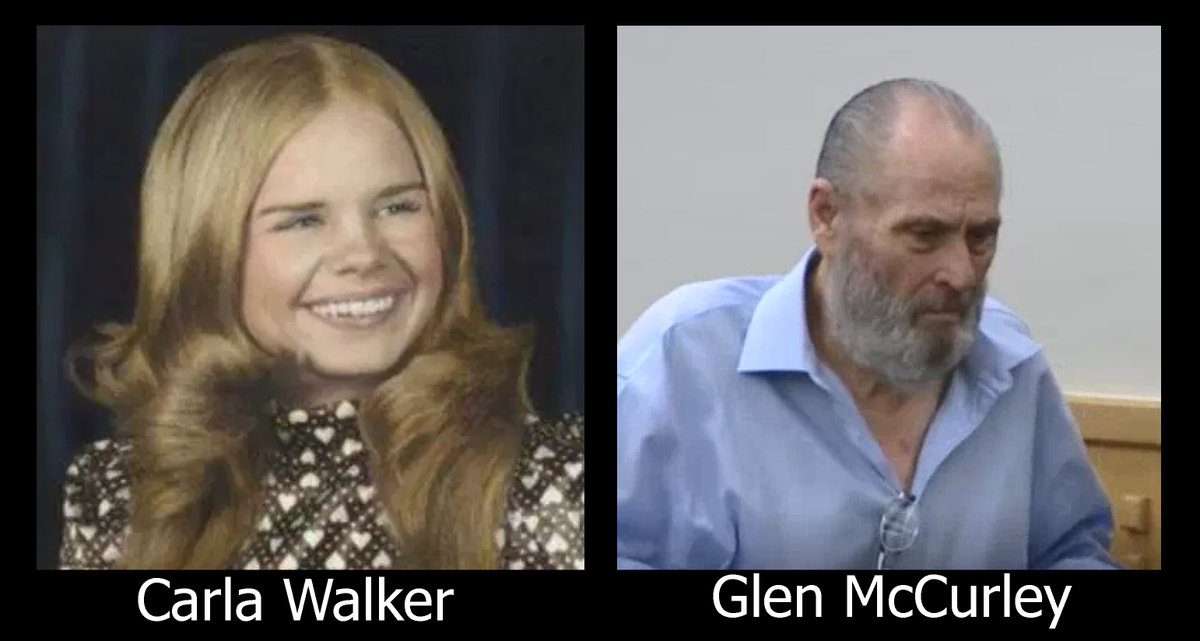
46 years after the abduction, torture, and murder of a 17-year-old girl, cold case detectives with the Fort Worth Police Department arrested a 77-year-old man and charged him with her capital murder. Retired homicide detective David Thornton helped start the cold case unit. At the outset, investigators faced 750 unsolved murders dating back to 1966. Thornton put into motion an effort that is still solving cold cases in which the original investigation failed to produce sufficient evidence to support murder charges. I'm Robert Riggs here with former federal prosecutor Bill Johnston. In this edition of our True Crime Reporter Confidential, we take you inside homicide investigations and cold cases. It is nothing like what is portrayed on popular TV shows. That's Hollywood. This is real life. So, David, you started the cold case unit at the Fort Worth Police Department. What was going on that there was a need, and how does something? How does a case go cold?
J.D. Thorton
Well, I've already always been interested in in cold cases ever since I started with the police department and worked in patrol, and I'd go out on different types of murders, and and as years went on, I've always wondered what happened to them. And when I went into homicide in 1987, I would run across those that I had been in patrol, and even before I got to the department, and they they always piqued an interest to me. I only worked one when I was a detective because there was no organization of of unsolved murders at that time. So when I when I became a supervisor, I I always said the first thing I'm going to do if I become a supervisor is make a cold case unit, and it was a miracle I even became the supervisor in homicide because that never happened. That was something I was a detective for 12 years. I think
Bill Johnston
you were pretty good. My guess is,
J.D. Thorton
well,
Robert Riggs
he wrote the book on it.
J.D. Thorton
I that that just didn't happen, and I took the promotional test, sergeant's test, too, fully expecting to go to patrol and do my time there, hoping maybe I could get back at some point. But I.
Bill Johnston
But you wanted to form the unit. Why? Because of what you'd seen, or because of what might can happen, the good things that can happen.
J.D. Thorton
Because we had over 750 unsolved murders.
Robert Riggs
Oh my God!
J.D. Thorton
And I, I thought that that those need to be addressed. When I was a detective, late '80s through the '90s, there was just no time to do that. We, the Fort Worth PD homicide at that point in 1986, we were the murder capital of the United States per capita, and we continued to be high on that list, and and even more so, what we led the nation is was cases per detective. We had in 1986 202 murders, which doesn't sound like a lot. Compared to New York, but when you only have eight or nine detectives, it's a lot. And even through the '90s, we carried cases 20 and 30 cases per year per detective. When you talk to the so-called experts now about how many cases a detective should maintain in a year, they say about five, so we're we're carrying 20 and 30 cases apiece.
Bill Johnston
And is that so? The huge number, a shocking number of unsolved cases in Fort Worth, Texas, in that time frame, is that a result of manpower? I'm sure it's many things. Manpower shortage, in other words, too many cases to work. Was it a product of just sheer volume? In other words, the time it takes to work a crime scene to start the detective investigation process, and then here comes another one, just layering on top of it. For instance, was it that sort of thing, or was it, for instance, some unqualified detectives that were new and didn't know what they were doing yet, or combination. I
J.D. Thorton
think it's a combination of, particularly at that time, it's the caseload that that got most departments, and that that it wasn't just us; it was around the country that so many cases apiece that some just slipped through the cracks, and they ended up in the what we call the unsolved room, and even then they were just in boxes. They weren't organized. They were just in there, and you were lucky to be able to to go in there and find what you were looking for. How did
Bill Johnston
you prioritize?
J.D. Thorton
How did we prioritize? Well, when I when I became the supervisor in 1999, I assigned cases, unsolved cases, cold cases to existing detectives. I was first a sergeant in the major case unit, and from there I went to homicide. But even when I was in major case, what are what the goal of major case? The main function was critical police incidents, police shootings, people who were injured, both officers and you know people of the general public. So that that that was the goal, the function of major case. So I thought, well, you know, it's not like we get those things every day, so I started assigning cases to major case detectives, and they actually liked it. They they liked working them, and we saw some include a 1969 case from major case. But when I went to homicide, there still wasn't really an organization to it, and when I went to homicide, they never the department did not think a cold case unit was necessary. They just thought it funds and money could be better spent Elsewhere, so I was determined not to flinch on this. So I started assigning cases to existing detectives in homicide, along with their regular caseload. Now, not all of them really like that, but they did it anyway, and were really had some success doing that. So we had major case doing it, and we had homicide doing it.
Bill Johnston
So is is cold case that term, which is literally makes television shows now, is that term applied to a case that has not been solved for a certain period of time, or is it? There's some other factor. First of all,
J.D. Thorton
and Robert asked that as well. And it's there is. I don't put a time limitation on it. I don't say after a year. I don't say after two years. A lot of departments do that, but I've had the experience that a case can go cold in a matter of months.
Bill Johnston
So that that term then to me means no current clues which are going to lead to a resolution. We've sort of worked the leads that we have. We're out of lead, out of good leads.
J.D. Thorton
Yes. And is is
Robert Riggs
there a rule of thumb of when if you don't get it saw by X number of days after the murder, it's going to go cold.
J.D. Thorton
Well, I'm glad you brought that up because the first 48. I don't know if you're familiar with that show, sure, which which purports, and I've always heard this that the first 48 hours, if you don't solve it, then your your ability to solve it is reduced greatly, which I think is BS, to put it mildly,
Bill Johnston
makes a good TV show. A good TV show,
J.D. Thorton
and it's something that's been going around. You know that that theory has been going around forever, and I don't know who came up with it, but it certainly didn't apply to our department. Because we had a bunch of bulldogs who, once they get a hold of something, they they wouldn't let it go.
Bill Johnston
Sometimes clues aren't even available for two or three days, and forensics or an autopsy, for instance. Sometimes you don't have it for, which may be your starting point. Sometimes
J.D. Thorton
true, and you know you don't know every every witness you have doesn't necessarily hang around and want to talk to you, you know, at the scene of the murder. So, you know, in that respect, no, I put no limitation on that. I've known some detectives who, you know, didn't always give it their full attention, and cases like that could go cold sooner than later. I
Robert Riggs
want to give some history here, though. I think the listeners, when they heard that caseload and the number of cases, are like, got to be astonished, Bill. This coincides 1986 up through the 90s of what you and I were doing. The Texas prison system swung open the doors. We had a revolving door system going on to relieve prison overcrowding. They didn't ever tell police departments or the public this, and you know I exposed there were good lord upwards of 85 former death row inmates out had been paroled. One of which Kenneth McDuff, who you know if you want to hear the first season of True Crime Reporter, and you'll hear about Bill and the manhunt and the corruption that went on behind that. But they had opened the floodgates on you. That explains these big, big numbers. Did you have any idea, though, that that was going on at the time, or wondering where are all these cases coming from?
J.D. Thorton
Yes, that had an effect. In my in in our experience, a lot of the cases late '80s on through the '90s were as a result of that eastward progression from LA and the crack epidemic that started there, and then basically infested every good-sized city from here to the East Coast. So that's where a lot of our that that increased it so much, and Almost, it it didn't eliminate the other types of murders. We still had plenty of you know robbery murders, sexual assault murders, people burglarizing houses, plain old arguments and fights. People kept doing that, but with the the wave of the the crack epidemic and what came along with that was really instrumental in building up murder rates in in every city in the U.S.
Bill Johnston
And you may know Robert speaking about the Texas prison system in the 80s and 90s, which seems a long time ago, but not so long ago, we're still feeling the effects of it. In and what he learned and publicized that changed everything was that Texas inmates could get, let's say, 20 years for a crime, whatever crime, drug dealing, it could be a robbery or whatever. And if they got 20 years, they might serve three. They might serve five years of a 40-year sentence, and I prosecuted many drug dealers in federal court who were on three and four state probations at once, and they were on probations because they didn't want to send them to prison. Because what good would it do? Because they got out so early, there was there was no such thing as the classification of the 3g offenses and others, which now in Texas require violent crime defendants to serve 50% or more of their sentences. That didn't exist. That exists now because of Robert Riggs, quite frankly, and with side credit to Kenneth McDuff, the killer, because everyone in Texas was shocked to learn that there were death row inmates, former death row inmates, out amongst us, and that there were people that served a fraction, a thimbleful of a sentence, and committed another one, and went back in and served another fraction, and tie that with what you're talking about about the drug dealing epidemic that swept our way. It's related because instead of getting a substantial sentence for a major wholesaler, let's say a violent wholesaler of drugs, they'd get they in that they were the first ones out. They'd get 10 years and be out in sometimes 11 months, and so that all played into it, but when you talk about those numbers, it's astonishing, it's frightening that you had the concept and you stuck with it to create that unit and to start weeding your way through. How did you then? Let's say you have the a room with 300 boxes. How did you pick, or assign, or prioritize within the boxes of the old cases?
J.D. Thorton
Once we got the unit established, which we applied for a grant, a state grant, in 2004, and Ended up as the number one grant submitted to the governor's office, and it it was a cold case grant, and it had money to do, had money for equipment, it had money for one detective, which of course, 750 plus cases wasn't. He's not going to be able to do them all. But the first thing we did once we got that grant and once once we got the detective picked and and settled in, and he was an ex homicide detective. He was an ex partner of mine who had had moved to a different unit. What what we did was we prioritized. We started going through every case and prioritizing it. And I wanted to keep it simple, so we prioritized it as priority one, priority two, and priority three. Is
Bill Johnston
that most likely to be solved? Still lose one is
J.D. Thorton
most likely to be solved. Two is the the and and I could go through everything we looked at. We we had a checklist of things that that would tell us that it was more likely to be solved or less likely to be solved. Or priority three being a a case that people had worked on throughout the years. I mean, and just had worked every lead in them, or there were no leads in them. There was no physical evidence. There was no potential DNA there. There was no there were no witnesses. They were not that we didn't look at those and try to solve them, but that was you had so
Bill Johnston
much money, so much manpower. You had to prioritize.
J.D. Thorton
Yes, and it was the first year after we did that. After we made the, and I put every case in these white folders by year, and the priority would be listed on the case. So every unsolved case from 1988 would be in one book, and so on and so forth. And the priority would be at the top of the case summary, and that case summary would have how many witnesses there were, what kind of physical evidence, are there any suspects? Were there any suspects? Everything you would want to know about that case to say yes. Let's start here. That first year, we solved 21 cases, and we didn't, you know, some of these more high-profile cases that that we looked at that had been looked at throughout the years. You know, people would go back and look at them, try and solve them, or see if there was anything new on them. We concentrated on other cases that were less than high profile people who didn't make the news all the time. The victim wasn't, you know, your normal victim that would be on the 10 o'clock news to start off, and we started with those, and I mean, we were like a bulldozer those first few years in solving those types of cases.
Bill Johnston
I wonder about your approach, Robert. You know, my role in all of this was a state prosecutor, and then a federal prosecutor for a long time, and then was fortunate enough to help solve some cases as a private attorney to try to gather the evidence privately without any state authority and refer it for prosecution. The Baptist preacher is one of those, but this is a way I looked at things, and I wonder honestly how you feel about this in looking at an older case, in reading a file, talking to people, I I found it helpful to come up with a theory of what may have happened and who may have done it and why. So just to have something, just to have something to start with a framework, but but be completely willing to change that theory when evidence came in. In other words, I just found that mentally helpful to me to have a starting point, which was okay. Well, they said, believe it or not, the son of this woman was very angry over not being included, you know, in her estate or something. So we had a kid with motive, but maybe we can't. But that's a starting point. At least we have someone with motive. How do you feel about that as a concept? Because you you have yeah 1000 times more experience than how did you do it?
J.D. Thorton
I think that's a natural way to look at things. You want to look at something and say, "Well, we're halfway there. All we got to do is get the rest of the way there because the original detective identified this person or persons, and and it makes the job easier for us. Of course, we tried to look at things from scratch and see how we got to this person that we got there legitimately, or was it just a
Bill Johnston
presumption that was unfounded, maybe.
J.D. Thorton
Yes, so we tried to start from scratch and build up from there. The cases that had information that we knew we could follow up on, or that was just the beginning of the time where DNA was really starting to.
Bill Johnston
I was going to say, how much did the change in Technology help.
J.D. Thorton
Well, I
Bill Johnston
touch of DNA and DNA particularly.
J.D. Thorton
I think it it has a lot to do with it, particularly now and particularly in high profile type cases. But I'll tell you this: when I when I retired in at the end of 2010, we had solved since we started the cold case. I call it an effort because we had the detectives at the beginning. We didn't have a unit. We finally got the unit in 2004, and we kept that unit going for six years, which was not usual. That the the the governor's office, the criminal justice office, would let it go that long, but we were having such success in doing that that we were solving so many cases a year. In 2008, we got another DNA grant from the federal government. But to answer your question, when I retired, I did a analysis of how many cases were solved by what means, and we had solved 114 cold cases when I left, and these are the stats that I came up with enough evidence at the time. We found cases where there was enough evidence at the time that the the case could have been prosecuted. It just wasn't for whatever means. So we easily submitted those. Those were but a small amount, 2% of the cases, but they still were there. Witnesses who we already knew about from the case, and talked to them again, and they provided additional information. That's 22% So we went back to the witnesses, and they were not completely forthcoming at the time.
Bill Johnston
Which happens when time helps. Time hurts and time to help send murder cases.
J.D. Thorton
Yeah, yeah, it's you know at at the time it's you know for one reason or another, but we still had to overcome that issue that they had at the time. And of course, when you go to trial on it, they're going to pick on those witnesses who didn't really tell the whole story to begin with. New witnesses located people we found by talking to old witnesses. They identified new witnesses, and nobody had ever talked to them. 40% of the cases we solved were because of new witnesses.
Bill Johnston
That's going to leave a small percentage for DNA
J.D. Thorton
suspect confessions. When we had a suspect, why not go out and talk to him? Went out and talked to him. They confessed on the front porch, you know, or maybe we arrested them and got them in, and then they confessed. But most, more often than not, is we just go out and talk to them, and they either we either surprised them so much by being there that the shock just you know they just blurted out what the first thing that came to mind.
Bill Johnston
Yeah, doggone the truth,
J.D. Thorton
and that was almost 10% DNA was at the time 19% when I left is that's the percentage of cases we saw by DNA.
Bill Johnston
Why is it is it television that draws us to the concept that everything can be solved with DNA, that it's infallible, and that everyone is either going to be found guilty or cleared by DNA? Why is that so prevalent in people's minds?
Robert Riggs
Well, I've heard present day young detectives thinking I don't have a case if I don't have DNA.
J.D. Thorton
Right. Yes, and just to move forward a little bit, when we did the heat project, the training project, we got the impression that if there was no surveillance. Video. If there was no DNA, then they didn't know where to start. I mean, it was like the first thing you look at when you get to a scene is where's the cameras, or where's the DNA, and and it is a misconception. Although DNA is coming a long way, particularly with this forensic genealogy, which we solved one recently with that, and actually two. But yeah, it's a misconception, and you see it on TV. People watch TV. I mean, they call that the CSI effect. It's people watch on TV and they think we can do things that we can't do. It
Bill Johnston
seems like that idea, and it it does seep down to young officers who want to be investigators, who are also part of the reason some of them even want to get into law enforcement are these shows, and then once they do, they think, "Oh, I'm going to be in that world. And the young, some of the young investigators, and certainly many watching think that yes, you are at a computer and you're you're running things on screens. It's kind of like I had a federal fugitive many years ago who was a murderer and a terrorist, and a the case unfortunately was assigned to a deputy U.S. Marshal who felt that she really never needed to leave the office. She would tell us great things about how she was going to catch him, as I say, by pecking on her computer. And she was a big computer pecker, but she wasn't much of a Street investigator, and so back to to your world. There's nothing that beats hard work, going out, looking at things, measuring things, taking pictures, talking to people in the world of homicide investigation and the world of fugitive tracking. You've got to get out amongst them.
J.D. Thorton
We used to call it kicking over trash cans.
Robert Riggs
I love that expression.
J.D. Thorton
Is getting getting out, getting dirty, going through the alleys, going through, you know, finding people we had to talk to. And there, you know, when we were doing it, there was no time for the office, you know. The time for the office was make a few phone calls and and hit the streets.
Robert Riggs
So that 40% figure of finding new witnesses, does that say the original detectives didn't do a good job, didn't have enough time? What's is there a common denominator there why these things went cold, and you can come in later and solve them.
J.D. Thorton
I'm not going to blame it on the detectives because on any murder scene, people just-they're not going to hang around. You know, they just don't-they don't want. Number one, they don't want to get involved in
Robert Riggs
it,
J.D. Thorton
and they don't want to be seen as a snitch or somebody who's talking to the police, so they can, you know, they can just hook them before the police even get there, or they can stand around and and watch and say, "I don't know anything, and you know, the police are going to leave them alone. So it's, you know, it's a combination of all that, and it's mainly that nobody at the time said they were there, and and that's a main thing that that we tried to do, and main thing that we taught in the in the EP project seminars is you ask a witness not only what he saw or she saw, but what this witness saw, what this witness saw, what they could have seen. So we're we're basically playing every witness against each other, and trying to find witnesses who didn't want to be found.
Bill Johnston
But but we're in a position to see or hear. Yes,
Robert Riggs
and I want to explain the heat project you're talking about. You literally have written the book on murder investigations. I've got it here, 640 pages, real murder investigation. Explain to us how. I mean, this really is a how-to investigate a homicide, and it's not CSI. I mean, I laugh out loud when I see CSI of you know a dozen detectives assigned to one case and the sophisticated lab running forensics and everything. And unfortunately, I do think it has set an expectation with the public of
Bill Johnston
injuries, injuries, or yet
Robert Riggs
injuries that all this should be easy to solve, or this should just be clearly apparent to a jury. Why?
Bill Johnston
Why hasn't that book been done over the last 50 years? It's amazing.
Robert Riggs
This is an amazing book.
J.D. Thorton
Well, I mean, there there are books that people have written, and I'm not going to say that is the book. It is. It is. Well, we'll
Robert Riggs
see. Yes, it is
J.D. Thorton
my way. That's the way I did things and and things about my career. So, but
Bill Johnston
it's without, if I may say, because because you won't. It's without glamor. It's without cliche. It's a common sense, difficult day in day out way of handling things, that for for instance, you talk about crime crime scenes and importance of crime scenes. I think, and again, my experience pales. My experience is as a prosecutor, so it's different and it pales compared to yours. But I think, and not talking about your department at all, just talking about generally and generally small departments, I think a lot of cases aren't solved in the first not only 48, as they say, but the first six months because attention wasn't paid to the crime scene in the first 1015 minutes. What what about that? I know it relates somewhat to your book. What about the what about the first what about the initial police response or even citizen response to a crime scene, and how that's critical?
J.D. Thorton
Well, once you miss it and leave it, there is no going back. So that's the attitude that you have to take when you process a crime scene, and think of it as there is there's something there. Now, do we have the technology and the means to find it? Is a different story. So it could be so minute that there is this that minute drop of blood in the middle of the victim's pool of blood that you know we we is not going to do us any good because we're never going to find it because we're not going to collect that whole pool of blood. So we tried to stress that money is not an object. You know, I had people who would, you know, even crime scene officers who would say, "Why are you collecting this? Why are you collecting all this? Because you know, you're never going to send it out for all the DNA. You know, it costs too much and it's too time-consuming. So let's take what is obvious. Well, you know, you're limiting yourself. You're going to take what's obvious, but you also need to take other things that will benefit you or could benefit you, and not worry about the money. Not worry about the money later. I mean, that's that's. But you know, we had crime scene officer. We had some really good ones, really good ones, and then we had some that you know were just like any profession. Were
Bill Johnston
a little laziness can really hurt you.
J.D. Thorton
Yeah, and especially when you do it for so many years, it's it's like you it's almost like robotic. You know, let's go in there, let's look for DNA because that's what's going to make the case anyway. Well, that no, that's not true because there's a lot in crime scenes that is not scientific that is are things that set that case apart from another one. It's all individualistic. So, you know, to say you know if we don't have DNA or fingerprints, we don't have anything, and plus DNA is is is useful only to an extent, as you well know, as as you both well know, is because we DNA only puts somebody in a particular location. It doesn't say exactly what they did,
Bill Johnston
and particularly if they had a a reason they could have been there, a a pool guy who may have committed the murder, but was also in the house at Tommy presenting his bill. Of course, my DNA was in in the house. Robert and I did a, if I may say, pretty fantastic story about a Baptist preacher that murdered his wife and faked it as a suicide. And this has to do with crime scene. A question for you, but also sort of a presumption that is so dangerous to presume anything at a crime scene or early on in a homicide case, that this guy was a Baptist preacher. He called 911. He acted as if he was doing CPR. He, when the police arrived late at night, he gave a brief explanation. Gosh, he's a preacher. Of course, we believe him, and it's awfully late at night. And one of our supervisors on the scene is sort of afraid of bodies, believe it or not. So hey, just a few snapshots of the crime scene, and there was a typed, I say typed suicide note, which I'd never heard of, and a bottle of pills, and a computer and a printer. None of those were taken, of course. We had to privately. Police didn't do the work. We had to privately try to establish the suicide note, the availability of those pills, and all that. That was. Terrible, I mean, terrible crime scene job, but they went into it presuming something. Basically, the word of the the killer. How how do you avoid presuming something happened when you first, as a detective, not responding, let's say, uniformed officer, but as a detective, how do you avoid presuming something?
J.D. Thorton
Well, it's hard to hard not to once you kind of get a look at the scene. But you bring up suicides, and and I always said that this is a murder until you prove it's a suicide. Thank
Robert Riggs
you. Okay, there you go.
J.D. Thorton
And and the reason I did that. Well, you know
Bill Johnston
what? That's really rare, and I'm sorry to interrupt you. That is rare for someone in in homicide work to think that way. I'll tell you why I say that because I've seen many cases. It's so much easier to work a suicide.
J.D. Thorton
Of course, it's However, the repercussions of not conducting a thorough investigation, even to a suicide, can get can give you headaches for years from people in the family and and other friends and things that well this person would they just wouldn't do that they just there were no signs and they just wouldn't do it. So, you know, why not make it easy and start at the beginning, not presuming something, and that goes for murders too. Don't presume that just because you know you have a broken window and think that's an entry point. Don't presume that's always the case.
Robert Riggs
We'll return to the episode in just a moment, but first, if you enjoy my exclusive stories, here are ways to support my work. Please share this podcast with someone who loves true crime stories and leave a review. Stay one step ahead of danger by subscribing to my free newsletter, Stories to Keep You Safe. Each issue gives you expert insights on how criminals operate and how to protect yourself. The link is in the show notes. If you like my podcast, you'll love my books and audio books. The best way to support my work is to buy direct from me on my TrueCrimeReporter.com website. You can also support my show by shopping online at our sponsors. I receive commissions for the purchases, and you receive my exclusive discount promo codes. Speaking of exclusive, let's talk about a signature style that's made its mark in both fashion and true crime: Eric Javits Hats. In the world of true crime, details matter: the right clues, the right instincts, and sometimes the right hat. Deputy Chief Brenda Lee Johnson from the popular TV crime drama *The Closer* was known for her sweet Southern charm, razor-sharp interrogation skills, and her iconic Eric Javits Hampton straw hat. Whether she was closing cases in the scorching L.A. sun or outmaneuvering criminals with her disarming drawl, her Eric Javits Hampton straw hat became a symbol of elegance, authority, and unshakable confidence. Eric Javits hats for women and men feature the patented squishy material, flexible, lightweight, and crush-resistant for travel, they offer UPF 50+ sun protection. They're crafted with timeless esthetic, worn by fashion icons and true crime fans like you. Get yours today using our exclusive 20% discount promo code, and bring a little true crime sophistication to your own adventures. Find your promo code in the show notes and on the True Crime Reporter podcast product page on our website. And now back to our surrey. In this case, this is a small town department. Did not have the competence, probably arrogance too. You can't don't tell us outsiders how to do this, but in your real murder investigation book with the Heat Project, you're we're you were out trying to train smaller departments that don't have the the know how.
J.D. Thorton
Yes, we were aimed at departments who didn't have the resources and who relied mainly on the rangers to handle their investigations, and we thought that if if you're, I mean that's fine for them to help. I mean they have all kinds of resources. Sources DPS does so, you know it helps in that respect. But I always thought that you know Rangers is a good outfit, but they're no better than you are. They're no better than anybody. So learn how to conduct your own investigations, and and you'll be better off for it. That was the aim of it.
Robert Riggs
Interestingly, the FBI original profilers that I knew-they always talked about victimology to find the serial killer or the-they needed to know more about the victim.
J.D. Thorton
That's always where you start.
Robert Riggs
Explain that to our listeners, because you don't see that in the crime shows,
J.D. Thorton
no, I mean,
Bill Johnston
oh, it's not as glorious or interesting. Let's talk about a serial killer and profiling the serial killer, but someone that, as you said, got their hair done someplace and and always had a one of the other hairdressers comment to them inappropriately, that might be helpful.
J.D. Thorton
And we wanted to by doing that, we wanted to make such a pattern to as to make it impossible not to know where this person ran across their their killer. So that that's what we're trying to do with it. It may not have been where they got their hair done. It may have been on their way to where they got their hair done, and you know you y'all know as well as I do. Serial killers a lot of times go hunting and tracking and find somebody they like, follow them home, know where they live, do their surveillance, and so on and so forth. But that's the way we tried to approach it.
Robert Riggs
Well, you know, Kenneth McDuff, our notorious serial killer, to our friend John Moriarty, the key investigator that worked with you in prison before he's executed, he described it as a hunt. That was his words. I'm hunting. Would drive hundreds of miles on the hunt,
Bill Johnston
and that's that's a serial killer for you too. That that drives McDuff was like a a wolf, more so like a shark, a great white shark that patrols 1000s of miles of oceans, and he he knew some of the victims by acquaintance, some not at all, and there would have been no way to work the victim side of it. But that's very rare. It, I mean, I think correct a serial that type approach where you have someone like a shark, you know, coming out of the wave after a seal and breaching and falling back in and swimming off-that's pretty rare, right? Normally, the victim, normally the path of the victim leads to the where it crossed the killer.
J.D. Thorton
Yes, you just have to know where it it crosses somewhere. When when we were in the cold case unit. We solved several serial killer cases. One guy to this day, his name's Curtis Don Brown, is responsible for several more than what we have him on, and I bring him up because during the mid to early mid late '80s, Fort Worth had a issue with dead women, and we were getting dead female victims across the city, very often to the point where, you know, the the newspaper Star Telegram was running things like, "Do we have a serial killer? Because there were so many of them, and once we started that cold case unit and went back and started looking at at those things, we identified Brown. He was already in prison for killing a a nurse who had left her apartment window cracked that much,
Robert Riggs
about an inch,
J.D. Thorton
and he had no regard. He had no care about who saw him. He went in there, drug her out, and as this was late at night, but drug her across a parking lot to a field across the street, where he raped her and beat her to death with a rock. He he was already in in prison on that. We identified him on two more. One an 18 year old girl who was just walking down the street. The other girl who had left the old Caravan of Dreams, which is now Riata downtown Fort Worth, a restaurant, and her her car was found in the middle of the road, several miles from there, and we found her the next day in the Trinity River. So a guy named Juan Segundo was your. Typical predator, and he killed four women, and and raped several more, just by finding a way into their house or apartment.
Bill Johnston
But as good as they were, and the fact that they were predatory didn't keep you from solving it. Why was that?
J.D. Thorton
Well, Juan Segundo at the beginning, his first victim was an 11-year-old girl in sleep in her room. The rest of them were adults that he found on the street, including a black woman who, at the time her body was found had KKK spray painted on her backside-an obvious diversion. But wow! But when we finally got him on all four of those murders, and he's on death row right now, he was a friend of the family of that 11-year-old girl, so that's where he was able to, and he even talked to the detective, the original detective on the case.
Bill Johnston
Could you say he messed up by knowing a victim in in a in a way? In other words, if he kept it, complete strangers on every occasion would have been more difficult. You found a little path across, didn't you?
J.D. Thorton
Well, that in hindsight, yes. Now that now he was solved by DNA by CODIS hits through DNA, and that's what when we started the cold case unit, we concentrated on on DNA cases and cases that were that could be solved by DNA. And when you say
Bill Johnston
CODIS, there's a there's a database of DNA, particularly of prisoners, correct? Right. Where the there's now a policy to take DNA from almost everyone convicted.
Robert Riggs
Yes. And
Bill Johnston
that's fed into a system, and you can
J.D. Thorton
yes. There's a national and state and local system.
Robert Riggs
This cold case unit is still paying dividends long after you're gone. You know, there's been a case here in the news just recently out of Fort Worth that was about Glenn Samuel McCurley, 77 years old. He's indicted on a charge of capital murder. They've charged him for abducting a 17-year-old junior in high school as she from her car after a Valentine's Day dance, and he tortured her allegedly and murdered her. You familiar with the the case? You remember this? Yes. So give us some insight into that and the others of how after it's been 46 years later.
J.D. Thorton
Well, McCurley, his name was in the case file for 46 years, and the reason his name was in the case file, and in these cold cases, I will say this, you know, that they are so educational that you're able to, for one reason or another, figure out who did it, but also how they came upon their victim. But his his his name was in there. His the case was solved by forensic genealogy. Why was his name in there originally? His name was in there because at the time of the murder, the victim was with her boyfriend. They had just gone into a bowling alley to use a restroom. They had had been at the Valentine's Day dance. When they came out, they were sitting in the car, and the passenger door flew open, and this guy produced a 22 caliber Ruger and started pistol whipping the the boyfriend, drugged her out of the car, drugged her to his car, and took her away. And she was found in a culvert near Lake Benbrook a few days later. But his name was in there because the detectives at the time had researched everybody who had bought a 22 Ruger in a certain time period before that, and his name was in there. They talked to him. He said it had been stolen, you know. Before he doesn't have it anymore. It's been stolen, and so on and so forth. So they had, you know, three or four pages of people like that.
Bill Johnston
So describe that that genealogy.
J.D. Thorton
Well, this this came all this all came about after I've left, and it wasn't. It doesn't go along with your standard DNA testing like I'm used to.
Bill Johnston
This is perhaps how the Night Stalker was captured in California. Yes. Go ahead. I'm sorry.
J.D. Thorton
He basically it's it it works off these ancestry databases where people look for relatives. They submit a saliva sample, and whether it's Ancestry.com or 23andMe, all those places like that, they'll submit it, they'll run it, and then they'll come back with relatives. And in this particular case, the detectives did that, and this detective hadn't was a reserve officer. He hadn't been in there for less than a year. He's a good friend of mine. We work out together, and he approached me one day and said, "You know, I really want. I'm really into cold cases. You think maybe you can get me a spot in there just so I can help out, and I went to the supervisor, the homicide supervis. know him real well, and he said, "Sure, you know we can use all the help we can get. So he got moved from the patrol division to the cold case unit.
Bill Johnston
Had to get the notion for the genealogy.
J.D. Thorton
Well, he. I mean, that's been around a while. Right. It's not. I mean, the homicide. You know, there's one guy in there who solved the murder of an 11-year-old girl who, by that same
Robert Riggs
method,
J.D. Thorton
yeah, the same DNA method, and that was three or four months ago, or I'm sorry, it was longer than that. It was a couple years ago, but anyway, he when he went in there, this was the first case they gave him, Carl Walker, and and there have been I don't know how many people who've worked that case, who've looked it over and worked it, and he would call me, and you know, we'd talk about it. He'd, you know, say, "Hey, you know, am I on the right track? Because he's really doing it by himself. They they didn't tell him much of anything, how to do it or what to do, or and I, you know, I said, you know, the boyfriend was always a suspect,
Bill Johnston
of course,
J.D. Thorton
and they thought so many people thought it was him, and the detective, the reserve officer, also thought that from the beginning.
Bill Johnston
Have it. It's okay to have a theory, but be willing to have an open mind.
J.D. Thorton
And as a matter of fact, he went on a one of those murder mystery shows. I can't remember the name of it. It's a new
Robert Riggs
one
J.D. Thorton
that a guy from California, the guy actually who solved the Night Stalker, yes,
J.D. Thorton
now has a TV show. There
Bill Johnston
you go,
J.D. Thorton
And so Jeff went out there and and was on the show and and even that show and I watched it. the The detective, California detective, who's now retired, but he was really into the boyfriend, really thinking that he had something to do with it, well, so when Jeff and I were talking about it, I said, "Man, it could be a lot of people. He's been polygraphed like three times. A lot of people have run him through the ringer. Why don't you look at the dress again? Because her dress had been ripped and torn, and and it had been six or seven years since they tried to do some DNA on it, so he agreed and said, "Okay, I'll look at the dress again. And and even our crime lab was saying, "We've looked at that dress. There's nothing on that dress. Jeff maintained and said, you know, let's look at the dress, and they actually did some cuttings and found some DNA. They found hair
Bill Johnston
or touch DNA cell cell sloughing.
J.D. Thorton
Well, it was semen. There was touch DNA, and there was blood that had never been tested.
Robert Riggs
My goodness!
J.D. Thorton
So he sent it. He he got in contact with this California detective about the genealogy and was directed, and he did that. The detect his name's Paul Holes, I think. Suggested these different places where he could go to and did and get those samples tested. He did it. It came back with a a a hit on a a woman who had some sons came back on one of the sons that was related. To our suspect McCurley,
Bill Johnston
how is it that I'm sorry, Robert? Go ahead.
Robert Riggs
And then to get McCurley, now you've got to have his DNA. Now, didn't they go do what we used to call dumpster diving and go through the trash? And believe it or not, Bill, as a congressional investigator, you know, the we did dumpster diving. It was amazing. So in many cases, oh yeah.
J.D. Thorton
Well, and and and when they were, when they got that information, they they thought about just going and talking to him and say, "Hey, can we have your DNA? Well, this guy had I can't remember how old he is now. He's in his over 77. I was concerned that being 77 years old, having some medical issues that he might check out, so to speak,
Robert Riggs
if
J.D. Thorton
if suspicion was cast in his direction. So we talked about that and decided, well, why don't you know? Why don't you go out there and get the trash bin and the recycle, and there were a bunch of needles in the recycle. Obviously, a diabetic. So that was an easy arc.
Robert Riggs
Wow! It
J.D. Thorton
matched, and they ended up getting the. They had to get another sample to to check for sure, and they did that, and it came back to him.
Bill Johnston
How does law enforcement get access to these private DNA services that have to do with ancestry? And is there some controversy about that?
J.D. Thorton
Well, there there was in the beginning, and I'm sure there'll be
Bill Johnston
privacy issues. People claim
J.D. Thorton
there'll be court issues, but most of those places now will require you to check off a box, cooperate with law enforcement. Don't cooperate with law enforcement. The com the genealogical companies will before you submit your sample. You have to fill out that and and check the box. So yeah, I mean there there'll be court cases regarding that, but that's that's how that was solved. And
Bill Johnston
great work.
J.D. Thorton
We've got another one also that's coming down. I can't really talk about that much, but the same way is pretty high profile of a woman in her mid 50s.
Robert Riggs
And so, Bill, will the day be here that you've got to go get a search warrant to go to 23andme. There's something broad.
Bill Johnston
Well, as you and I've learned in a in another matter, oh yeah, particularly California. There are some other states. California, particularly if a company is based there, and sometimes if they just operate it through there through those big servers, they don't want anybody getting their records. And so I think the time will come where maybe take maybe it's an administrative subpoena, maybe not a full court subpoena, but it may be headed that way. But you know what? Fine, we'll do it. Law enforcement will do it the way they need to do it properly and get it. But I don't think a state or federal grand jury subpoena will be denied by these companies. But they certainly are resistant. A lot of them are.
J.D. Thorton
Well, and and some of these are actually, like I said, put that consent. That's a great idea in the paperwork before they'll they'll test the sample.
Robert Riggs
Great, David. Anything to wrap up cold case here for
J.D. Thorton
us? Well, I think it's it's still progressing. At least with Fort Worth PD, we do have a full time officer there, and a and the gentleman I just referred to, who was a reserve, and you know you get you're gonna saw you're gonna have dry spells, and I think they're kind of into that now, other than the ones I've just talked about.
Bill Johnston
And your book is Real Murder Investigation, and likewise available through Amazon. Amazon
J.D. Thorton
and Barnes and Noble,
Bill Johnston
wonderful, amazing book.
Robert Riggs
What would you say to the family member of a victim that's listing here? That look, I want them to take another look at this unsolved case. Well, how would you recommend they go about getting that, getting the attention of a department?
J.D. Thorton
Well, of course, it depends on the department. At least our department, they have people working there, and that's one of their obligations is to field calls from relatives who have concerns about whether their case is ever going to get looked at again. And that that was one thing that when when I had the unit that that we did all the time, that was one of the duties. It wasn't just investigating cases. It was it was listening to people, giving them status updates on the case, and seeing and going back and looking at that case and getting information. As to whether there's something we can proceed with, and letting the family know that, and not keeping them in the dark.
Bill Johnston
So they should call the department that has the case or could be working the case and persist. In other words, don't be inappropriate, but be persistent and seek seek an answer. Right.
J.D. Thorton
Yes, and they they will give an honest answer, and sometimes it's not what people want to hear, but at least they will take the time to sit down and explain why they can't go any further or what's preventing them, what they've done, and whether there's still something to do.
Robert Riggs
Did you have any cases because Bill and I dealt with this, where the victim's body had never been recovered. Were you able to break any of those out?
J.D. Thorton
Yes. Now this wasn't a cold case, but we we did have a case back 20 mid 2000s 22,005.
Robert Riggs
It's very rare. It's hard to do it. Very rare. Very
J.D. Thorton
rare. But we made the case on it, and it was a stranger case. A woman worked at a GM plant out in Arlington, and came home from work on a Thursday night, and nobody saw her since then. And her body still hadn't been recovered. The guy who did it was a transient, staying in vacant apartments. Apparently, he had got gained access to her apartment, and we found a lot of DNA in there. We found where she had vomited, found things that he had touched and used and drank out of, and things like That so, we got onto him basically a few weeks later when he was acting suspiciously outside a convenience store in the same area of Fort Worth, and when the police approached him, he was in a stolen car he had carjacked in Dallas, they led him on a chase and finally caught him. But in the trunk, he had a pistol and he had a bunch of ligatures in the in the trunk. So we got onto him pretty fast, and and he's dead now. He died in prison. Good. So it it does take to answer your question, it does take two main things. You have to prove the person did it, and you have to prove the person is dead. and And they'll say all day, "Well, this person didn't want to be dead, didn't want to be found. So, you know, they may not be dead. This may not be a murder. They may just be in hiding, so and that's that's just
Bill Johnston
sort of prove a negative or overcome a negative. That's that's an
J.D. Thorton
obstacle is to prove they're dead, but you do that by just perusing their daily activities and what they normally do and what they normally spend money on, whether they use credit cards, obvious things. But you got to go deeper than that and say there is no way this person would have missed. And then the totality of the circumstances with the suspect and everything else, and that one worked out real good.
Bill Johnston
I wish every city in America, every city in the world, had this guy,
Robert Riggs
oh yeah,
Bill Johnston
as their homicide detective,
Robert Riggs
and David said an important thing here. They gave chase. They pursued him a chase. There's a movement in city councils across this country that, you know, you got their plate number, let them go. Don't, don't do the chase. Just let them go. They'll, you know, they'll show up at home. Well, they're they're not driving their own vehicles and stuff. But imagine if you'd let him go. What would have gone with him? It's what happened in McDuff. They let him go that night. Yes. Yeah.
J.D. Thorton
We could spend hours talking about what's going on now, but that's a different conversation.
Robert Riggs
Is David? Thank you for joining us. The book is Real Murder Investigation. If you're a real true crime lover and you want to see the nitty grit details of how they do it, that's the book. It's on Amazon. Thank you for coming into this episode of True Crime Reporter Confidential with my partner Bill Johnston, where we really do classic police procedurals, I think you've heard one here today. Thank you, thank you,
J.D. Thorton
thank you.
Robert Riggs
We want to be your favorite true crime podcast, so please recommend us to your friends and leave a review wherever you listen. If you want to receive updates and bonus interviews, join our true crime community at truecrimereporter.com. If you have suggestions or know of a case that we should look into, email us at fan at truecrimereporter.com. This podcast is a trademarked and copyrighted news organization based in Dallas, Texas, you can read more about our news team at truecrimereporter.com. Thanks for listening to our journey into darkness. Please tell your friends who love true crime that they can bypass secondhand tales and get their true crime fix here with authentic stories straight from my reporter's notebook. Sign up for my free newsletter, Stories to Keep You Safe, on the TrueCrimeReporter.com homepage. It's your gateway to a world of knowledge and awareness for personal safety. And while there, purchase my audio books and other books which feature serialized stories you won't hear on the podcast, this is a copyrighted production by True Crime Reporter in Dallas, Texas. Thanks for listening, and until we meet again, stay alert and stay safe. This is Robert Riggs reporting.