Robert Riggs
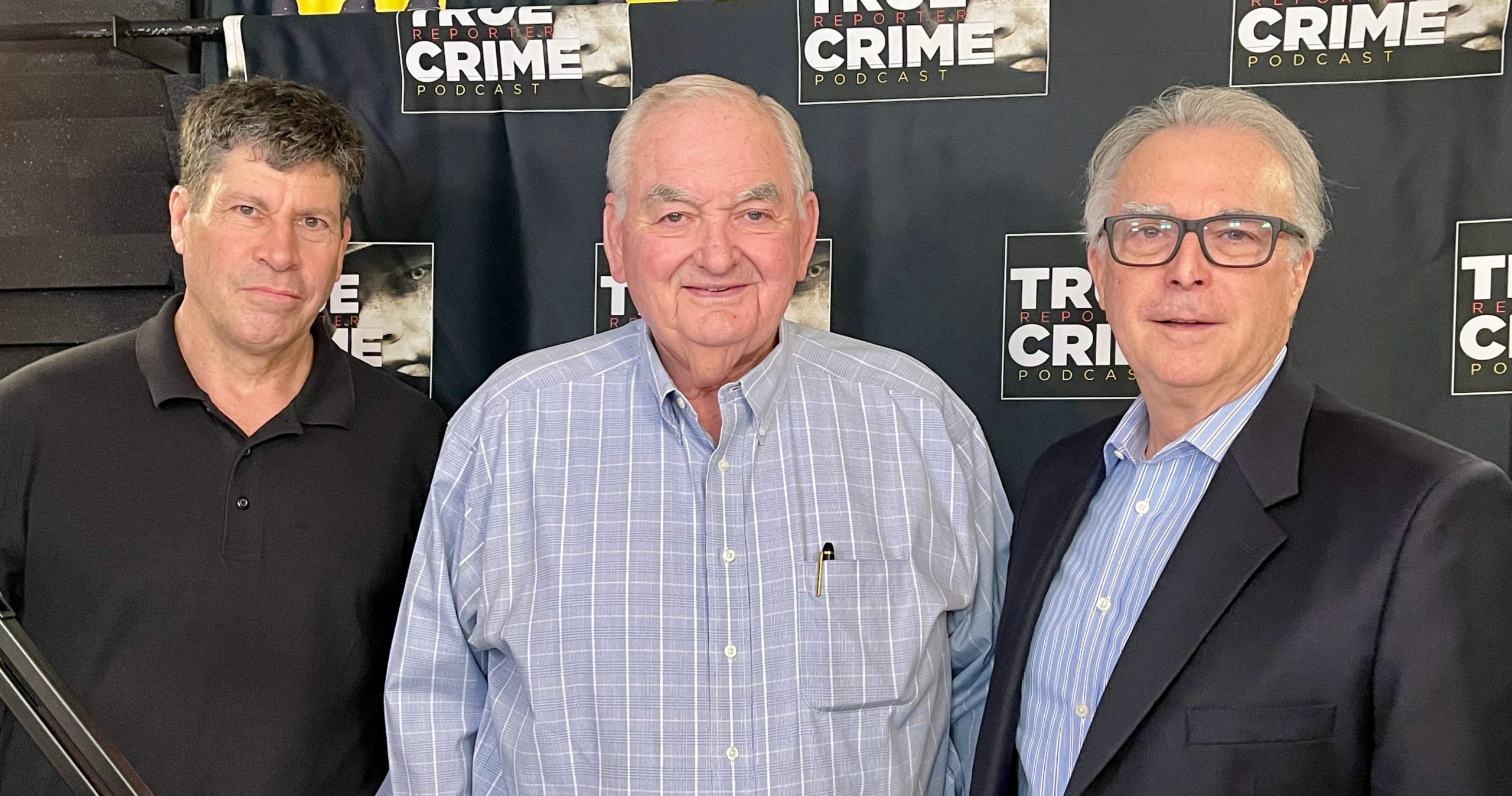
True crime reporter goes inside the case files of the Texas Rangers. I'm investigative reporter Robert Riggs with decorated former federal prosecutor Bill Johnston. You can follow the trail of the Rangers' epic stories and get bonus episodes by joining our true crime community at truecrimereporter.com. From one of the world's most legendary crime-fighting agencies, this is an exclusive edition of True Crime Reporter, Texas Ranger Files. Be advised that this podcast is for a mature audience. Some episodes may contain profanity and graphic descriptions of violent Crimes. In this inaugural episode of True Crime Reporter Texas Ranger Files, Bill Johnston and I interview one of the most famous of the modern-day Texas Rangers, retired Ranger Captain Bob Prince. Captain Bob Prince and his son Randy are the only father and son in the history of the law enforcement organization to serve concurrently as ranger captains. The Texas Rangers constitute the oldest state law enforcement organization in North America, dating to 1823. You can read more about the history of the Texas Rangers and see vintage photographs on our blog at truecrimereporter.com. Our story begins with the rescue of 13-year-old Amy Mcneal from five kidnappers in mid-January of 1985. It captures the frontier spirit and courage of the officers who wear the distinctive five-star badge of the Texas Rangers. The teenage daughter of Don Mcneill, a pioneer in the development of the first handheld calculator, was snatched at gunpoint on the way to school. Kidnappers ran a jeep driven by her 17-year-old brother off the road and put a sawed-off shotgun to his face as they grabbed his sister. They demanded a $100,000 ransom for the seventh grader's safe return, but had no intention of releasing the teenage girl alive. Throughout McNeil's abduction, the five kidnappers snorted and ejected drugs and talked about driving to Hawaii with the ransom money. The teen defiantly insisted that her captors feed a hungry dog in their backyard before she would cooperate. Their ringleader, 34-year-old James Wesley Foote, lived near the McNeils mansion, and his son was her school classmate, but unknown to her. Foote's son had once stabbed a fellow student in the arm with a knife two weeks before Mcneill's abduction, Foote, who was wanted for attempted murder, had burst into the home of a prominent businessman in Arlington near Fort Worth to kidnap his two young children. The family's housekeeper wrestled Foote's gun away from him and fought him in a bloody 45-minute struggle. The gun discharged near her head, and Foote fled. A few weeks later, Foote and his accomplices then abducted 13-year-old Amy Mcneal. Retired Ranger Captain Bob Prince remembers a tension-filled 48-hour, 600-mile game of cat and mouse, and a 100-mile-per-hour running gun battle. Captain Prince, when you look back over your long career, is there a case that you always think about that really stands out for you?
Bob Prince
Well, there's several, but one of them probably I think all the officers that were involved call it a highlight of her career. We had a young lady named, well, a 13-year-old girl named Amy Mcneal that was kidnapped in Johnson County out of Alvareta one February morning in 1985, her brother, who was old enough to drive, was driving her to school, and it was an extremely cold morning. And four gunmen, masked gunmen, forced him off the road into a barred edge, and ran up and and hit the brother with a barrel of a sawed-off shotgun and in the head, and not knocked him out, but just punched him with it, and. Took the keys and then grabbed Amy and and kidnapped her and left the brother there. They kidnapped her and carried her into Arlington to a house, and then she they called her dad. Her dad was a wealthy businessman. Called her dad and told that we have Amy, and we need you to get together a large sum money. I don't recall the amount. I think it's 100,000, but dollars, and we'll call you back. This was on Thursday morning. The reason I remember that is because Company F Rangers had just gathered for a company meeting. We had all our rangers there. I was Ranger Sergeant. Bob Mitchell was a captain of the company, and that's a
Bill Johnston
company out of Waco, Texas.
Bob Prince
Yes, and of course, Johnson County is in Company F territory, and and when the sheriff got the call, our captain dismissed the group and sent all the Company of Rangers to up to Alvaredo, and is a waiting game when we got there, and and we got a polarity trap on the on the dad's phone. What does that mean? Polarity trap is not near as sophisticated as days. Our phone traps are. All the polarity trap would do was if you don't hang up the call, the phone company could identify where the call came from if it's a local call, so that occurred. They didn't hang up, and Polarity Trap could only identify that it was coming from Arlington, Texas, but couldn't identify where it was since it was a different town. So what had happened? They had carried Amy to that house, which was one of one of the suspects' houses. From there, they held her and didn't abuse her, but they they held her until Saturday. Now this was Thursday morning until Saturday, and and and then on Saturday they called the dad and told him to have the money together and go to a payphone in Mesquite, Texas. And when they got to the payphone at a given time, well, the call came in, and I was the closest one to him because we had a transmitter on the dad to where we could record the conversation. The caller instructed the dad to go to a payphone in Tyler, Texas. Wow, this is a long ways.
Robert Riggs
Gave
Bob Prince
us a certain time to get there. Of course, we were in unmarked cars, and then we had two aircraft, FBI aircraft and DPS aircraft that were overhead, and we had had took a drill and drilled a hole in the tail light of the dad's car because it's heavy heavy traffic, and we didn't want to lose a car and want to be able to. And this was after dark. We didn't want to lose a car from the aircraft looking down, and then us, they our cars. And even though it's a real small hole, it was emitted a bright light, so we could we could track his his limousine. And when we got to Tyler, the call came in at the appointed time, and then instructed us to go or instructed the dad to go to a location on Interstate 30 outside of Texarkana, to the west of Texarkana, which is another
Bill Johnston
Arkansas border, yeah,
Robert Riggs
another 6780, miles from Tyler now.
Bob Prince
What I don't recall the times, but I do know that from the time we got to call in Tyler, it'd take almost an airplane to get to that phone in over toward Texarkana. We drove as as fast as we could, and but didn't get there at the appointed time to take the call. And after we got there, we had like I told you before, an extremely cold night, and two rangers would rustle up a couple of sleeping bags, got out and got behind the the service station where the meeting was supposed to take place, but the call already come in and we and we're late. Of course, our ranger cars was okay with the speed, but the limousine. That dad was driving, blew an engine, and it's it was still drivable. But when he stopped there at that at the meeting place, which was a service station, which was closed, but all of the lights had been shot out, and so we we felt very certain this was the actual meeting place. So we got in there, hidden places in our vehicles and aircraft. You couldn't even hear it; it was up so high. But we waited for seemed like about two hours, maybe just an hour, and another phone call came in, and the dad answered, and the people were very upset. Wesley Foote was the caller; he was the the ringleader, and he cussed the dad out for not being there on time, and and the dad told him, "I have the money. I'll meet you anywhere, and to give you the money, just just come bring me my daughter. We waited another couple hours, three hours, and didn't show up, so we're up to around 4o'clock in on Sunday morning now, and so Captain Mitchell called and told everyone to where to meet. We were going to go behind the service station a few miles away and regroup and decide what to do next, which obviously we're going to go back to the house and wait for calls there because the calls didn't come in. While we were going there, we had a van that was going to come by and pick up the two rangers that were in the in the bedrocks And they called either Brantley
Bill Johnston
or
Bob Prince
Brantley Foster, and I'll call the other rangers. Now
Bill Johnston
we're done.
Bob Prince
No, no, it was. I'll call his name. That's around. It looked like it's gonna be the suspect's car, and so wanted everybody to back off until see what they did. Well, after a while, they left, and so our undercover van waited and then picked up the two rangers, and and then we had one car still out on the interstate. It was Jimmy Ray and Joe Wiley were still out on the interstate, and so they slowed down and waited till the car past them, not knowing it for sure is going to be the suspect car, and they got the last number and called it in, and it was a stolen vehicle. And they obviously got a little too close to the suspect's car as they put Amy in the back package tray, 13-year-old girl, and then they leaned out both windows and started shooting. One of them had a sawed-off shotgun and with buckshot, but had sawed it off enough where it didn't have the velocity it would have had you not saw it, Jimmy Ray was driving the car, and the one of the shots, buckshots, would have hit him right in the face. It hit the windshield, but it didn't break the windshield because it lost velocity pluses the ways off. And the person they drive shooting out the other side of the car shot numerous times and and hit the transmission line. And when the
Bill Johnston
could the Rangers tell that the the girl was in that back window area? Right, they could see it.
Bob Prince
Right,
Bill Johnston
thank goodness they could see her.
Bob Prince
Yes, Jim Ray and and Joe White. I think Joe was one doing the communication had had stated that they have the girl in the back package tray, and so anyway, they dropped back. But when they did, their car caught on fire, and they ran a a construction area. We had a very nice narrow lane with with
Bill Johnston
barricades on
Bob Prince
both sides, and so they were staying with him. And cars burning, and if they had stopped, it had completely blocked any other pursuit. Coming, and but they continued driving even though it's burning, and and there's not many things that were very humorous that night. But Joe Wiley called the captain, gave his radio number 682 to 66. We received gunfire and our cars on fire. Well, our our men, a lot of the men were in personal cars, and they had just walkie talk radios with their communication. And at that time, we couldn't charge the walkie-talkies in the cars; had to be in a in a house charger. And so Captain Mitchell's walkie-talkie was pretty weak, and he replied back, "Are you receiving gunfire? 10 four, receiving gunfire, and our car is on fire. He called again. Are you receiving gunshots? You receiving gunfire? 10 four. We receiving gunfire and our car is on fire. You hear his real crackly radio thing. Repeat. Are receiving gunshots? Joe Wiley answered and said, "10 four. We're receiving gunfire. Our car's on fire, but we'd welcome second opinion. And but they were able to to continue driving until just past where the construction ended, and pull off and didn't block the road. And then they, of course, got out. The car melted and burning,
Bill Johnston
and thankfully someone was now in tail of them. Right,
Bob Prince
right, right. Where they some other cars are back behind and in pursuit, but no one would return fire, knowing that Amy's in the back window. And but the the kidnappers are like a whole lot of thieves. They don't think things through. They didn't realize that the car that's stolen didn't have a lot of gas in it. So they made their after they realized that they made the next exit on a rural road, and the intentions going to a first house, and then gets more hostages and steals another car. Well, all of our folks were right behind him, and when they stopped, well, and jumped out with their guns. Well, gunfire started, and some of our guys or all our group started shooting, and two of their guys were hit: Wesley Foote and I don't recall the other's name, but there was four of them involved: three males and one female, and two of them were one of them was shot in the foot, one of them was shot in the elbow, and because they were in under cars and whatever, and so had to skip some shots in to get them in the foot and get them in the elbow. But Howard Alfred and John Dendy, both Rangers, ran up on each side of the car and rescued Amy out there while the gun battle was going on, and so they got her out. She was unharmed. None of her good guys were hit; just the two kidnappers were hit. Little side note: one that I was handcuffing them, had them let on the ground, handcuffed them, and carried them over to the edge of the road, waiting on Amlish to get there. An FBI agent walked up with his pad and said, "What's your name? He said, "Foot. And I'd been up three nights and wasn't as patient as I normally be. And I said, "No, don't care where you're shot. We know where you're shot. What is your name? Foot. Well, I wasn't professional and talked to him again about. We know where you shot. What is your name? Foot. Well, his name was Wesley Foote, and so we got all of them captured, and Amy rescued, and the the highlight of the evening or of the day or the career was when the dad got there and was united with Amy. Probably they. Wasn't a dry in the house. Everyone was so happy that everyone was safe. And later on, the brother became a highway patrolman.
Bill Johnston
Brother of the little kidnap girl.
Bob Prince
Kidnapped girl, and then her husband was a highway patrolman. Also, they they came back to a ranger reunion a few years ago and was able to honor them and thank the the guys.
Robert Riggs
So, how did they know so much about the family and when the little girl would go to school? It was some sort of inside connection. Yes,
Bob Prince
there was a relative of Wesley Foote was in a class with Amy, and with that's where they got their information. As a result of all this, the kidnappers talked pretty freely in front of Amy, And Wesley Foote told the guys, you know, we can't let her live because she can recognize all of us, and so we're one of you gonna have to kill her, and the dad when he pays the money, and one of the other guys broke up and said, "Well, I'll do that. I don't mind killing her. And very recently, well, let me back up. Wesley Foote has been turned down for parole. This this happened 36 years ago. He got turned down last year for parole. The suspect. and I apologize not being able to call his name. The one that volunteered to kill him was being considered for release, and there's a couple of us that were involved, appealed to the parole board not to release him because they tentatively approved him, and so we told the board about he's one of them that shot the ranger car, and would have killed the ranger had the projectile broke through the windshield, and he's one that also volunteered to kill the victim as well as the dad, and Wesley Foote had also threatened to come back and kill the sheriff when he's released from penitentiary. Well, they approve the alleged to be gunman for parole, and I was very angry until I I talked with the Amy's brother very recently, and found out why he was released. He was is terminally ill, and Night Speck lived a very short time. And Emily, the
Robert Riggs
news media cooperated with the Rangers and did not reveal the kidnapping until Amy Mcneal had been saved. In February of 1985, Texas Governor Mark White signed a resolution passed by the House and Senate lawmakers that commended seven officers who thwarted the kidnapping: Texas Rangers Howard Allred, John Dendy, James Ray, Johnny Walter, and Joe Wiley, and Johnson County Sheriff Eddie Boggs and his lieutenant D.J. Molder, Rangers James Ray and Joe Wiley had continued the chase with their car on fire. Ranger Dendy had dashed to the kidnapper's stalled car in a hail of gunfire, scooped up the girl and tossed her to Howard Slick Allred, who drove her to safety. Humble as rangers tend to be, they declined to be described as heroes. A month after the commendations, Foote went on trial for aggravated kidnapping. He vowed that he would never go to prison. A jury took less than 20 minutes to find Foote and one accomplice guilty. During a recess in the trial, Foote kicked the sheriff and struggled with deputies. Four months later, the 34-year-old Foote was returned from state prison back to the Johnson County Jail for questioning in a robbery. The shotgun used in the kidnapping of Amy Mcneal had been stolen from a man who was beaten the day before she was abducted? But Foote escaped from the Johnson County Jail's recreation yard by climbing a 10-foot chain-link fence topped with barbed wire strands. He was aided by another inmate, and a jailer resigned. Don Mcneill offered a $2,000 reward for information leading. To the capture of his daughter's convicted kidnapper, Mcneill, with a chrome nine-millimeter Colt pistol tucked in his blue jeans, told a reporter, "I want the man caught. An informant tipped off law officers for the cash reward. Foote was captured without a fight, 150 miles away in a small town where his parents lived after being on the run for a week. His mother told reporters, "If he had come here, I would have fed him, and then I would have called the police because I don't want my son on the run. He did that kidnapping, and he's got to pay for it. His sister claimed foot escape because he was being mistreated, and because police were trying to tie him to other killings. People don't know the good side of James. He used to go to church, and he was almost a preacher. He's a good person. He's a good guy. He just got on drugs, she said. Seven months later, James Wesley Foote was sentenced to life for four attempted capital murder charges for his gun battle during the kidnapping with the Texas Rangers, sheriff deputies, and FBI agents. As of this broadcast in November of 2021, Foote is 71 years old and still behind bars in a maximum security prison in Texas. He was denied parole in May of 2021. Captain, the Texas Rangers are one of the most legendary law enforcement organizations in the world. What is it that separates them from the rest that makes them so different?
Bob Prince
Well, I don't know that I can objectively answer that because I'm-I've been involved with the Rangers. I was active ranger for 19 years, and then I've been a what's called a special ranger, which we're still commissioned after you if you ultimately retire, and so I've been involved with the Rangers for a number of years, and they have a very intense selection process. You have to have eight years law enforcement experience before you can even apply, and the applicants, nearly every applicant comes from inside DPS.
Bill Johnston
That's Texas Department Public Safety State Police in Texas, right? State Troopers, Highway
Bob Prince
Patrol, this sort of thing, or DPS narcotics, or but they passed legislation in past few years where you just have to have eight years experience, but the last four must be in DPS, and so you could be a commission officer in New York. It wouldn't matter how many years, long as at least four, but you'd still need to have four years in in Texas DPS.
Bill Johnston
Nearly all were highway patrolmen historically, and there's something about, of course, Texas is the size of Texas and the the job of the highway patrol on lonely, often by yourself on roads where there's not help for 30 minutes or or maybe an hour away. That I think it this is I'm just adding to what I'm hearing from you. It does something, either does something or not, to a to a person's character to have to be able to buy yourself on a highway in the middle of nowhere. You could say, for instance, between Pecos, Texas, and El Paso, Texas, there's interstate highway, and your next grocery store might be 150 miles one direction at some point, but having nearly all come from the Highway Patrol, it weeds out toughness. I know toughness is just part of many facets of a ranger, but it'll find the faint of heart, and they might slide to the side and not become a ranger. But it seems also just the, and not everyone's perfect, and not everyone's perfect ranger, I'm sure. But as a general rule, the the curiosity and intellect that I've seen in the homicide cases, how do they screen for that when they're interviewing or they're applying?
Bob Prince
Well, one of the things that well, let me back up. We have at least 100 apply for every one position. One of the things we look for is people can work without supervision. We always go to their prosecutor that they have. Dealt with, see what kind of witness they make from the court, and we take quite a few of their investigative reports and review them, and we talk to other officers about how do how does he relate? Does he work with other officers, or is he a loner? Or, but mainly, can you work without supervision? Because in in the rangers, I was a supervisor for several years, but you may have a ranger that'll be stationed 100 to 125 miles away from the nearest supervisor, and we expect rangers to give you a day's work for a day's pay, and you know, and a lot of that's weeded out before they come in, and then I don't want to pat myself on the back of this because I'm not talking about myself. But the rangers I see today are probably the most elite bunch of guys and girls that I've ever been around. I've had several DAs since I've retired talk about their local rangers and how good witnesses they are. Said they always come prepared and they very precise and make great witnesses. You don't really teach that. That that has to be someone that, of course, you you do give them a lot of instructions, a lot of training, but still you have to have that that inner self, in order to be that type character that we're looking for, and we're very fortunate because we have so many people trying to get in the Rangers. You can be very selective of who you actually pick
Bill Johnston
geographically for people not from Texas, or even someone new to Texas, you know, southeast Texas. Let's say around Beaumont, which is east of Houston. Beaumont, Texas, is closer to the east coast of Florida than it is to El Paso, and and and northeast Texarkana, Texas, is closer to Chicago than it is to El Paso, the size of Texas is so hard to understand for people that have not been in Texas, and so you have so few rangers. When during a big case I worked with you all, you had 93 at that time, and so you have is it correct? You have six company areas, A Company A through F, and then they may handle, for instance, the Ranger headquarters in Dallas. It's not a huge geographic area; it's pretty big, but the area, let's say, out of Lubbock, Texas, has a big span of space as one and out of El Paso, Texas, and so that's where you're saying you may have a ranger station 150 miles from his supervisor. You told a story a minute ago, and I didn't. I've known Joe Wiley as long as I've known you, and I did not know Joe's doesn't mind a second opinion that his car is on fire and he's taking taking gunfire. But the you know where do you find people like that is part of the question. Driving a car, and they knew that ultimately that the solving of the case, the saving of the girl, depended on them taking a chance of getting burned up and killed. And they didn't think twice about it. You had a ranger, a couple of rangers out of Company F that rescued a little girl, and one of them was killed down near Horseshoe Bay. And over and over, we could tell them, and we may get to that courage-not hero courage, but true, deep courage, where you don't think twice about doing the right thing, even if you may very likely get killed. How do you sense that or find that in an applicant?
Bob Prince
I don't know that you do find an applicant, but I'd say the majority of rangers I've worked with, I sense it in them.
Robert Riggs
So the going above and beyond the the call of duty is it just when the the rangers come in, you know the history and you know the expectation, and that explains the courage.
Bob Prince
I don't know how to explain courage. It just either have it or you don't, and professional armsmen have it. Not not every officer had. I wish it did, but the professional ones do, and they do what's necessary, knowing there's lots of risk involved. But they do what's necessary to save a life or to complete the investigation.
Robert Riggs
What was it that attracted you to the Rangers?
Bob Prince
I wish I had a good answer for that. It's just a burning desire I had. I was a school teacher. Went to college, and
Bill Johnston
now you didn't just go to college. You were an excellent football player for Texas Christian University in Fort Worth, Texas.
Bob Prince
Well, my coach would probably disagree with that description. Yes,
Bill Johnston
you play with some good players as well, Bob Lilly and others. But at any rate, you had options of what to do, and you decided to teach school.
Bob Prince
I did, and thoroughly thoroughly enjoyed it. But I was a history teacher, and I had a burning desire to become a Texas Ranger, the more I studied it, I realized what a very difficult chore it was to become a Texas Ranger because so many try and so many fail. When you have hundreds take the test every year for one or two positions, I knew how slim it was, but I had enough confidence in myself to try it.
Robert Riggs
I do want you to do one thing because we have an audience that's around the world. Describe for them the ranger, how they look. They all in the proper
Bill Johnston
proper
Robert Riggs
the apparel, white white cowboy hat for somebody who's never seen one. Tell us about them.
Bob Prince
Well, I maybe later time and get some pictures of them. But normally the Rangers dressed in Western style clothes, conservative Western. All the hats would be either light gray or or some color kin of that, they all wear a open firearm, normally with a gun belt. They wear a ranger badge pinned to the left left breast, And normally, if you're out in the field working, you might not. But normally, wearing a tie and white shirt,
Robert Riggs
and the badge is modeled after
Bob Prince
the badges are are made out of single peso
Bill Johnston
Mexican $5 coin. Yeah,
Bob Prince
and the captain badges are made out of 50 peso,
Bill Johnston
and the belt that I've had a couple of don't have one now. Also known as a Ranger belt or Ranger rig, which has the smaller buckle piece. How you know how that originated? It's a very secure rig.
Bob Prince
It is. I. It's been around a long time, but I know that's the name of them now. When you order one, you order a ranger style. But the the the badge you show there that's a captain's badge. But they all look alike except the captain rank and above is made out of gold, and the the ranger and even through lieutenant is single peso with silver,
Bill Johnston
and those are those are out of circulation. I think now coins, but you can find them. But they have that have that ridge around them, and they're heavy, thick silver, mostly silver, and they make a good stamp impression. I can't
Bob Prince
remember the exact years, but there's only a limited number of years that they use, and and that's from the mold that they use to make them cut the badges out of. But there's only a limited number of years, and I'm sorry, I don't remember the exact years.
Robert Riggs
So, what should a criminal think when they see a ranger coming?
Bob Prince
Well, they're gonna know that I that he's a credible, honest law man that is gonna do the job.
Robert Riggs
Thank you so much for your service. We appreciate you having on True Crime Reporter, and we want to have you back.
Bob Prince
Be glad to come back. Thank you.
Bill Johnston
Thank you, Prince. Thank you.
Robert Riggs
In our next episode of Texas Ranger Files, you will hear about a Texas Ranger who was involved in the rescue that you just heard about. Give up his life to protect a two-year-old girl from her kidnapper. It's the never-before-told story of the day the last Texas Ranger died. We want to be your favorite true crime podcast, so please recommend us to your friends and leave a review wherever you listen. If you want to receive updates and bonus interviews, join our true crime community at truecrimereporter.com. If you have suggestions or know of a case that we should look into, email us at [email protected]. This podcast is a trademarked and copyrighted news organization based in Dallas, Texas. You can read more about our news [email protected]. Thanks for listening to our. Journey into darkness.