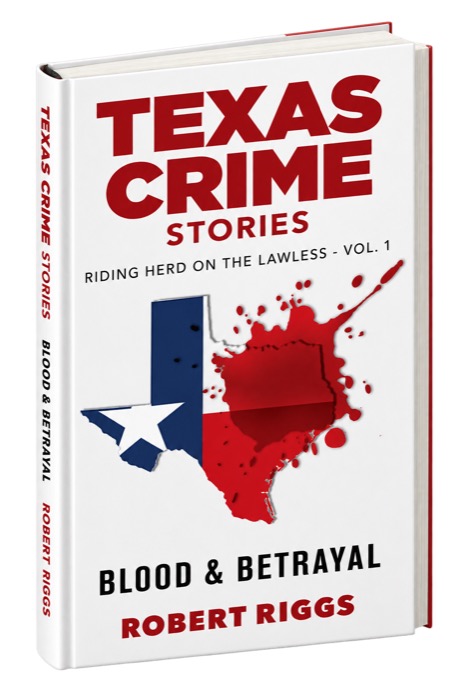
Robert Riggs
When the curtain drops on everyday life, true crime shows like this podcast and especially those on television expose the darkest side of humanity.
Television relentlessly chases the latest trending crimes on police blotters and court dockets.
Claire St. Amant pursued those stories in the cutthroat world of prime-time television as a producer for CBS 48 Hours. She also produced segments for 60 Minutes.
She’s written a memoir about her experiences, Killer Story: The Truth Behind True Crime Television. (https://www.clairestamant.com/)
Television executives have known for decades that the audience is overwhelmingly female.
We’re talking 70-80 percent, sometimes more. Mothers and daughters. Best friends.
Women of all ages coming together for what amounts to a girls’ night out… centered on murder.
Robert Riggs
You may want to go back and listen to my episode with Journalist Mike Cox.
He wrote a satire, Getting Away With Murder, Learning From Dateline and Other True Crime Shows. (https://www.truecrimereporter.com/true-crime-books-authors/a-police-beat-reporters-funny-guide-to-getting-away-with-murder/)
So what’s going on here? Why are women so drawn to true crime?
Claire St. Amant, now a fellow true crime podcaster, shares her insights. (https://www.finaldaysonearth.com/)
Robert Riggs
Well, Claire, I'll ask you the question I get asked all the time, why is true crime so popular, especially with women?
Claire St. Amant
I've thought about this a lot because I also get asked this a lot, and I really think it's because it's a safe way to consume all the terrible things that could happen to us. You know, women are statistically more likely to be the victim of violent crime and interpersonal violence. And so I think a lot of that fascination comes from knowing that many of the victims are just like us. And so I think that we're naturally drawn to stories where we can see ourselves in them, as scary as that might be.
Robert Riggs
And I always get the question from everybody on the serial killers, is it nature or nurture. Now I have to believe that it's a combination of both. Do you get that question a lot?
Claire St. Amant
I do, and I agree. I think it is a combination of both. I think some people are born with this, you know, violent tendency. I think some people are born with a shorter fuse. I think that the idea that violence is the answer, that they've been wronged and they have to seek vengeance, you know, I think that is sort of a something that is innate in some people, that they're more predisposed to that. But I think the nature element comes into play with, are they taught to embrace that tendency? Are they taught to try to do things differently? Do they have tools to manage their anger? Are they shown outlets for their frustration, or does it get to be something where violence is used against them regularly, and so they see violence as the answer, you know, and they internalize that. But that's how you get respect. That's how you get results. And I think that that is a really dangerous thing to teach anyone. And I think we see it, you know, in our society play out all the time that people grow old, but they don't grow up, and they still act like, you know, spoiled kids. They still act like the temper tantrum toddler, only this time they have a knife or a gun in their hands.
Robert Riggs
Well, we’re both in Dallas, and, you know, the FBI director was even here a number of months ago, talking about gun crime among youth. And it does seem to be like epidemic that something is going on out there. I'm talking about 16- and 17-year-olds, men and women. What's your sense?
Claire St. Amant
Well, without getting too political, I do think, you know, the ease in which we can access guns make it something that is as easy to do you know, is to go to the store and to pick one up. And so I think that having that ability is a blessing and a curse, and it does create opportunity for, you know, it to be abused. And I think if you're growing up an environment where you feel that you don't have protection, that you feel like you could, you know, face mortal harm at any moment, and you want to protect yourself, well, I could certainly understand why you would start carrying a gun, but that introduces a whole other layer of problems, you know, in our society, and I think, you know, there's just a public safety element to the idea that, you know, are we going to have gun battles on the street like it's The Wild West? Is that, you know what? We're really wanting our modern society to look like? You know? I find that disturbing.
Robert Riggs
Well, we're having them in cars. You know, the Texas leads the country in road rage, especially Houston, and it's people that normally would never even think of doing this, but there's something going on heat of the moment. I don't know if everybody is just angry. It's hard to put your finger on. I'm I don't know how much you run into it, but yeah,
Claire St. Amant
I definitely think about that. When people cut me off in traffic, I'm not the one to, you know, retaliate or give them, you know, the finger or anything, because I know that people can react completely disproportionately, yeah. And, you know, I often say, you know, for various behaviors, well, that's a good way to get shot in Texas, you know. And I just don't do it. So it's, you know, one of those things is to start tailing someone after they've, um. And, you know, cut you off in traffic. It's just not, uh, behavior, risky behavior I'm not going to engage in.
Robert Riggs
What attracted you to write about true crime as a journalist, and I got the sense, maybe from your book, there's, you know, you maybe you've had some misgivings of kind of wading around in the refuse of society every day.
Claire St. Amant
You know, I was drawn to it initially, just because, as a journalist, I couldn't believe all the story elements that were just right in front of my face in a crime story. Whenever you go to the police report and you get the narrative of the case. You get the victim, the complainant, witnesses, names, phone numbers, addresses. To me, it was like this unbelievable gift from the journalism gods to give you this story that you could just take a running start with to tell it, and you had all of this really valuable information at your fingertips, if you knew how to, you know, use the police databases. And so for me, that was the initial draw. It was just all of this information that allowed me to very quickly start working on a story. And I, you know, I love nothing more than a good story. So, so that was pretty tantalizing to me,
Robert Riggs
Was the police beat your start in crime?
Claire St. Amant
So, yes, it was, it was absolutely just the police blotter at People Newspapers was my start in crime. So I was a general assignment reporter, you know, covering everything. I was going to the school board meetings, I was going to city council. I was writing stories when little old ladies turned 100 and they were throwing birthday parties, you know, I was doing it all. Robert, so the police blotter was, was part of my, you know, weekly routine. And I just started to get really interested in the patterns that I would see in the kinds of crimes that were committed. And, you know, just really thinking about all the different people who are impacted by crime. You know, you have the police officers you have, of course, the victims you have, you know, the suspects and people who get, you know, falsely accused of crimes. There's just, it's a really rich tapestry for writing,
Robert Riggs
oh, it is a tapestry. You know, I'm, I'm very senior age to you, but you know my peers, we've all talked about the best place to start journalism as a rookie was the police beat. And you see really good reporters come out of that. I mean, amazing reporters. What is it you think about that? It is about you can really craft a good journalist covering the police beat.
Claire St. Amant
I think it's a trial by fire. You know, you're thrown in. You're talking to cops that usually don't want to talk to you. You're dealing with matters of life and death. You are chasing down, you know, people for statements and interviews. And you're learning, you know, the basics of records requests, and, you know, navigating the court system. And I think it really gives you, you know, a lot of skills that can translate to other types of journalism. You know, very easily, political journalism, you know, feature writing, so many things you can use the skills that you learn, as you know a reporter on the police beat, but yeah, I just think the also the idea that there's always something happening, there's, you know, the crime beat never sleeps, and you can always find a story, and there's always, like, More things to dig into
Robert Riggs
in your new book, killer story. Is it based largely on your experience as a producer for 48 hours doing crime stories, and because you also talk about a story that really was interesting is the woman who was murdering her husbands, and you found a pattern, yes, talk about that that story is that really what kind of set you off?
Claire St. Amant
It is. So the story of Michelle Williams is my origin story in true crime television. I was, at the time, working for CultureMap Dallas, and I came across just a scant story talking about a plea deal that a woman named Michelle Williams had reached in the death of her husband, and it said that she would, you know, probably serve nine years and she was pleading guilty to deadly conduct and tampering with evidence. And, you know, it was just all very curious to me, and it really piqued my interest as a crime reporter, because I know you don't get a plea deal for murder in Texas very easily, and you certainly don't get something like nine years. You know that that's that's unheard of. So I was really drawn to this case, and I started digging into Michelle Williams background, and I found out that nothing about this woman was as it seemed, and she had a trail of destruction. This was her third husband. This was the second time that she was claiming, you know, that someone close to her had committed suicide. And this was, you know, a pattern that I discovered that she would lie and manipulate and use her, you know, sweet, innocent woman persona as this damsel in distress to really get preferential treatment from law enforcement and from, you Know, the court system. And so I ended up doing a three part investigative series on Michelle Williams, asking, did she get away with murder? You know, in the death of her husband, because she was allowed to plead, plead guilty to something called Deadly conduct, not murder. And so, you know, after my story came out, it was just a wave of immediate interest from Dateline NBC, from 2020 on ABC and from 48 hours on CBS about this twisted murder story in in Texas. And so I ended up working with 48 hours as a consultant on that story, and that really launched my career in television. It was my first experience with TV, and it was just the beginning of a new phase of my career. We covered, you know, the fact that Michelle Williams plea deal was taken off the table once the authorities realized how much she had lied about in her past, and she actually went to trial for murder and was found guilty and sentenced to 60 years in prison. So I take a lot of pride in that story, in finding out, you know, more information about her than authorities had been able to ferret out, you know, in their investigation, and really helping the family you know the victims family get justice, get a just verdict for you know their loved one’s death.
Robert Riggs
Do you ever go see her in prison? You ever interview her?
Claire St. Amant
I have tried. She has declined my request. Robert, yeah, imagine that.
Robert Riggs
Is she going to be eligible for parole in the future? I'm wondering what the sentence was. Yes.
Claire St. Amant
So she would be eligible for parole, but unlikely to get it. I think she would be have to serve, I want to say 30 years of her sentence before she would be eligible for parole. But I know the victim's family plans on protest. Yeah, exactly. Protesting that and being, you know, present and vocal about how they do not want her to get out.
Robert Riggs
In your time with 60 minutes, what was a particular story there that you just, you know, we’re all going to shake our heads about, like, boy, you can’t make this stuff up, sure.
Claire St. Amant
So I my big story with 60 minutes was called the Ranger and the serial killer, and it was a story of a Texas Ranger who had elicited 93 confessions from serial killer, Samuel Little, who, at the time was in LA County Prison on a life sentence for three murders that he had said he had been falsely accused of that he did not commit. He was adamant that he was innocent. And after this, Texas Ranger went and interviewed him. Over the course of many, many interviews, many hours, many days, he ended up confessing to not only those three murders, but to 90 others, and really providing so many rich details about the cases and the victims, where he would actually sketch his victims and he had these haunting portraits of these women that he killed, and they were actually used to identify the bodies many times. Authorities had found these unknown Jane Does, and the bodies had been out for some time. There's decomposition. They did not know who they were, and so Samuel Little's own words and drawings were made public, and family members would come forward and say that looks like my mom, that looks like my sister, and you know, would remember details that would allow authorities to corroborate those cases. So that was just an unbelievable investigative journey, and was so interesting to be part of that story, and to, you know, share it with the nation.
Robert Riggs
Do you know how many actually ended up being confirmed of the 90?
Claire St. Amant
So I believe the last time I checked, it was somewhere in the 60s. I know we had broken I think it was like 61 when the FBI announced Samuel Little as the most prolific serial killer in the history of the United States, because he had gone past, you know, the other established kill number, which I believe was like 60 from, yeah, previous serial killer.
Robert Riggs
As a reporter, I'm curious, did you ever get a little apprehensive in the process, because everybody got burned by Henry Lee Lucas in this state? Yes,
Claire St. Amant
years ago, yeah, yes. So that absolutely came up. And the Texas Ranger who was interrogating Samuel Little, you know, he was very aware of the Henry Lee Lucas case and the pitfalls that authorities made at that time by putting this information out in front of him. And so he was very careful never to put information in front of him, to allow Samuel Little to himself bring up the dates, the places, the cities you know, where he killed. And so by doing that, he really avoided the false confession pitfall. And many people have tried to prove that Samuel Little, you know, did not commit these crimes. And to date, I don't know of a single murder that Samuel Little has confessed to that has been proven to be anyone else's many, many journalists from the Washington Post, from all sorts of fabulous, you know, media companies have looked into this to see, is there a false confession? And to date, I have not seen any evidence that they found one.
Robert Riggs
Did you ever get the opportunity to interview him, Samuel Little?
Claire St. Amant
I did not so the closest we got. So LA County does not allow media interviews with their inmates on prison grounds, but we were able to do a phone call with him. And so correspondent Sharyn Alfonsi, with 60 minutes, you know, conducted that phone conversation, and as one of the producers, I was in the room as she was talking to Samuel Little over the phone, and that that's as close as I got, probably a little bit closer than I would have liked, was whenever we went into his cell at LA county prison, and he was not in it, but we were allowed inside, and we could see, you know, he gets fan mail, which is really disturbing to think about, and he hangs it up on his walls. And, you know, he gets, still gets, like, lots of newspapers and other forms of media that he, he keeps. And, you know, he had all sorts of snack cakes. And it was this kind of bizarre, like, almost like a summer camp cabin, you know, atmosphere, because he had, like, pictures that people had drawn, you know, tacked up on his wall, and his own drawings and letters from pen pals. And it was, it was a strange experience, and it was very eerie to be, you know, in his space, and know that this is where, you know, this man that had killed so many people, this is where he relaxes. This is where he reclines. You know, it was a disturbing experience.
Robert Riggs
You know, I've done a lot of reporting on Texas Death Row. And I see the same thing the fan mail, particularly women, bizarre pen pals and all. And I, I still have trouble wrapping my head around it. I'm just like, it's hard to understand what is going
Claire St. Amant
you know, part of it, I think, is that a certain kind of woman is drawn to this quote, unquote, powerful man that is locked away and cannot actually harm them anymore. I think there's a weird, like safety element in that they are completely incapable of causing them physical harm, but they can have, like, this emotional relationship with this violent, powerful man that they're probably drawn to due to some very sad things that have happened in their lives, and, like, some strange psychology about, you know, just being attracted to bad Men. And so I found that, you know, women will make pen pals with these murderers, knowing that they'll never get out. And they like it that way. You know, they can't they can't cheat on them, they can't abuse them, they can't actually steal money from them. And so it's this sort of really bizarre. More unusual, quote, unquote relationship. You know, it's not a physical relationship. It's not a relationship in the way that you and I would have, you know, a relationship with someone outside of prison, but to them, it's actually a very romantic, intimate, emotional connection.
Robert Riggs
You talked about the Texas Ranger certainly overseas, the rangers have this huge mythology, and even here in the States, what do you think that is, and is it justified in this day and age?
Claire St. Amant
So the Texas Rangers, you know, they have a unique role in law enforcement in our state, they are able to have jurisdiction across the entire Lone Star state, which is expansive, so they aren't limited to a city or county. And I think the idea that they can literally go into any town in Texas and start investigating a crime and arrest someone you know, that alone is pretty special and allows them to, you know, stand above local law enforcement. I also think the specialized nature of their training and the types of cases that they look into, like, if the Texas Rangers are involved, it's a very serious crime. It's a weird crime, it's an unusual case. And so I have worked with a lot of cold case investigations that involve the Texas Rangers, and they come in and they do new interviews, and they retest evidence, and they do the kinds of things that, you know, victims families are like, have been asking for, you know, and so I think they rightfully so. You know, get a lot of credit for looking into these forgotten cases. These, you know, their unsolved crimes unit is, is very busy in Texas.
Robert Riggs
I like to say that you might find them in the morning on a horseback and in the evening on their laptop. I mean, they're very even though the Don't be misled by the Western garb and everything, they're very sophisticated and got
Claire St. Amant
They are, and a lot of times, yeah, they're the first to use new technology and to look at advances in, you know, DNA testing or other forensics. And, yeah, I definitely think that they are on, usually, on the cutting edge of of new technology, which you wouldn't necessarily think with the with the cowboy hats and the boots and, well,
Robert Riggs
you know, they were at the forefront of forensic genetic genealogy in this state, in Texas. So, yeah, that's fascinating, yeah. But you know, they, they stay out of the limelight. You know when there's a press conference, even though they might have helped solve the crime, they let the sheriff take all the credit. Yeah, that's right, they stay in the background on cold cases. You know, there's 300,000 cold cases across the country. Heck, there's more than 1,000 in Fort Worth alone. I've always called it sort of the silent scandal. What? What is your sense of will? Will we ever get there?
Claire St. Amant
It's really a never ending mountain to climb, because, as these cases, you know, they don't have enough evidence to test, they don't have witnesses, and they just kind of start stacking up. And so I do think that as we have more, you know, advances in technology and the ability for, like, touch DNA and, you know, other types of forensic testing, I think we'll get a higher, you know, solve rate. But yeah, unfortunately, you know, there is just a backlog of these cases that have not been solved and continue to grow. You know, colder by the day, and we know how important it is to investigate these cases when they're fresh and when you know the days are short on the calendar from when the crime occurred, and so it just gets harder. You know, memories fade, evidence degrades. And, you know, the longer a case sits there, the harder it is to solve.
Robert Riggs
Are you seeing any new trends in crime?
Claire St. Amant
Um, you know, I think probably what I would lean toward is I'm seeing trends of criminals trying to get smarter with the technology, trying to cover their tracks. But even so, you know, if you turn off your cell phone and go commit a crime and then turn it back on, well that stands out as an unusual activity. So I think that in a lot of ways. You know, technology is really catching up to many criminals, and there's a lot more data for people to comb through. You know, not only your cell phone, your smart watch, your Fitbit, but license plate readers, you know, toll tags. There's lots of information available that police officers are using, you know, to solve these crimes and to put the puzzle pieces together. Well,
Robert Riggs
as you know, Dateline is the mother of all televised crime shows break down for our listeners the formulas, story formulas that each of these shows they have, yeah,
Claire St. Amant
so, I mean, you know, true crime shows, we all talk about telling them in Acts. That's something that comes up, you know, time and time again. And whether you're working for the networks or cable, or who you're, you know, whatever you might be working for, they tell the story in in five or six acts. And that's, you know, they these little bite sized pieces of drama right for the audience, and you always want to end on a cliffhanger before you go to commercial break and get them to come back. And, you know, these shows are really built for the linear television experience. They're not built to binge and so they really just want to keep you glued to your chair for one hour, and that's that's the goal, and at the end of the hour, you have the satisfaction that the case has wrapped up. You know who the bad guy is? They're being punished. And you know you can sleep better at night, because we got to the bottom of this case, which is not always the case. No, it's definitely not that cut and dry. But if you watch True Crime television, you would think that it is.
Robert Riggs
Well, in contrast to what you did in true crime television to now a podcast, what's the difference? What do you like about the podcast?
Claire St. Amant
Yeah, the podcast really allows me to go as deep as I need to, and, you know, go down all the trails that are available to me and follow the story wherever it takes me. And sometimes that's six episodes, sometimes it's 10, sometimes it's 15. And there's really not, you know, anything that limits the amount of air time that you can have in a podcast, because you can always release a new episode. So that that's exciting to me.
Robert Riggs
So for you, what’s kind of the hallmark of a great true crime story that you're looking for?
Claire St. Amant
I look for twists and turns, you know? I look for those moments where you think you know the answers, you think you know who did it, and suddenly your entire perspective changes based on new witness testimony, new evidence, you know, and the idea that things are not as they seem
Robert Riggs
Same here, I'm really drawn to the mind, yeah. What makes them tick? Yeah, yeah. Bottom line, and all of it Well, based on your all the crimes you've seen, what advice do you have to people listen to this, elders and our young women young men, about safety?
Claire St. Amant
So I usually tell people, if you're not worried about the person sleeping next to you, then you're probably going to be okay, because that's your biggest risk. Your intimate partner is your biggest risk for violent crime, and so if you have concerns about that person, get out now, right? Like that. That is very real. The other big risk is anyone that you let into your home. So talking about contractors, talking about, you know, anyone who might do regular work in your home, housekeeping. A lot of times, you know these people might be casing these houses to see who would be an easy target for crime. So a good way to not be an easy target. Have security cameras. Make sure they have a visible light so people know that they're working and on. I like to tell people wave to the camera when they come into my house, if they're, you know, not a friend. If it's someone who, who I've hired to come into my house, I want them to know that I have cameras. I also have a very large dog that barks. And, you know, these are things that are very easy to do. Um. That just really make you a less likely target for this type of crime, where they would think, I'm going to come back and steal the TV and the computer and, you know, they don't want to come back to the house with cameras everywhere and with a big barking dog.
Robert Riggs
I have no desire to end up as the subject of a true crime story. That’s why I live by a simple mantra: Stop. Pause. Observe.
It’s more than a slogan. It’s a survival skill.
Former FBI agent Robin Dreeke introduced it to me in conversation. And it’s a practice I’ve carried forward.
Make it a habit to slow down and notice what others overlook.
Because danger rarely announces itself. And most victims never saw it coming.
If you want to learn how to sharpen your instincts with Stop. Pause. Observe, subscribe to my newsletter Stories To Keep You Safe at TrueCrimeReporter.com.