Getting your driver’s license used to be a rite of passage for Texas teenagers.
I couldn’t wait to sign up for driver’s ed classes the moment I turned 16.
A driver’s license gave my high school buddies and me the key to freedom and privacy.
In rural areas across Texas, teenagers met after dark on deserted farm-to-market roads or went to the local lake to hang out.
We never thought that anything bad could happen to us.
Until a member of my high school class and his accomplice abducted and murdered a teenage couple after dark at the local lake.
This episode is a cautionary tale for teens in a state of innocence and invincibility.
Evil comes calling when you least expect it and often in a place where you feel secure.
In my series about sadistic serial killer Kenneth McDuff, I tell the nightmarish story of how he randomly abducted and murdered three teenagers.
17-year-old Robert Brand, his cousin, 16-year-old Mark Dunnam, and 16-year-old Edna Louise Sullivan were parked at their high school’s baseball field.
On Saturday night of August 6th, 1966, they were talking and listening to music on the radio in Robert’s newly purchased used car.
The top 20 hit that month was “Summer In The City” by The Lovin’ Spoonful.
The band’s leader John Sebastian sang lyrics that resonated with teens,
“Dressin’ so fine and lookin’ so pretty.”
16-year-old Edna Louise Sullivan, a pretty blue-eyed high school basketball player known as Louise, playfully wrote her name in mascara on the car window.
They were unaware that 20-year-old Kenneth McDuff was sneaking up on them with his finger on the trigger of a 38-caliber revolver.
In 1965, at age 19, McDuff received a 42-year prison sentence for a string of burglaries and robberies that he called a prank.
But Texas ran a revolving-door prison system then. McDuff walked out on parole after serving only nine months and two weeks.
18-year-old Roy Dale Green, a weak-minded follower who was impressed by McDuff’s prison record and his bragging about the number of young women he had already raped and murdered, gripped a broken broomstick handle.
McDuff surprised the teens at gunpoint.
A fisherman found the boy's bullet-riddled bodies stuffed into the trunk of Robert Brand’s car, which had been abandoned by McDuff on a remote country road.
Hundreds of residents and police scoured the rough, brushy terrain for Edna Louise Sullivan.
They found her body dumped in a drainage ditch covered with dead bushes.
McDuff had brutally raped her with a broken broomstick and used it to crush her throat.
A jury sentenced him to die in the electric chair, but he escaped his date with the executioner when the U.S. Supreme Court struck down the death penalty in 1972.
Death row inmates' sentences were commuted to life, which meant someday, they would become eligible for parole.
But who in their right mind would release such monsters? Texas did, under a cloud of political corruption and old-fashioned bribery by the parole board’s chairman.
McDuff started abducting and murdering women the day after he walked out of prison.
Years later, he received death penalty convictions for the murder of two women. We will never know where he buried the bodies of dozens more.
You can hear the full McDuff story by going back to the beginning of this podcast.
If you subscribe to the My Stories To Keep You Safe newsletter at True Crime Reporter.com, I will send you a free link to watch the first episode of our documentary. Send me an email to get the link at [email protected].
I’m telling you this cautionary tale because there are many McDuffs among us who prey on innocent, unsuspecting teenagers.
These killers share a common denominator. They got out of prison after serving only a fraction of the sentence a jury gave them.
This episode features a blood-chilling story about a Texas serial killer just as mean as McDuff, who dubbed himself the animal.
In 1995, the Texas Legislature named Hawkins, Texas, the “Pancake Capital of Texas,” a destination for local restaurants.
The small East Texas town of 1,300 people, located north of Tyler, was established in 1873.
The city’s website describes it as a Texas paradise, a place to relax and unwind in the quiet countryside or at local Lake Hawkins.
But Lake Hawkins has a dark chapter in its history. It became the scene of a murder investigation and one of the largest manhunts in Texas history.
A major crime had never been committed there. Residents left keys in their cars and left their home doors unlocked.
On the clear Sunday evening of May 4, 1986, 18-year-old Suzanne Harrison and her best friend, 20-year-old Gena Turner, jumped in their car and drove out to Lake Hawkins.
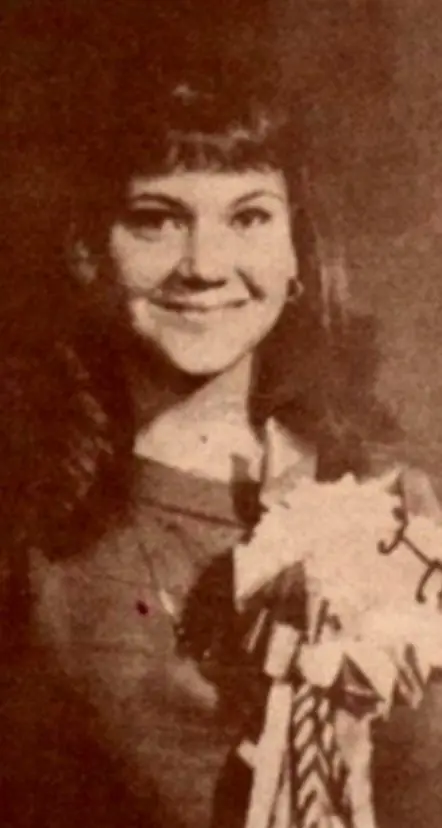
Suzanne Harrison was a church-going, popular high school cheerleader with an infectious grin. She worked at a local pharmacy.
Gina Turner had been voted Miss Hawkins High School and was the valedictorian of the 1984 graduating class. She was enrolled at the nearby Tyler Junior College studying to become a nurse.
Both were fresh-faced brunettes with long flowing hair to their shoulders.
They met up with 20-year-old Bryan Boone, a handsome basketball and football player who had recently graduated from Hawkins High. He was attending Tyler Junior College.
They met at the local teenagers' popular beachside hangout called “the point.”
The trio planned to ride around the lake and enjoy the cool night air. They did not make it back home by curfew. They never made it home.
The next morning, a Monday, people from the small town began searching. Neighbors at the lake had seen the three missing friends with a scruffy man in a blue-and-white vehicle that looked like a Ford Bronco.
They found Bryan Boone’s truck by the lake, with the women’s purses still inside.
Later that afternoon, they found Suzanne Harrison’s body in a ditch. She had been beaten to a pulp, was nude from the waist down, and raped
Harrison had been strangled to death with her white lace underwear and found clutching a handful of thorny weeds during the ordeal.
Gena Turner’s shorts and underwear were found near her friend's body.
A young couple who had been parked at the lake came forward.
They told police that a wild-eyed man with wild, unkempt hair confronted them at gunpoint the night that the three friends went missing.
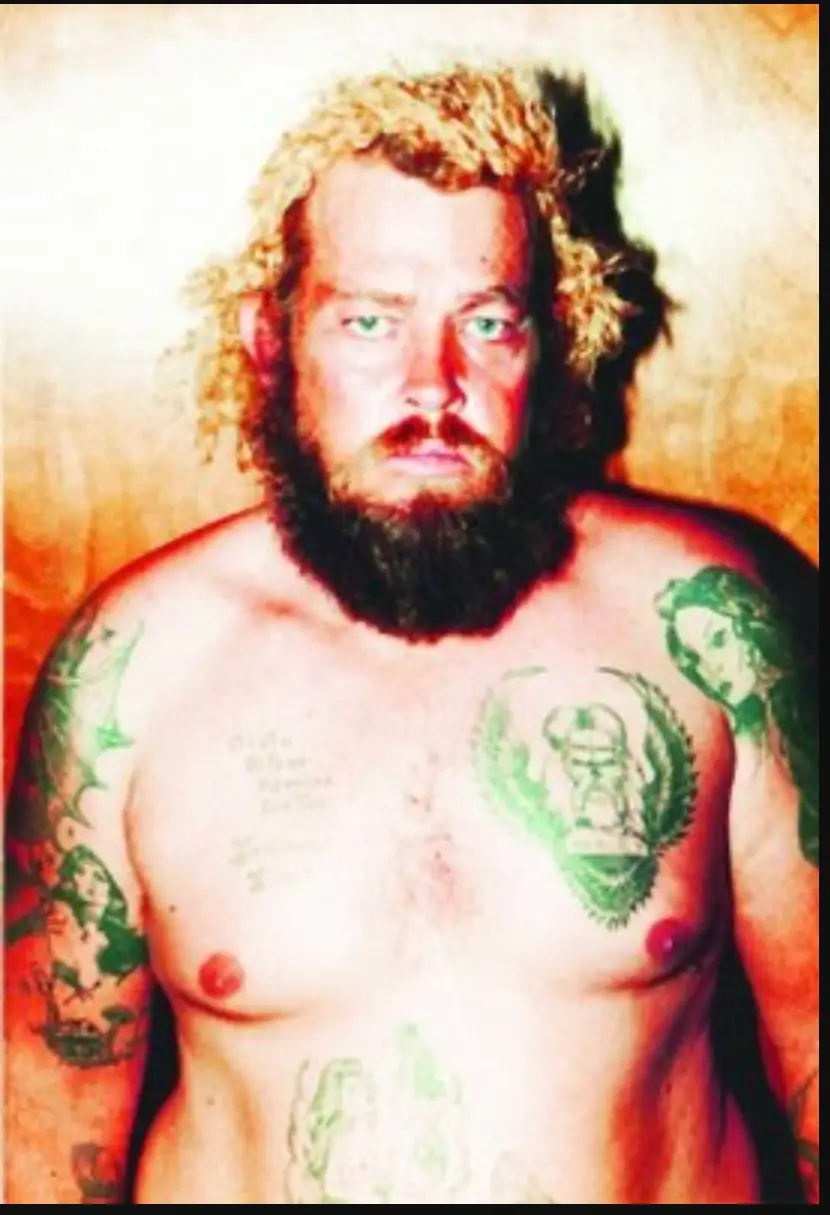
Beneath his open shirt, they saw a tattoo on his chest that read, “Death before dishonor. The Lonesome Loser.”
They left him standing beside a blue-and-white Ford Bronco.
The next day, police pulled over the Bronco and asked the driver to get out and pull up his shirt.
38-year-old Jerry “the Animal” McFadden lifted up his shirt to reveal a “Lonesome Loser” tattoo on his chest. According to the prison system, fellow inmates gave McFadden the “animal” nickname.
He was assigned to work with animals at a prison farm. After nursing an injured animal back to health, inmates and guards called him “The Animal Man.”
The nickname became associated with his violent crimes.
McFadden was taken into custody and jailed in the Wood County Jail on suspicion of aggravated robbery. The court set his bond at $100,000.
Five days after they disappeared, the bodies of Suzanne Harrison and Bryan Boone were found in a ditch eight miles from where Suzanne Harrison was found murdered. They had been shot to death.
Ammunition found in McFadden’s Ford Bronco matched the rounds used to kill the pair.
Now charged with Capital Murder, McFadden escaped from the Upshur County Jail in Gilmer, Texas, when he asked to make a phone call.
He hit a 53-year-old deputy between the eyes with a piece of metal pried from a cell window. After overpowering two guards, he locked them inside a jail cell.
McFadden stole a deputy's .38 caliber revolver from a locker and a case from the prisoner commissary fund.
He made his way to the jail control room on the fifth floor of the Upshur County Courthouse, where he took 24-year-old Rosalie Williams, a dispatcher, hostage.
McFadden, armed, fled in Mrs. Williams Datsun 280ZX until it overheated. He held her hostage in a train boxcar for 16 hours before she escaped.
When McFadden went for water, Williams, the wife of a State Trooper, crawled on her hands and knees to a nearby house. She described McFadden as very mean.
Meanwhile, more than twelve hundred law enforcement officers launched a dragnet in one of the largest manhunts in Texas history.
They cornered McFadden in the bathroom of a vacant house. He surrendered without a fight.
When a motorcade brought McFadden back to the Upshur County Jail in Gilmer, Texas, more than 300 people lined the streets cheering; some wanted to lynch him.
A cheer erupted when one woman shouted, “String Him Up.”
Hundreds of car horns blared to celebrate McFadden’s capture.
A similar scene played out on the lawn of the federal courthouse in Waco when U.S. Marshals captured serial killer Kenneth McDuff.
The Texas Parole Board had released McFadden in 1985 after he served less than five years of a 15-year sentence for aggravated sexual abuse of an 18-year-old secretary in West Texas.
McFadden had kidnapped, raped, and sodomized her.
Originally from West Texas, McFadden was allowed by the Parole Board to move to a small community near Hawkins to live with his mother and sister.
Sheriff Frank White and other Wood County authorities vigorously protested McFadden’s release to their community, but the Parole Board granted it.
It was the second time McFadden had been released in Texas on early parole. His first parole, for a double rape, was granted after serving less than five years.
The Parole Board did not warn the residents of Hawkins that a two-time convicted violent sexual predator had been set free in their community.
The murders took place at a time when Texas was under pressure from a federal judge to build more prisons to relieve overcrowding.
Lawmakers talked tough on crime by passing longer sentences. But they refused to spend money on more prisons.
For many years, Democrat and Republican Governors freed up prison space by granting prisoners excessive time off their sentences for so-called good behavior.
Community members from Hawkins pressed the Texas Legislature to stop the parole board from running a revolving door system.
But their pleas fell on deaf ears.
On July 14, 1987, a six-woman, six-man jury took less than 35 minutes to sentence McFadden to death by lethal injection for the rape and strangulation murder of 18-year-old Suzanne Harrison.
Two years later, in 1989, the Texas Parole Board released sadistic serial killer Kenneth McDuff to live with a sister in Central Texas without warning the community or notifying his victim’s families as required by law so they could lodge a protest.
McDuff resumed a killing spree that began after he walked out of prison.
During my investigation of parole board corruption in mid 1992, I uncovered that nearly 80 former death row inmates had been released with McDuff.
The parole board was secretly releasing 150 inmates a day to relieve prison overcrowding.
In a fiery hearing led by then Texas Senator Ted Lyon, a parole board member admitted they were scraping the bottom of the barrel.
On Texas Death Row, Jerry the Animal McFadden and Kenneth Allen McDuff became known as the MAC-Brothers.
Texas executed serial killer Kenneth Allen McDuff in November 1998.
McFadden, AKA The Animal, followed McDuff to the death chamber a year later, but it wasn't over yet.
Two decades earlier, McFadden had gotten away with the sexual assault and murder of a 20-year-old woman in Portland, Oregon.
He strangled her with the electrical cord from her clock radio.
In 2019, homicide detectives tested DNA left at the victim's apartment and identified McFadden as her killer using new forensic genetic genealogy technology; it solved a 40-year-old case.
In closing, I want to remind you that all of McDuff and McFadden's victims would still be alive today if Texas had just kept them behind bars and not run a revolving door prison system.