Robert Riggs
I'm Robert Riggs, and this is True Crime Reporter. Follow me into the darkest corners of the human mind, with stories rip from the pages of my reporter's notebook. True crime reporter goes inside the yellow crime scene tape. I'm investigative reporter Robert Riggs, with decorated former federal prosecutor Bill Johnston. You can follow our journey into darkness and get bonus episodes by joining our true crime community at truecrimereporter.com. Our true crime cases are stranger than fiction. With that said, here's a classic police procedural, a true crime reporter confidential. When you hear about violent crime, do you think to yourself, "It would never happen to me" When 29-year-old Colleen Reed went to a self-service car wash in Austin, Texas, none of her family and friends thought it would be the last time they would ever see her again, Reed never imagined that serial killer Kenneth McDuff was stalking her. McDuff is featured in the first season of True Crime Reporter, and our story is being turned into a TV series for a major streaming channel scheduled for release in the spring of 2022. Bill Johnston and I want you to understand that it can happen to you, because they walk among us. Sexual predators and killers don't present themselves as monsters or in a demonic manner, and they're not easy to recognize or avoid. They look pretty normal. They walk among us means that people who might hurt us may be unrecognizable as a threat. More often than not, they are people we see in public, go to school with, date, live with, or strangers who appear trustworthy. In our earlier episode about the teenage girl who was rescued from her kidnappers by Texas Rangers, the ringleader of the abduction was the father of one of her school classmates. If you were ordered to get into a car and threatened if you didn't, what would you do? In this episode of True Crime Reporter Confidential, retired homicide detective David Thornton is here to explain how and why violent criminal actors target their victims, and how victims' behavior may contribute to their vulnerability. Thornton was a guest in our earlier episode about cold cases. More than 100 homicide cold cases were solved in part because of Thornton's efforts with the Fort Worth, Texas Police Department. We are going to talk about the lessons in Thornton's book. Have a plan because they do. I started by telling Thornton about what happened to a nurse in my doctor's office. She was minding her own business at her health club when a man approached. The stranger whispered sex acts that he wanted to perform on her. The nurse told me she was shocked and frightened to death. She fled to the restroom, packed up, and never went back to work out there again. We start this conversation with a response from Thornton and my co-host, former federal prosecutor Bill Johnston, about how to handle such situations.
J.D. Thorton
As far as any breaking of laws, I don't see anything laws that were broken necessarily, unless he made some type of threat in there. But you know, I think she did the right thing into getting away from him and going to a place where she could recompose herself, and most of all, is take it as a learning experience. Because when I say people have a plan to hurt you, he followed that plan as well. He had a plan to go up and talk to her, make her uncomfortable, and she didn't have a plan to respond to that. So those are the things that are important: is for her to make a plan in her own mind, should a situation arise like that again.
Bill Johnston
You mention. Reporting it, it was good to report it, or she should immediately report it. And even for something that's less than the physical assault, but a verbal introduction to assault, I think a lot of young women, women of all ages, but a lot of younger women have read enough and heard enough that no one will believe them. They'll be stigmatized. There's all kinds of reasons. Robert and I did a podcast about a Baptist preacher that murdered his wife and faked it as a suicide. Well, his career in violent assault actually started when he was a college student, and he was a trainer at a university with a football team and a female trainer. He got in the locker room. He attempted to sexually assault her. Got a certain way with it before she escaped. She reported it to the school, the university, very well-known university. Reported it, described it in detail. Oh, we'll take care of it. They said they didn't do anything to him. They didn't report it to the police. They did nothing. And years later, at his murder trial, we called her. She was called as a witness to testify what kind of character this kid had when he was 18, which was consistent with what happened later. What do you tell women who say something, particularly if it's short of of completed sexual assault, that there there is inhibition to reporting it because they won't be believed, or it'll make them look bad, or they'll they'll feel like they put themselves out there for nothing.
J.D. Thorton
I actually have people who are very close to me who have been in that exact situation, and there's no way around the fact that it's going to be second-guessed. I think.
Bill Johnston
Why is that?
J.D. Thorton
Well, I think in the current time, I think we're we're trying to get away from that and investigate the allegations on their own merit and not take into who reported it or who allegedly committed it. I also have people have come to me and said, "I have been a victim of false accusations. So you know there there has to be more of a belief in these victims to start off with, and and let the investigation take its course. But we have to we have to have a a plan to as a society to not only believe them, but to follow up and see if they happen and make sure they that it didn't happen again. When you talk about the the people, the woman at the gym, yes. If she reports it, is the management going to take any action? Are they going to expel this individual who she is accusing of making inappropriate comments? That's something that you know. Again, we have to get into a mindset that we have to take some action because if she did report it, she has a plan. Now we have to support her in her plan to respond to things that are uncomfortable or threatening.
Robert Riggs
And unfortunately, she was so frightened, she left. She didn't report it, and she thought, "Well, it'll be my word against his. And it, in effect, it terrorized her. And I have a feeling from talking to a number of young women, they have these situations where they're not physically touched or anything, but they're mentally assaulted. And you talk about having a predetermined, thought-out plan. What goes into the making of that? It
J.D. Thorton
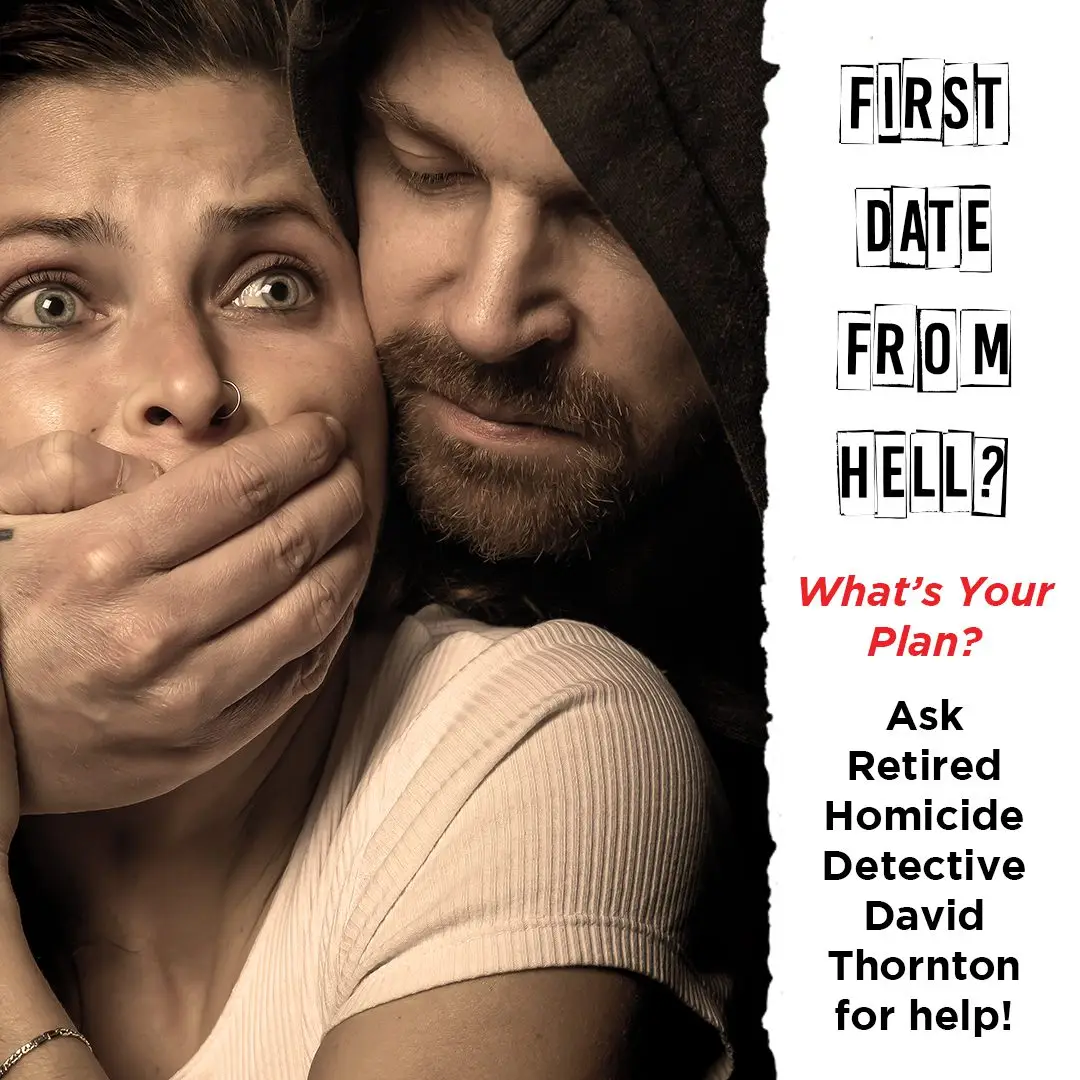
depends on the situation. If you're talking about a date rape type situation; those are probably the easiest to plan because it's it's not involving violence. It may involve some type of physical taking over of an individual through verbal weapons or a physical Type oppression, so something like that. And again, I've been through that experience with somebody who's very close to me, and see the examples in the book that I've set out that are very similar to that. And whether it's a first date, or whether it's a second or third date, whether it involves a woman in college in a unfamiliar situation, such as a party with athletes or things like that that she hasn't been accustomed to, those are the things where you just say from the beginning, this is not going to happen. One way is not to put yourself in that position to start with.
Bill Johnston
It it seems like in a number of the cases that I've worked, particularly in the age group you're speaking of, the first couple steps that are stumbled over by the victims, and and not to say they should act differently, but maybe it's part of planning. They get a little inebriated. It seems like in in many of the cases I was been involved with, and which is everyone's right to drink if they if they can legally drink, but it seems like they get where they're not as in control of the situation, and that pretty quickly cascades into the date rape is that is that your experience as well?
J.D. Thorton
Certainly, certainly alcohol plays a factor in it. But even if it's just a date rape, it is the same thing as being at a gas station and pumping gas into your car. People will take advantage of situations. They will use any means necessary to not have any resistance. In other words, they're going to want to lower your guard immediately. So that same person who comes up and asks directions at a gas station may have an ill intent behind that. At the same time, the first date or somebody you just met at a party who is trying to get you into a a location where the victim is by herself, then that's the same thing. They have a plan. Everybody has a plan, and that's why I did these seminars. That's why I do this book, is so that these girls will see what has happened to other people, and they will have a plan. They will make a plan in their mind that if they are in a situation where they are alone with a person who makes advances towards them. They will know how to overcome, either verbally or physically, those bad intentions.
Robert Riggs
Well, there is a thinking out there that it will never happen to be, and that's kind of among all crime victims. You know, it'll never happen to me. I won't get carjacked, but in particularly with young women, it will never happen to me. Bill, you saw this play out one of your cases against Baylor in the athletic department. Talk about the young woman and what happened. Similar situation, alcohol, and I have to believe, David. These offenders know that's their plan. I apply them with booze and drugs, and now can take advantage.
Bill Johnston
You know something that happens. Of course, the drinking age is 21, and so a young lady that's 18 or 19 that can't legally buy alcohol, the draw to them is parties, and it happens that several of the cases that Robert's referencing, they were invited to parties where alcohol was was free to everyone, but it was also underage, so it was without recourse, so they could come and have fun. In fact, one of the parties was actually guarded by someone that should have known better-someone in law enforcement-because it was an athletic party. Nobody wanted trouble, so it was protected, and so they felt like they could come and drink, not get in trouble, be with cool people, and because they did, and began to feel less inhibited, for lack of a better phrase, one thing led to another. In some of the locations, they had different rooms. The apartment may have three three bedrooms, and they would use one of the bedrooms to sexually assault people. While the loud noise was going on downstairs. The rape went on upstairs after the young ladies got got drunk. That's what happened.
J.D. Thorton
So I tell them that it will never happen to me is not rightful thinking, because when I do the seminars, I have examples of people who look just like them, act just like them, are in the same situations as them, and it happened to them. So these are things that that I in the book I whatever it is, whether it's a sexual assault, whether it's a robbery, whether it's a kidnapping, whether no matter what it is, it can happen to you, and it has happened to people like you. So to say, it can't happen to you, and I show them pictures, final results of victims who have been murdered in situations like that. Now that's a long way from what we're talking about with the date race rape situations, but those things have escalated too, and I give several examples of that, of those type of cases where the girls have been hurt. So I don't take that for any type of rightful thinking, as I said, that it will never happen to me because it can, and it will at some point in their life. They're going to have to fend off somebody who is overstepping, and to know that it is coming, to have thought about it in advance, they will have a plan, and they can shut that down as soon as it starts. But most people, they freeze in that situation.
Bill Johnston
Those of us that have been around this sort of thing and are older and have seen it all, we can watch a scene. I know you can, and the hair will stand up on the back of your neck. You see it coming. You can see in a parking lot of a mall when someone approaches a car. You know what's getting ready to happen. But an 18-year-old doesn't have sensitive hair on the back of their neck. I think it's incredible what you're doing with this book because you're trying to program beyond their years, the idea of what could happen based on what has happened. So it's wonderful,
J.D. Thorton
exactly.
Robert Riggs
And Billy, you and I know from doing serial killers, mass murderers, you name it. They don't look like the boogeyman until their crimes become public. And you say in your book, David, they walk among us, so you don't want to pay attention to the what they look like dressed. Do you really want to? It's about behavior.
J.D. Thorton
Yes, of course. You always want to take in the totality of the circumstances, and there are a lot of different things that go into that that you can recognize that will will help you make good decisions, but you're correct in that just because somebody is all catted up and dresses different or talks different shouldn't be the sole thing to be afraid of somebody. So you have to take in everything. But you are correct. In most people, if they want to do something bad to you, they are not going to approach you with a bad attitude. They're going to approach you to make you feel comfortable, make you feel rested, non-suspicious. They're going to do everything they can to make you let your guard down, and that goes for any crime that we're talking about in the book. Look, any situation.
Bill Johnston
If you want to think that way about being at ease, just look to Bill Cosby, or or the allegations against Harvey Weinstein. You look to someone who engenders confidence and trust, and even a fatherly figure. It can even be that at ease. Boy, that's tough to get someone to not trust. And we hate to make every human on earth totally distrust everyone else too. It's one of the great traits of humans is we can trust and we can love and and care about each other. But we have to sow in enough distrust, don't we, to at least be suspicious of people, particularly when you get in a vulnerable situation.
J.D. Thorton
Certainly, and my words to them is, you can apologize later if somebody comes into your space, invades your space, or comes at you with some type of verbal assault or physical assault. You're better prepared to say, "This is my space, and nobody comes into this space. And if you have to say, if somebody's walking up to you and you have to say, "Stop right there, and their intent was not ill. Then you can apologize, but don't feel bad about having to apologize because it's better to be able to gage their intentions to start with than it is to have to gage them when it's too late.
Robert Riggs
Do they tell them like the situation I described earlier. Do they tell them then that it's inappropriate, or is it better just get away?
J.D. Thorton
Well, it depends on the situation. If if you're in a fraternity house and end up in a room with somebody by themselves, and and there are no witnesses or other people, and somebody starts to overstep. Yes, you start right there. I mean, I'm not saying that the the victim is not interested, and alcohol plays a big part of that, and she doesn't want to insult anybody or turn anybody away. That is just trying to be friendly, but there comes a time when she can feel or should be able to sense that things are going in a direction that she's not wanting them to go, and the whole thing is is do not freeze, and that is what most of these things, as to why they happen, is because our victim didn't expect it to come, and when it did come, had never thought about it, never planned for it, and she just freezes, and that allows the perpetrator to carry out whatever he's going to carry out. So it's it's developing an attitude at an early age, you know, 20 late 2030 something year old women probably already have a lot of that experience to know when something's about to to turn bad or turn uncomfortable. The younger kids don't, and that's what I'm trying to to get them to understand.
Bill Johnston
In addition to physically getting away, let's say something is starting to feel like it's heading the wrong direction, but a person's not sure. What about technology? And by that I mean a cell phone. What about as a first step having your cell phone near you, no matter what, and having a one button away from getting someone on the phone that's hearing what's going on-in other words, a parent or a friend, even-and I'm thinking now from the perpetrator's point of view, you want secrecy, you want it to be your word against the victim's word. That's what you want. That's an ideal situation for a rapist, very little physical evidence, but the issue, particularly the issue of consent, is you said this and I said that. Okay, but having a cell phone around where you can get someone on the line, even if you're not sure, and you just want to get someone talking to someone prophylactically, so to speak, where you just have a discussion while the person's present. Yeah, I'm here with so and so.
J.D. Thorton
Sure, sure, that's a good defense, a good technique to use if they've thought about it, but they have to think about it in advance and have a
Bill Johnston
plan, as you say.
J.D. Thorton
And so many people don't
Robert Riggs
when it turns into a physical attack, what's your advice there? Fight, scream, get attention.
J.D. Thorton
Sure, to begin with. Now, Texas law, if you read it word for word, will tell you that if somebody is being sexually assaulted, and this doesn't mean aggravated sexual assault. It means sexual assault with no weapon, just kind of an overbearing physical assault that you have the right to use deadly force to prevent that. And I'm not suggesting that's done in every case, particularly if it's a classmate whose just wandering hands have gotten out of control, and you can shut that down both verbally and using the same amount of force or greater to shut that down. So I think you know, like most most guys of a college age, they they think that when they are trying to get a girl to have sex with them, they think, okay, if I start this way, she's going to resist a little bit, but you know, once she gets the feeling and gets into it, she's going to drop her resistance, and and I'm going to be able to have my way, and I think that's a lot of the issue of of how much the perpetrator will do to overcome her resistance.
Robert Riggs
So what you just described, they're already thinking like a rapist. You know, I did a huge documentary on child predators, interviewed so many of them, they all played the game of grooming and winning confidence and being an authority figure. But boy, did they have a plan! And so, what you just described to me-somebody there's a there are men with a plan. And do you see this in the gay community as well? Same sort of thing happening.
J.D. Thorton
I'm certain it does. I don't have a lot of experience with with those situations, but to me, I mean, it you know one would be the same as the other.
Bill Johnston
Don't you think that there's a certain mentality? In other words, a right thinking, for lack of a better way to say it, not getting into the morals of it, but a right-thinking person, a 20-year-old guy at a party, might fantasize about how the the night might end, but he's not going to force it to end a certain way. I think that part of what your idea of is having a plan and helping get a mindset is. I think we need to help young people understand, and any person that could be a victim, that some people are just mean. In other words, they're not mean. Comes in different forms too. Mean can be a serial killer, like Robert and I have talked about, but mean can be someone that, in their mind, says, "I'm not taking no for an answer, and I'm just as charming as they come, I can do whatever because I'm charming. I'm good looking. I'm on the football team, and I again, we don't want young women to distrust everyone, but I wish more people understood that there are people out there that are selfishly mean and will take advantage of them if given any opportunity. How do we get young people thinking that way without just being so bitter about the whole world?
J.D. Thorton
Well, if it depends on the degree of meanness, I mean, I can show them mean. I can show them what mean is like, and what the end result is, and that certainly seems to make a an impression on them. Telling them that people are mean and they're bad people in the world, they know that. I mean, but they don't. Again, it's that mindset. It's never going to happen to me.
Bill Johnston
They don't think that good-looking football player is mean, but he might be a rapist.
J.D. Thorton
No, and as guys, you know, in college, everybody, most guys who go on a date may want it to end in a particular way, but when that's not happening, they leave it alone and hope for better next time, but you're right. There are some people who are not going to take no for an answer, and my goal is to get people to make them take no for an answer.
Bill Johnston
Great,
J.D. Thorton
and that's whether it's verbal or whether it's physical, it ain't happening today, and that's what I try to tell them to to have that mindset.
Robert Riggs
We'll return to the episode in just a moment, but first, if you enjoy my exclusive stories, here are ways to support my work. Please share this podcast with someone who loves true crime stories and leave a review. Stay one step ahead of danger by subscribing to my free newsletter, Stories to Keep You Safe. Each issue gives you expert insights on how criminals operate and how to protect yourself. The link is in the show notes. If you like my podcast, you'll love my books and audiobooks. The best way to support my work is to buy direct from me on my TrueCrimeReporter.com website. You can also support my show by shopping online at our sponsors. I receive commissions for the purchases, and you receive my exclusive discount promo codes. Speaking of exclusive, let's talk about a signature style that's made its mark in both fashion and true crime: Eric Javits hats. In the world of true crime, details matter: the right clues, the right instincts, and sometimes the right hat. Deputy Chief Brenda Lee Johnson from the popular TV crime drama *The Closer* was known for her sweet Southern charm, razor-sharp interrogation skills, and her iconic Eric Javits Hampton straw hat. Whether she was closing cases in the scorching L.A. sun or outmaneuvering criminals with her disarming drawl, her Eric Javits Hampton straw hat became a symbol of elegance, authority, and unshakable confidence. Eric Javits hats for women and men feature the patented squishy material, flexible, lightweight, and crush-resistant for travel. They offer UPF 50+ sun protection. They're crafted with timeless esthetic, worn by fashion icons and true crime fans like you. Get yours today using our exclusive 20% discount promo code, and bring a little true crime sophistication to your own adventures. Find your promo code in the show notes and on the True Crime Reporter podcast product page on our website. And now back to our story.
J.D. Thorton
I know people who said, "Well, I'm not going to live my life like that. I'm not going to walk around afraid of everybody, and that's fine. People are going to do what what they feel is best for them, and I don't blame them for that. I think they're setting a bad example for their kids, and these are mainly adults that say this. You know, to me, that's famous last words.
Robert Riggs
Well, there is common sense. You should use common sense. I remember Bill back in the hunt for McDuff. I did a ride along with Stoltz, the U.S. Marshals, one evening, and we're driving through a truck stop in a convenience store, and there is a lone woman on a payphone. You know, I'm dating myself now. A payphone outside, and Stotes looked back and said, "You know what we call her? I said, "What? He said, "A victim, wrong place, wrong time. It's dark. It's you know the very thing you're talking about. Common sense, but there is a naivete that it can't happen to me. David, what did you work on down your your list here from the book?
J.D. Thorton
Well, I think you know, first of all, is surprise, and we talk about victims being surprised to where they are off balance, have no response because of the surprise. I go in the book when you're walking in certain places, whether it's back to a car or whether it's through a a parking garage, whether it's a row of businesses, to know where the entryway to those businesses are, to know corners of buildings, and and not parking your car in a parking lot next to the corner of a building where people can come out and may even be laying in wait to where you can't see them, but they can see you. So you know when I'm when I'm out, I always if I'm you know in a a row of shops or stores and some are closed, some are open. I'm always keeping my distance from exits or entrances from corners of buildings. Sometimes I'll want to get closer to the corner of the building in case somebody comes out. I have easier access to them, particularly if they have a gun that you know I can take some type of action if I need to. So it's just I mean it's looking at cars, it's looking under cars, and I'm not saying go crazy with it, but just know that people will hide anywhere cars parked next to your car. It does take any time for somebody to pick up the average woman and put her in another car.
Bill Johnston
Well, okay, what about that critical decision that any victim of a serious crime can have, which is they have a weapon, knife or gun, let's say, and they tell you to get in the car, get in or don't get in, flee then, fight then or get in. I have my opinions. I've got my opinion. What is yours?
J.D. Thorton
Everybody needs to make their own decision. My decision and what I relate to women in my family and the women in these seminars is: if somebody comes up to you with a weapon and wants your purse, give it to them. If unless you feel like it's not gonna end well anyway, as far as getting into a vehicle and going to a second location, never, never, never. Robert and I are
Bill Johnston
nodding. Oh yeah, because so many bad situations that we have seen came out of control once they left. You might have at least some witnesses or at least some control to literally run and hope someone is not a good shot, and it's difficult to shoot hit a running person. I mean, that sounds silly, almost like a hunter would think. But so to run is often the best,
J.D. Thorton
and I would rather be shot or stabbed, and somebody find me than somebody never find me again, yes, or never see me again.
Robert Riggs
And I've told the women in our family, based on my reporting and based on interviewing these serial killers and you name it in prison, that if you get in that car, you're dead. So the only chance you've got to save your life is screaming, yelling, fighting. Now, don't let them con you. They they're going to tell you that if you just cooperate, if you just get in here, and who's really I've seen vulnerable to situations of women that might have their children with them. You know, I I won't hurt your daughter. You don't want your daughter to get hurt. Cooperate, you know. And at the end, they're they're both going to be murdered,
Bill Johnston
right? That's a tough one, but as you said, everyone has their own. But in terms of planning, it's that's something if you can cogitate on that for even a minute and decide ahead of time, and because surprise gets you. And you said the often the result of surprise is to freeze, and some people just do. I've seen it in law enforcement. You know, been out at a scene, and some people hide behind the vehicle that you wish they didn't. Happens in war. There's Audie Murphy and others, and then there's those that hide behind the tank, and so to to. Try to plan ahead of time, as you say. Plan that if I have an opportunity to get in a vehicle with a stranger with a weapon or not, I'm not going to. So hopefully, almost like a football player or basketball player shoot a basketball player shoots free throws, so he's ready to shoot a free throw. If they plan ahead of time, you know, perhaps they can make that decision as a reflex instead of freezing,
J.D. Thorton
I always tell a story to our classes about a woman who was attacked in her own house. By she was in bed and she was approached by a man who was totally naked. Her son had just left, and they'd been out to eat or something, and and he dropped her off and left. She got in bed, and then there was this man standing over, and he got on top of her, covered her mouth, told her to shut up or he'd kill her. And what she did next was she, when he was on top of her, she grabbed that thing and she twisted just like she she said it was just like the old Model T my dad used to have. I just cranked and cranked and cranked. He screamed, got up, and ran out of the house just in time to meet her son coming back in, who had forgotten his wallet? So she, she, I mean, she grabbed his penis and she just cranked it like it was going out of style, and that was something that she was prepared to do because she had just taken a self-defense seminar from a good friend of mine. This was way back. This was in the 80s, but it it just shows that you got to do whatever you got to do to to get out of those situations.
Bill Johnston
You may know the the somewhat famous story of when George Harrison and his wife were at home at his estate in in England, and this crazy, obsessed guy threw a part of a statue through a window, came into the house, and started a started up the stairs as George Harrison the Beatle and his wife looked, and this guy started fighting George, and George, his response was to sing a mantra. Well, that didn't do any good. That's very good spiritual advice to someone in a peaceful situation. But George Harrison began on a mantra he learned in India. His wife grabbed a fireplace, a wrought iron fireplace poker, and as her daddy taught her, swing away, and she waylaid this creep with a fireplace poker until he gave up while George mumbled his mantras. So everybody responds differently, but she was ready to swing away. So you never know. Just like you're talking about, that woman responded. She did what she had to do and saved the day.
J.D. Thorton
When you are attacked, or when she was attacked, there are certain things you can do because it's going to be such a shock to start with. There are going to be things you can do. I talk about in the book your physical reactions to that and how you can settle yourself into the right way of thinking, clear thinking, as opposed to being to get rid of the shock is what you want to do. Get rid of the shock and be able to think, and and make a plan. If you don't have a plan, develop a plan at the spur of the moment to, as you did, quell that situation.
Robert Riggs
So I talked to a young woman who recently was at the grocery store with her five and six year old daughters, check to check out in the checkout line, and suddenly she starts hearing two guys behind her making comments about her, smacking their lips. And she turns and looks at them, and they just keep doing it. People all around them, and finally she said, she told me, she said, I said, excuse me, I'm here with my little girls, and they stop. Then she said, "Now I'm afraid to go to the parking lot. Now, now what? Now what? And so she's heard. She heard that on TikTok, apparently, a lot of women are putting their cell phone in their back pocket with a video camera turned out in recording video as they go through shopping and grocery stores. And she did it, and shopping with two little girls, she said she is stunned by what men are doing behind her. From your experience in homicide and working this, do we have a growing problem going on here?
J.D. Thorton
I think we have growing problems in a lot of different areas.
Robert Riggs
Yes,
J.D. Thorton
but yes, to answer your question, if if we're talking about violence against women, I don't think it's improved over the last quarter century that I've been working. That we have a lot more awareness as far as domestic violence and and violence, general violence against women, sexual assault, and. And other crimes like that. This just statistics may say that it's gone down, but I'm very skeptical that anything has changed, and that's why it's so important that we we protect women because of the specific type of violence is committed against them. They have a whole different. They need a whole different defense system than men do because men usually you're just looking at. Well, am I going to get robbed, or you know, I know how to stay out of that situation. I know how to react, or I'm going to get in a fight in a a line at a store with somebody cutting line or or taking my parking spot ahead of me. I'm getting fight with somebody like that. That's about all they have to worry about. Women, on the other hand, have a lot more things that can happen and have happened and will happen that that and they don't have the physical strength generally and size that men do, so that's another disadvantage. And I say generally, there are a lot of women who can kick my you know what, but but generally,
Robert Riggs
yes,
J.D. Thorton
men are more able to handle themselves in a situation like that,
Robert Riggs
so Roy Hazelwood, the great original FBI profiler, he helped me trying to understand McDuff when I was investigating how he got off at death row, and then you were Bill leading the manhunt. And unfortunately, he's passed, but he did he he specialized in sadistic sexual serial killers and sex crimes, and this is a guy that knew the mind of these monsters. And it was over 10 years ago that that Roy thought that things were really getting worse, and he it was his gut sense from his work and talking to that violence towards women in Hollywood movies and the spread of pornography, particularly on the internet, was feeding this. What What's your sense from from your work and Bill from the cases you did?
J.D. Thorton
Oh, I think absolutely that the entertainment industry has a lot to do with perpetuating violence and making serial killers probably out of people who wouldn't normally do that. That's just my opinion. I'm not gonna, you know, throw any statistics behind it. But I think, oh, you know, the violence you see on television now can't be anything but having an effect on people's minds and and what they think they can do and get away with and how to do it and things like that.
Bill Johnston
And I do think also, as Robert mentioned, pornography-the availability of it can certainly whip up what the Supreme Court called the prurient interest in sex, the itching interest in sex, which used to be more difficult to sort of go into that world, but now people can go into worlds on their phone, and it can lead doesn't lead a good person necessarily into becoming some horrible person, but it it certainly can can light a views that may end badly in terms of a demand. I think this goes into a discussion Robert and I have had and and will have in the future about the human trafficking related to this. I think it's why we see a rise in it. The sort of the massage parlor, the underside of that world regarding human trafficking. I think that's all related to what we're talking about. So the availability of the driving nature of pornography toward it, and everyone's different. Everyone makes their own mind up at what they'll do, but if someone has an inclination, it can certainly push them toward that. I think, from what I'm hearing today, the greatest self-defense mechanism that a woman has is her brain and the ability to think and plan, to not even get in a situation or to quickly get out of a situation where the physical is irrelevant. I know it can go there, but it sounds to me when you talk about the word plan, that's thinking, and that's thinking in a way different than people are thinking before they hear this. But it's a, as Robert said, a common sense way of using your mind, your brilliance, to avoid the situation to begin with. Yes, what a great what a great book and a great purpose behind it.
Robert Riggs
David, where can people learn more about you and particularly the training you do?
J.D. Thorton
I have an email, [email protected].
Bill Johnston
Where can they get the books?
J.D. Thorton
They're on Amazon. In
Bill Johnston
the title of the book,
J.D. Thorton
have a plan because they do.
Bill Johnston
Great.
J.D. Thorton
We have things that you talk about preventing to start with. We want before it gets physical. We want that individual who is thinking about doing something bad to you. To take a pass on you to start with,
Bill Johnston
outsmart them,
J.D. Thorton
and that has to do with number one, your awareness. But things like your posture, things like your peripheral vision, things like your attitude, your voice inflection, things like that. That we want to make this person just go away,
Bill Johnston
right?
J.D. Thorton
Before it gets physical, if it has to get physical, then we have answers to that too.
Robert Riggs
Thank you for doing that book once again. The title of David Thornton's book is "Have a Plan Because They Do. It is full of lessons for both women and men on how not to end up at the wrong place at the wrong time.