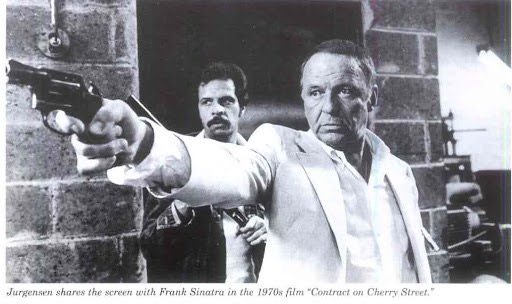
Former NYPD Detective Randy Jergensen walked a beat in Harlem all the way into Hollywood’s greatest crime dramas of all time.
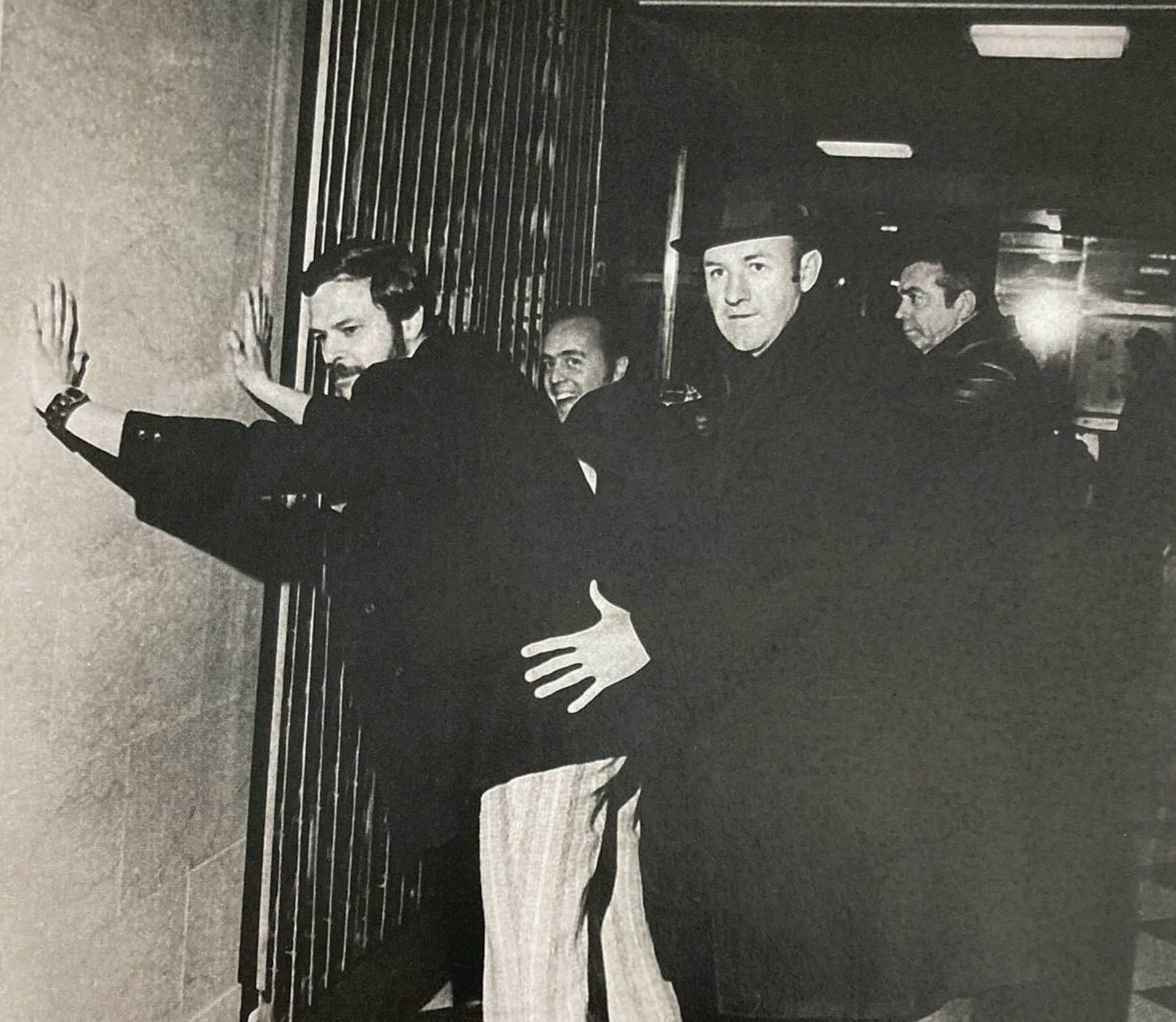
His walk of fame started when William Friedkin, the director of The French Connection asked Jurgensen to demonstrate how to put a suspect against a wall for the “pat down”.
Friedkin hired Jurgensen as the film’s technical consultant to advise him on how to realistically show the gritty side of heroin trafficking in the 1960s.
It became Jurgensen's job to turn actors Gene Hackman and Roy Scheider into narcotics detectives.
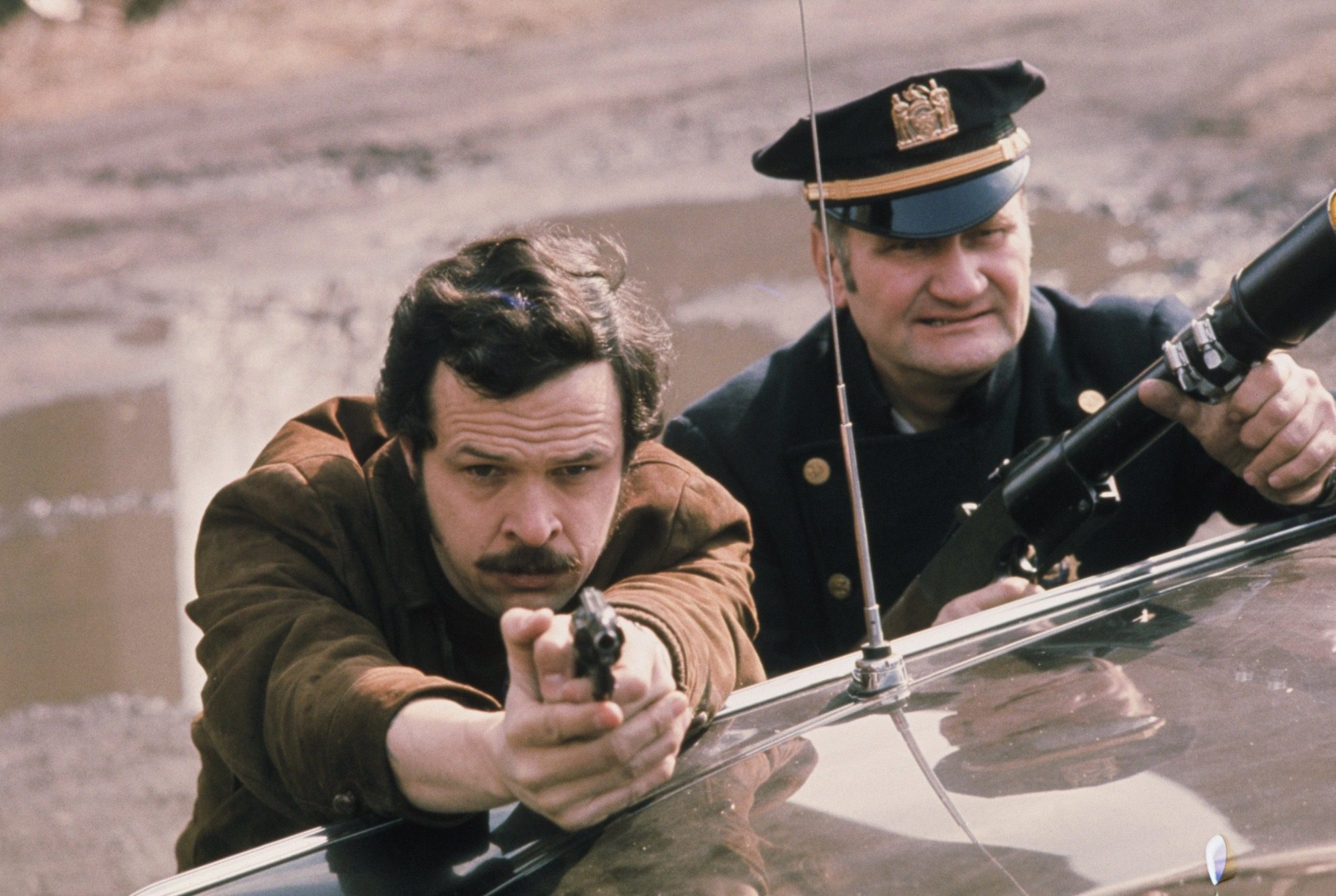
Jurgensen turned out to be a natural on camera and was given the role of an NYPD Sergeant in film.
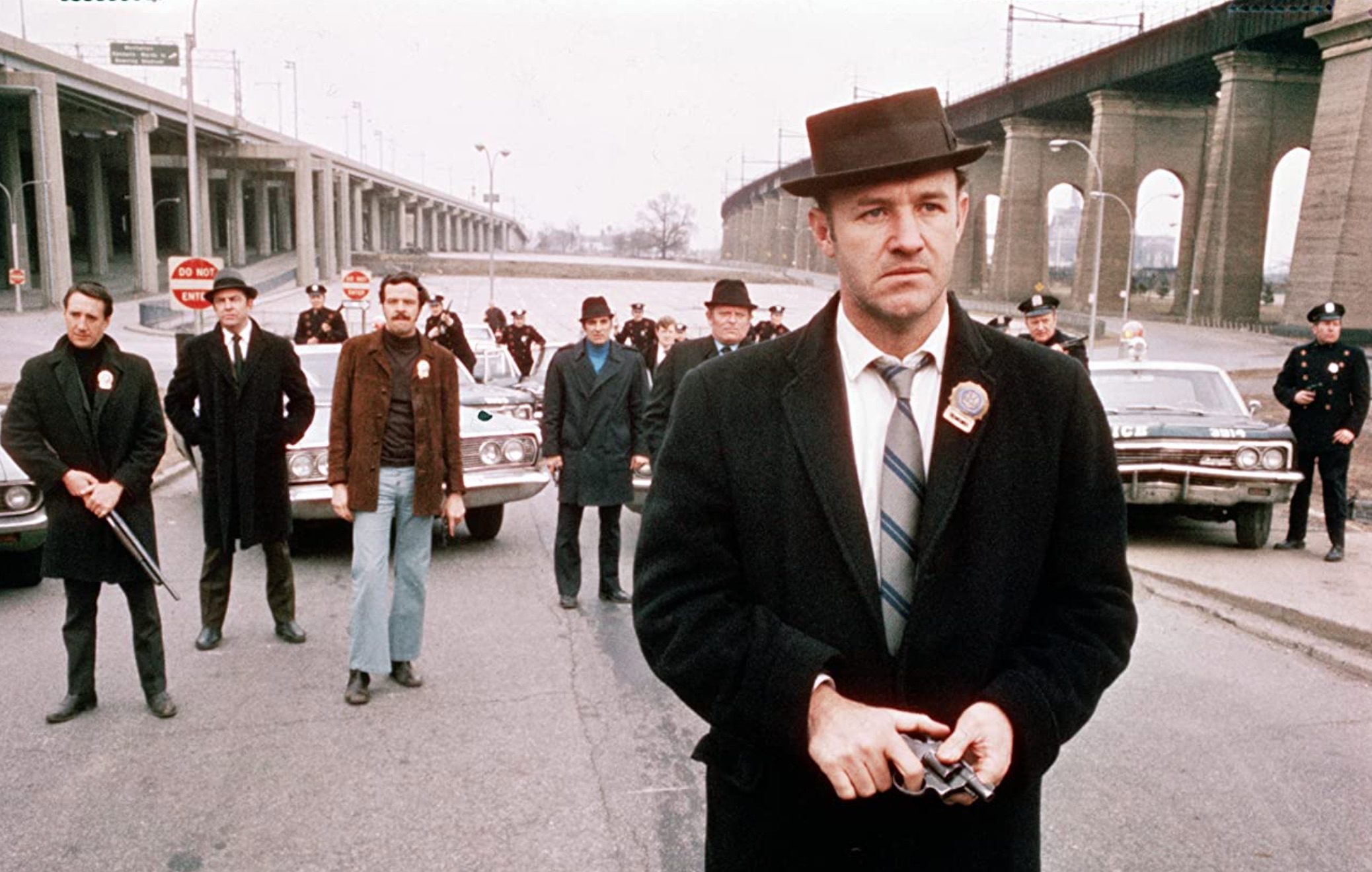
He appears on the poster for The French Connection flanking Gene Hackman.
Jergensen had been on the periphery of an undercover narcotics investigation that netted a legendary seizure of heroin.
Robin Moore, the author of The Green Berets, wrote a book about the case, titled The French Connection.
In those days heroin flowed into New York City from Marseille and the book was made into a movie.
A long list of credits includes Jurgensen’s work as a technical advisor on Die Hard with a Vengeance and a cop in the first Superman movie with Christopher Reeve.
Fasten your seatbelts.
Jurgensen takes us inside the greatest car chase ever made in this edition of True Crime Reporter™ Confidential.
All right. Popeye’s here. Get your hands on your heads. Get off the bar. And get on the wall.
That’s the voice of Gene Hackman, playing the role of NYPD narcotics detective Jimmy “Popeye” Doyle in the 1972 Academy Award-winning movie The French Connection.
Doyle is bad news. But he’s a good cop. We are going now. Bye”
It’s considered among the best American crime films ever made and contains one of the greatest car chases in movie history.
The film achieved its unparalleled realism with help from then NYPD homicide detective Randy Jurgensen.
Jurgensen was the technical consultant and acted in the movie.
He even appears on the movie’s poster.
Jurgensen worked the mean streets of Harlem for 16-years.
A few days after celebrating The French Connection’s Oscars, Jurgensen became embroiled in the most notorious case in the history of NYPD.
Jurgensen’s book titled, Circle of Six, details his determined effort to bring to justice
the murderer of Police Officer Philip Cardillo who was killed in a Harlem Mosque in 1972.
For fans of crime films, you are about to hear Jurgensen’s inside stories about the making of The Godfather and The French Connection.
“The French Connection. A millionaire exporter with a record too clean to be true.”
The plot of The French Connection, based on the book by the same title, was inspired by a real case of heroin smuggling in New York City during the 1960s.
Back then heroin flowed into the U.S. East Coast through France.
All right let’s hit them. Hit them All right nobody move put your hands in the air.
Gene Hackman and Roy Scheider based their characters on Narcotics Detectives Eddie Egan and Sonny Grosso.
Their pursuit of a wealthy French heroin smuggler is based on a record-setting seizure in 1968 of 246 pounds of heroin hidden inside a car transported aboard a French ocean liner.
The French Connection won 5 Academy Awards including Best Picture. Best actor in a leading role went to Gene Hackman, Best Director to William Friedkin, and Oscars for best writing, and best film editing.
In the 1950s Jurgensen served as an Army paratrooper during the Korean War.
He fought in the bloody battle of Pork Chop Hill. He received the three bronze stars and Purple Heart.
After the war, Randy Jurgensen joined the NYPD.
I was sent to a precinct, the 25th precinct. And that was in the midst of Spanish Harlem. And that was a very, very unique precinct. As far as you could go on the east side, it was Italian. And there were people speaking Italian. And then as you came into the middle of the precinct, it was Spanish. And there were people speaking Spanish It was very defined. And all the way to the right which now working towards the west side. That was a black of black community. And so you know, I did 18 months, so 16 months working in different parts of that precinct, you know, but being raised born in New York City and being raised out on the street, you know, I could see at a distance you know, what was going on? I it wasn't teaching me anything. I I knew this. I knew this look. My father was a bookmaker when was arrested my my uncle used to take the sports bets. I worked for a black man called Clint taking street street numbers at 13 and 14. So when I got to this precinct, I, I saw it all you were streetwise. So one day after a shooting, my mind is shooting, I was in court. And a captain came to me in court and asked me how long I was on the job, and how old I was. And the next thing I knew I was being interviewed and accepted into narcotics. Now, there's about three different levels of narcotics, I suppose the lowest level, the most active one, and probably the most dangerous one is the and I know what it is, is the street narcotics. So I was out in the street, purchasing, buying, buying narcotics. While I was doing that, the unit in the unit was working on major, major drug drug bust, these st st ones, if you could work your way up the line, you would finally get but they were already there. So one day, one day, in 19, late 1962, they made this they made this bust. And as you have as you have said, not not quantity wise but quality. It's never been matched Ever since then, it was damn near 90% pure. So that got into the paper that called the attention of writer by the name of Robin Moore. And Robin Moore had written a book called The Green Berets. And so Robin Moore was allowed to hang out with us in narcotics, an out of that came the book, Paul, The French Connection. And of course, out of that came the movie, The French Connection.
The French Connection. And of course, out
of that came the movie, The French Connection.
RIGGS
Jurgensen says William “Billy” Friedkin, the director of the movie, asked him to give the actors a taste of life on the streets.
Randy Jurgensen
Now as soon as the cast was in place, Roy Scheider, Gene Hackman and of course pretty freakin well then I went to work as a narcotic detective, and I took them with me in the street. So after about two or three weeks of doing that, and some of it was a little, a little dairy going into the daring, going into the shooting gallery. And a little side note here, Billy freakin one time. Eddie Egan. Being at Eagan gave really freaking the gun gave him his gun, when we went through the door, you know, so I didn't approve of that. So, by the by the end of three weeks, possibly four weeks, I had turned Billy freakin Gene Hackman and Roy shader into narcotic detectives, how the bust went down to fingerprints, the pictures, the whole thing, how I got the information and so forth and so on. And that's how, that's how, I guess I would say ingratiated me into the motion picture. It was it wasn't so much like a consultant or a technical adviser. And throughout the picture, I was constantly asked the you know, not that, are you doing this? Right? Are they doing that right? Are they doing the other thing, right? so forth and so on. So that's what that's what I did. For the for every day off that I had I even took vacation to make that picture to continually to make that picture.
RIGGS
The French Connection features one of the greatest car chases in movie history.
The chase scene was set to begin with Hackman as Detective Popeye Doyle commandeering a motorist 1971 Pontiac LeMans to pursue a hitman trying to escape on an elevated subway train through Brooklyn.
The Pontiac comes in from Detroit, it's got 37 miles on it. And Gene Hackman gets in there just to get the feel of it. And as he's taking the car out, you know, just just normally driving, he gets cut off, and he hits the pillar. This is the true story. He hits the pillar. And we had to take him to the emergency room. And, and, and that car, we will use it later on. But we had to get another car.
RIGGS
Director Billy Friedkin climbed into the back seat to film the first reel of the car chase staged under the elevated track of the BMT West Line in Bensonhurst, Brooklyn.
Bill Hickman, known as the best and most fearless stunt driver of all time, doubled for Gene Hackman at the steering wheel in the dangerous scenes.
Hickman had previously appeared as a hitman and getaway driver in the famous chase scene of the 1968 movie Bullitt.
He drove the black Dodge Charger 440 Magnum pursued by Steve McQueen in a Ford Mustang 390 GT.
The streets were empty of pedestrians and cars in Bullitt.
Director Billy Friedkin wanted The French Connection chase scene to be different. Real different.
He challenged Hickman’s driving talent to raise the action up a notch.
By the way, although Hickman was not shown driving in The French Connection, he played an on-screen role as an ornery wise-cracking FBI agent who gets under Popeye Doyle’s skin.
so this is the way that the master in the chase went down. And Billy freakin was going we mounted when I say we remember. I'm talking of the movie company, not me yet. So they mounted a camera on the front bumper of the car. And then they had a camera that Billy freakin got in the back in the backseat, right? And he held that camera, like on the front seat. It was like locked in on the front seat. They're now in the front seat on the passenger side. I'm sitting At first they wrapped me in a mattress and they said, Well, that's not going to work. And so because I had the wire for the kill switch that was on the camera in the front, and so I would turn that camera on and turn that camera off when I was told bill Hickman did the driving. So, what we were going to do was to just take, just go and do it. Did we have a permit to be in the street with a uniformed police officers there? I've said this before, and I'll say it again, um, you know, I spoke to the police officers and I said, You know, I think it's time for a cup of coffee guys. And so they all went off to have a cup of coffee, and we got in the car. Now, as we get in the car, Bill Hickman, I remember this, Bill Hickman is smoking, and he's got a cigarette in the ashtray. And Billy gets into the car. And the language goes something like this. You know, Hickman, you haven't shown me shit. You haven't shown me anything yet. We're gonna need this. I mean, we're unprotected. You we got to get this, we can only do it once. In the meantime, I see Hickman, and he's taken out another cigarette, and he's like, lighting the cigarette. And I'm saying to myself, I'm going to die today. I'm gonna die. And so with that said, we went 26 blocks.
There was no siren, we did pick up wild sound. There was no, as I've been told, oh, there was a jelly bean on top. No, there was not because if it was it would show in the camera when the red came on. So the first thing that happened was that we careened off of a city bus. And that broke the sideview mirror of where I was, and it was going free, going free. And in no time flat, it slammed up against the slammed up against the glass, and it broke, it broke the glass. And we kept right on going at one point, he was driven up onto the sidewalk, and we hit gates that had a chain on it. And once that was broke, it really was a junkyard, and there were two or three dogs in there, and they came out out onto the street. We kept right on going getting onto the sidewalk. In the meantime, you know Billy's camera is Billy's cameras right by my ear, and I hear it. So we get all the way down. And at the end of the conclusion, he whips the car around, and it's all over. It's all over. And Billy says let's do it going back. And we start going back, and we didn't get five or six blocks. And I hear Billy's camera, kick, kick, it's at a tape. It's out of film. And I said to Billy, we're out. We just kept right on going and we finished back now that's called the master. That's a beginning and an end. And of course it took us two weeks and I was much involved in that in in the hits the purposely hits the stage hits the cars crashing into each other. But yes, that was done without a permit. It is five minutes on the screen. And it cost $100,000 to do what you see was real our e a l going on to our e l no green screen no computer. No speeded up film. That's it.
Robert Riggs
And so when you Sideswipe the bus, that wasn't planned, it just happened. Oh,
Randy Jurgensen
no, nothing was planned. Nothing. It certainly it certainly wasn't planned that we would go headfirst into those into those two gates who had a back the car rather the junk shop and keep right on going. And you know, we form a crash. Right by that. junkyard we form a crash a near miss. Yeah. For the car.
Robert Riggs
What do you think other motorists were doing? I mean, are they dodging for their lives as you're coming through?
Randy Jurgensen
Well, we did have the horn. And because the horn does play in the chase, and he just leaned on the horn leaned he was leaning on the horn. You could smell the rubber burning because one, you know the left foot was on the brake and the right foot was was on the gas and you could hear the car and it will go like ah and it wasn't moving. It was like jumping because he had a step too for like a near miss and then when he took his foot off the brake what the tires would spin, and off, we would go again.
Robert Riggs
was there a was there a moment when you're running that? those blocks that you thought I'm gonna die here?
Randy Jurgensen
Well, you know, you know, now I've heard that every time the story is called, told the car was doing 90 miles an hour, it was not. I mean, we were doing 60 to 65 you could see it in there. And you know, the speed, the speed, you know, it certainly has to match. It certainly has to match, you know, the 24 frames that are going through the camera and stuff like that. I mean, when you jerks off like that, it the camera doesn't get it. So we were doing 6065 miles an hour. And I have to tell you, it you know, that's very, very scary. It was it really was scary. What was I scared that I was going to have an accident and something like that. Listen, you know, I wouldn't want to have been a part of Dear God, that we hit a pedestrian and kill them. And you know, and Billy, Billy has repeatedly repeatedly said that, you know, I've never said that. Billy has repeatedly said that. But you know, while while in that car, even though the cars doing 65 miles an hour, my mind was doing 90 miles an hour and it was like, just let us get through this thing without without hurting somebody.
Robert Riggs
So did you see some of yourself in Gene Hackman or Roy Scheider?
Randy Jurgensen
my pride, my pride in is that you know, I got damn made them narcotic, narcotic cops, but you know, act as a sponges. And you know, they look at everything. I was one of them he even came up to me and said, I noticed you're left handed. I mean, you know, they absorb everything you know. So Gene Hackman, he was really, he really was Eddie Egan. He really was, well, there's
Robert Riggs
that scene when they're rusting all the African Americans in the bar and collecting the drugs. And boy, he is a nasty character in there. And he also he had that that phrase you use? Do you pick your toes? Pick your eating Poughkeepsie, your feet? Yeah. Where did that come from?
Randy Jurgensen
Well, you know, when we would when we would, we would lock them up. We would like lock them up. They were at they they were at the bottom bottom rung of the ladder. But they had a score someplace else. And they would basically not give up their source. Or where were they where they scored. And so Eddie would come along and say, I know you. I know. You picked your feet and Poughkeepsie you got on the end of the bed, and you pick and the guy was saying no, no, no, you did that. And you pick your feet. No, I didn't do that. Hey, listen, you better tell me where you scored your ID. And and they would, they'd come right across and say, Alright, I got I scored here in this building from this guy. And you know, it was like, Here led to there. And once we got that guy, where are you getting it from? Oh, well, a shipment is coming in. You see it? It's very rarely from the top down. It's usually it's usually built built on up.
Robert Riggs
In the actual case, real lead undercover officer, what was the role? You were?
Randy Jurgensen
No I was no, I I was always a street street narcotic. I always was I bought guns. Believe it or not one time, I bought a piece of art. And it really was an expensive. I didn't know what I was doing. But no, they, I was street level $75 a half load. These guys were dealing in keys. And at that time, a key was worth $32,000 $32,000 in 1962. I have a story about on the cover. I was working in Alphabet City that's the lower part of Manhattan. And I went out to make an and they were now insisting that we had to make a Beibei if it wasn't dangerous enough to go in and do it once you had to go in and do it a second time. So I made I went in, I made my by and usually up on the top floor, and I got the drugs and I'm starting down the stairs. And as I'm starting down the stairs, I see sneakers and hands coming up the stairs, and I know I'm in trouble. So I beat it back up onto the roof. And I run over a few roofs and I come down. I've lost my backup entirely. I come down and I get out onto the street I get out onto a predominantly Jewish neighborhood, the lancy Street. And not everybody had televisions then. But there were televisions in retinas, a famous restaurant, a Jewish restaurant, and the television was there people were standing black and white people were watching it. And something in my stomach told me that something's not correct. I didn't know what it was. I felt like everything was slow motion. I didn't know what was going on. So I went into the precinct and we have to do what they call the dance. You know, my hair is long. It's a rubber band this that you know. So I have to give the sergeant at the desk or the who Yo, I have to give him certain numbers that he would only you have 61 Baba, okay. And once we get that done, and I got narcotics and I said such I said does nobody here even in the precinct. He says I gotta use a word hero. Okay? He says, I don't know where the fuck you been, but they just shut the President of the United States. They shut john F. Kennedy. I don't even know what happened to that by. I turned it in. And it was like, within the police department. I'll tell you right now. The world stood still. We did nothing. Nothing. Hey, we all watch television. We'll listen to Walter Cronkite. Yep. Do it. That was a tough one for us to that was my last narcotic buy.
Randy Jurgensen
Can I give you one more French Connection story? Oh, please, please. Okay. So one day where we, they're rehearsing. And I see the president of the East Coast statments Association. His name is Alex Stevens. And he's going to fall down the stairs, like the Frenchman does, right? And Billy, Billy, this is a rehearsal. And Billy is portraying Jean. And Alex does exactly what you see in the movie. So I walk over to Billy and I said, Billy, I said, this, you got Jean, who's Eddie Egan? committing murder? He says, What are you talking about? I says, whoa, he lost the gun on the train. I said, His hands are up in the air. He's walking away. And you're shooting him in the back? And he says, Yeah, don't worry about it. And I said, Billy, Billy, that's murder. I mean, you shooting an unarmed man in the back. He looked at me, and he said, I'm the director. I'm directing this movie, and it will be okay. And I walked away. I walked away. Well, fast forward. October 8 11 1200. People in the theater, Premier, French Connection. On comes that scene, right? And I'm looking at that scene. And Jean gets there. He shoots the Frenchman. There's that moment of silence. of 1100 people stand up screaming, applauding Billy freaking comes running up the aisle. And he says to me, works for me. It works for them. I hope it works for you. That's what if that's not enough, he sends me the poster, which is the poster of the of the of the Frenchman standing with his hands up and Gene shooting him in the back and Billy sends me the poster and he signs it and it says it works. I go to work I go to work on the Buy Now I'm a Screen Actors Guild and eventually I would take the test and I would which is a pretty prestigious group called the Directors Guild of America the DGA, which I was a member I would work in pictures as a DJ.
RIGGS
The legendary detective went on to spend his life in front of the camera and as a technical consultant on some of Hollywood’s most iconic films.
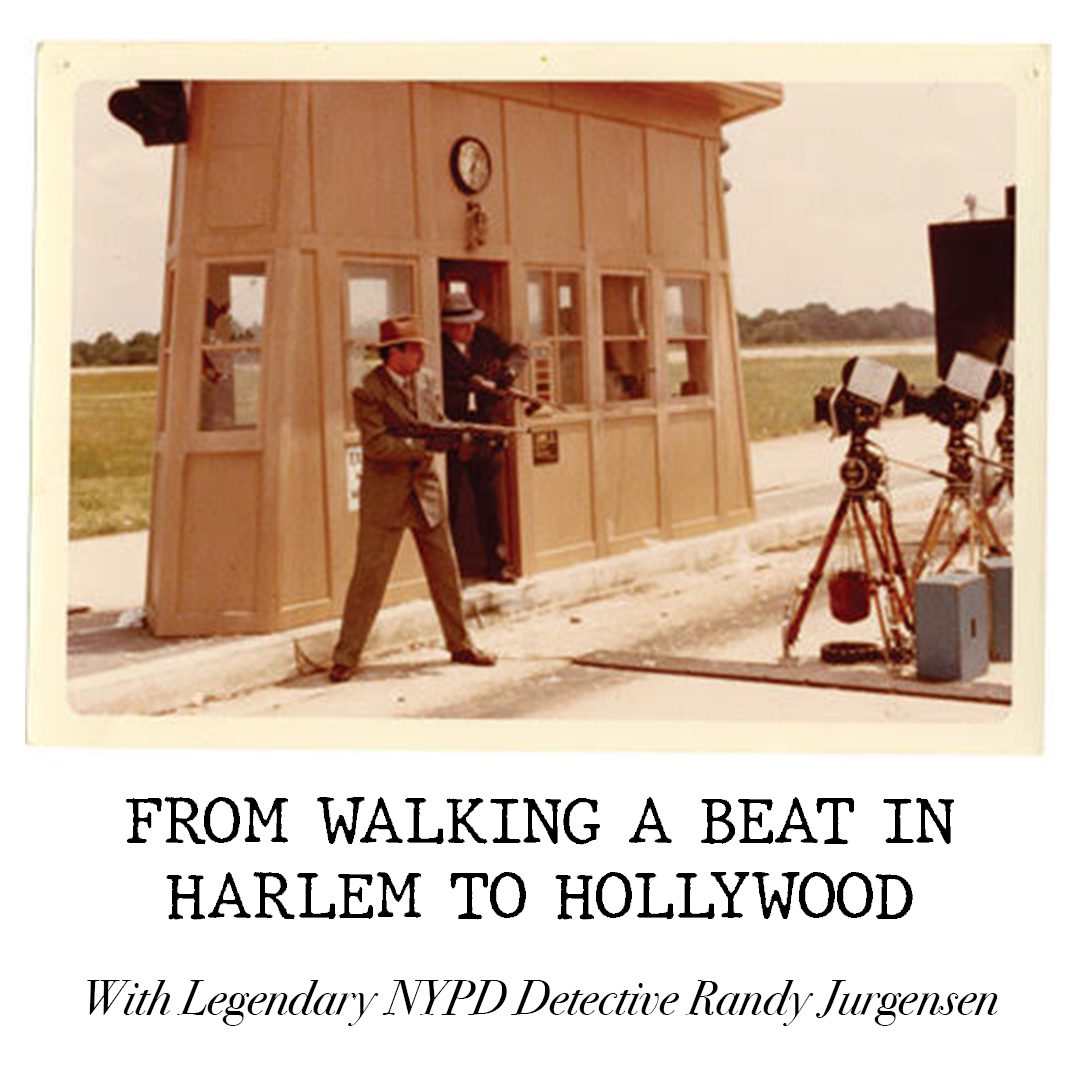
Including the Godfather.
After this break, you will hear how Jurgensen is remembered as hitman who killed Sonny Corleone.
RIGGS
We are talking with retired NYPD detective Randy Jurgensen about his Hollywood career. His credits include more than 50 films and television shows.
Randy Jurgensen
so I go to work on the Godfather and Of course I mean meet Brando, Jimmy con alpa Chino. I I meet the whole crew. Did you ever find Jimmy and Jimmy Caan is sort of our kind of guy you know, he likes to go to the Copa he likes to bounce around and and we did a lot of that we did a lot of bouncing around so yes our reserved our was very reserved on the Godfather mainly mainly kept kept himself I don't mean that he would wasn't with Brando and stuff like that. Brando spent a lot a lot of time in his camper. I used to go and get brand new cars. We used to walk them to the set. And Brando did a lot of talking to himself in the camp, right? I don't know if he was reading lines or whatever he was doing. But yes, I saw I met out I met out on the Godfather, and we and we we remained in touch, we definitely remained in touch. No, we didn't hang out or go out or anything like that. Now. So one night, I get a phone call. I'm working. I'm working. I'm working in Harlem. And the call is from a guy that I grew up with. And he's a cop in Midtown. His name is George being and he's in traffic. And I get to call up and I'm in Harlem homicide up in the squad. Randy Yeah, he says, look, we got two guys down here. We got two guys, you know, they're little, they're a little drunk. You know? And they they don't have a driver's license and they keep mentioning your name. And I said, Okay, I'll be right down. So I drove down to the precinct, and there's James Caan behind bars. And the guy who plays Serato you'll have to help me out. A sweetheart of a guy. He's the guy that gets shot out pitino shoots him in the Yeah, okay. Okay. And he's there. Randy. I said, Okay. Just said, Keep your mouth shut. I said, just keep your mouth shut. So we're walking out and George's George's looking at me. And George says, This never happened. I said, No, no, it never happened. I said, I'll get you a ticket to godfather when it comes out. But no, this never happened. He stops. So that's the guy who plays like, he says, Can I have my license back. And now this is Sergeant. And the sergeant says, You want your license back. This is a phony license. He says to the sergeant. I paid $100 for that license. And I intend to use that license. zarges looked at me and he said jurgenson get them out of here or roaster couldn't be they're going to be back back in the bus. And of course Jimmy Caan is now pulling them out to go all the way out into the street. He said, This is not right. I said, What is the matter what you you get a phony license? Jesus, I smell alcohol and stuff like this. He should be behind bars. They got out they got in their car, and they drove away. That's that's a godfather story.
Robert Riggs
Well in The Godfather. You are the gangster that kills Jimmy Khan, who's playing sunny. Tell us a bit about that. And I'm on the poster. Yes, yes.
Randy Jurgensen
I'm on the poster.
Robert Riggs
That scene or
Randy Jurgensen
no? Well, one day, the first assistant director came to me. And he said, Can you get three guys that can fall and he's the one that said this. Can you get three guys that can fire sub Thompson machine guns which are military? And I said, Yes, I can. They're all cops. I can What's it about? And he said, Well, you know, we're gonna shoot sunny at the toll booth. And the toll booth was built out Nassau Community College in Long Island and about 10 blocks away from that. This is the sand dunes and that's where they shoot the guy in the back of the head over there can only Okay, they we did that they did that scene there. So I go and every time I tell the story here, we it's not a sub Thompson. It's a regular machine gun from the 40s. So I misspoke on that. So we get into the booth and cupola talks to each one of us. And he puts me in the front booth and I'm holding it and I'm left handed And the camera is to my right. And he came to me and he said, Randy, can you operate it with the other side in your right hand? And I said, Of course I can, because that's where the camera is. And there are pictures. I don't know if you got them. But there are pictures showing me standing there with the machine gun.
So we did that about three or four times what the problem was, of course, it's candy glass in there. And there are blanks in there. And sometimes the blanks weren't strong enough to blow the glass out. So we did it about two or three times. And it was cupola who came and said to the guys, look, when you pull the trigger, if the glass doesn't go out, poke it with the machine gun, you know, nobody's going to just poke it with the machine gun. So that's what we did. When it came to James Caan, they use Trojans, there were Trojans that were fixed to him. And the wires were fixed to the Trojans.
Robert Riggs
Explain why that is.
Randy Jurgensen
rubbers, yes.
Robert Riggs
But they're filled with blood.
Randy Jurgensen
Yes, but synthetic, they're filled. They're filled with something that's an orange, orange in color, because the blood films black. So they were using I'm pretty sure that they've come a long way. But yes, so they use are they were using orange that was in there. So I don't know how many he had. But there was a board. And the board might have been 18 inches long. And it had switches on it. And there was a wire on every switch. And so when James Caan got out, you know, and they did this only once, when James Caan got out, and they said, action, you know, we fired the machine guns off camera, to you know, to give James Caan something to react to, and then the guy went with the switch with the switch like that right right down. Now, bah, bah, bah, bah, bah, bah, bah, bah, and that and they came right, right on up right on up to James Caan. When he went down, I went over and kicked him. I went over and kicked him. And, you know, this is what cupola told me. I went over and kicked him. And then we got in the car, and we drove away. That that's how that's how that that that scene came about. On the cupola setting. Oh, and Coppola said to me, and it's, it's, it's in the thing. Coppola said to me, he says, you know, Randy, you're going to be one of the most hated men in America. And I said, Why? He said, there isn't a woman that isn't in love with Sonny Corleone. And you're killing him. I'm telling you, for the longest of times. I was known as the cop who killed Sonny Corleone. Oh, you're the cop that killed Sonny Corleone? Yep, that's what Coppola said to me.
RIGGS
What do you want our listeners of this podcast and people that they What do you want them to know about? The police officer on the beat the men and women who are out there?
Randy Jurgensen
I want them to know, I want them to know that. We, we have taken it quite seriously, when we raise our right hand and swear to protect life and property. And that's what we go out and try to do every day. You don't know standing in a uniform, when somebody comes up to you and says, Can you help me get down to that street, here's this address, and you give that person that address and you give that your day is made. Your day is made, you know, that small little gesture or whatever it is, your your day is made. It's it's the it's the greatest, it's the greatest thing, you know, the greatest thing in the world, you know, to you know, to protect people from maybe a crazy in the street or whatever it is. So I would like I would like them to know that. That's what that's what we really do. That's that's what we really do. You know, a good day for a cop is a day that he can help somebody. Help a situation. Protect somebody. That honestly that's what we do. That's that's what we do.
Robert Riggs
Randy Jurgensen. That's the last word. Thank you for your military service in Korea and certainly thank you for your police service. It's been a joy to talk to you about your movie career. Thank you.
Randy Jurgensen
Thank you for having me that thank you for having me on the having me on the show and I look forward to return.
Randy Jurgensen turned 84 on December 7th of 2021.
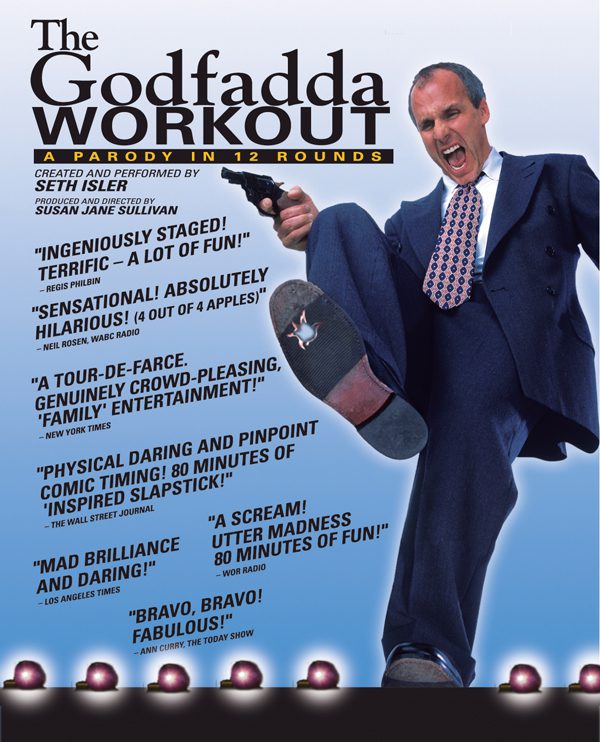
For Godfather fans, we put a link in the show notes to a parody called, The Godfadda Workout”. The comedy features a one-man performance by Seth Isler playing 37 characters from the movie. It was co-created, directed, and produced by Susan Sullivan and played Off-Broadway.
Isler and Sullivan are respectively the showrunner and producer working on our TV production about Serial Killer Kenneth McDuff featured in the first season of True Crime Reporter.
Our five-part documentary series called Freed To Kill is scheduled for release in the Spring on a major streaming channel.
By the way, When Director Francis Ford Coppola remastered the three-part Godfather series he included the Godfadda Workout in a supplemental disk. Coppola cited it as an example of how his movie impacted pop culture.