Robert Riggs:
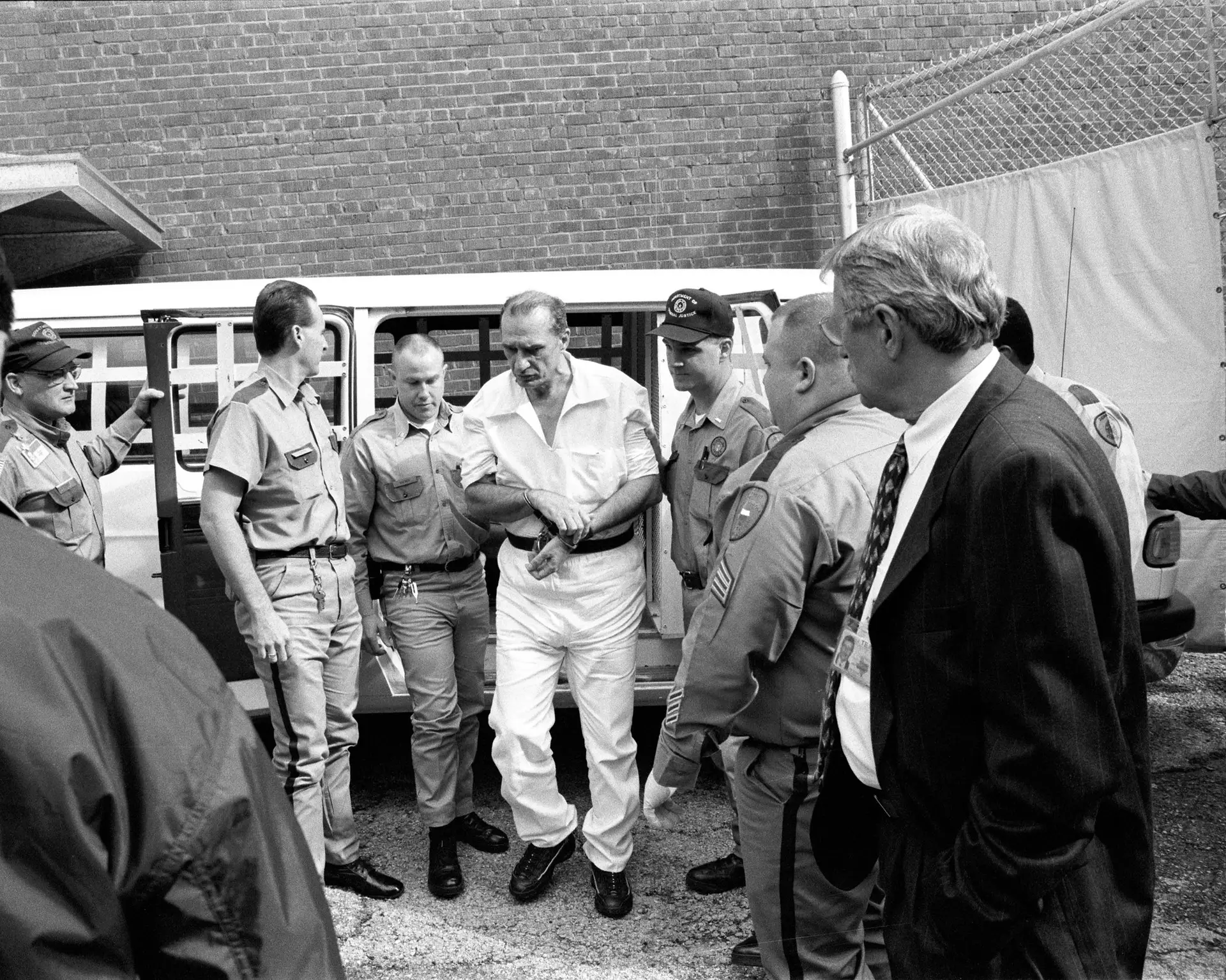
This episode marks a somber milestone: the 25th anniversary of the execution of serial killer Kenneth Allen McDuff, a name that chills the soul of the men and women in law enforcement who hunted him down, and the families of his victims. McDuff, infamously dubbed the Broomstick Killer, was a figure of unparalleled brutality. His story isn't just a tale of sadistic crimes; it's a saga that shook the very foundations of the Texas criminal justice system. He was released on parole in the late 1980s under a cloud of corruption. McDuff, within a day of his release, unleashed a reign of terror, abducting, raping, and murdering countless women. His actions embodying the darkest impulses of humanity. My original reporting on this case exposed not just a man's evil, but a system's failures. It led to a sweeping overhaul of the parole and prison systems in Texas, revealing a disturbing scheme of parole selling that shook public trust to its core. As I delve into this grim chapter, I do so with a purpose. We seek to understand, to remember the victims, and to reflect on the lessons learned. The echoes of Mcduff's crime still reverberate, reminding us of the vigilance needed to safeguard justice and integrity within our system. Here's an episode from my award-winning podcast series that led us to producing a five-part streaming documentary about McDuff called "Breed to Kill. Texas found itself under siege by violent criminals set free by the state parole board in the 1980s and 90s. In the first episode on True Crime Reporter, we learned that the board freed 85 notorious former death row inmates to relieve prison overcrowding, Texas politicians talked tough on crime, but they did not build new prisons. The prison system teetered on the brink of a shutdown. A federal judge threatened to take it over because of overcrowded conditions. So, to avoid political embarrassment, the parole board threw open the floodgates. They released 56,000 ex-cons alone in 1989. Among them, the Broomstick Killer. He was supposed to die in the electric chair. Three days after he walked out of prison on parole, women's bodies started showing up, and others started disappearing. His killing streak runs two and a half years. Then U.S. marshals pick up the trail of Kenneth Allen McDuff, a modern-day Jack the Ripper, snatched a young woman out of a Waco convenience store in the middle of the night. 22-year-old Melissa Northrup, a pregnant mother of two children, vanished during her shift on a lonely stretch of Interstate 35. A widespread search for the petite clerk turned up an abandoned two-door tan 1985 Thunderbird nearby. The car belonged to paroled triple killer Kenneth Allen McDuff. When an FBI agent mentioned McDuff's name in passing, Deputy U.S. Marshal Parnell McNamara stopped dead in his tracks.
Parnell McNamara:
So, the first time we really started to get on McDuff's trail was when Melissa Northrup disappeared from the Quick Pack where she was working on South I-35. I believe it was March the first of 1992, and she just vanished, so we didn't know who had gotten her. So about a week later, we got a helicopter up that belonged to the sheriff's office here. My brother and I were in the helicopter along with a couple other deputy sheriffs, and we were flying all around, just trying to find some kind of clue. Then, on about the fifth or sixth day, Mike, my brother, who was a deputy U.S. marshal, also, and Bill Johnston, the U.S. attorney here, were walking down the sidewalk, going to lunch, and we were approached by an FBI agent stationed here in Waco. Freddie Vella, and he said, "Hey, let me ask you something. Does the name Kenneth Macduff mean anything to you? And I said, "Oh my gosh, yes, absolutely, a triple murderer. I said, "Why are you asking me this? He said, "Well, his car has just shown up on the parking lot of the new road in on South I 35 right next to the Quick Pack, where Melissa Northrup had disappeared the same day. I said you don't have to be Sherlock Holmes or Dick Tracy to solve this case. I said you like you have a dead girl in the alley and you got Jack the Ripper down at the end of the alley with a knife in his hand. That's a pretty good place to start. So, at that point, all three of us said, "My gosh, you know McDuff is the one doing all this because there was several girls that were missing. The
Robert Riggs:
marshals knew 46-year-old Kenneth Allen McDuff as the broomstick killer. In the last episode, I explained how McDuff dodged his death sentence in the electric chair. The parole board set McDuff and 84 other convicted Capitol murderers free in order to relieve prison overcrowding in Texas. Back in August of 1966, McDuff and an accomplice named Roy Dale Green abducted and murdered three teenagers in Fort Worth. Author Gary Laverne says McDuff's accomplices provided him with an audience for his violent performances.
Gary Lavergne:
Both of these unfortunate, and I've gotten into trouble for saying this because you know you're not supposed to use the word stupid, but both of those men suffered from what I call in my book heartbreaking stupidity, and I've gotten into trouble for even saying that. But I couldn't kid myself anymore. That's what was going on, and McDuff understood that. I mean, it's not like McDuff picked out a high school graduate to bring along. I mean, he wanted to impress people with his brutality, and anyone with an ounce of intelligence or education would not have been impressed.
Robert Riggs:
Armed with a 38 caliber revolver, McDuff surprised Robert Brand and his cousin Marcus Dunham while they were talking with Edna Sullivan, a popular high school junior. McDuff ordered the teenage boys at gunpoint into the trunk of their car, the boys beg for their lives. Macduff shot Robert Brand in the ear and forehead. Mark Dunham tried to shield himself. Macduff shot him through the arm, then grabbed the boy by the hair, put the muzzle of his pistol against Mark's head, and coolly squeezed off a round. Next, McDuff raped the young woman several times, sexually assaulted her with a jagged broomstick, then choked her to death with a broomstick. Thus, McDuff's moniker, the Broomstick Killer, McDuff, was no stranger to crime. The 19-year-old had already been to prison for 13 counts of burglary and theft. He had been out of prison for eight months on parole when he murdered the three teens. Parnell McNamara, now the sheriff of McLennan County, and Larry Pamplin, the former sheriff of Falls County, knew McDuff better than anyone in law enforcement. We sat down together to talk about the broomstick killer. What was your history? Your father had a history in this. Tell us about your father was originally involved in capturing him.
Parnell McNamara:
Well, my father was a deputy U.S. Marshal here in Waco from 1942 up through 1978, so he worked very closely with Sheriff Brady Pamplin of Falls County, our neighboring county. In fact, the first probably 10 to 12 years of my dad's career with U.S. marshals, all of the federal prisoners were kept in the Falls County Jail because the McLennan County Jail was not federally approved. So, as a young boy, and I'm talking about very young, four or five years old, I would ride with my father to Marlin when he would transport prisoners, and that's where I met Larry and Brady Miles Pamplin when they were very young, about my same age, and so we'd play together when we go down there. My father and. Brady worked very closely together, and there was a respect there that was just incredible. It was unbelievable between those two tough, tough lawmen, a sheriff and a U.S. marshal. And so I first heard of Macduff in 1966 when he killed those three teenagers in Everman up by Fort Worth, and I can remember being with my father because starting in 1963, January of '63, my father got an okay from the Justice Department to use my brother and me as federal guards, so we were going with my dad to make arrests, transport prisoners to and from the court, off to Leavenworth Penitentiary, Areno, all over the place, and this happened in 1966 when I was a sophomore at Baylor. My dad and I were in Marlin for something, transporting a prisoner down there. What? And I remember Sheriff Pamplin talking to my father about this brutal murder that had just happened. That this guy named Macduff, you know, once you hear that name associated with a murder, you don't forget Macduff, and he
Robert Riggs:
already had a reputation.
Parnell McNamara:
He had a reputation as just being a lowlife thug and a punk. So I remember Brady Pamplin's hands shaking and his voice trembling when he was telling my father how McDuff had killed these three teenagers, and especially the little girl, and putting a broomstick across her throat after he had used it on her, and brutally sexually assaulted her, and had her down on her back in a gravel road, and I remember the sheriff shaking and saying, "TP, he broke her neck just like you would kill a possum. And I remember how sick I was, and my father, you know, his reaction. I know that either one of those men would have killed McDuff at the drop of a hat, and so would I. You know, I I was a guard. I didn't have a badge. I didn't have credentials, but I had a gun. And you know, to hear something like that happen in in such a brutal way just made me sick, and I never forgot it.
Robert Riggs:
And then he shows up, and there's a gunfight or a standoff.
Parnell McNamara:
Exactly. The night after the brutal murders, McDuff comes back home the night of the murders, but the next night he has a date with a young girl that lived in Bremond.
Robert Riggs:
Seems unbelievable, triple murder, and he's out on it. Yeah,
Parnell McNamara:
and he's out on this date like nothing ever happened. So at that point, Sheriff Pamplin had been made aware that a cohort named Roy Dale Green had been with McDuff when these murders happened the day before, and as well as I remember, Green and another individual and a young girl that the other guy had a date with were in a car, and it came over the radio that this young girl and these two young boys had been murdered by Fort Worth. Apparently, Roy Del Green got very upset and may have started crying. And the fellow friend of his that was in the car with him slapped him to get him to come to his senses and say, "What are you talking about? And he broke down and said, "I was with Kenneth Macduff when he killed those kids. So they went straight to the Falls County Sheriff's Office to bring Sheriff Pamplin, and then Sheriff Pamplin got in touch with Sonny Elliot, Sheriff of Robertson County, which is where Bremond is, and so they proceeded along with Sheriff Pamplin's son, Larry Pamplin, who happened to be in town at the time, who was a college student in 1966, like I was.
Robert Riggs:
Who's here with us today?
Parnell McNamara:
He is here with us today. He sure is, and he can fill in the details of that day better than I can or that night.
Speaker 1 14:50
My name is Larry Pamplin.
Robert Riggs:
Larry Pamplin vividly remembers a running gun battle with Kenneth McDuff. They found McDuff driving around with his date in the car. Hamplin's father, the sheriff of Falls County, emptied his shotgun into the car's radiator so he would not hit the young woman inside. The engine overheated, and McDuff bailed out. He jumped into a pickup driven by his date's brother. The chase resumed. I
Larry Pamplin:
was able to get right up beside of them. My dad had reloaded and jacked another one in the 12 gage, and he was fixing to take care of the business. At that point in time, the brother slammed on the brakes. Truck slid to a stop. Door flew open, and Mac Duff was on the passenger side, and he just flew out on the pavement face down.
Robert Riggs:
The Pamplins captured McDuff. McDuff and his accomplice were placed in solitary confinement at the Tarrant County Jail because inmates, outraged by the brutality of the murders, threatened to kill the pair. In November of 1966, the ex-con, now 20 years old, went on trial for capital murder. Prosecutors describe McDuff as a cold-blooded, sexually deranged killer. Spectators packed the Fort Worth courtroom. His accomplice, 18-year-old Roy Dale Green, a skinny, emaciated high school dropout testified against McDuff for five hours. Green described how McDuff pressed a jagged broomstick across the 16-year-old woman's throat and choked her to death. Green admitted that he held down her legs to stop her from kicking, and he said they threw her body into a clump of scrub brush. In a written statement, Green said McDuff told him afterwards that he had raped and killed before. Macduff boldly took the stand in a bizarre attempt to blame his accomplice. McDuff claimed that Green dropped him off at a burned-out shopping center where he spent the night. Green, he said, left to find a girl. Mcduff's mother Addie and sisters watched his testimony from the front row of the courtroom. The jury of nine men and three women deliberated for four hours. They sentenced Mcduff to die in the electric chair. The convicted triple killer spent six years on death row. In 1972, the U.S. Supreme Court struck down the death penalty as unconstitutional. McDuff's death sentence, along with 129 other capital murderers in Texas, was commuted to life. Then the parole board secretly released 85 former death row inmates to relieve prison overcrowding. In 1989, McDuff walked out of prison after receiving parole under very suspicious circumstances. That's when Sheriff Larry Pamplin picked up the phone to warn Marshall Parnell McNamara and made an ominous prediction,
Speaker 2 18:03
and I told Parnell, I said, "You're not going to believe this. This is just crazy. I said, "But I've just received information that Kenneth Allen Macduff has been released from TDC, and I said, mark my word. I said I don't know if it'll be three days, three weeks, or three months, but I promise you, bodies are fixing to start showing up. And I think it was three days later.
Robert Riggs:
Macduff's release alarmed back to Barra. He found out the ex-con was enrolled in a trade school class right there in Waco,
Parnell McNamara:
we were just in a state of disbelief, and I immediately went to the Texas State Technical College Police Department and told them, "I said, you've got a triple murderer going to school here, and then the sheriff told me that he found out that McDuff was attending college on a state grant, so we were paying for this scumbag piece of trash to go to school, you know, and that was more salt in the wound.
Robert Riggs:
But he really wasn't going to school. We really no, he was never going to. He was
Parnell McNamara:
cutting class and he was killing people as we were looking at him, and so we were looking at him very hard, and but really didn't have anything to go on. There were girls that were disappearing, prostitutes, and you know we were we were concerned about them because as we've said before, you know every prostitute was at some point someone's little girl. They weren't always a prostitute, and they didn't deserve to die like this.
Robert Riggs:
True to Sheriff Pamplin's prediction, the body of. Seraphia Parker turned up near the trade school three days after McDuff got out of prison. The petite woman, a sex worker, had been raped, beaten, and strangled to death. Parker was last seen alive with McDuff in his pickup the day before her body was recovered. It was the same day McDuff reported to his parole officer for the first time since his release from prison on parole,
Parnell McNamara:
he was so brutal and so heartless and soulless that the more we got into the investigation and we knew what he had done to those those young kids in 1966, His brutality was just over the top. He thoroughly enjoyed inflicting pain, and misery, and terror on his victims.
Robert Riggs:
Next on True Crime Reporter, the marshals and U.S. Attorney Bill Johnston form a three-man posse to hunt down Kenneth Allen McDuff.
Bill Johnston:
We warned him off the street because Mike and Parnell convinced me that if McDuff was out, he's killing. I didn't understand the nature of a serial killer like he was. I I was learning, but they convinced me that you know he he is going to be abducted in killing girls. He's a he's a horrible predator.
Robert Riggs:
As our journey through the harrowing saga of Kenneth Allen McDuff comes to a close, let us not forget the overhaul it's spurred, born out of tragedy and scandal, it serves as a testament to the enduring quest for justice and integrity. In remembering the victims, in recognizing the systemic failures, we recommit ourselves to vigilance, ensuring that such horrors are never repeated. This is not just a story of a serial killer. It's a narrative about the resilience of justice, the power of truth, and the unyielding spirit of a community and law enforcement determined to learn from its darkest days. Thank you for joining me on this solemn remembrance and reflection. I'm Robert Riggs, and this has been True crime reporter, where the past is never forgotten, and the pursuit of truth never ceases.
Transcribed by https://otter.ai
As our journey through the harrowing saga of Kenneth Allen McDuff comes to a close, let us not forget the overhaul it spurred, born out of tragedy and scandal, it serves as a testament to the enduring quest for justice and integrity.
In remembering the victims, in recognizing the systemic failures, we recommit ourselves to vigilance, ensuring that such horrors are never repeated.
This is not just the story of a serial killer; it's a narrative about the resilience of justice, the power of truth, and the unyielding spirit of a community of law enforcement determined to learn from its darkest days.
Thank you for joining me on this solemn remembrance and reflection. I'm Robert, and this has been True Crime Reporter®, where the past is never forgotten, and the pursuit of truth never ceases.